Artwork
High Tide on the Marshes
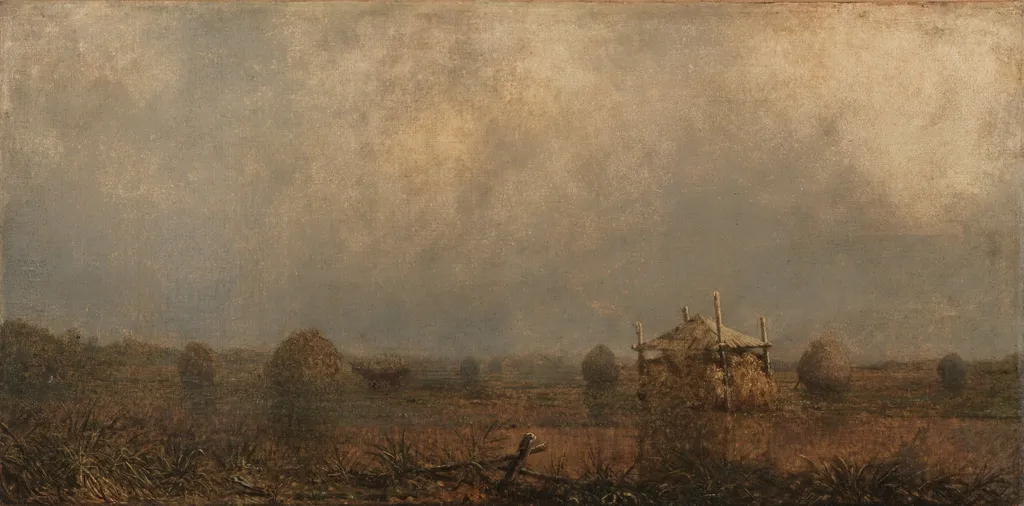
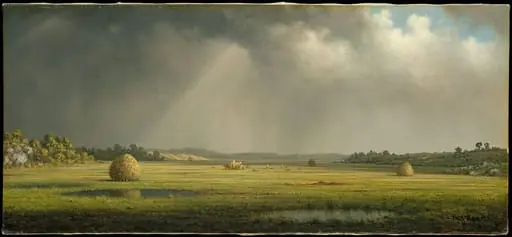
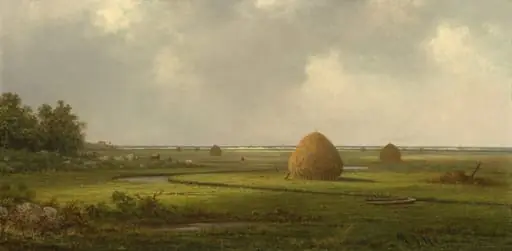
High Tide on the Marshes is an unspecified painting by the Hudson River School artist Martin Johnson Heade. It dates from 1872 and is held in the collection of the Cleveland Museum of Art.
About this work
Overview
The work captures a moment of stillness between tide and land, emphasizing atmosphere over grandeur, and stands as a key example of his mature style.
Martin Johnson Heade completed *High Tide on the Marshes* in 1872, a quiet coastal scene that reflects his sustained interest in salt marshes of the northeastern United States. Though associated with the Hudson River School through subject matter, his approach diverged in its subdued palette and intimate scale. The work captures a moment of stillness between tide and land, emphasizing atmosphere over grandeur, and stands as a key example of his mature style.
Subject & Meaning
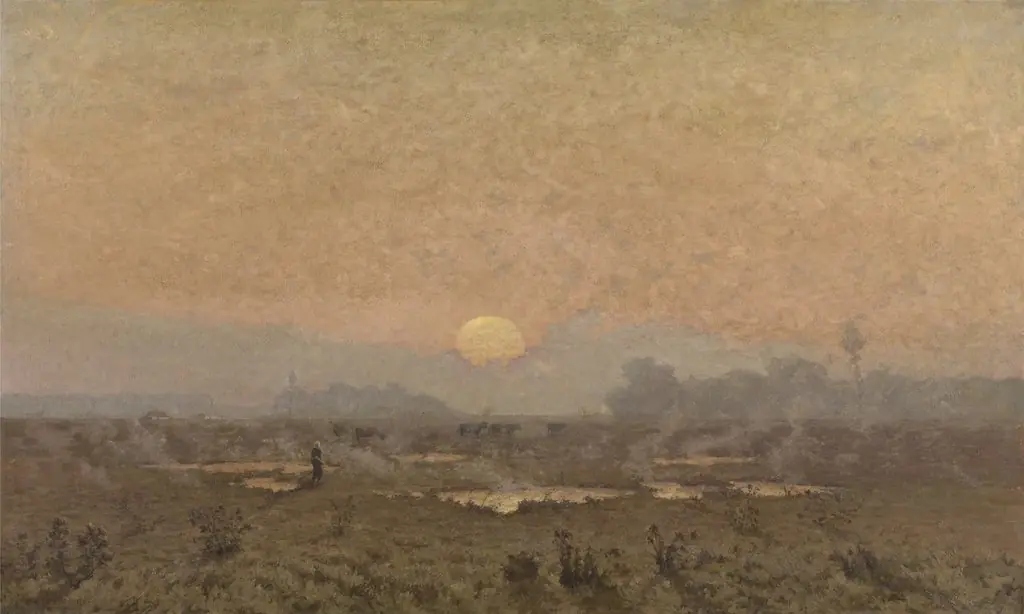
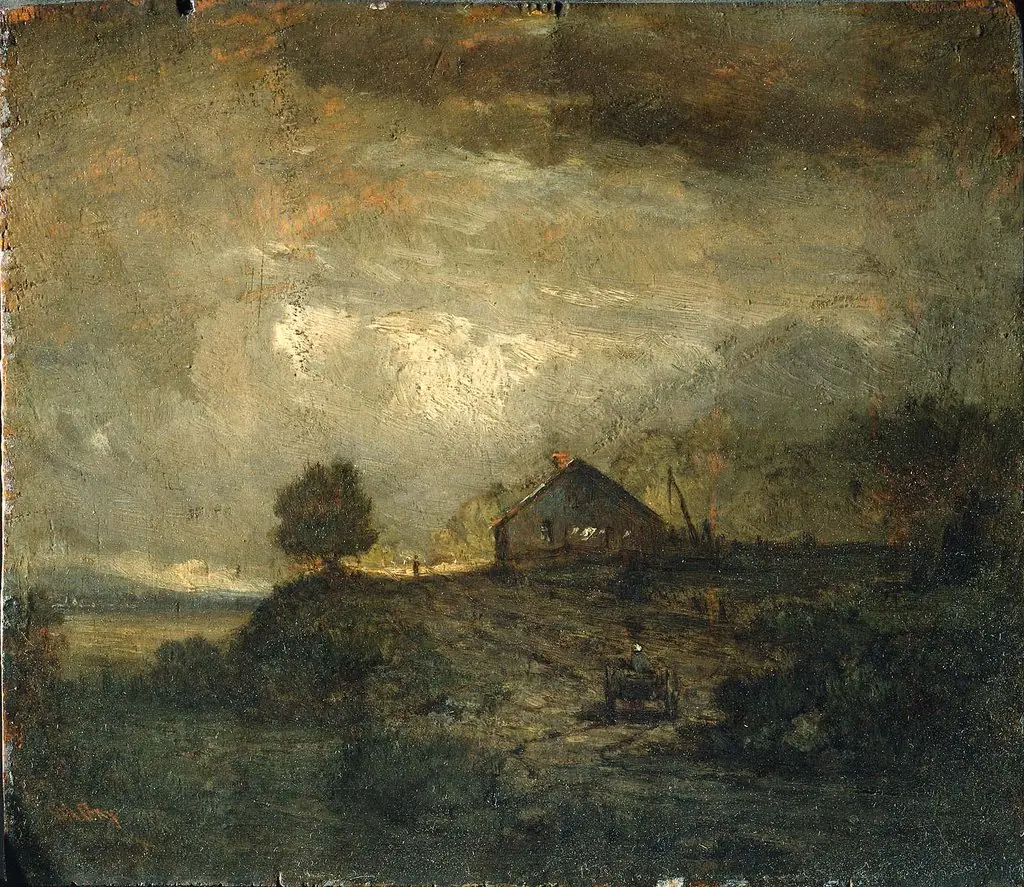
The painting depicts a solitary dwelling nestled at the edge of a tidal marsh, surrounded by tall reeds and wetland grasses. The absence of human figures and the distant, quiet house suggest solitude and the quiet persistence of life in marginal landscapes. Heade’s focus on the subtle rhythms of nature—tide, light, vegetation—conveys a contemplative mood, inviting reflection rather than narrative.
Technique & Style
Heade employed soft, blended brushwork to render the hazy sky and reflective water, while finer strokes define the texture of marsh grasses. His muted palette of grays, browns, and muted greens avoids dramatic contrast, instead relying on tonal gradations to suggest depth. Light is diffused and even, enhancing the sense of calm and atmospheric cohesion across the composition.
History & Provenance
Painted during Heade’s most productive period, the work entered The Cleveland Museum of Art’s collection in the 20th century. It was not widely exhibited during his lifetime but gained recognition later as scholars reevaluated his contribution to American landscape painting. The painting remains a representative example of his coastal studies, preserved in its original condition.
Context
In the 1870s, Heade shifted from tropical scenes and hummingbirds to the salt marshes of New England, drawn to their quiet, changing light. While contemporaries like Church emphasized sublime vistas, Heade favored intimate, unpopulated views. His work aligned with emerging interests in naturalism and the poetic potential of ordinary places, anticipating later American tonalism.
Legacy
Heade’s marsh paintings, including this one, influenced 20th-century American artists interested in mood and atmosphere over spectacle. Though overlooked for decades, they are now recognized for their quiet innovation—bridging romantic sensibility with observational precision. *High Tide on the Marshes* endures as a quiet testament to the aesthetic value of unassuming natural environments.
Artist & collection