Artwork
Lotus Blossom
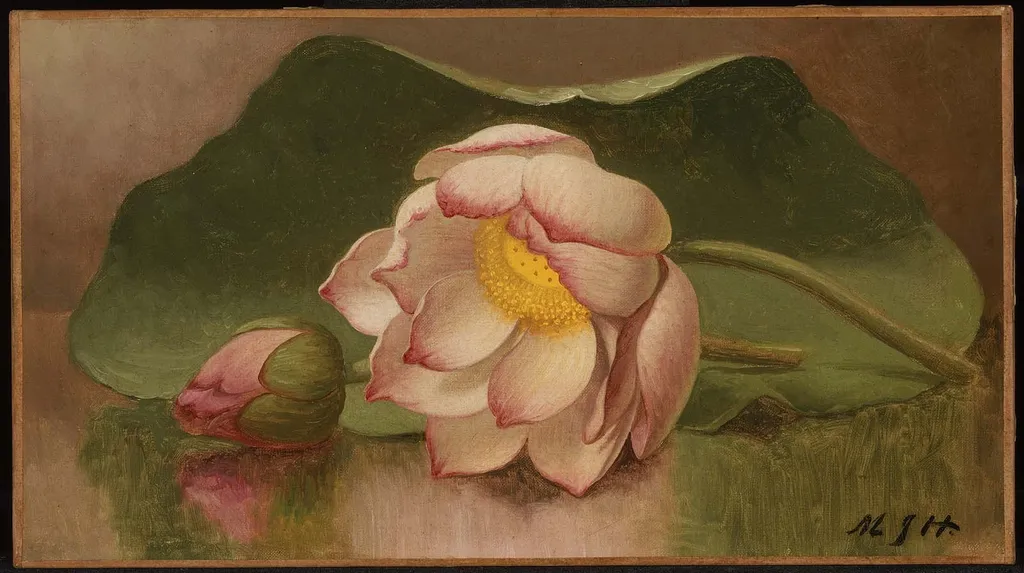
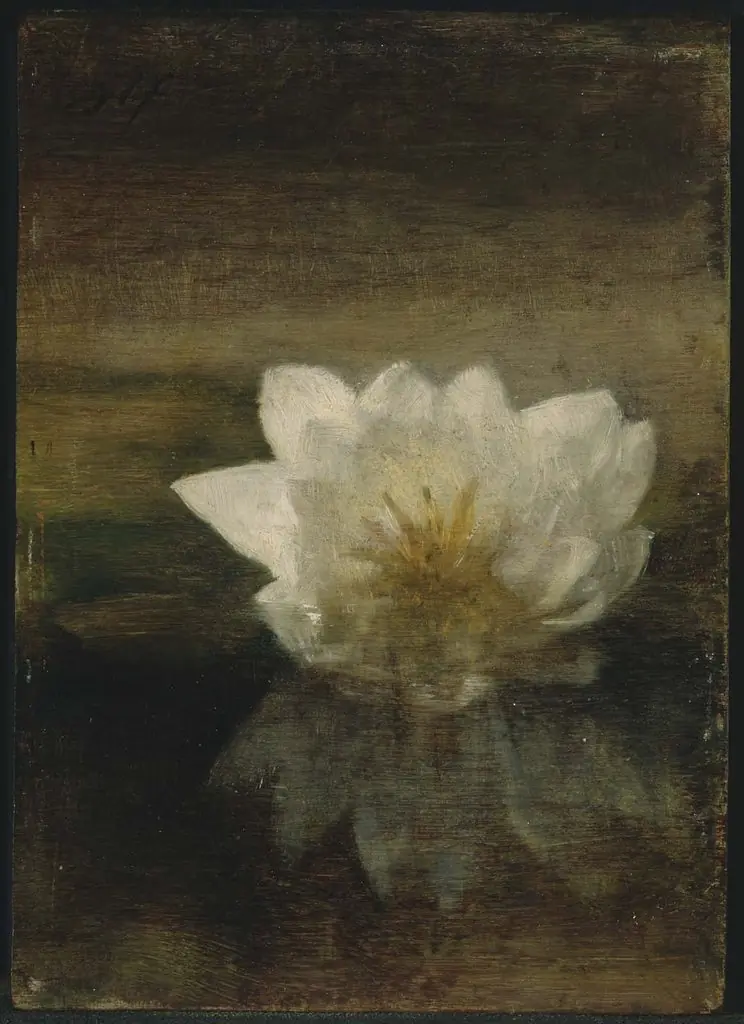
Lotus Blossom is an oil painting by the American Impressionist artist Martin Johnson Heade. It dates from 1896 and is held in the collection of the Museum of Fine Arts Boston.
About this work
Overview
Lotus Blossom is a painting by Martin Johnson Heade, created in 1896, characterized by its serene depiction of a pink lotus flower on a green leaf floating on calm water, rendered in oil paint.
Subject & Meaning
The painting focuses on a single, large pink lotus blossom with a yellow center, set against a natural backdrop. The lotus, often symbolizing serenity and growth, is portrayed in a state of full bloom, emphasizing its beauty and tranquility.
Technique & Style
Heade employed soft, gentle colors and meticulous detail to achieve a realistic representation of the flower and its surroundings. The visible veins on the leaf and the reflective water underscore his attention to naturalistic detail, aligning with his unique style within American Impressionism.
History & Provenance
Created in 1896 by American artist Martin Johnson Heade (1819-1906), known for his distinct landscapes, seascapes, and still lifes. The work is part of the collection at the Museum of Fine Arts, Boston.
Context
Lotus Blossom reflects Heade's divergence from the romanticism of his time, instead embracing a more subdued, realistic approach, characteristic of his contribution to American Impressionism.
Legacy
This painting exemplifies Heade's skill in capturing the beauty of natural subjects, contributing to his reputation as a meticulous and innovative artist of his era.
Artist & collection