Artwork
One of eighteen drawings of flowers.
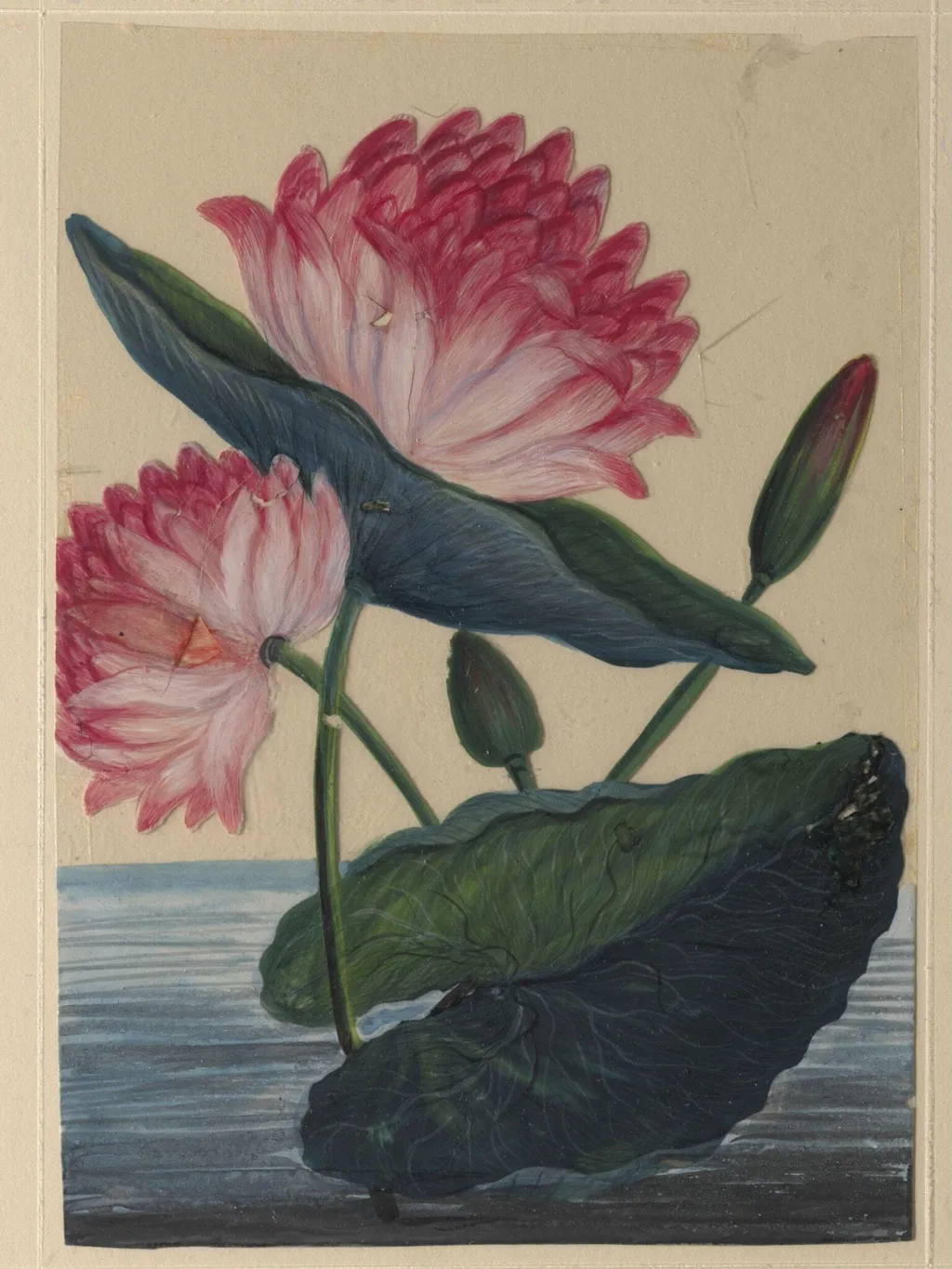
One of eighteen drawings of flowers. is a paint painting by the Impressionist artist Unknown. It dates from 1860 and is held in the collection of the Victoria and Albert Museum. This artwork is one of eighteen floral studies created in 1860, each focusing on a single plant specimen.
About this work
Overview
This artwork is one of eighteen floral studies created in 1860, each focusing on a single plant specimen. The subject is a pink lotus, rendered with close attention to natural form. Executed in a detailed, observational manner, the piece belongs to a series intended as botanical documentation rather than decorative art.
Subject & Meaning
The pink lotus, or Nymphaea, is depicted in full bloom, its petals arranged with botanical precision. The inclusion of slender green stems and leaves suggests an interest in the plant’s full morphology. There is no symbolic or narrative layer; the focus remains on accurate representation, reflecting a scientific approach to natural forms.
Technique & Style
The flower is rendered in fine, controlled strokes that capture petal texture and the delicate curve of the stem. A pale, neutral background isolates the subject, enhancing its three-dimensionality. The style is realism grounded in close observation, with no decorative embellishment or atmospheric effects.
History & Provenance
The drawing is part of a small, cohesive group of floral studies made in 1860, likely for personal or academic use. Its origin is tied to an artist engaged in systematic plant observation, though the full provenance of the series remains undocumented beyond its creation date and subject matter.
Context
Produced during a period when botanical illustration was evolving alongside scientific inquiry, these works align with contemporaneous efforts to record plant life with precision. While not part of the Impressionist movement, they share a quiet attention to nature that later artists would reinterpret through looser brushwork and light.
Legacy
The series remains a quiet example of 19th-century naturalist art, valued for its restraint and fidelity. Though not widely exhibited, it contributes to understanding how artists engaged with botany outside formal scientific institutions, preserving a method of seeing that preceded modern photography.
Artist & collection

 Domestic Scene
 Giacomo and Cardinal Marco, investing Andrea, Abbot of San Zeno, with his Benefice
 The Nymph of Fontainebleau
 Portrait of a Woman
 Madonna and Child with Saints in the Enclosed Garden
 Venus and Minerva
 Family Group of Four on Sofa
 Wall painting from Room H of the Villa of P. Fannius Synistor at Boscoreale
 Lotus
Lotus Nuphar lutea (gul åkande); Nymphaea alba (hvid nøkkerose)
 Chinese rose
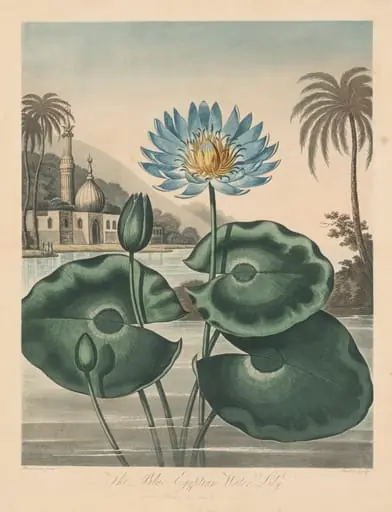 The Temple of Flora, or Garden of Nature: Blue Egyptian Waterlily
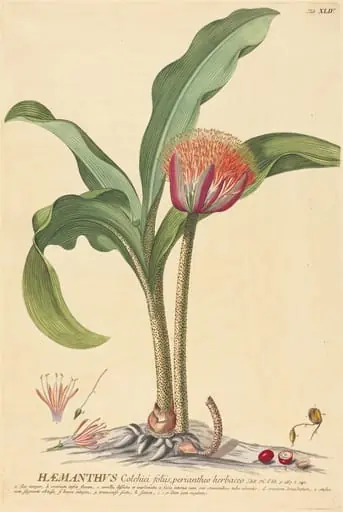 Haemanthus
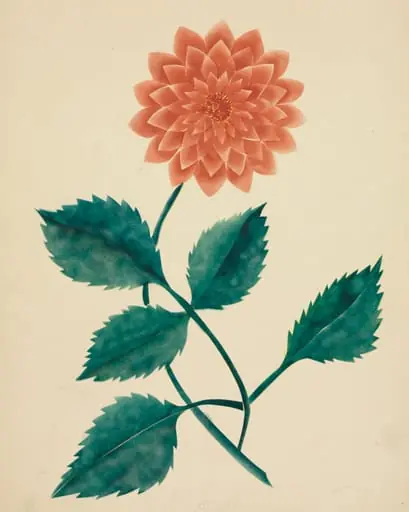 Dahlia
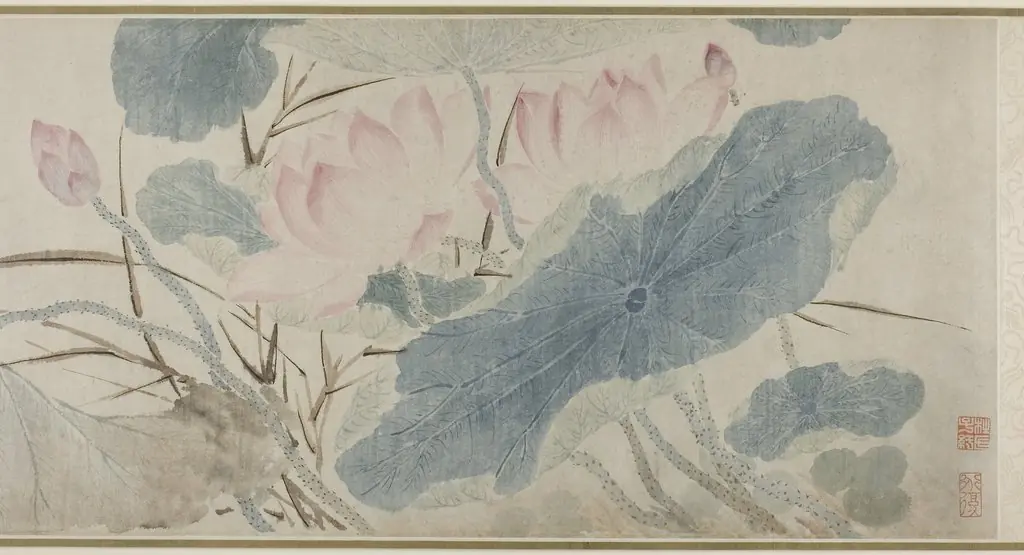 Flowering Lotus
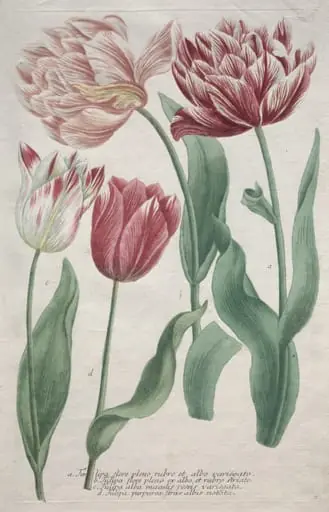 Tulips
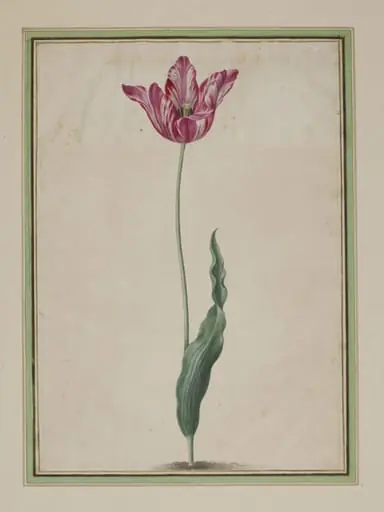 Simulacrum Scenographicum Celeberrimi Horti Itzsteinensis
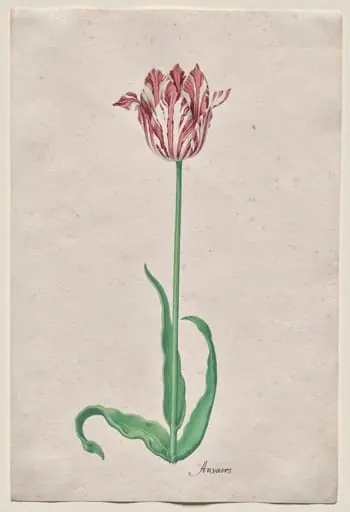 Study of a Tulip (Anvaers)
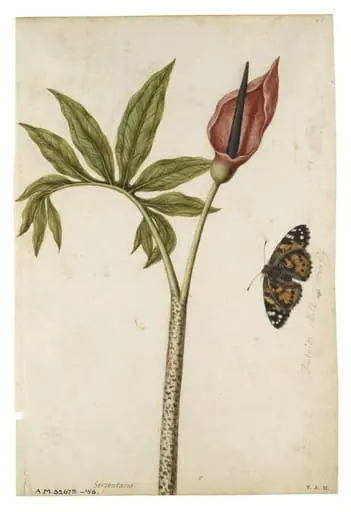 Dragon arum flower and tortoiseshell butterfly
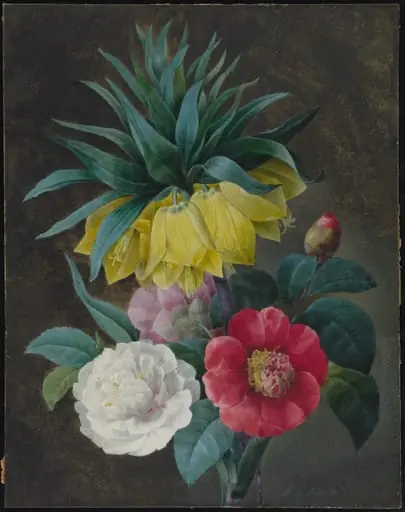 Four Peonies and a Crown Imperial