Artwork
The Passion: The Agony in the Garden
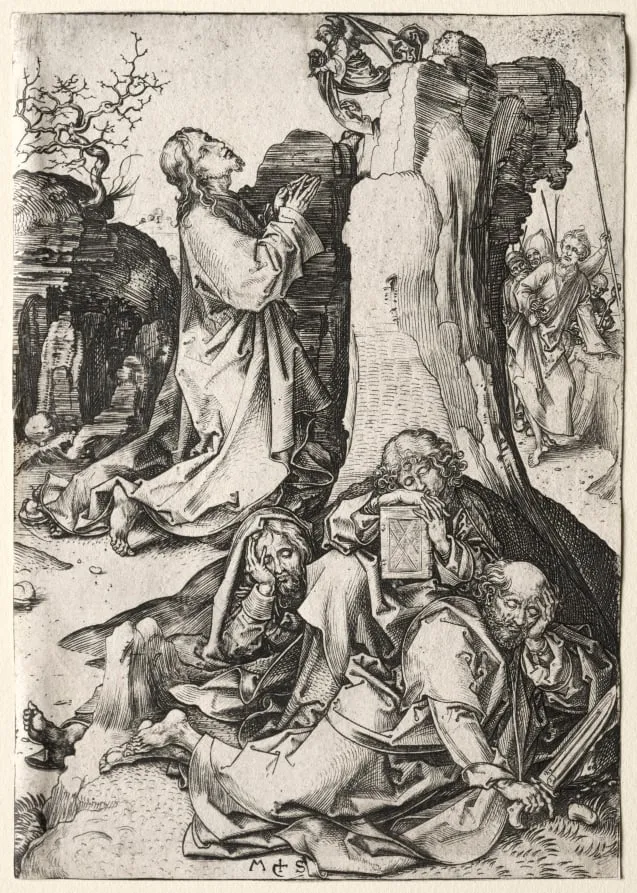
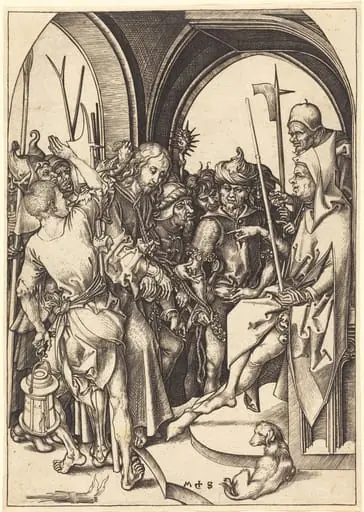
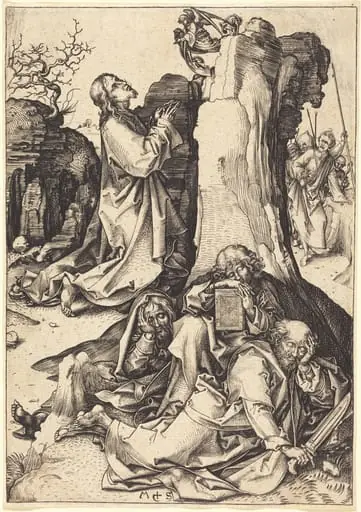
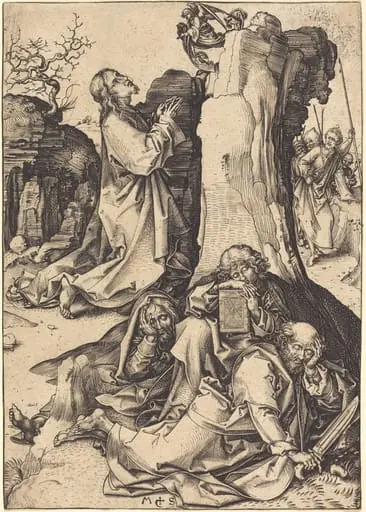
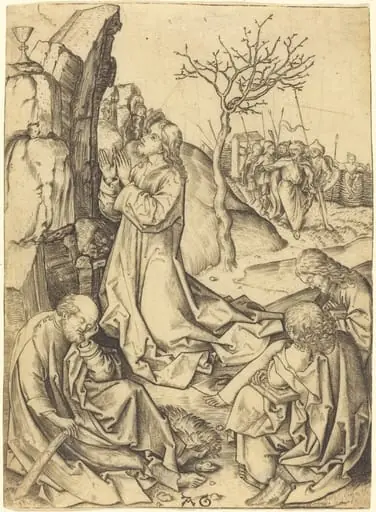
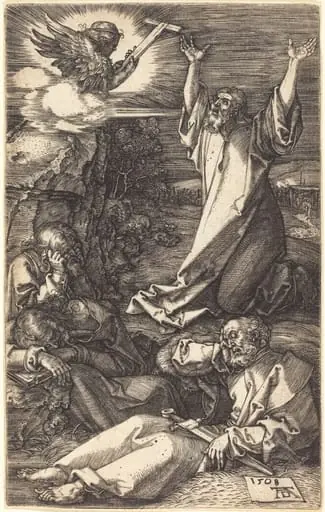
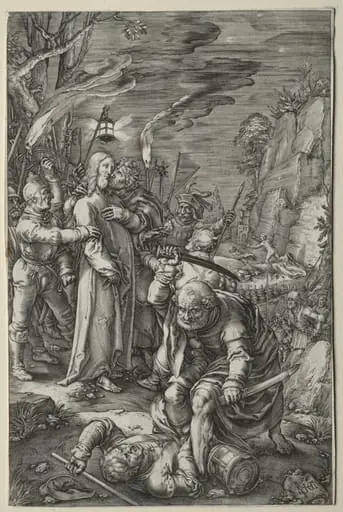
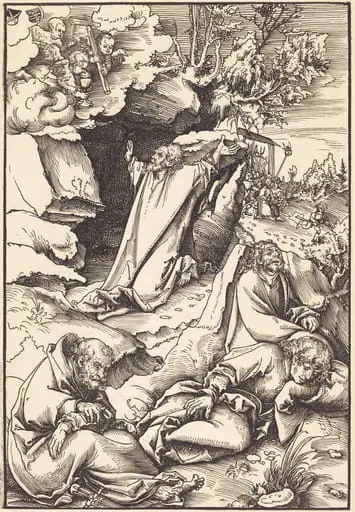
The Passion: The Agony in the Garden is a print by the Renaissance artist Martin Schongauer. It dates from 1480 and is held in the collection of the Cleveland Museum of Art.
About this work
Overview
The scene captures Christ in the Garden of Gethsemane, moments before his arrest, rendered with intricate line work characteristic of copperplate engraving.
Created around 1480, this engraving is part of Martin Schongauer’s twelve-print series depicting the Passion of Christ. As his most extensive print cycle, it circulated widely across Europe, influencing generations of artists. The scene captures Christ in the Garden of Gethsemane, moments before his arrest, rendered with intricate line work characteristic of copperplate engraving. The medium allowed for fine detail and tonal depth, making it ideal for conveying emotional intensity.
Subject & Meaning
The image portrays Christ in prayer, overwhelmed by impending suffering, while an angel hovers above, offering a cross as a symbol of his destiny. Behind him, the apostles Peter, James, and John lie asleep, their neglect contrasting with Christ’s vigilance. In the distance, Judas leads Roman soldiers, clutching the silver coins of betrayal. The composition underscores spiritual isolation and the inevitability of sacrifice.
Technique & Style
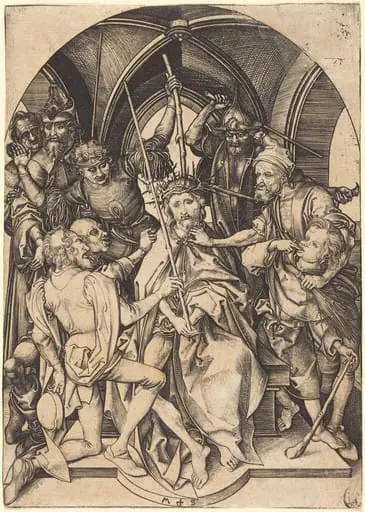
Schongauer employed fine, controlled engraving lines to build texture, shadow, and volume. His use of dense cross-hatching creates dramatic chiaroscuro, heightening the emotional weight of the scene. The figures are rendered with exaggerated, almost grotesque features—particularly among the soldiers—adding psychological tension. The crowded composition, with layered figures and deep spatial recession, reflects a deliberate move toward narrative complexity.
History & Provenance
Produced in the late 15th century in the Upper Rhine region, the print was widely disseminated through trade and copying. Its popularity is evidenced by numerous later imitations and adaptations by artists in Germany, the Netherlands, and Italy. Original impressions are rare, but the print’s influence persisted well into the 16th century, serving as a model for early printmakers before Dürer’s rise.
Context
Schongauer’s series emerged during a period of growing devotional print culture, when images of Christ’s suffering were used to foster personal piety. The emphasis on emotional realism and physical torment aligned with contemporary religious movements that encouraged meditation on the Passion. His work bridged late Gothic expressiveness and emerging Renaissance naturalism, appealing to both clerical and lay audiences.
Legacy
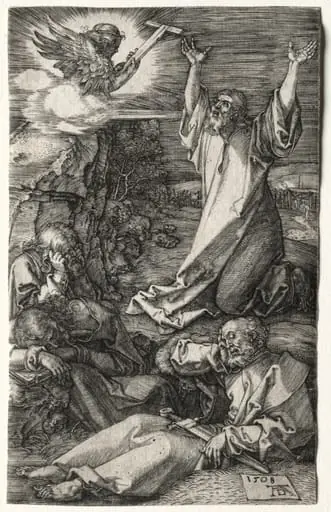
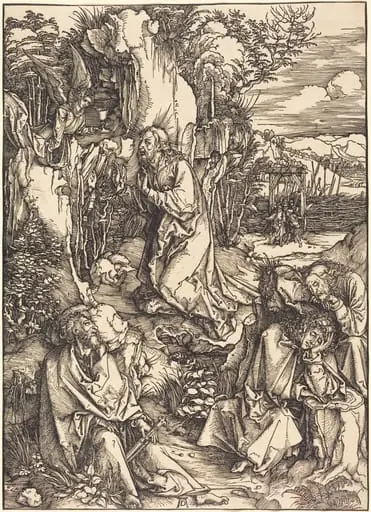
Schongauer’s dramatic compositions and technical precision set a standard for narrative engraving. His treatment of the Agony in the Garden became a prototype for later artists, including Albrecht Dürer, who studied his prints closely. The emphasis on psychological depth and crowded, dynamic scenes influenced the development of Northern Renaissance printmaking, ensuring his role as a pivotal figure in the history of the medium.
Artist & collection

Artist
Martin Schongauer, also known as Martin Schön or Hübsch Martin by his contemporaries, was an Alsatian engraver and painter.