Artwork
Street in Constantinople. Noon
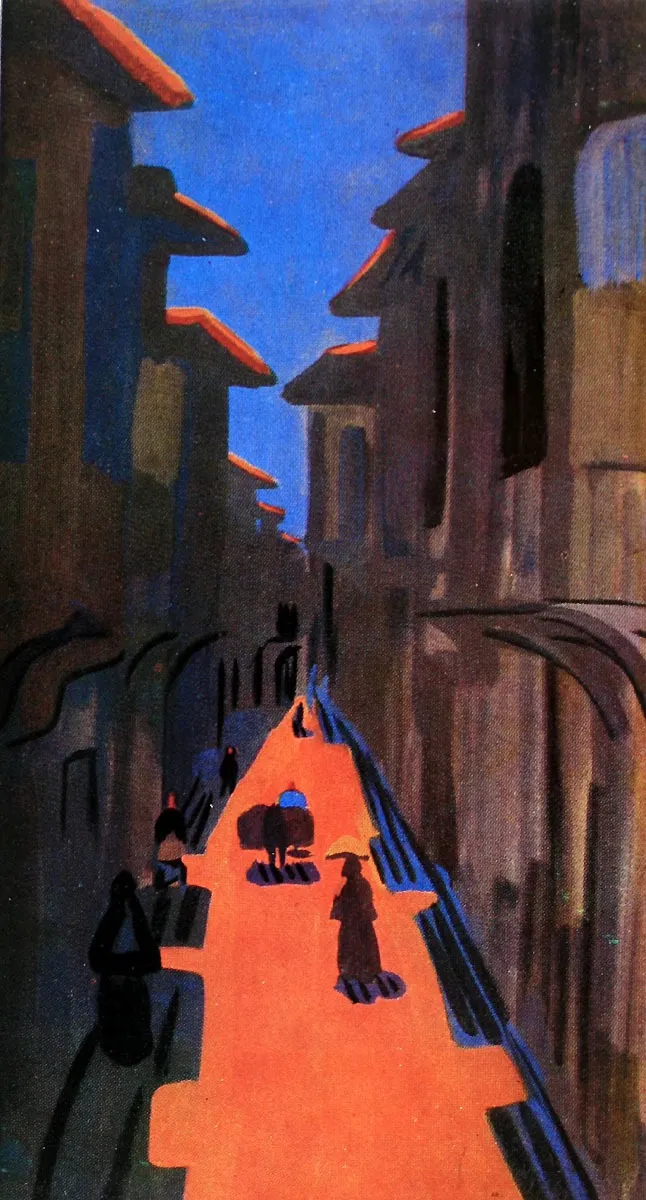
Street in Constantinople. Noon is a tempera painting by the Post-Impressionist artist Martiros Saryan. It dates from 1910 and is held in the collection of the Tretyakov Gallery.
About this work
Overview
The work captures a midday urban scene in the Ottoman capital, reflecting Saryan’s observations during his travels in the Middle East.
Martiros Saryan painted *Street in Constantinople. Noon* in 1910 using tempera, a medium known for its fine detail and matte finish. The work captures a midday urban scene in the Ottoman capital, reflecting Saryan’s observations during his travels in the Middle East. It is one of several cityscapes he produced during this period, blending personal experience with a distinctive color sensibility. The painting is now part of the Tretyakov Gallery’s permanent collection in Moscow.
Subject & Meaning
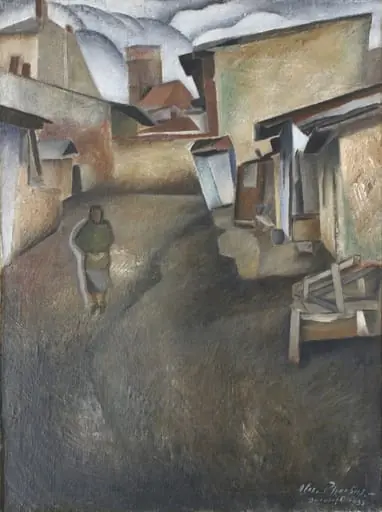
The painting portrays a quiet, sunlit street in Constantinople, with figures moving along the pavement beneath tall, closely spaced buildings. There is no dramatic narrative—instead, the scene conveys the rhythm of daily life in a multicultural metropolis. Saryan’s focus on ordinary pedestrians and architectural mass suggests an interest in the quiet dignity of urban existence, rather than spectacle or exoticism.
Technique & Style
Saryan employed tempera to achieve crisp edges and layered hues, allowing precise rendering of architectural forms and subtle shifts in light. His palette combines cool blues with warm oranges and ochres, creating a luminous contrast that suggests the intensity of midday sun. The brushwork is controlled yet expressive, avoiding the loose brushstrokes of Impressionism in favor of a more structured, post-impressionist composition.
History & Provenance
Created during Saryan’s travels in the Ottoman Empire, the painting entered the Tretyakov Gallery’s collection in the early 20th century, likely through the artist’s connections with Russian art institutions. It was acquired during a period when Armenian artists were gaining recognition within broader Russian cultural circles. The work has remained in the gallery’s holdings since, with no documented changes in ownership.
Context
In 1910, Constantinople was a cosmopolitan crossroads of empires, and Saryan’s depiction reflects the city’s layered identity. His approach diverged from Orientalist tropes common in Western art, instead emphasizing structural harmony and atmospheric light. As a founding figure of modern Armenian art, Saryan used such scenes to explore visual language beyond national boundaries, grounding his work in direct observation rather than romanticized stereotypes.
Legacy
Though less known internationally than his Armenian landscapes, *Street in Constantinople. Noon* remains a key example of Saryan’s urban studies and his mastery of tempera. It influenced later Armenian painters seeking to depict everyday life with emotional restraint and formal clarity. The work continues to be referenced in discussions of early 20th-century Eastern European and Middle Eastern modernism.
Artist & collection
Artist
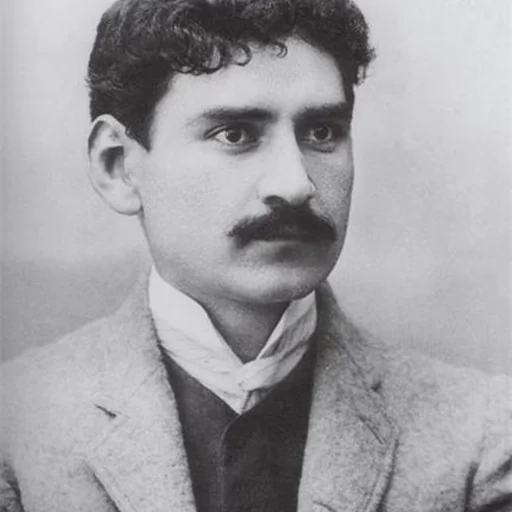
Martiros Saryan (Armenian: Մարտիրոս Սարյան; Russian: Мартиро́с Сарья́н; 28 February 1880 – 5 May 1972) was an Armenian painter, People's Artist of the USSR (1960), member of the USSR Academy of Fine Arts (1947),…