Artwork
Fiesole
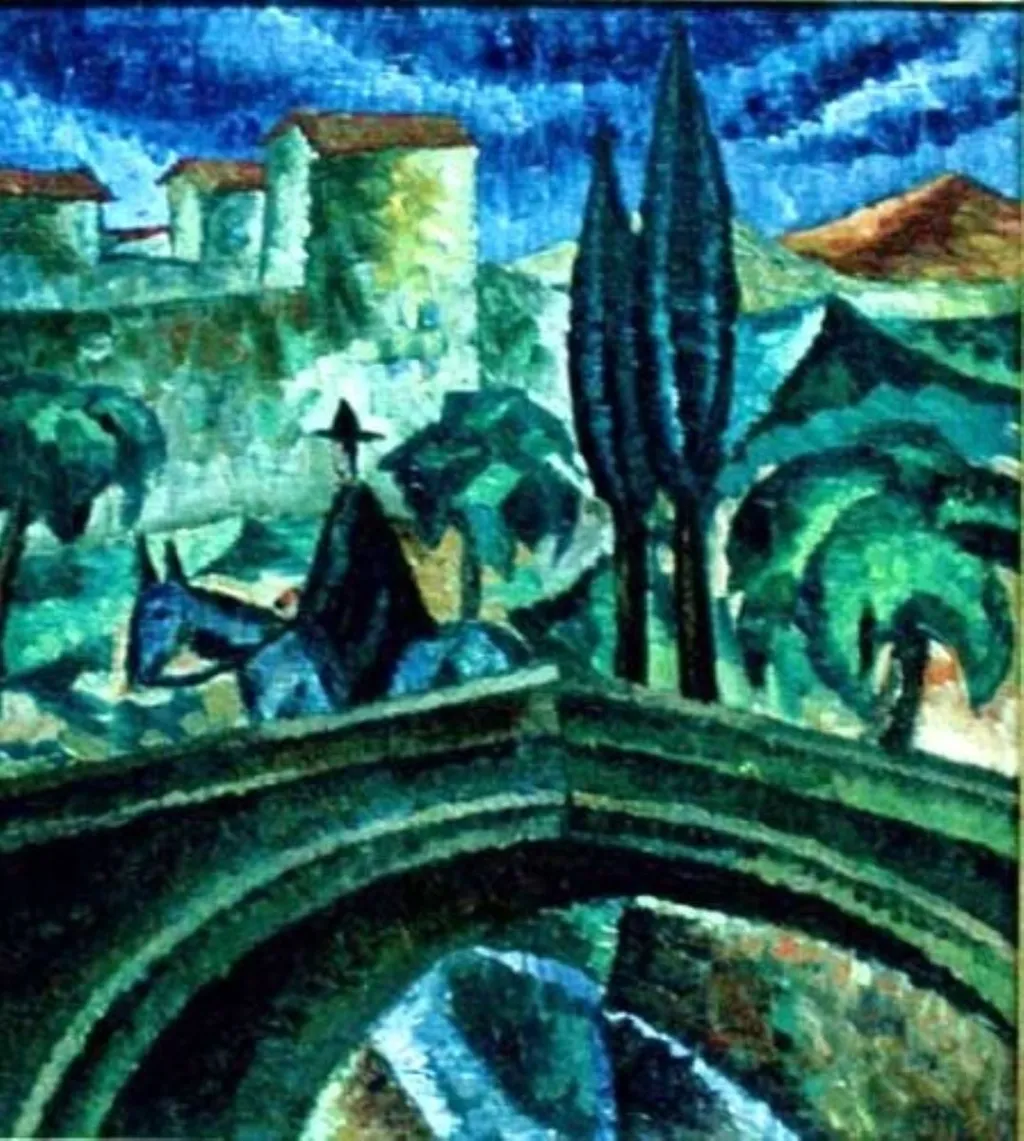
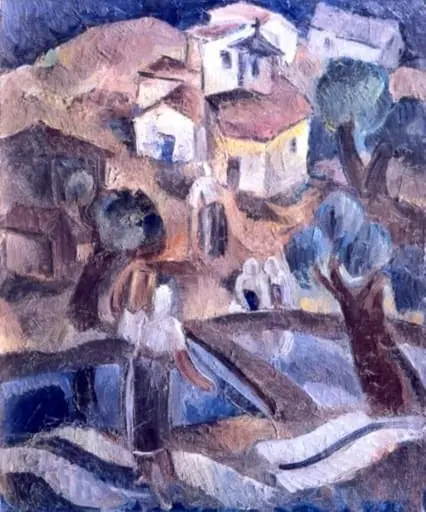
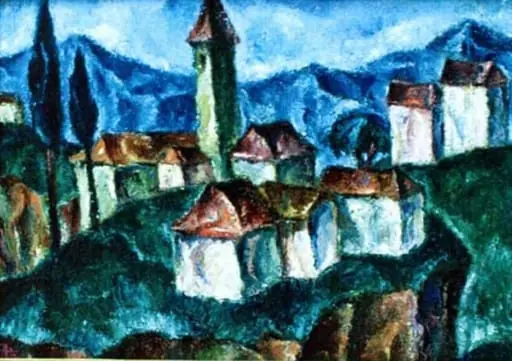
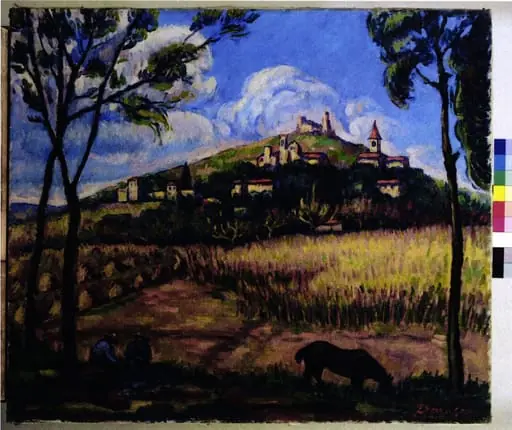
Fiesole is an unspecified painting by the Art Nouveau artist Corneliu Michăilescu. It dates from 1921 and is held in the collection of the National Museum of Art of Romania.
About this work
Overview
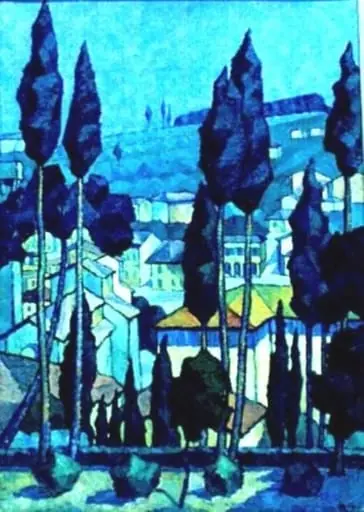
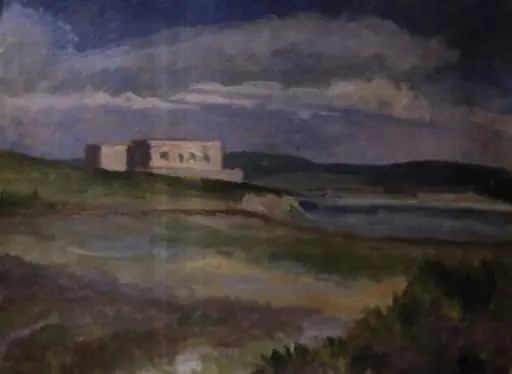
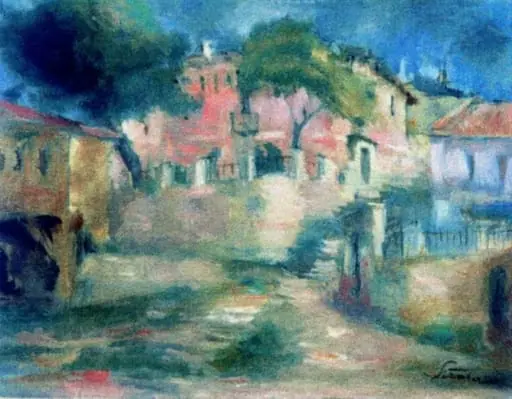
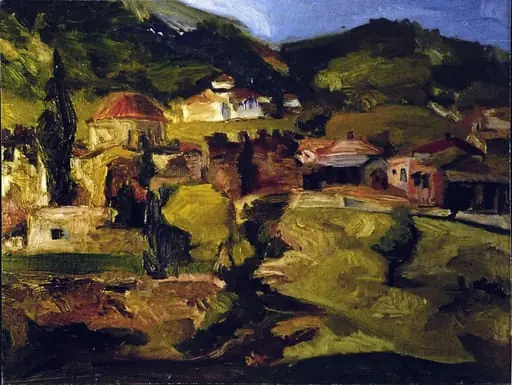
The composition centers on clustered dwellings ascending the slope, framed by dense trees and a meandering path that draws the eye forward.
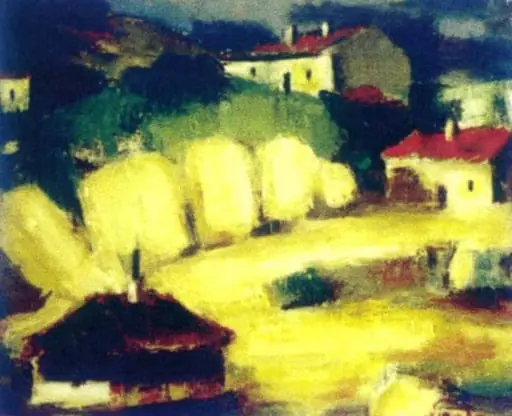
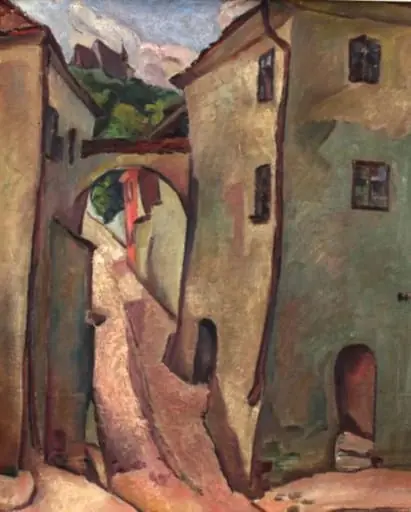
Painted in 1921 by Corneliu Michăilescu, Fiesole depicts a hillside village in Italy, rendered with a sense of quiet immediacy. The composition centers on clustered dwellings ascending the slope, framed by dense trees and a meandering path that draws the eye forward. The palette leans toward muted greens, cool blues, and earthy tones, evoking a hazy, atmospheric quality. Brushwork is deliberate and tactile, emphasizing texture over refinement.
Subject & Meaning
The scene captures a modest Italian village, not as an idealized landscape but as a lived-in environment shaped by time and terrain. The stacked houses suggest communal living and adaptation to topography, while the winding road implies movement and connection beyond the frame. The absence of human figures enhances the sense of solitude, inviting contemplation rather than narrative.
Technique & Style
Michăilescu employed thick, expressive brushstrokes to build form and texture, a technique known as impasto. Paint is applied with visible pressure, creating ridges and depth that catch light unevenly. Colors are layered without smooth blending, preserving the energy of each stroke. This approach prioritizes emotional resonance over precision, aligning with early 20th-century tendencies toward painterly immediacy.
History & Provenance
Created during Michăilescu’s formative years as a painter, Fiesole reflects his engagement with European landscapes after travels in Italy. The work remained in private collections for much of the 20th century, with limited public exposure. Its current location and exhibition history are not widely documented, contributing to its status as a lesser-known but significant piece in his oeuvre.
Context
Painted shortly after World War I, Fiesole emerges in a period when many artists turned to rural scenes as a counterpoint to urban trauma. Michăilescu’s approach echoes broader European trends—such as Post-Impressionism and early Expressionism—that valued emotional texture over realism. His focus on light, atmosphere, and tactile surface aligns with contemporaries exploring the materiality of paint.
Legacy
Though not widely exhibited, Fiesole exemplifies Michăilescu’s distinctive synthesis of observation and emotional expression. It stands as a quiet testament to his interest in landscape as a vessel for mood rather than topography. The work contributes to understanding Romanian modernism’s dialogue with broader European artistic currents during the interwar period.
Artist & collection