Artwork
Monumentul treptelor distruse
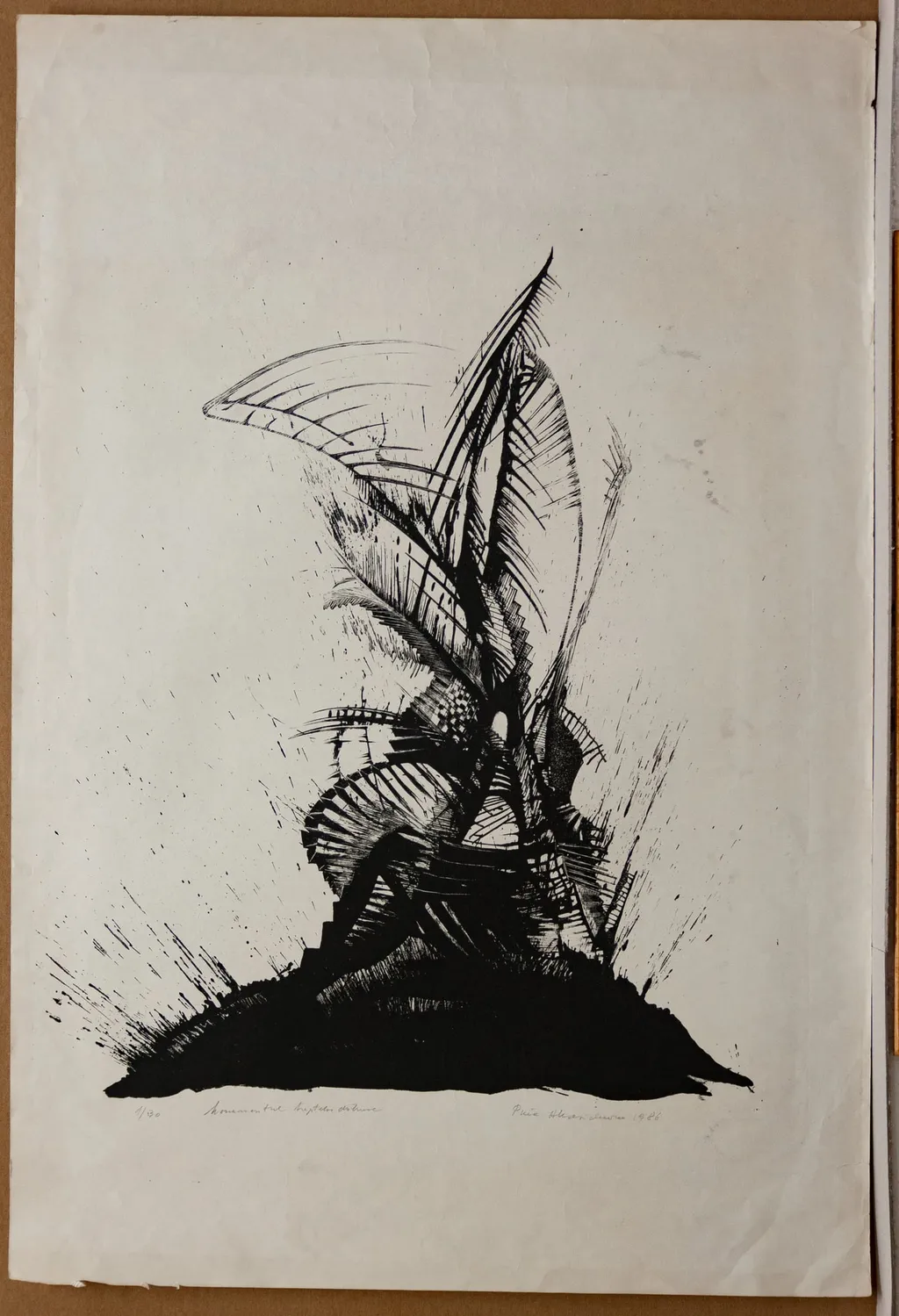
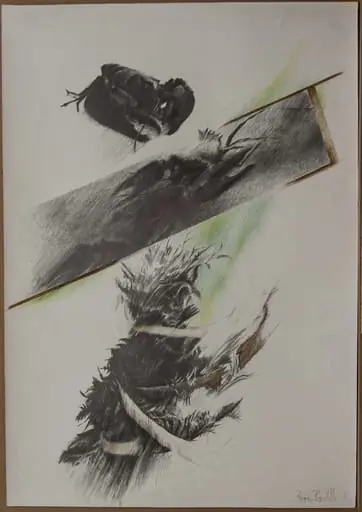
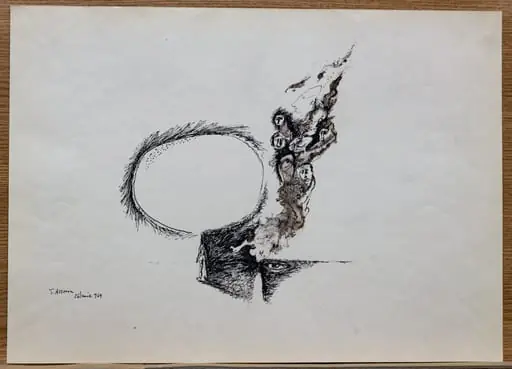
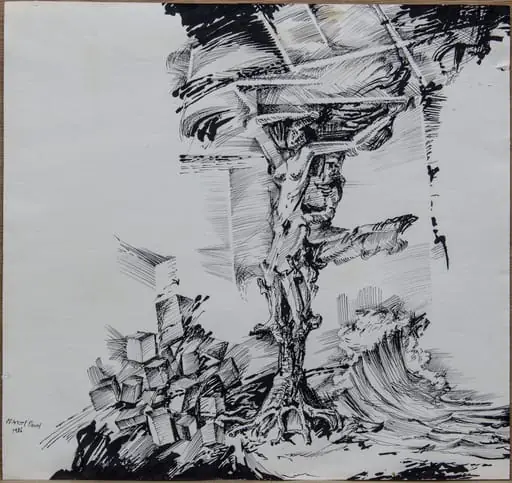
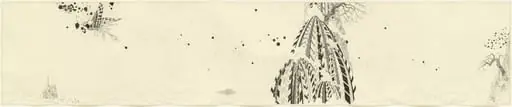
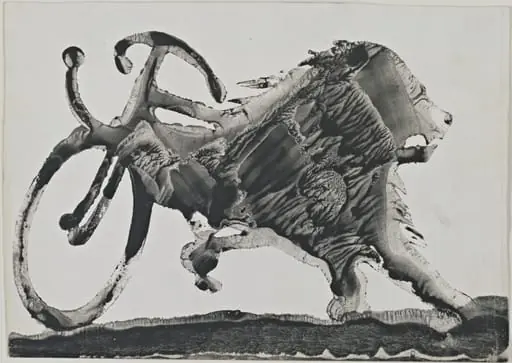
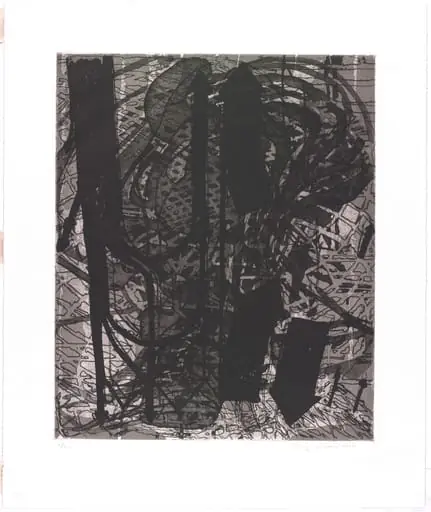
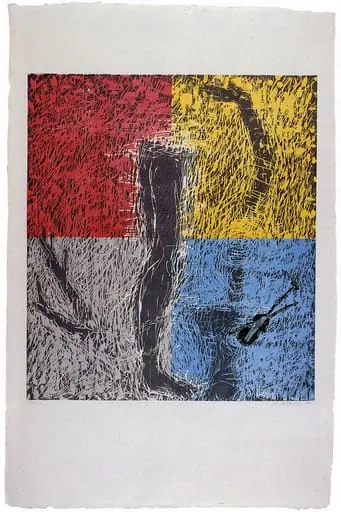
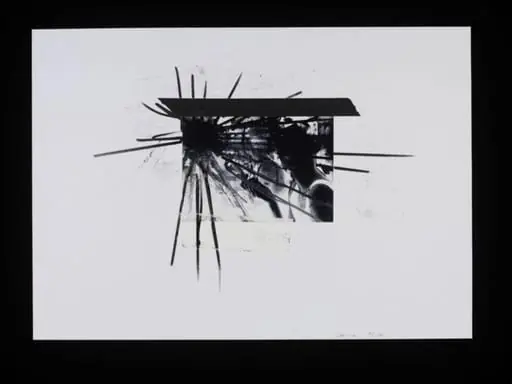
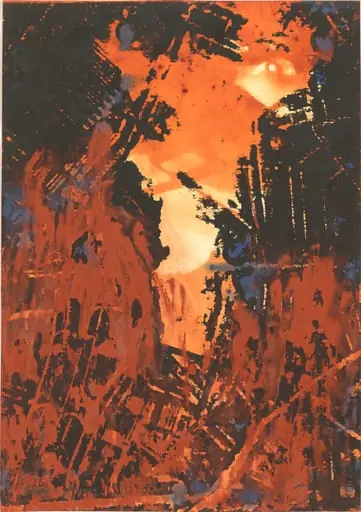
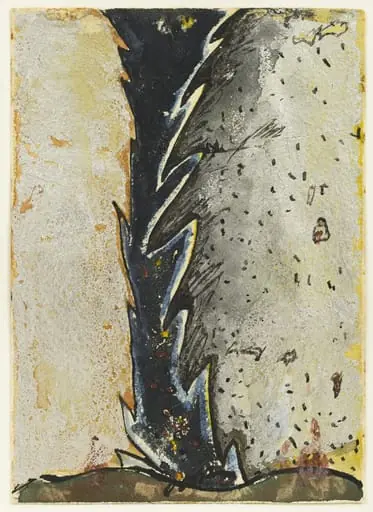
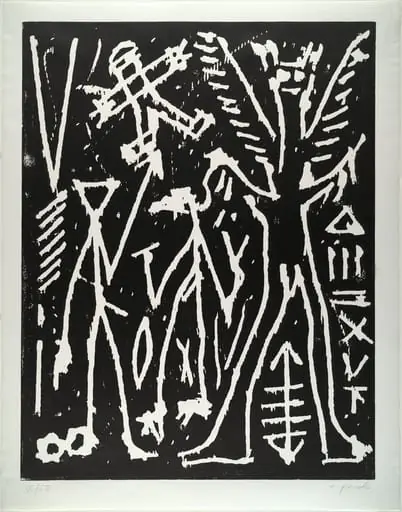
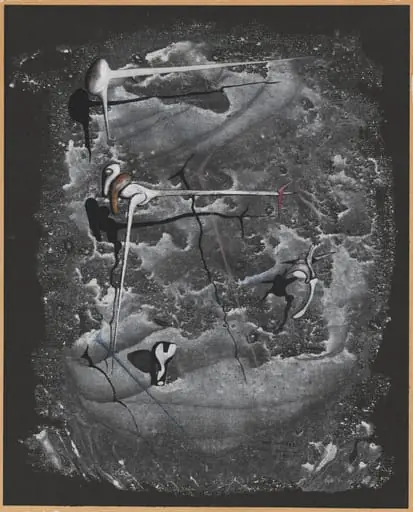
Monumentul treptelor distruse is an unspecified painting by Hortensia Masichievici-Mișu. It is held in the collection of the Gavrila Simion Eco-Museum Research Institute Tulcea. This ink drawing depicts a fragmented, vertical form rising from a shadowed base.
About this work
Overview
This ink drawing depicts a fragmented, vertical form rising from a shadowed base. Rendered in stark black on white paper, the composition emphasizes abrupt, uneven lines that suggest rupture rather than construction. The title, 'Monument of the Destroyed Steps,' directs attention to the idea of structural collapse, framing the shape as a relic of something once ordered but now shattered.
Subject & Meaning
The form evokes the remains of staircases or terraced architecture, implying descent, ascent, or ritual passage now interrupted. Its jagged silhouette resists clear interpretation, functioning more as an emblem of loss than a literal depiction. The absence of context or scale reinforces its symbolic nature, inviting reflection on decay, memory, or the erasure of function.
Technique & Style
Executed solely in black ink, the drawing relies on contrast and texture to convey tension. The lines are deliberately rough and irregular, avoiding smooth contours or precision. This raw handling amplifies the sense of violence or erosion, aligning the medium’s simplicity with the theme of destruction, stripping away ornament to focus on form as ruin.
History & Provenance
No documented provenance or exhibition history is available for this work. It appears to be a standalone drawing, likely created in private or as part of an unpublished series. The absence of dates or inscriptions leaves its origin and intent open, reinforcing its role as an abstract meditation rather than a historical record.
Context
In 20th-century art, ruins often served as metaphors for war, trauma, or cultural decline. This drawing aligns with postwar visual languages that favored fragmentation over restoration. Its minimalism echoes contemporaneous works by artists who used abstraction to convey loss without literal representation, avoiding narrative in favor of emotional resonance.
Legacy
As an unattributed and undated piece, its influence cannot be traced directly. Yet it exemplifies a broader tendency in modern drawing to use minimal means to evoke monumental absence. Its power lies in its restraint—offering no explanation, only the imprint of collapse.
Artist & collection
Artist
She kept a tiny chisel in her pencil case long after she stopped sculpting in the round.
Museum
Gavrila Simion Eco-Museum Research Institute Tulcea
Continue through works from the same source collection.