Artwork
Passion of Jesus Christ: The Descent into Limbo
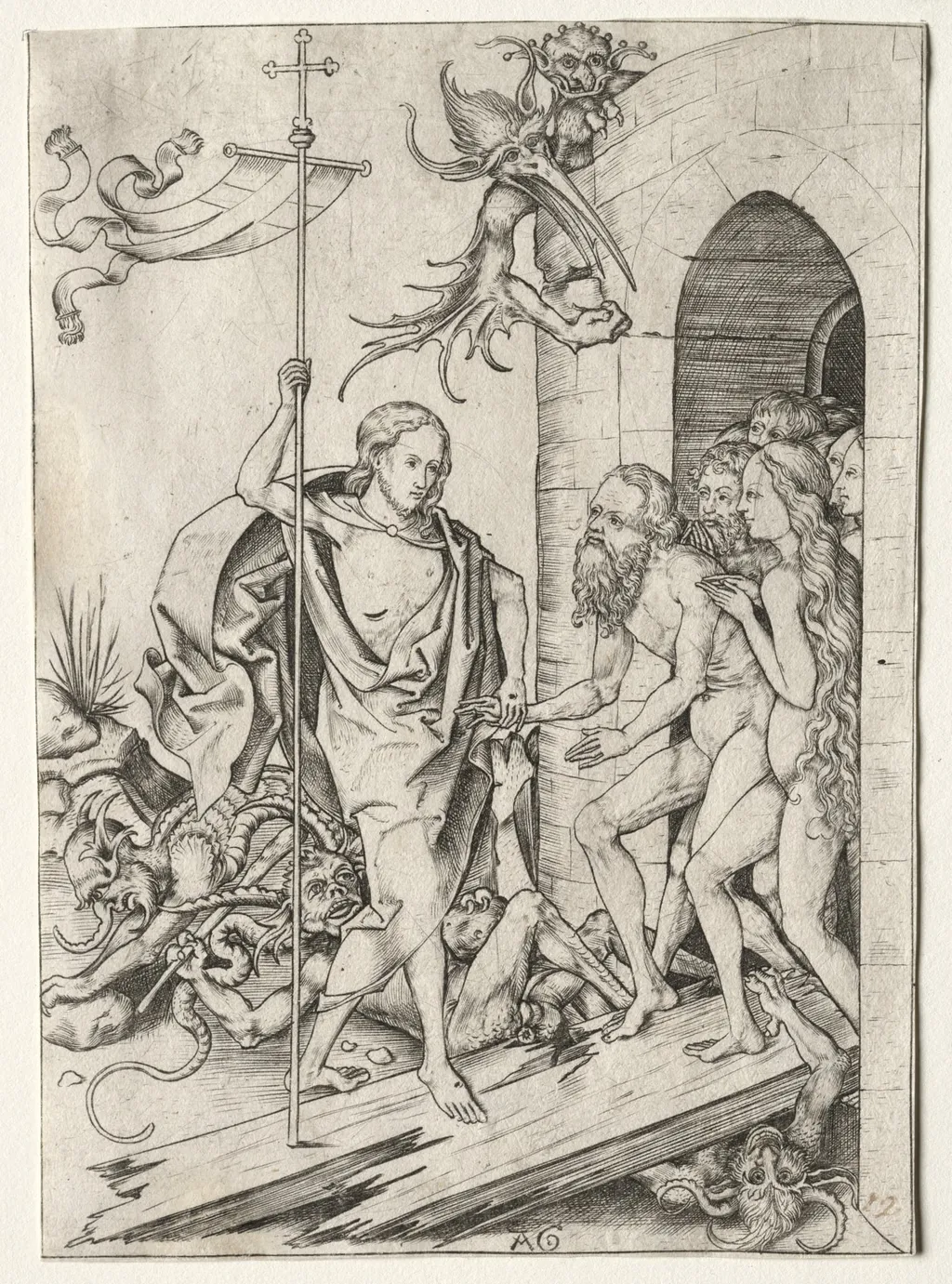
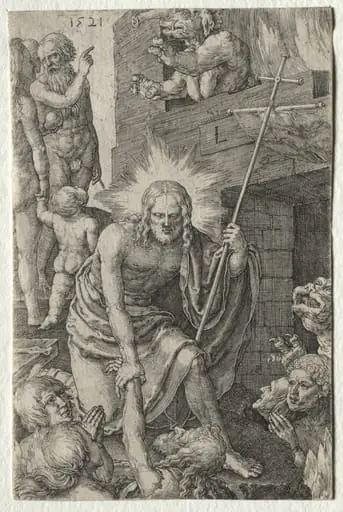
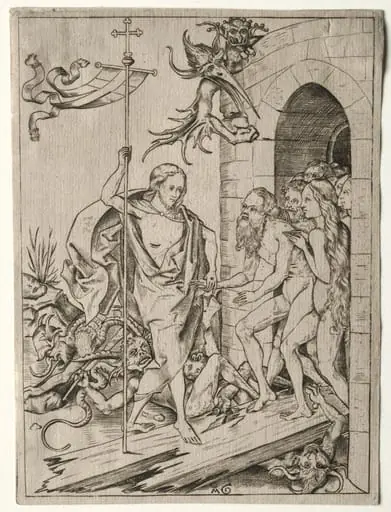
Passion of Jesus Christ: The Descent into Limbo is a print by the Renaissance artist Master AG. It dates from 1404 and is held in the collection of the Cleveland Museum of Art.
About this work
Overview
It portrays Jesus entering the realm of the dead to liberate the righteous souls of the Old Testament, including Adam and Eve.
This print illustrates the theological concept of Christ’s descent into Limbo, a moment not explicitly detailed in the Gospels but widely accepted in medieval Christian tradition. It portrays Jesus entering the realm of the dead to liberate the righteous souls of the Old Testament, including Adam and Eve. The scene is rendered with symbolic intensity, emphasizing divine authority over death and evil.
Subject & Meaning
Christ, depicted as a commanding figure, reaches for Adam, the first man, symbolizing the redemption of all humanity. Eve and other biblical figures follow, representing the faithful who awaited salvation. The shattered door, crushed beneath Satan, signifies the collapse of death’s dominion. Demons, powerless and watchful, underscore the futility of opposition to divine grace.
Technique & Style
The artist employs sharp linear contrasts and detailed engraving to define figures and textures. Facial expressions of the demons convey anguish and impotence, while Christ’s calm posture radiates authority. The composition directs the viewer’s eye along a diagonal path from Christ to the broken threshold, reinforcing the narrative of liberation through movement and spatial tension.
History & Provenance
Created during the late medieval or early Renaissance period, this print reflects devotional practices centered on Christ’s harrowing of Hell. Its production as a printed image suggests widespread circulation among religious communities, likely used for private meditation or liturgical instruction. The Cleveland Museum of Art holds a version, indicating its preservation within institutional collections since at least the 19th century.
Context
The imagery aligns with medieval sermons and apocryphal texts, such as the Gospel of Nicodemus, which expanded on Christ’s post-crucifixion journey. While not biblical, the descent into Limbo was a staple of Christian iconography, especially in Northern Europe, where it reinforced doctrines of salvation and the continuity between Old and New Testaments.
Legacy
This print contributed to the visual codification of a theological narrative that endured for centuries. Its symbolic language—broken doors, defeated demons, and the hand of Christ reaching to redeem—became standard in later altarpieces and illuminated manuscripts. Though less prominent in modern theology, its influence remains visible in Western religious art traditions.
Artist & collection