Artwork
White Eagle and Crown of Poland
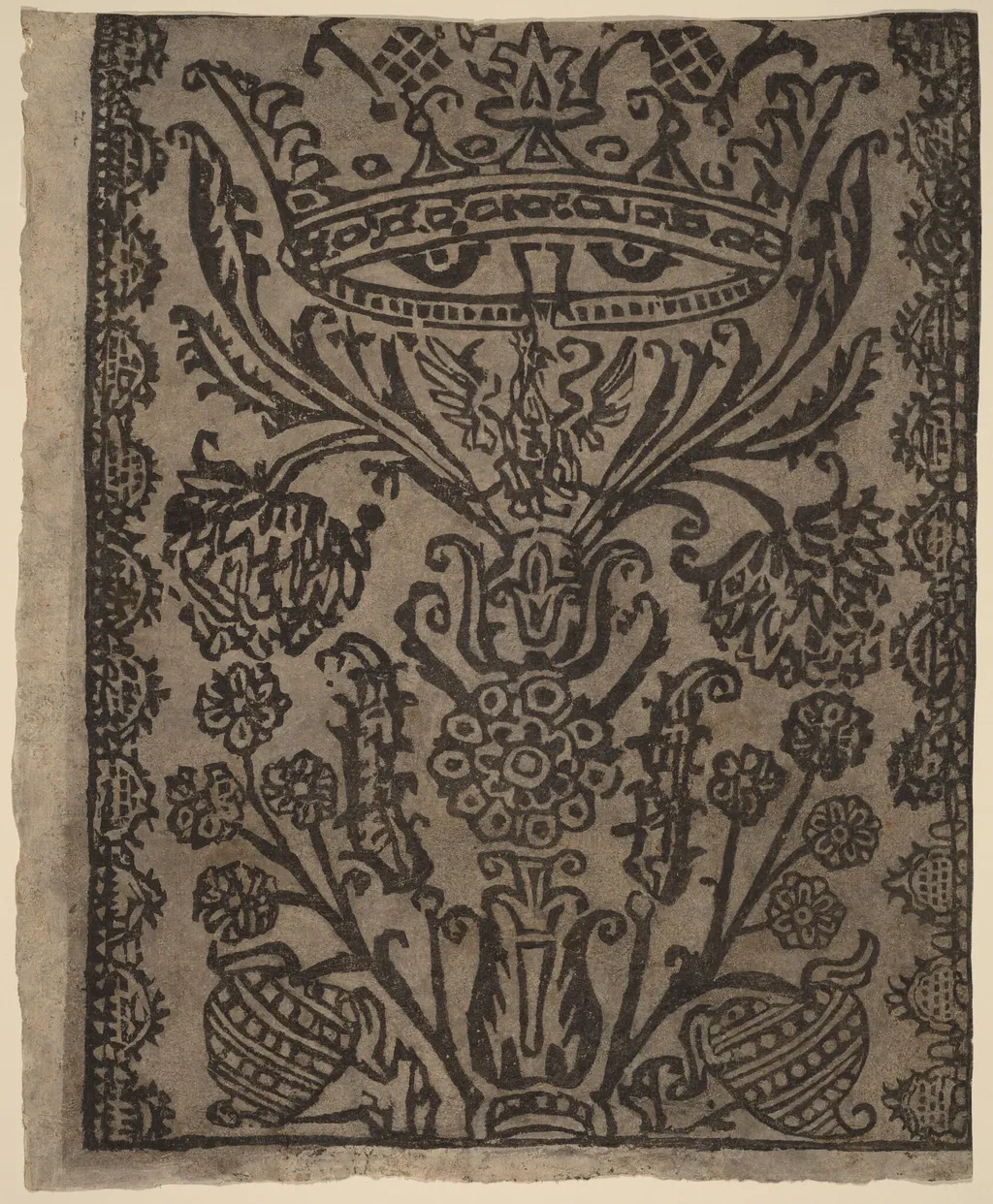
White Eagle and Crown of Poland is an ink print by the Renaissance artist Polish 15th Century. It dates from 1450 and is held in the collection of the National Gallery of Art. The work is a woodcut print executed on gray laid paper, presenting a stark black-and-white composition.
About this work
Overview
The work is a woodcut print executed on gray laid paper, presenting a stark black-and-white composition. Central to the image is a stylized white eagle with outstretched wings, encircled by a crown and a ring of lettering. The surrounding field is filled with ornamental foliage and floral motifs that frame the central emblem.
Subject & Meaning
The eagle and crown are traditional heraldic symbols associated with the nation of Poland, evoking its historic coat of arms. Their placement within a decorative border suggests a celebratory or patriotic intent, reinforcing national identity through visual allegory.
Technique & Style
The image was produced by carving the design into a wooden block, inking the raised surfaces, and pressing the block onto gray laid paper—a relatively recent printmaking method in early modern Europe. The stark contrast of black lines against the gray ground, combined with intricate vegetal ornamentation, reflects the graphic clarity typical of early woodcut aesthetics.
Context
Woodcut printing emerged in the late 15th century as a means of reproducing images quickly and affordably. By the time this piece was created, the technique had spread across Europe, allowing artists to disseminate national symbols such as the Polish eagle to a broader audience.
Artist & collection

Artist
This artist carved a single wooden block in 1450 and left us a tiny print that traveled five centuries to hang in Washington, D.C.

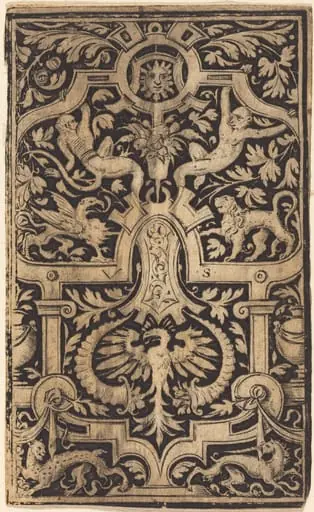 Strapwork and Foliage Ornament on Dark Ground with Monkeys and other Animals
 Ornament
 Ornament
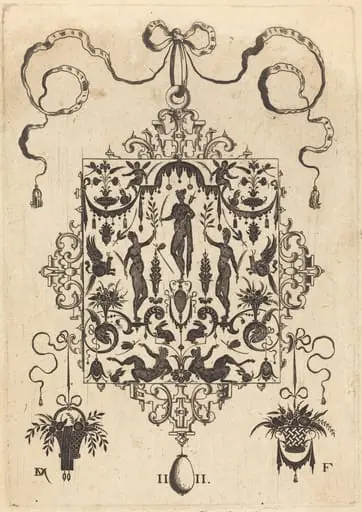 Large Pendant, Three Nude Women with Twigs at Centre
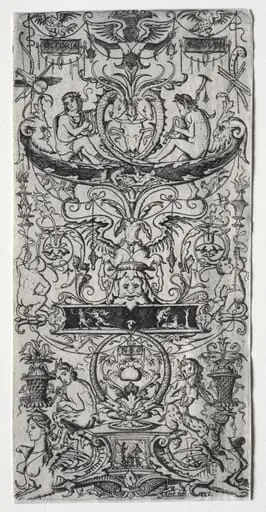 Ornament Panel Inscribed Victoria Augusta
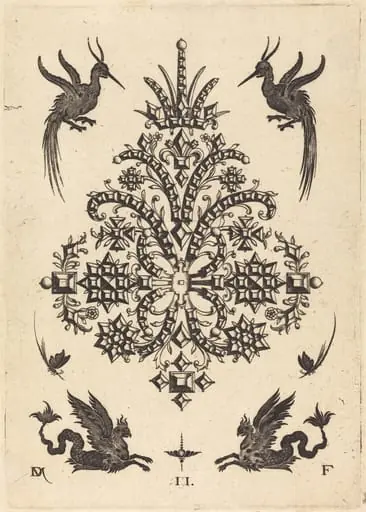 Brooch with Tablestones and Winged Griffins Above and at Bottom
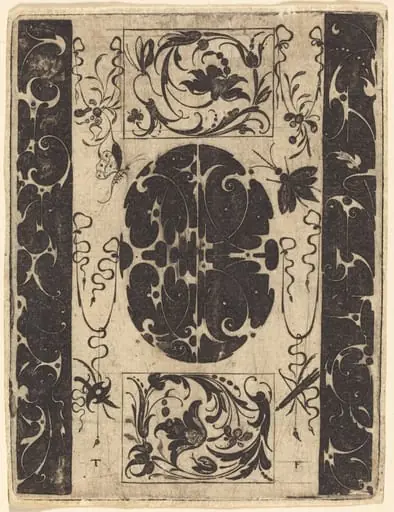 Ornament
 Head of Medusa
 Ornament Panel: Victoria Augusta
 Hyacinth-Shaped Brooch with Winged Animals at Top and Crouching Swans at Bottom
 Ascending Ornament
 Cherub