Artwork
Title Page: Large Pendant, Venus and Amor at Centre
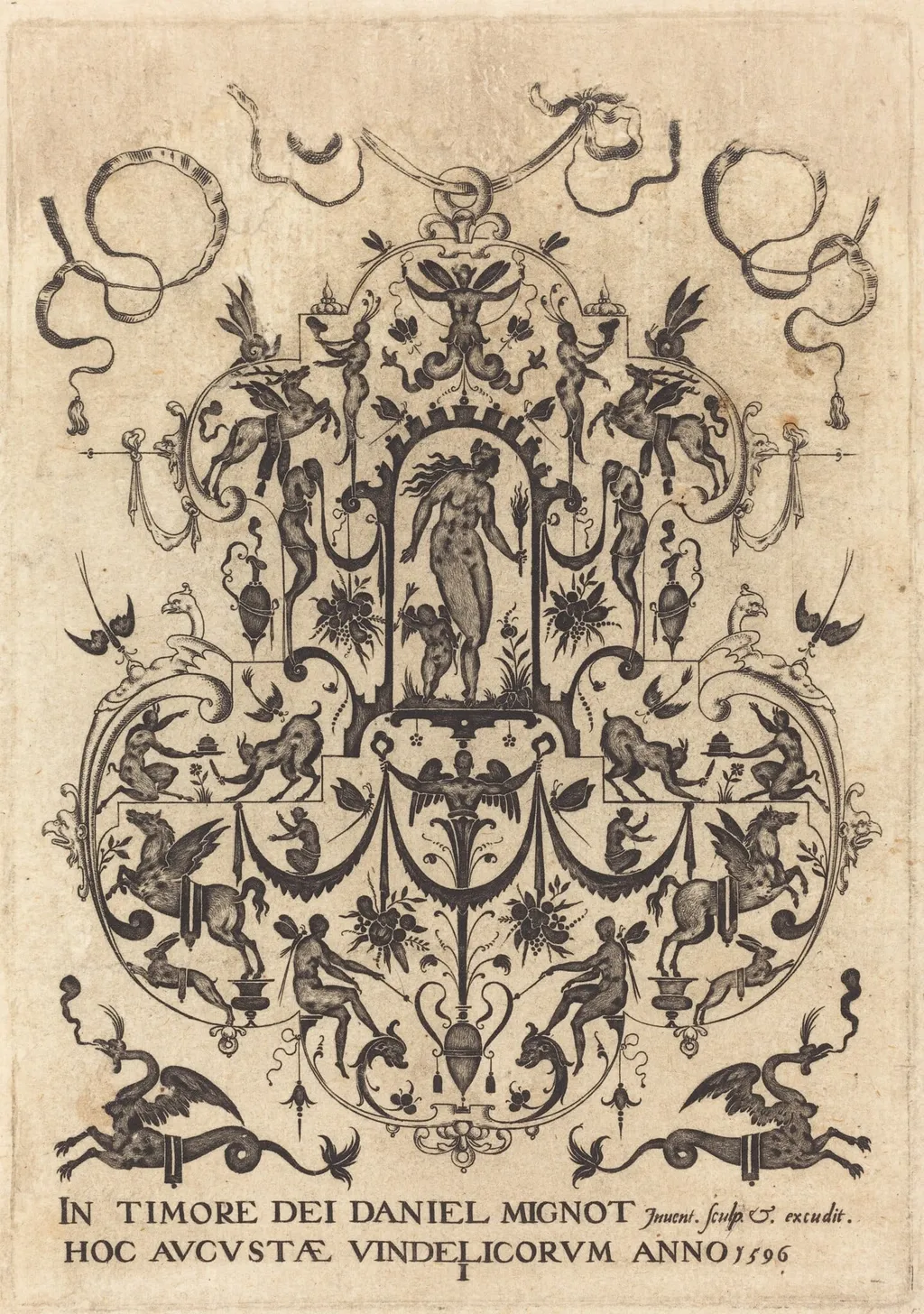
Title Page: Large Pendant, Venus and Amor at Centre is an ink print by the Renaissance artist Daniel Mignot. It dates from 1596 and is held in the collection of the National Gallery of Art.
About this work
Around her, small figures—some human, some animal—climb, play, and hide in the busy patterns.
This print is packed with tiny, swirling designs. At the center, a naked woman stands tall, holding a spear. Around her, small figures—some human, some animal—climb, play, and hide in the busy patterns. Birds fly between vines, and strange creatures peek from the corners. The whole thing looks like a crowded party of shapes and lines.
The artist carved this into metal using a sharp tool. That’s how the dark lines stand out against the light background. The text at the bottom says it was made in 1596.
Check out how engraving works to see how artists like this made their marks.
Overview
Daniel Mignot’s 1596 engraving, titled “Title Page: Large Pendant, Venus and Amor at Centre,” presents a densely ornamented composition centered on a nude female figure wielding a spear. The print functions as a title page for a larger work, integrating mythological subject matter within an intricate decorative framework.
Subject & Meaning
The central nude represents a classical goddess, likely Venus, accompanied by her son Amor (Cupid). Their presence amid a bustling array of human and animal figures suggests a scene of playful interaction, echoing themes of love and fertility common in Renaissance mythological imagery.
Technique & Style
Mignot executed the image by incising lines into a metal plate with a burin, producing fine, dark outlines against a light background. The engraving is notable for its profusion of swirling motifs, interlaced vines, and miniature figures that create a lively, almost theatrical visual rhythm.
History & Provenance
The print bears the date 1596, situating it in the late sixteenth‑century French printmaking tradition. It was likely produced as a title page for a larger book or pamphlet, a common practice for disseminating mythological and decorative designs during the period.
Context
During the 1590s, French engravers such as Mignot were influenced by Italian Renaissance motifs and the burgeoning interest in classical mythology. The elaborate ornamentation reflects the era’s taste for ornate book illustrations and the integration of allegorical figures into decorative schemes.
Legacy
While not as widely known as some contemporaneous prints, Mignot’s work exemplifies the technical skill and decorative exuberance of late Renaissance engraving, offering insight into the visual culture of printed book design in the early modern period.
Artist & collection


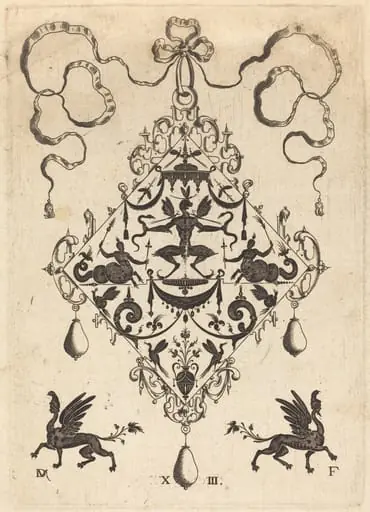 Large Pendant, Winged Fantasy Creature Holding Two Snakes
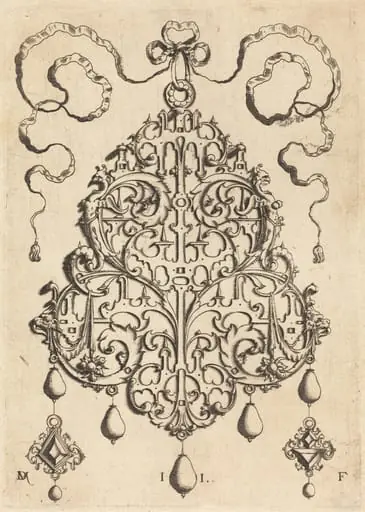 Large Strapwork Pendant with Two Hangers as Earrings at Left and Right
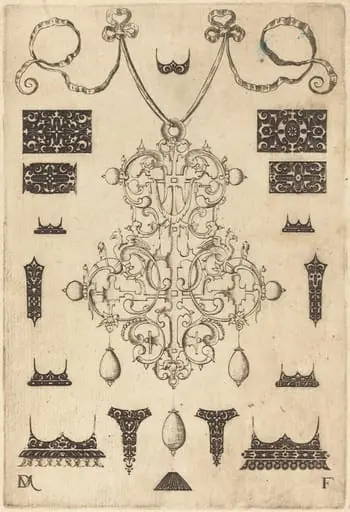 Large Pendant with Three Drops Below, Surrounded by Fifteen Different Studs
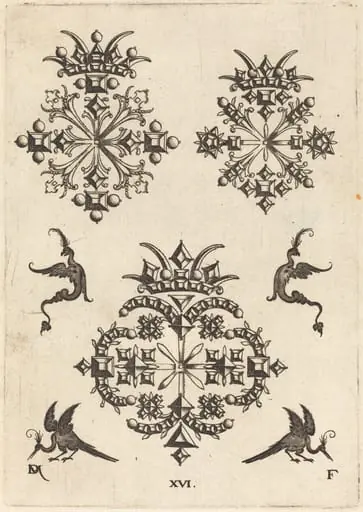 Three Brooches with Fantasy Birds at Left, Right, and Bottom
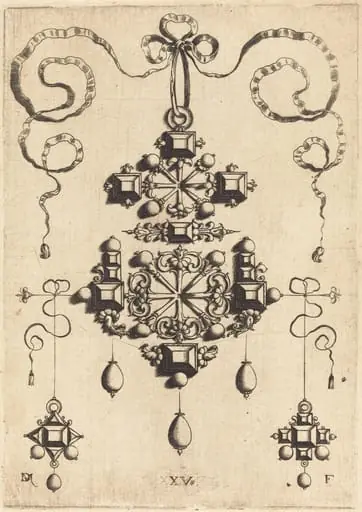 Pendant with Two Double Crosses, Surrounded by Four Diamond-Shaped Stones, Five Table-Stones, and Thirteen Pearls
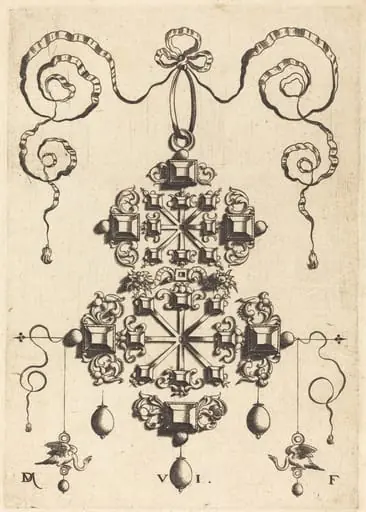 Large Pendant with Two Double Crosses, Surrounded by Six Large and Sixteen Small Table-Stones
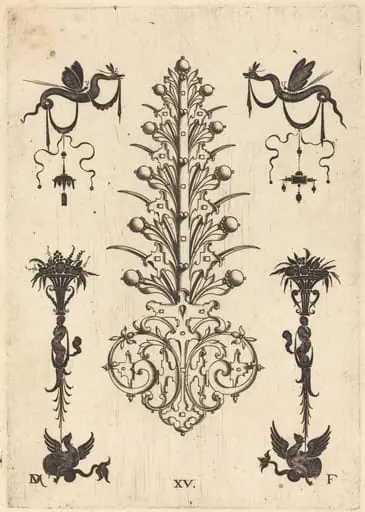 Hyacinth-Shaped Brooch with Winged Snakes at Top and Winged Animals at Bottom
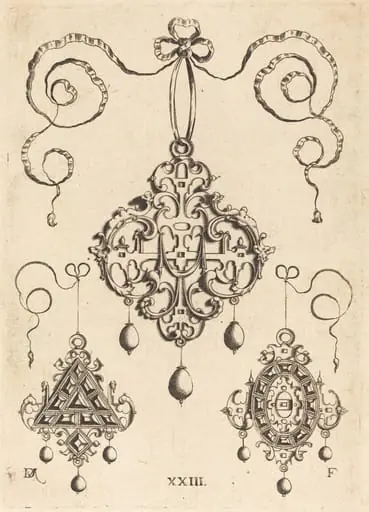 Three Strapwork Pendants, The Lower Ones Triangular and Oval
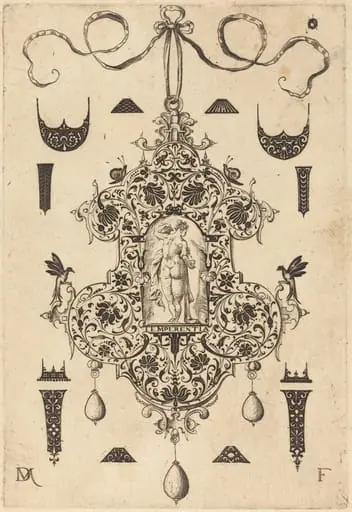 Large Pendant, Temperance Standing at Centre
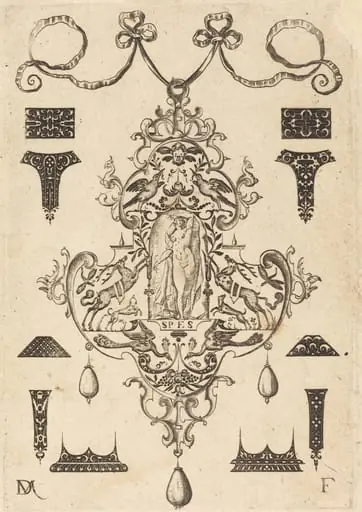 Large Pendant, Hope Standing at Centre
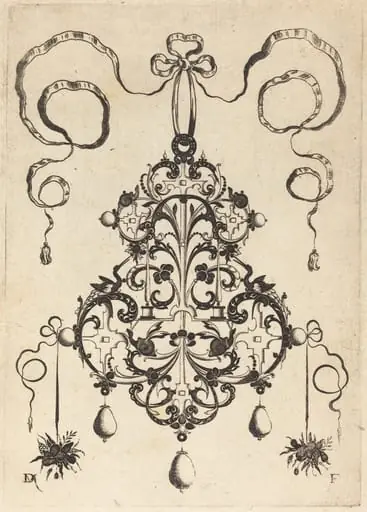 Large Pendant, Lower Left and Right Two Bunches of Grass and Fruit
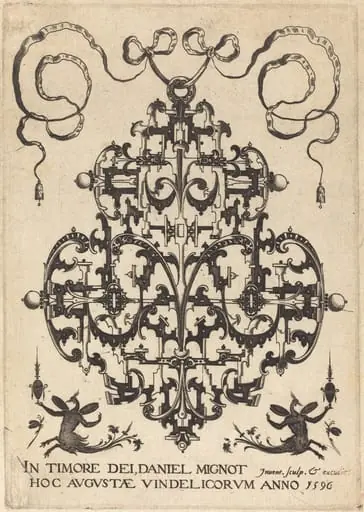 Title Page: Large Pendant, Two Winged Imaginary Figures at Bottom
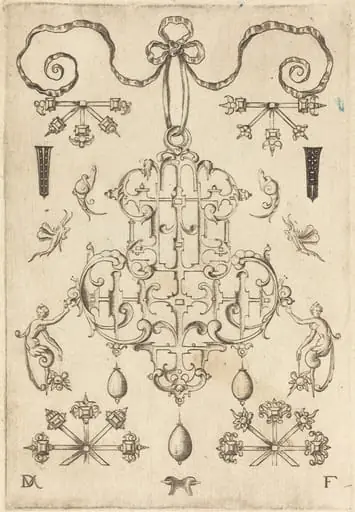 Large Pendant with Three Drops Below
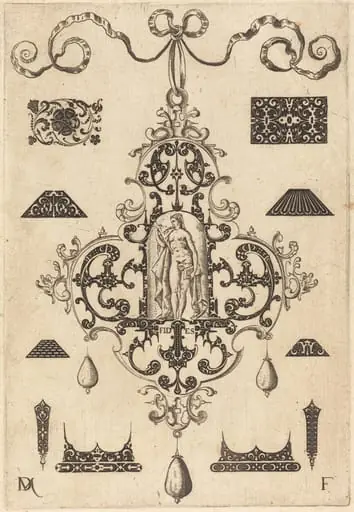 Large Pendant, Faith Standing at Centre
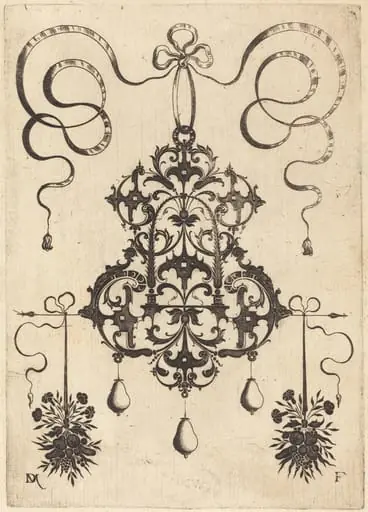 Large Pendant, Lower Left and Right Two Bunches of Grass, Flowers, and Fruit
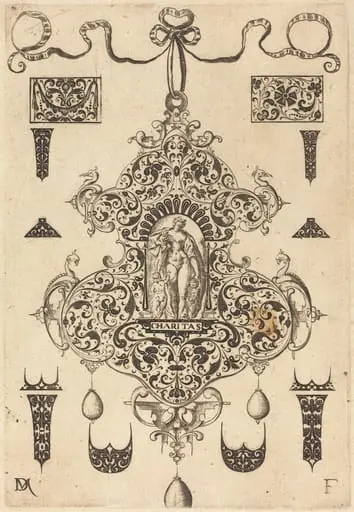 Large Pendant, Charity Standing at Centre
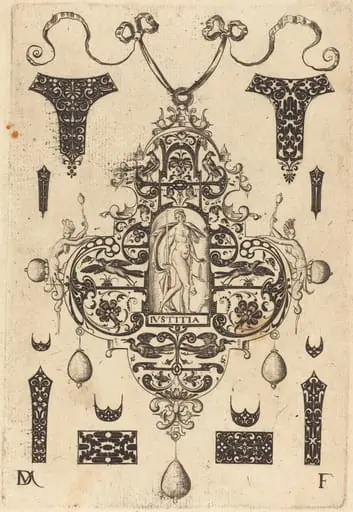 Large Pendant, Justice Standing at Centre
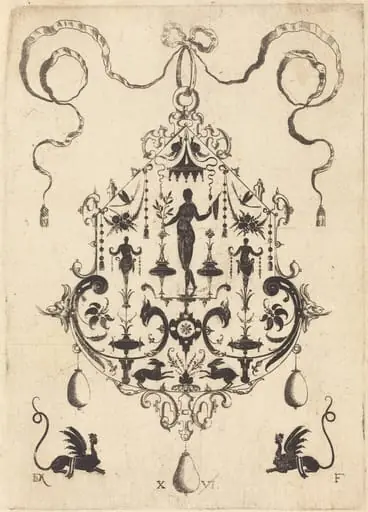 Large Pendant, Victory Flanked by Two Herms at Centre
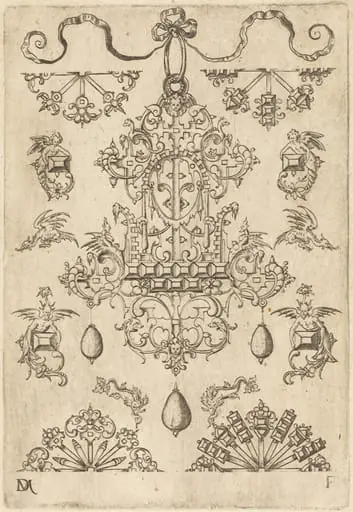 Large Pendant Surrounded by Ten Different Studs