Artwork
Base and Capital with Putti (base)
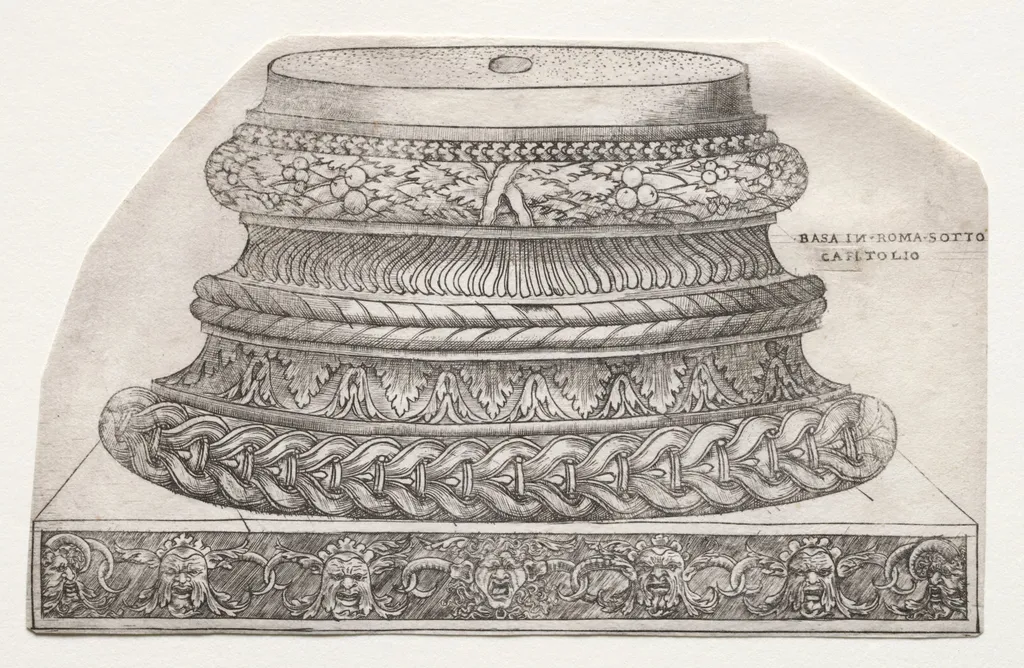
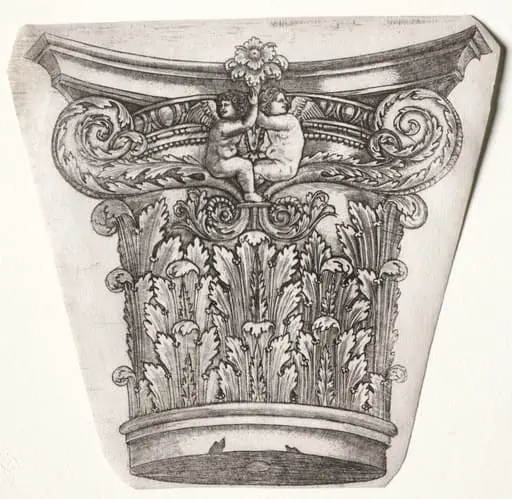
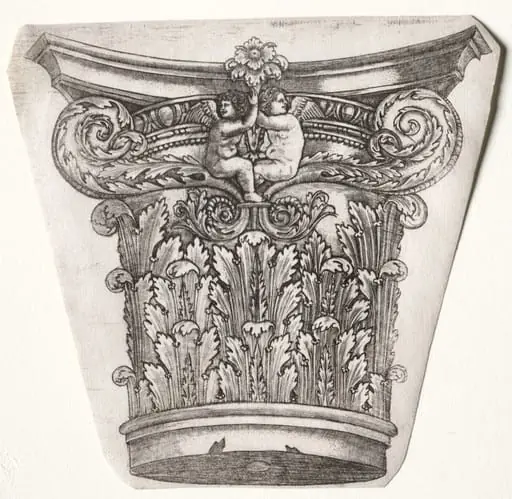
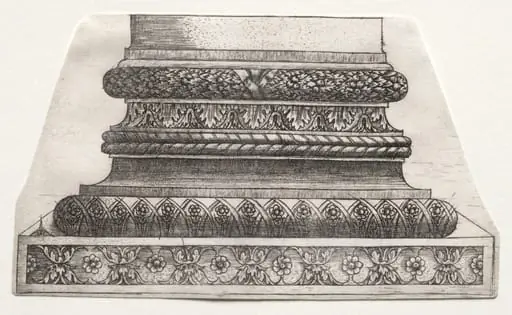
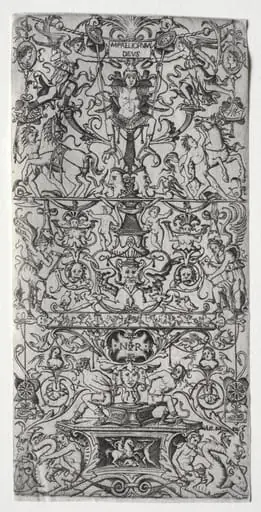
Base and Capital with Putti (base) is a print by the Renaissance artist Master G. A. with the man-trap. It dates from 1538 and is held in the collection of the Cleveland Museum of Art. Created around 1538 by the artist known as Master G.
About this work
Overview
with the man-trap, this black-and-white drawing depicts the lower section of an ancient Roman architectural base.
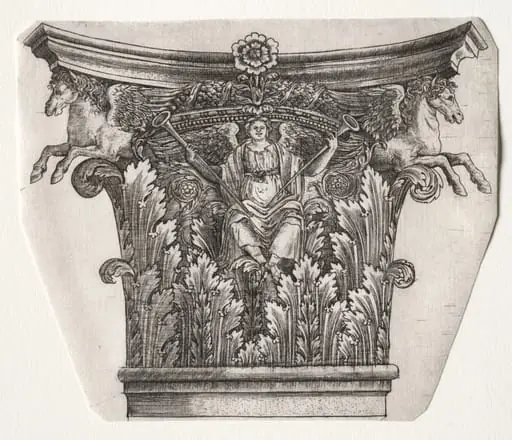
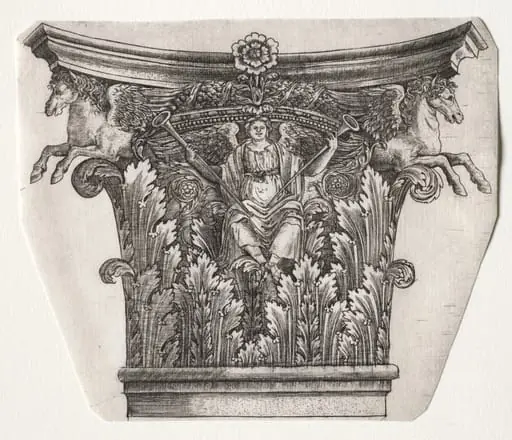
Created around 1538 by the artist known as Master G. A. with the man-trap, this black-and-white drawing depicts the lower section of an ancient Roman architectural base. The work was produced as part of a documented study of antiquities beneath the Capitoline Hill in Rome. Rendered in precise linear detail, it captures the carved surface of stone, including decorative motifs and a central perforation, likely intended for structural or ceremonial use.
Subject & Meaning
The base features a frieze of putti—winged infant figures—repeating along its lower edge. These figures, rendered with a brisk, almost spontaneous hand, suggest a blend of classical inspiration and Renaissance reinterpretation. Their playful forms contrast with the solidity of the architectural structure, possibly symbolizing the continuity of ancient motifs in contemporary artistic practice, rather than serving a specific religious or mythological narrative.
Technique & Style
Executed in fine pen and ink, the drawing emphasizes texture and contour over tonal variation. The artist uses controlled, deliberate lines to suggest the roughness of weathered stone and the subtle depth of carved reliefs. The putti are simplified yet expressive, their forms captured with a sense of immediacy, indicating the artist’s focus on direct observation rather than idealized reconstruction.
History & Provenance
The drawing originates from the study of Roman antiquities uncovered during excavations beneath the Capitoline Hill in the early 16th century. It was likely made as part of a broader effort to record and preserve fragments of classical architecture. The work entered the collection of The Cleveland Museum of Art, where it remains as a record of Renaissance engagement with Roman material culture.
Context
During the 1530s, artists and antiquarians in Rome systematically documented ancient ruins as interest in classical forms surged. This drawing reflects that scholarly impulse, aligning with contemporaneous efforts to catalog architectural elements for study and emulation. The depiction of putti, common in Roman decorative arts, reveals how Renaissance artists absorbed and reinterpreted pagan motifs within a Christian cultural framework.
Legacy
As a precise record of an archaeological find, the drawing contributes to the understanding of how Renaissance artists engaged with antiquity—not as mere imitation, but as active interpretation. Its survival offers insight into the methods of early antiquarianism and the transition from medieval to humanist approaches to classical heritage in early modern Europe.
Artist & collection
Artist
Master G. A. with the man-trap
Master G. A. with the man-trap (b. 1525) was an Italian artist.