Artwork
Ornament Panel: Mars, God of Battles
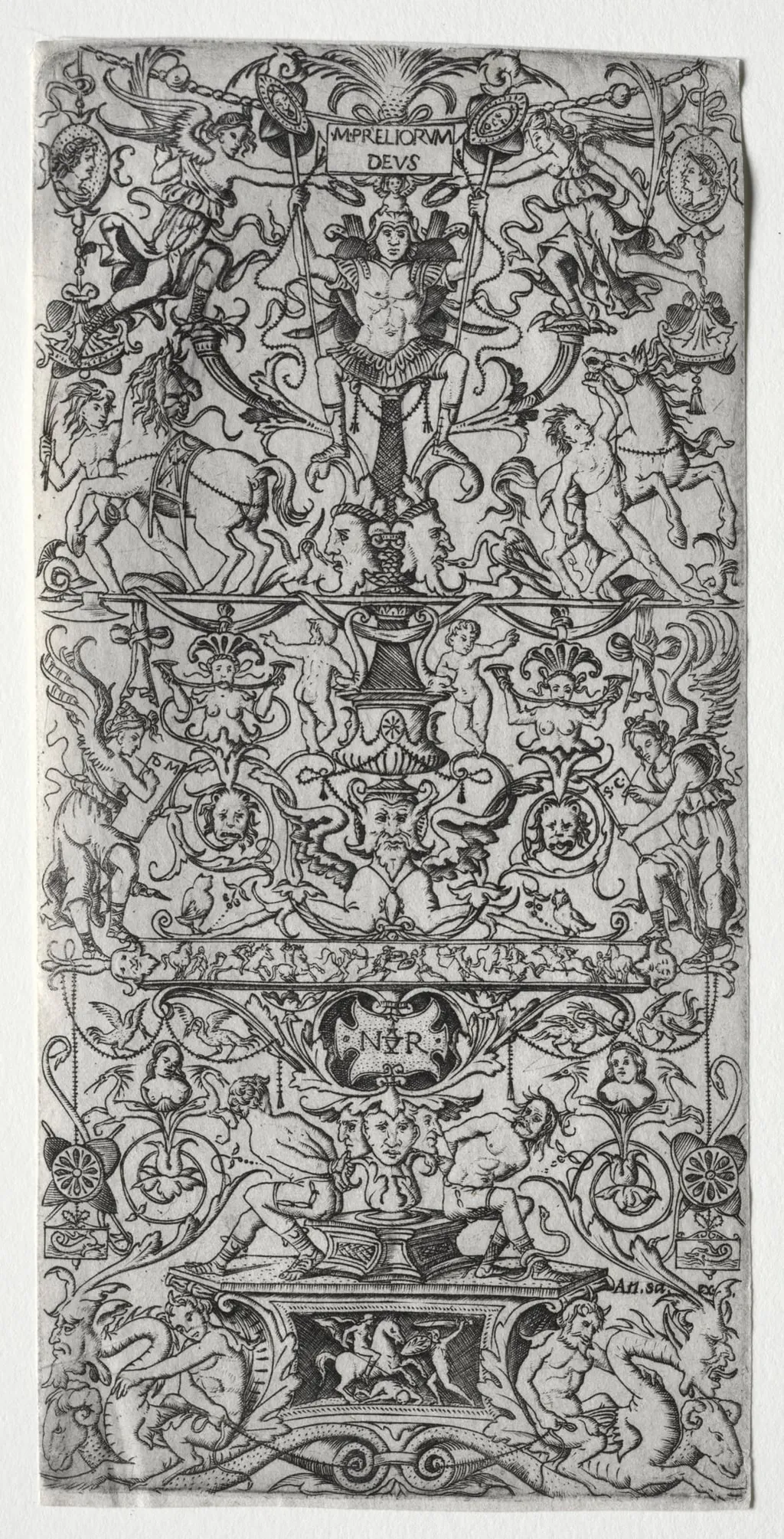
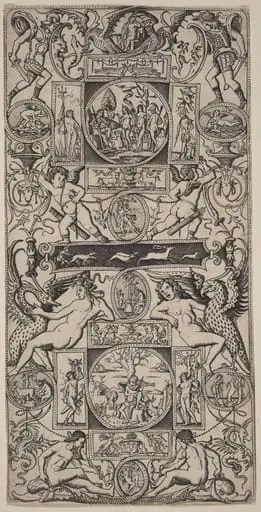
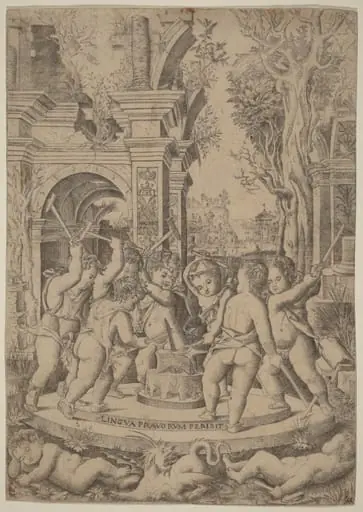
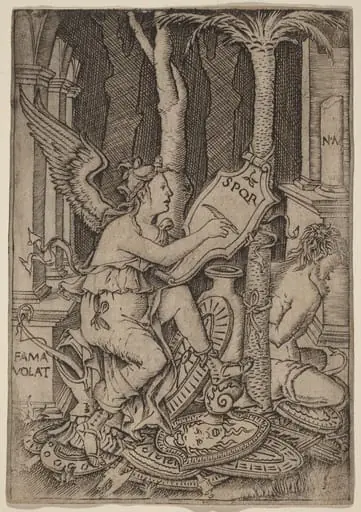
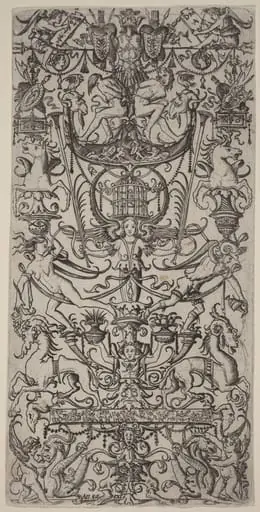
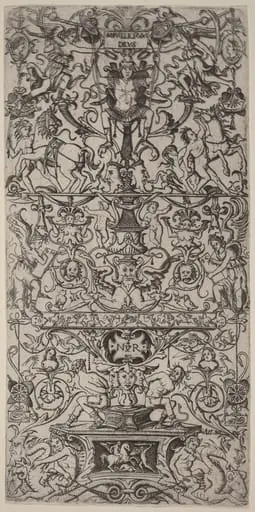
Ornament Panel: Mars, God of Battles is a print by the Renaissance artist Nicoletto da Modena. It dates from 1507 and is held in the collection of the Cleveland Museum of Art.
About this work
Overview
Though small in scale, the composition is densely packed, reflecting the period’s fascination with ornamental complexity and classical symbolism.
Created around 1507 by Nicoletto da Modena, this black-and-white print functions as a decorative panel, likely intended for application on armor, furniture, or architectural surfaces. Its intricate linear design features dense, interwoven forms that suggest motion and rhythm. Though small in scale, the composition is densely packed, reflecting the period’s fascination with ornamental complexity and classical symbolism.
Subject & Meaning
The central figure is Mars, the Roman god of war, depicted with wings and a spear atop a pedestal, surrounded by miniature faces and creatures. Below, a chaotic arrangement of masks, foliage, and hybrid beasts reinforces themes of conflict and primal energy. The imagery draws from classical mythology to evoke martial power, while the surrounding motifs may symbolize the chaos of battle or the wild forces under Mars’s dominion.
Technique & Style
Executed in fine, precise linework, the print employs sharp contrasts and rhythmic contours to animate its crowded surface. The absence of color emphasizes form and texture, allowing intricate details—such as feathered wings, snarling masks, and curling vines—to dominate. The style aligns with Northern Italian decorative traditions of the early 16th century, blending Gothic intricacy with emerging Renaissance classical references.
History & Provenance
The print is attributed to Nicoletto da Modena, an artist active in northern Italy during the early Renaissance. It entered the collection of The Cleveland Museum of Art as part of a broader acquisition of Renaissance decorative prints. Its survival in relatively intact condition suggests it was valued as a design source or collector’s item, possibly used as a model for craftsmen rather than displayed as fine art.
Context
Produced during the height of the Italian Renaissance, this panel reflects the era’s revival of classical themes and the growing demand for ornamental designs in elite material culture. Similar motifs appear in armor decoration, book borders, and architectural stucco. While not a painting or sculpture, it exemplifies how mythological imagery permeated everyday artistic production beyond monumental works.
Legacy
As a surviving example of early 16th-century printmaking for decorative use, it offers insight into the transmission of classical iconography through artisanal networks. Though not widely known today, such prints influenced later ornamental design in Europe, particularly in the development of Mannerist and Baroque decorative systems that favored dense, symbolic patterning.
Artist & collection