Artwork
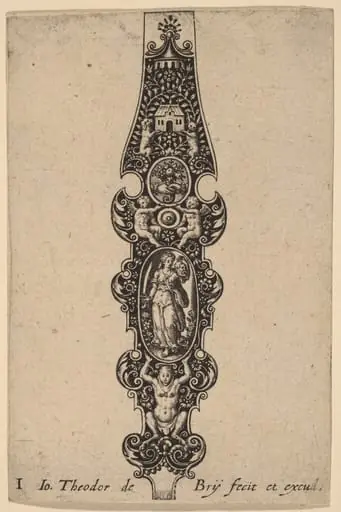
Ornament for Knife Handle
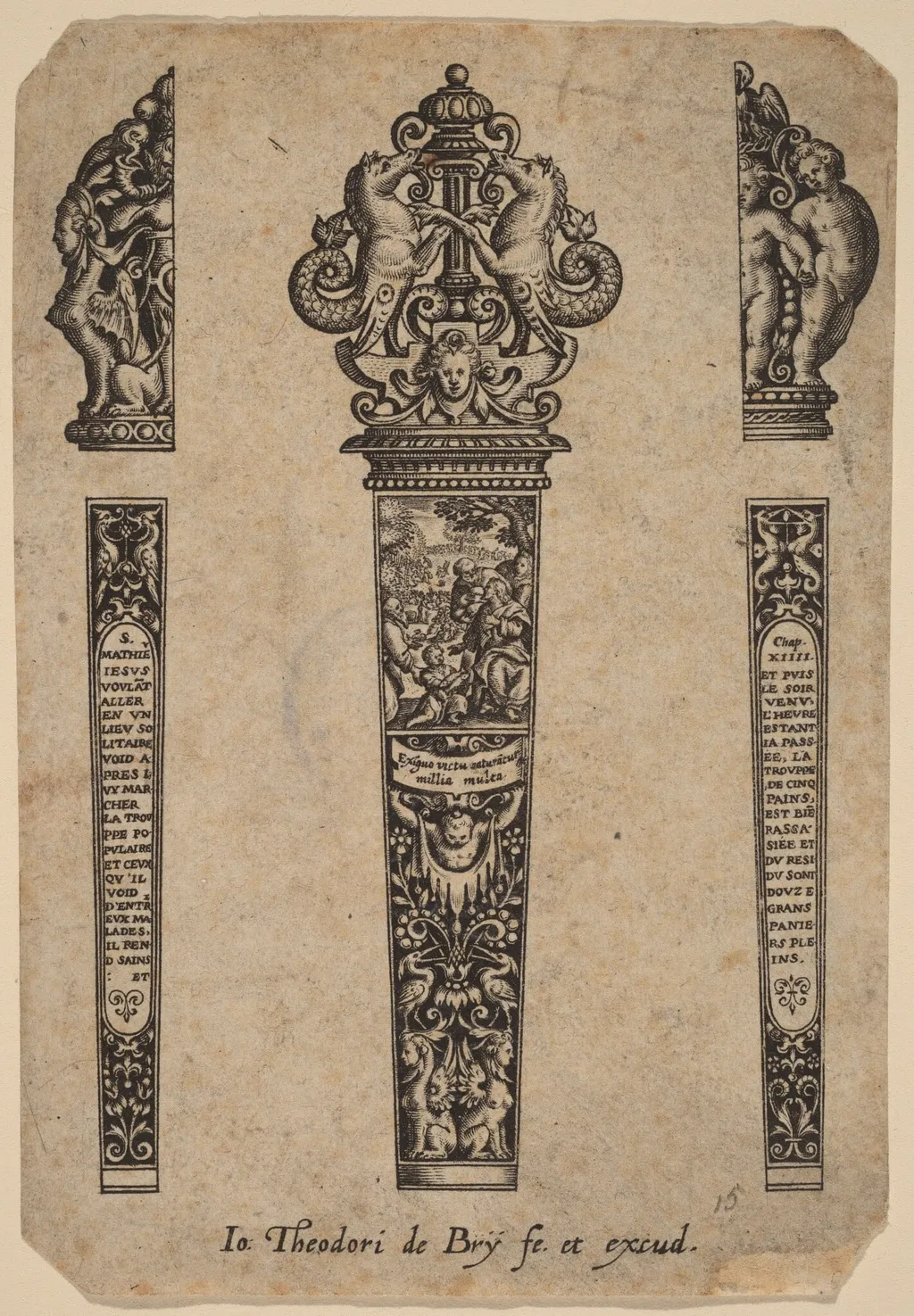
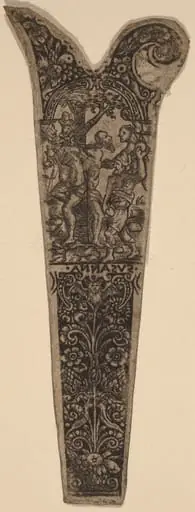
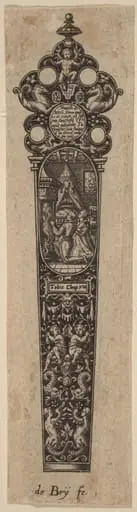
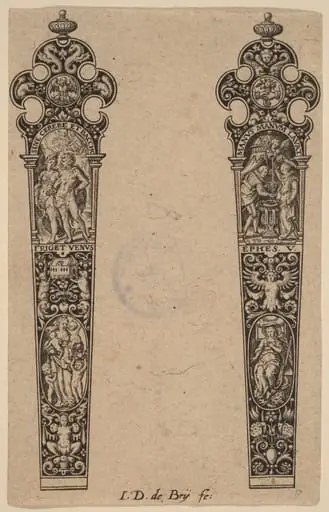
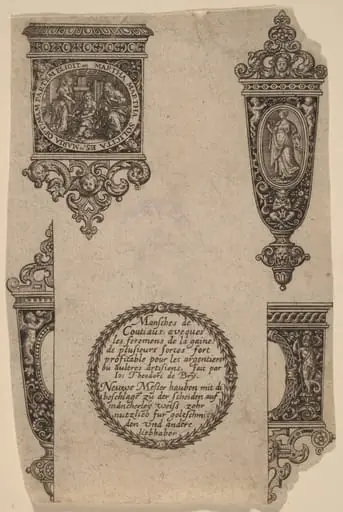
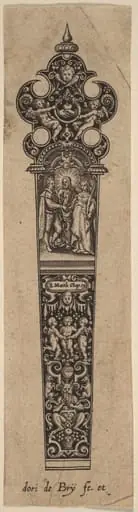
Ornament for Knife Handle is an ink print by the Renaissance artist Theodor de Bry. It dates from 1563 and is held in the collection of the National Gallery of Art.
About this work
Overview
Ornament for Knife Handle is a 1563 engraving by Theodor de Bry, a Walloon artist known for his detailed work in engraving, goldsmithing, and publishing. This print showcases a meticulously designed metalwork pattern intended for a knife handle.
Subject & Meaning
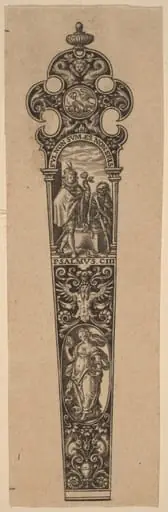
The design features a central ornate pillar with a crown-like finial, encircled by swirling vines and small faces. Flanking panels display intricate patterns and Latin inscriptions, blending ornate shapes with miniature scenes of natural and figurative elements.
Technique & Style
De Bry employed fine lines to achieve shading and depth, imparting a three-dimensional appearance to the design, simulating the look of carved metal. The work exemplifies his proficiency in creating detailed, high-relief effects through engraving.
History & Provenance
Created during de Bry's European travels, following his exile from the Spanish-controlled Southern Netherlands due to his Protestant beliefs, the piece reflects his versatility as an artist working across multiple mediums and locations.
Context
This engraving aligns with de Bry's broader contributions to illustrated books, notably those documenting early European American expeditions, though here focused on decorative art for practical objects.
Legacy
While specific lasting impact of *Ornament for Knife Handle* on subsequent design is not prominently documented, it stands as a representative example of 16th-century engraving techniques and decorative design, influencing the appreciation of detailed metalwork patterns in historical contexts.
Artist & collection
Artist
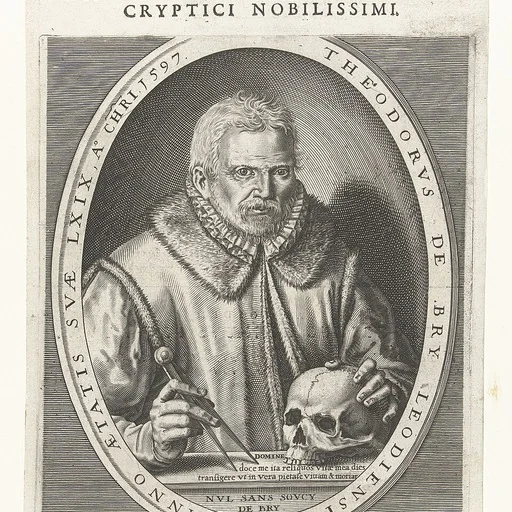
Theodor de Bry (also Theodorus de Bry; 1528 – 27 March 1598) was a Walloon engraver, goldsmith, editor and publisher, famous for his depictions of early European expeditions to the Americas.