Artwork
Justice
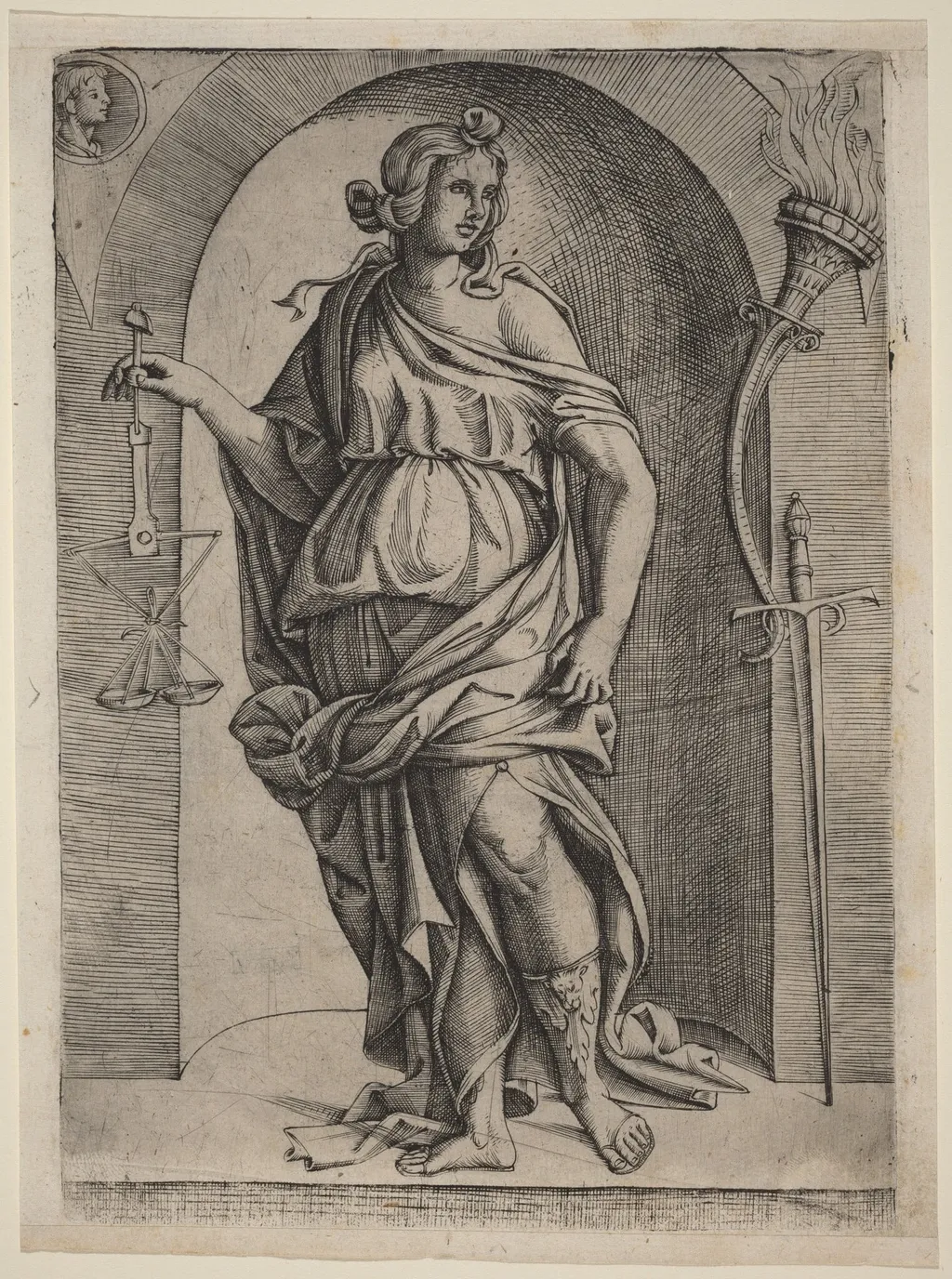
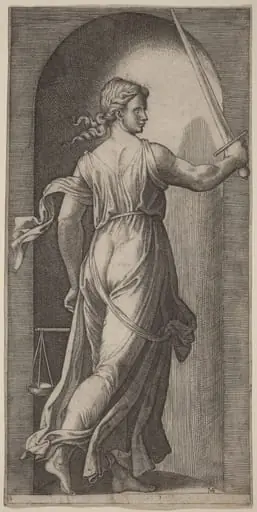
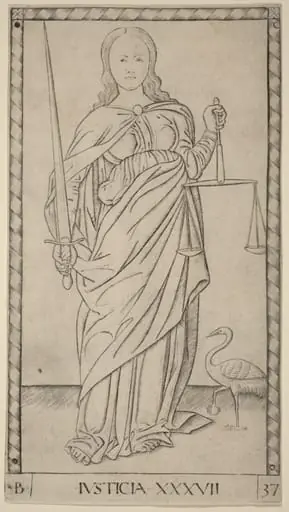
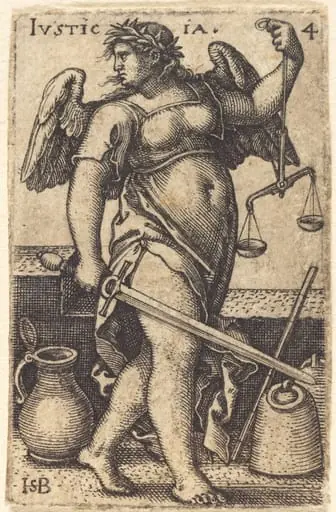
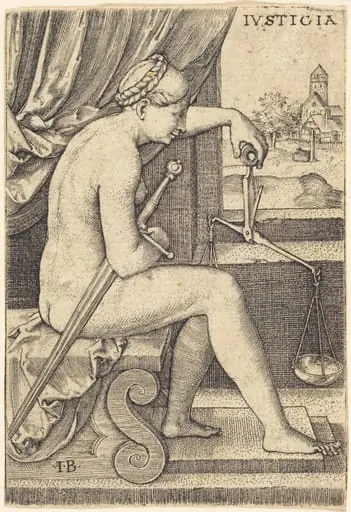
Justice is an ink print by the Renaissance artist Master I.I.CA. It is held in the collection of the National Gallery of Art.
About this work
Overview
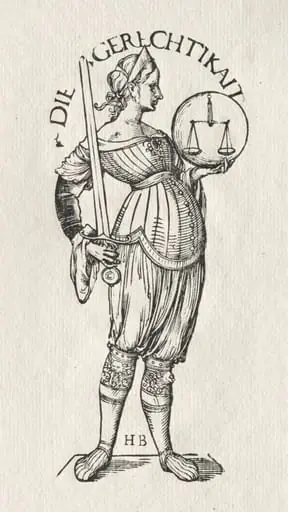
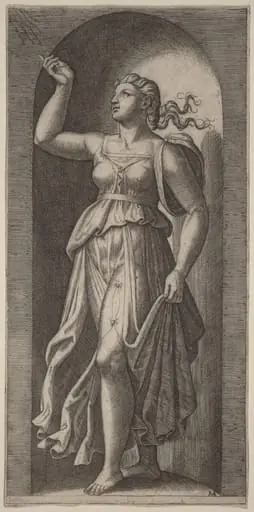
The image presents a singular figure, rendered with meticulous attention to surface and form, reflecting the technical priorities of the medium at the time.
Created around 1520, Justice is an engraving attributed to the artist known as Master I.I.CA. As a print made by incising lines into a metal plate, it exemplifies the precision and fine line work characteristic of early 16th-century Northern European printmaking. The image presents a singular figure, rendered with meticulous attention to surface and form, reflecting the technical priorities of the medium at the time.
Subject & Meaning
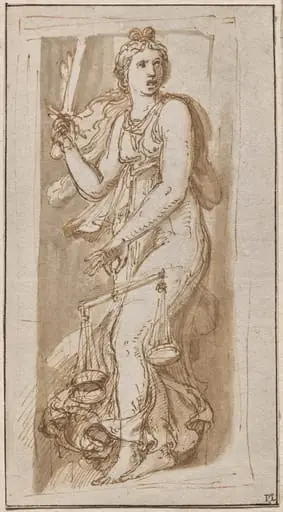
The figure represents Justice as a personified virtue, holding a sword in one hand and balanced scales in the other—traditional symbols of legal authority and impartial judgment. Her attire, styled in archaic fashion, evokes a sense of timeless moral order rather than contemporary dress. The composition isolates her against a plain background, emphasizing her symbolic role over narrative context.
Technique & Style
The artist employed fine, controlled incisions to model form and texture, particularly in the folds of clothing and the intricate patterns of her garments. Cross-hatching and parallel lines build tonal depth without shading, relying on line density to suggest volume. This method was standard in engraving, allowing for high detail and reproducibility, suited to the print’s function as a disseminated image.
History & Provenance
The engraving survives in limited early impressions, with no known original plate. Attribution to Master I.I.CA rests on stylistic comparison with other signed works, though little is documented about the artist’s life or workshop. The print likely circulated among educated urban audiences in the Low Countries or southern Germany, where allegorical imagery was in demand.
Context
Produced during the early Reformation, images of Justice reflected broader cultural interest in moral and legal order amid religious and political upheaval. While not overtly religious, such allegories aligned with humanist ideals of reason and civic virtue. Engravings like this served both decorative and didactic purposes, accessible to a growing literate class.
Legacy
The engraving contributes to a broader tradition of personified virtues in Northern Renaissance art. Though not widely reproduced in later centuries, its technical execution influenced subsequent printmakers who valued clarity and linear precision. It remains a representative example of how symbolic figures were rendered in print before the rise of more naturalistic styles.
Artist & collection