Artwork
Sibylla Europa
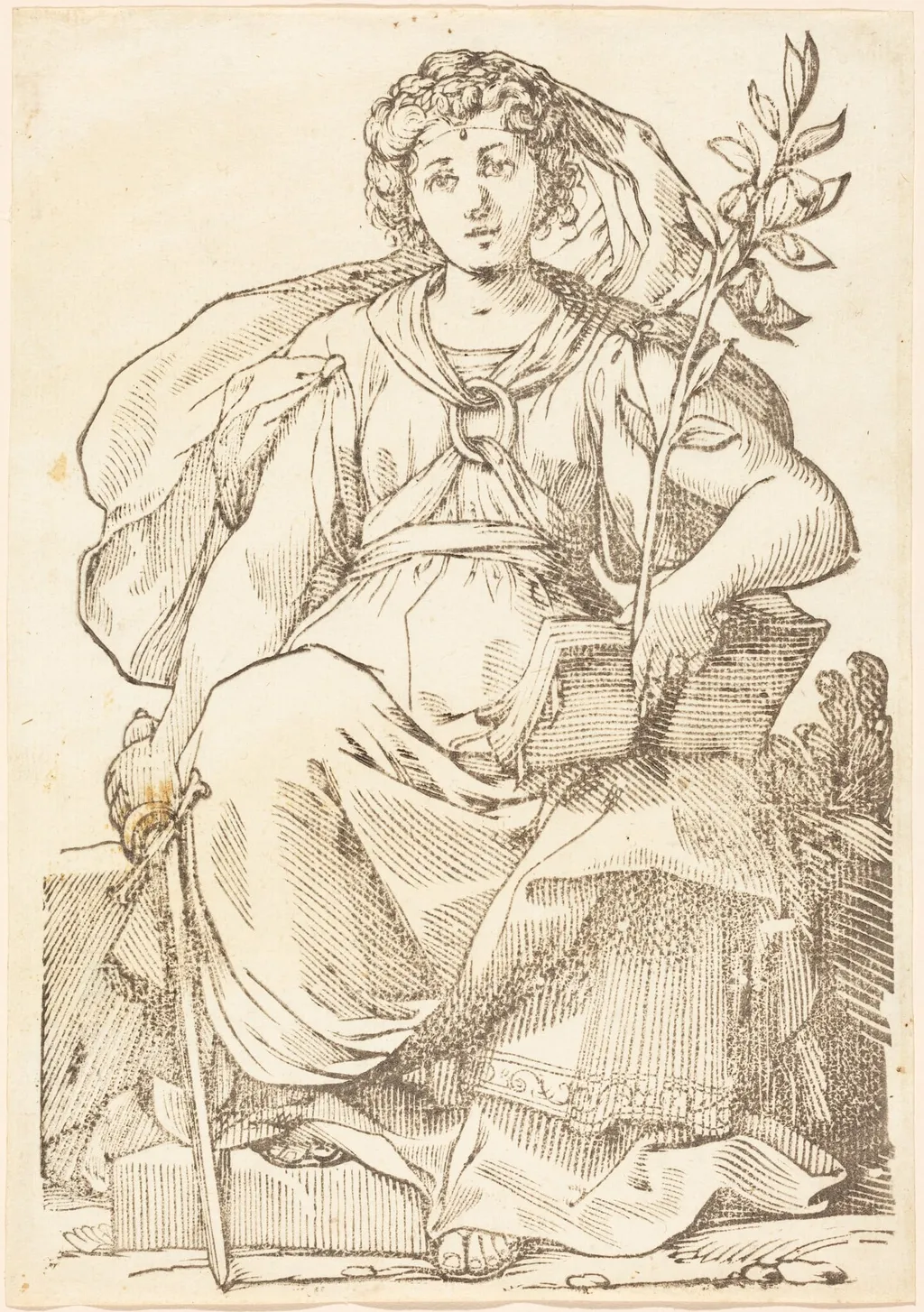
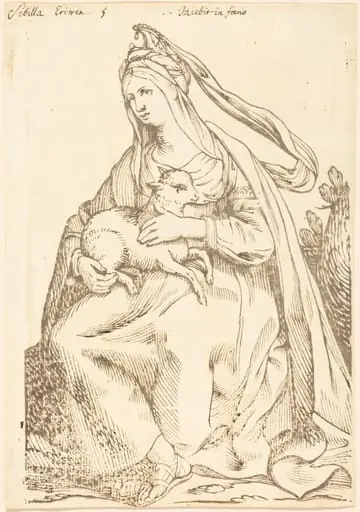
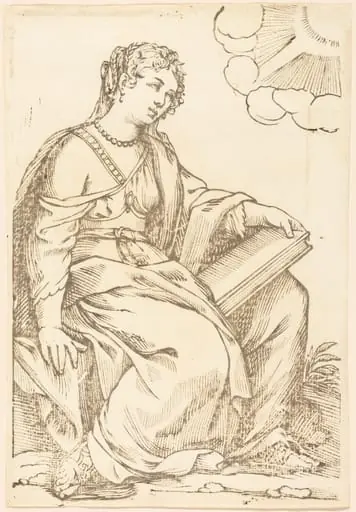
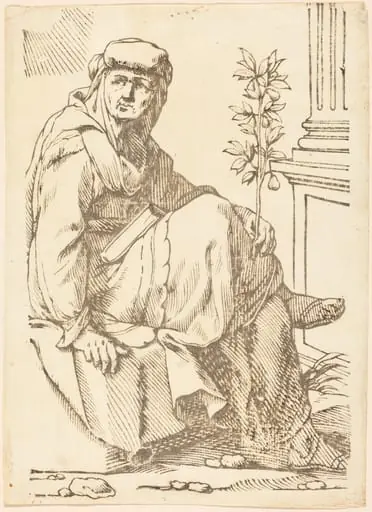
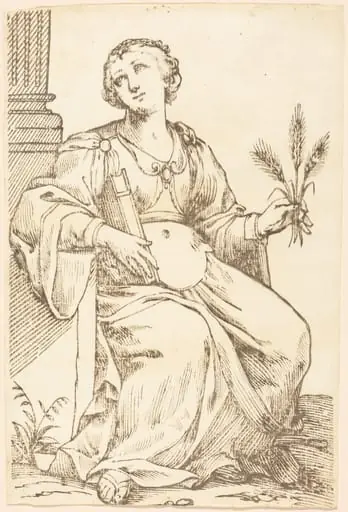
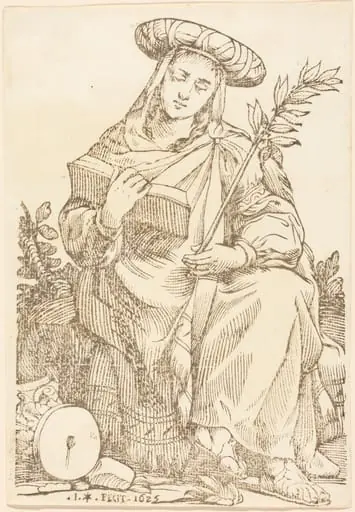
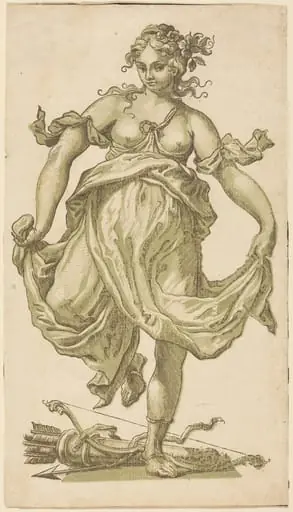
Sibylla Europa is an ink print by the Baroque artist Paul Maupin. It dates from 1625 and is held in the collection of the National Gallery of Art.
About this work
Overview
The composition emphasizes texture and form through the woodcut medium, using incised lines to suggest volume and atmosphere without color.
Sibylla Europa is a mid-17th-century woodcut on laid paper, attributed to Paul Maupin and dated around 1625. The print presents a solitary female figure seated on a rugged stone ledge, rendered in monochrome tones with strong linear contrasts. The composition emphasizes texture and form through the woodcut medium, using incised lines to suggest volume and atmosphere without color. Its quiet intensity distinguishes it from more ornate contemporary prints.
Subject & Meaning
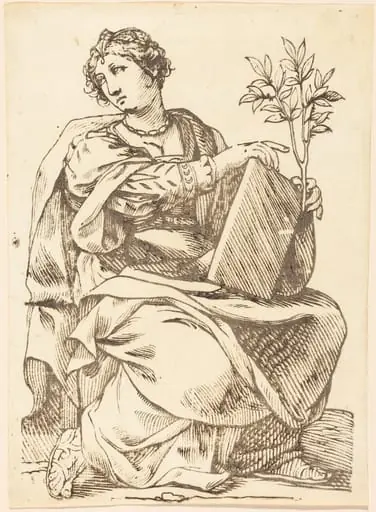
The figure is identified as Sibylla Europa, a classical sibyl associated with prophecy and divine insight. Her seated posture, staff, and sprig of leaves suggest a connection to oracular tradition and natural cycles. The draped cloak and enigmatic gaze evoke mystery, reinforcing her role as a mediator between human and divine realms. The setting, neither sacred nor urban, implies a liminal space where wisdom emerges from solitude and nature.
Technique & Style
Executed as a woodcut, the image relies on carved lines and tonal contrasts to model form and depth. Bold, deliberate strokes define the figure’s robes and the rocky terrain, while finer incisions suggest fabric folds and shadow. The use of laid paper enhances the tactile quality of the print, allowing subtle ink variations to emerge. The style is restrained, prioritizing clarity and emotional resonance over decorative detail.
History & Provenance
The print’s early history is undocumented, but its technique and iconography align with Northern European devotional and allegorical prints of the early 1600s. It likely circulated among scholarly or ecclesiastical circles interested in classical antiquity and prophetic literature. No known original impressions are recorded in major institutional collections, suggesting limited distribution or later reproduction.
Context
In the early 17th century, interest in sibyls persisted in Christian Europe as symbolic figures bridging pagan prophecy and Christian eschatology. Woodcuts like this one served as visual aids for theological reflection or private meditation. Maupin’s work reflects a broader trend of reviving classical motifs through accessible print media, blending humanist ideals with spiritual contemplation.
Legacy
Sibylla Europa remains a rare example of Paul Maupin’s graphic work, offering insight into the quiet, introspective side of early Baroque printmaking. While not widely reproduced or studied, it contributes to understanding how classical imagery was adapted for personal devotion. Its endurance in private collections underscores its appeal as a meditative object rather than a public statement.
Artist & collection