Artwork
Faith
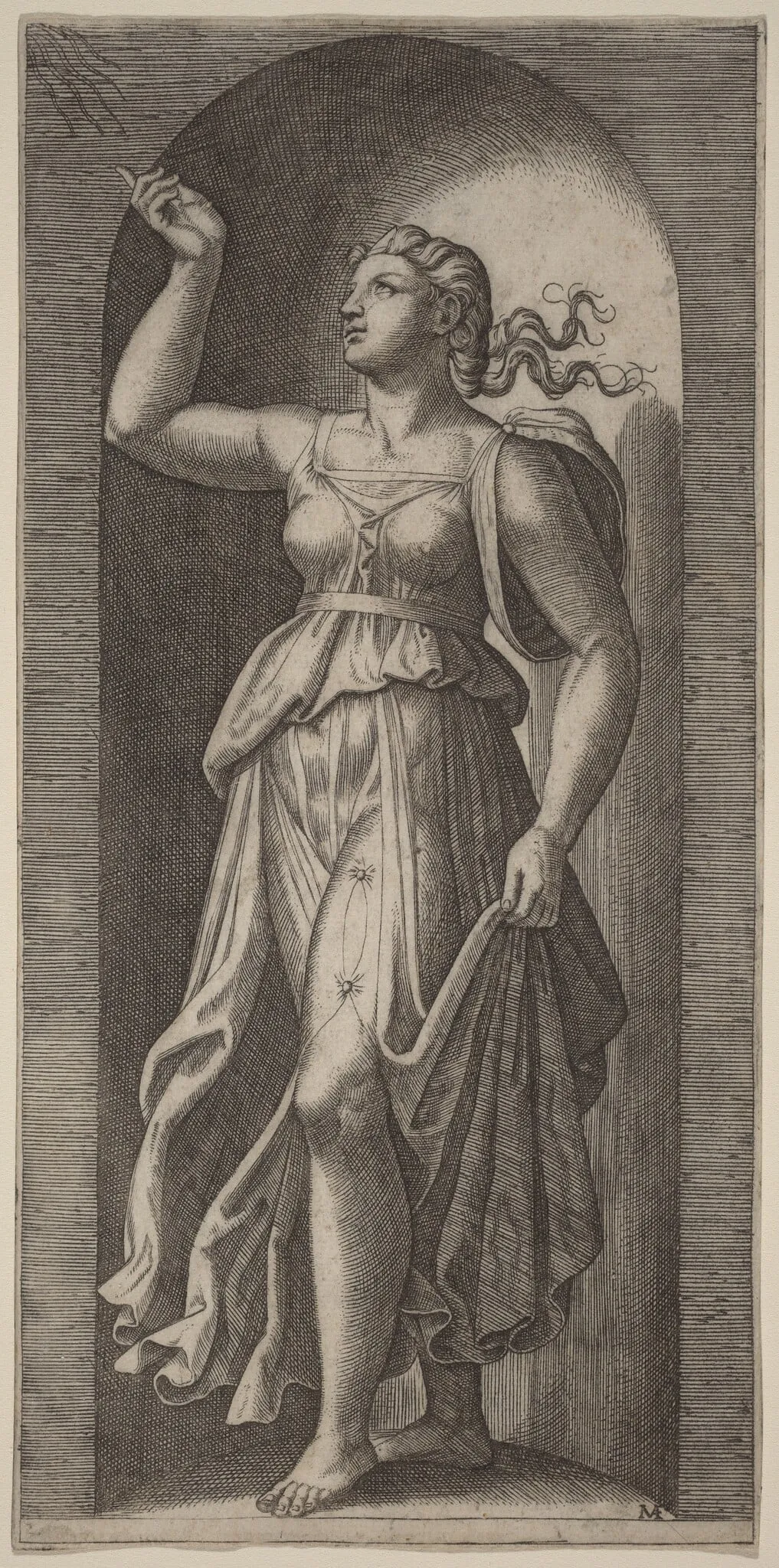
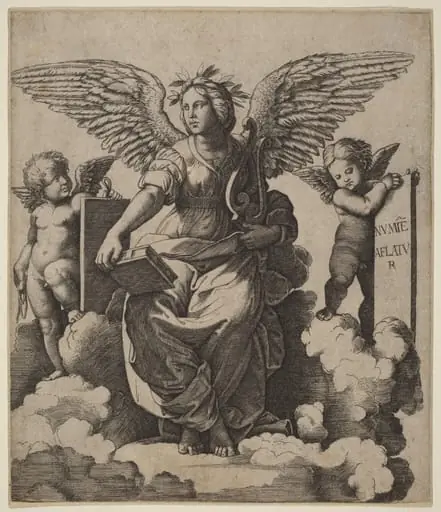
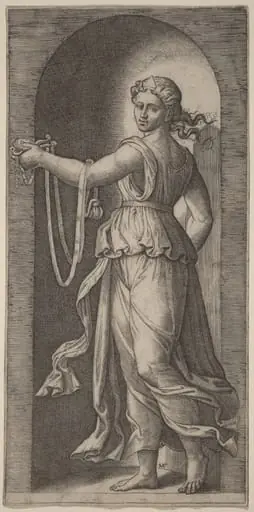
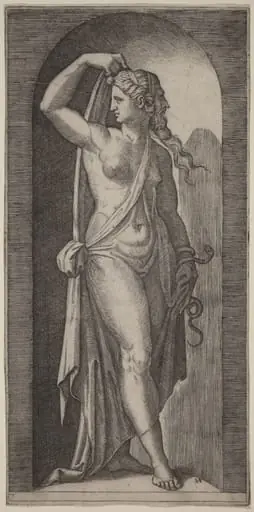
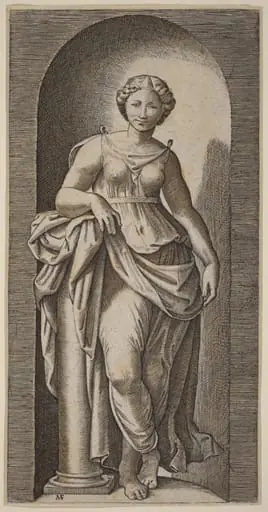
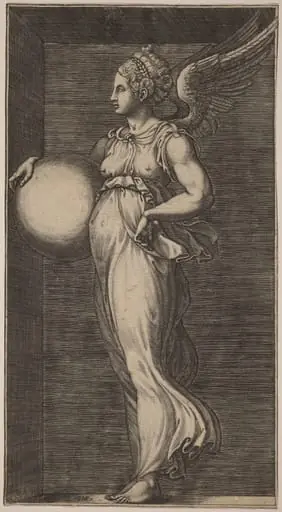
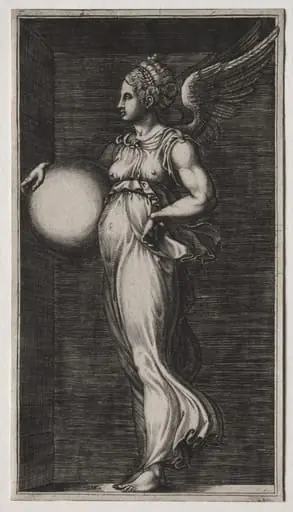
Faith is an ink print by the Renaissance artist Marcantonio Raimondi. It dates from 1520 and is held in the collection of the National Gallery of Art.
About this work
Overview
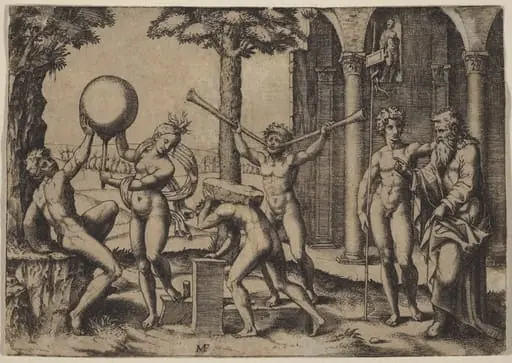
Created circa 1520, *Faith* is a black‑and‑white engraving by the Italian printmaker Marcantonio Raimondi. The image presents a standing female figure, one arm raised and the other grasping a globe, rendered in fine line work that emphasizes muscular form and draped clothing against a largely dark background.
Subject & Meaning
The central figure embodies the allegorical concept of Faith, suggested by the globe she holds—a symbol of the world’s spiritual unity. Her confident stance, with one foot forward and hair in loose curls, conveys a sense of resolve and devotion, aligning with Renaissance personifications of virtues.
Technique & Style
Raimondi employed copper‑plate engraving, using a burin to incise delicate lines that build tonal variation through hatching and cross‑hatching. The meticulous shading gives volume to the robe and globe, while the stark contrast between the illuminated figure and the shadowed background heightens the three‑dimensional effect.
History & Provenance
Active in the early 16th century, Raimondi was renowned for reproducing paintings as prints, a practice that spread High Renaissance aesthetics across Europe. *Faith* exemplifies his independent compositions that circulated alongside his more famous copies of works by Raphael, reflecting his role in the diffusion of contemporary visual culture.
Context
The engraving belongs to a period when printmaking emerged as a key medium for sharing artistic ideas beyond local workshops. By translating complex compositions into reproducible images, artists like Raimondi facilitated a broader engagement with Renaissance iconography and stylistic developments among patrons and collectors.
Artist & collection

Artist
Marcantonio Raimondi, often called simply Marcantonio (c. 1470/82 – c. 1534), was an Italian engraver, known for being the first important printmaker whose body of work consists largely of prints copying paintings. He…