Artwork
Solomon Worshipping Idols
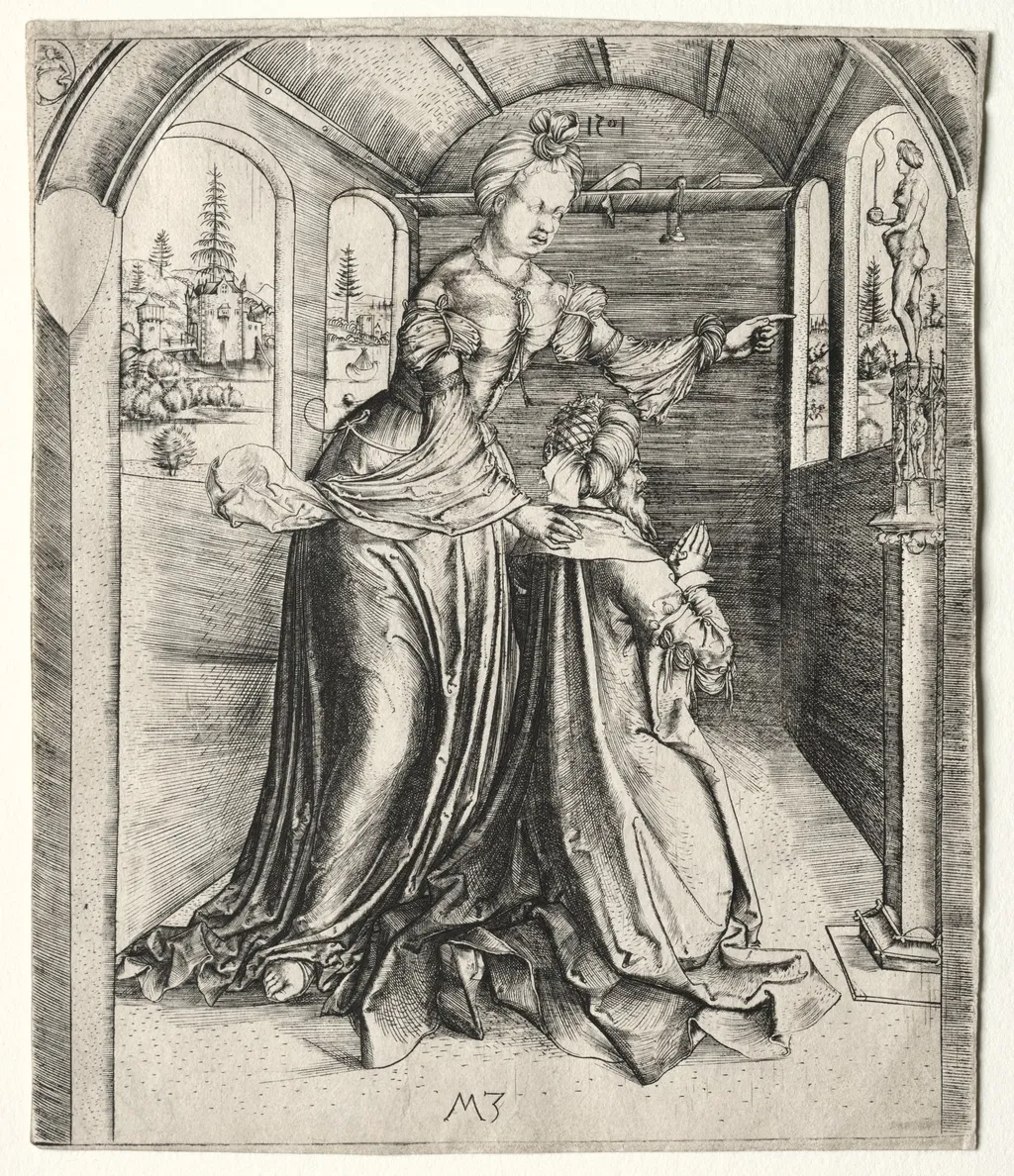
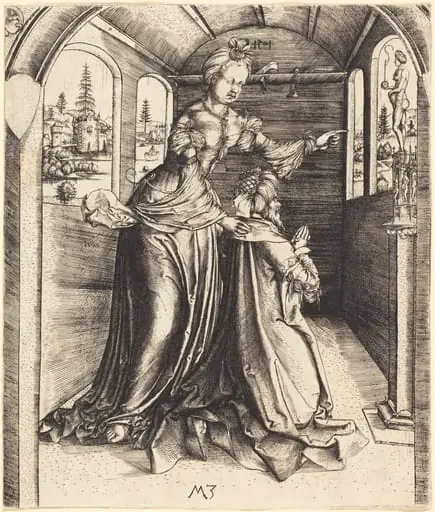
Solomon Worshipping Idols is a print by the Renaissance artist Master MZ. It dates from 1501 and is held in the collection of the Cleveland Museum of Art.
About this work
Overview
The work is part of a small body of engravings attributed to this anonymous artist, notable for their intricate detail and psychological nuance.
Created in 1501 by the engraver known as Master MZ, this print depicts a scene of religious transgression set within an architectural interior. The work is part of a small body of engravings attributed to this anonymous artist, notable for their intricate detail and psychological nuance. It resides in the collection of The Cleveland Museum of Art, where it is studied for its complex symbolism and technical precision in early Northern Renaissance printmaking.
Subject & Meaning
The scene illustrates King Solomon, traditionally associated with wisdom, engaging in idolatry by directing devotion toward a pagan statue. A woman, possibly a consort or priestess, gestures toward the nude male figure, while a kneeling man offers a crown in submission. The narrative draws from biblical warnings against idolatry, yet the composition’s intimacy and ambiguity suggest a meditation on power, desire, and spiritual lapse rather than simple moral condemnation.
Technique & Style
Master MZ employed fine, controlled lines to model form and texture, using hatching and cross-hatching to achieve subtle gradations of light and shadow. The figures are rendered with anatomical precision, and the architectural setting—complete with a distant landscape through a window and a cityscape beyond a doorway—demonstrates an advanced understanding of spatial depth. The chiaroscuro enhances the sculptural presence of the figures, focusing attention on their interaction.
History & Provenance
The print was produced in the early 16th century, likely in southern Germany or Austria, during a period of heightened interest in biblical allegory and moralizing imagery. It entered the Cleveland Museum of Art’s collection in the 20th century, having passed through private European holdings. Its survival in good condition reflects its early appreciation among collectors of graphic arts, though its exact original patronage remains unknown.
Context
This work emerged amid religious tensions preceding the Reformation, when depictions of idolatry served as cautionary tales. Yet Master MZ’s treatment diverges from overt didacticism, favoring psychological realism. The fusion of classical statuary with Christian narrative reflects Renaissance humanist interests, while the domesticated setting—rather than a temple—hints at the internalization of spiritual conflict in private life.
Legacy
Master MZ’s print influenced later Northern artists through its fusion of narrative ambiguity and technical refinement. Though not widely reproduced in its time, it became a touchstone for scholars studying the intersection of secular and sacred imagery in early print culture. Its quiet intensity and unresolved moral tone continue to invite interpretation, distinguishing it from more overtly polemical works of the era.
Artist & collection