Artwork
The Annunciation
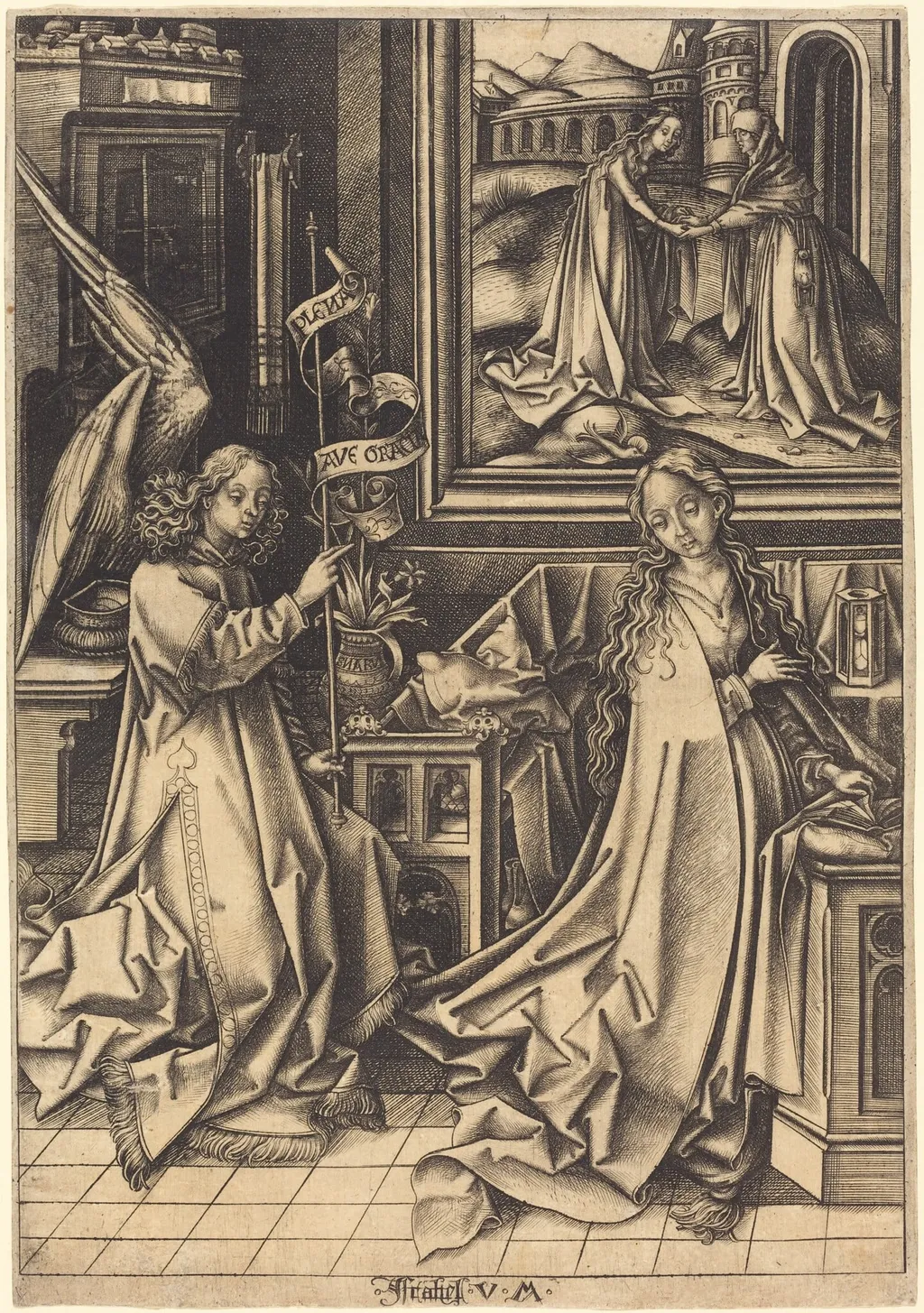
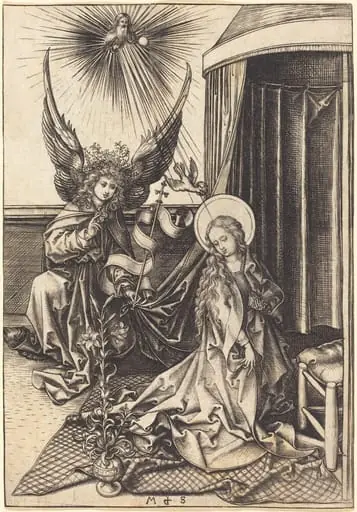
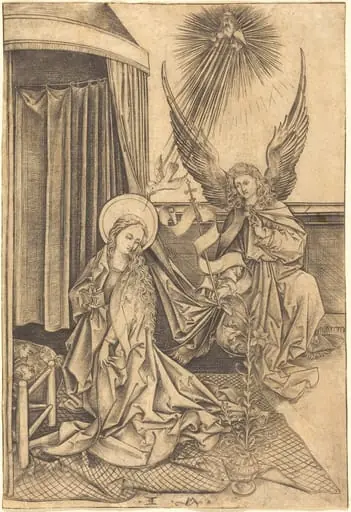
The Annunciation is an ink print by the Renaissance artist Israhel van Meckenem. It dates from 1495 and is held in the collection of the National Gallery of Art.
About this work
Overview
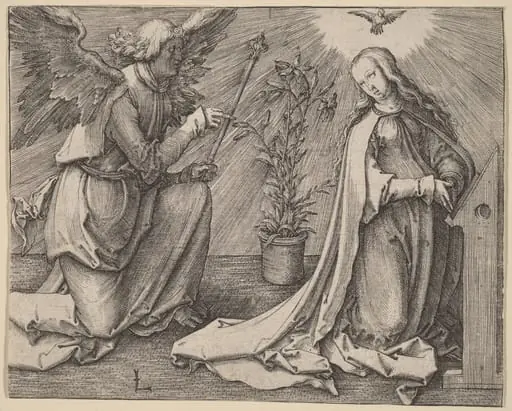
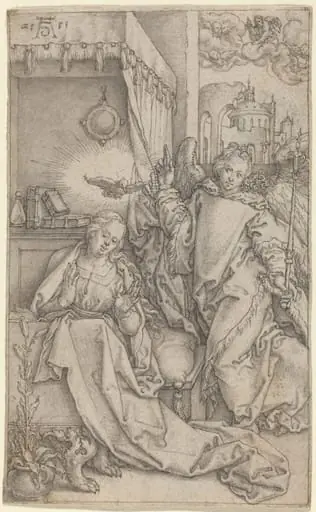
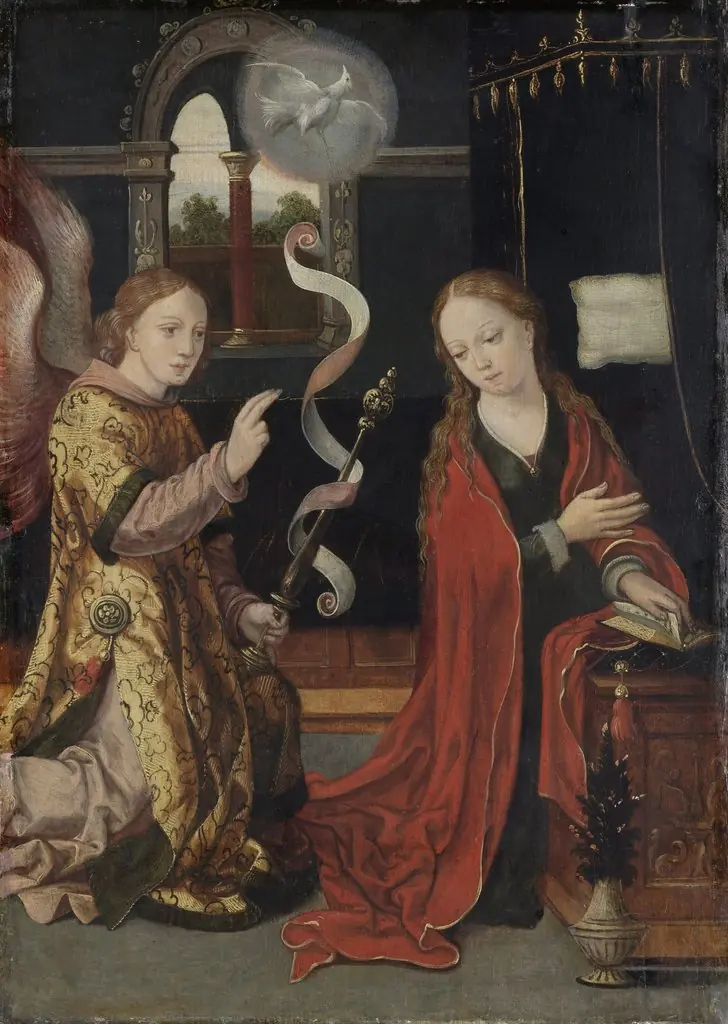
Executed in black‑and‑white line work, the print presents the biblical moment when the angel Gabriel announces to Mary that she will bear the Christ child.
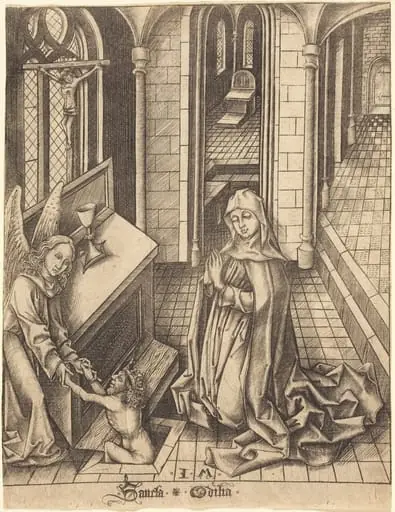
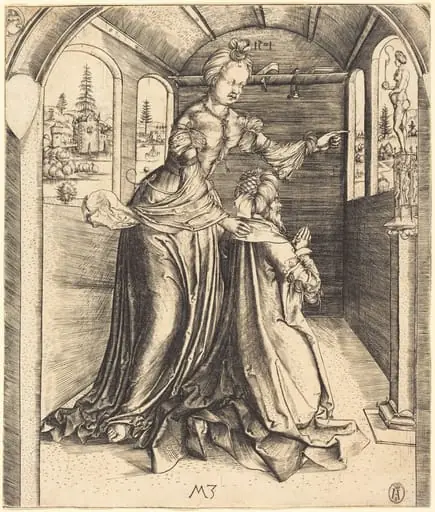
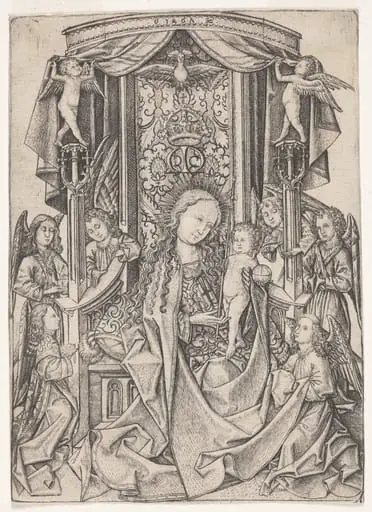
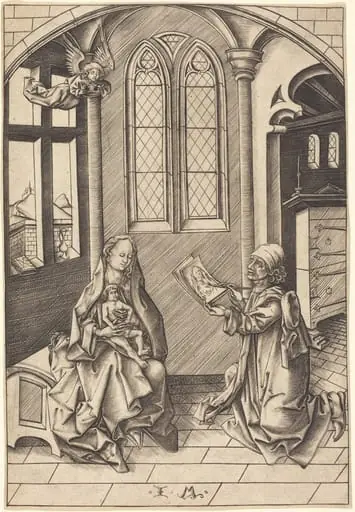
Around 1495 Israhel van Meckenem, a German engraver active in the late fifteenth century, produced an engraving titled *The Annunciation*. Executed in black‑and‑white line work, the print presents the biblical moment when the angel Gabriel announces to Mary that she will bear the Christ child. The composition is confined to an interior space, populated by several figures that convey the narrative in a compact, detailed manner.
Subject & Meaning
The central focus is the kneeling woman, identified as Mary, whose hands are clasped in prayer. To her left, a winged messenger holds a staff bearing the Latin inscription "AVE GRATIA," echoing the angelic greeting from the Gospel of Luke. A secondary scene behind Mary shows a man beside a bed with another woman and a sleeping child, suggesting the domestic context of the annunciation and the continuity of life.
Technique & Style
Meckenem employed the engraving technique, incising fine lines into a copper plate to achieve precise rendering of clothing folds, architectural details, and the tiled floor. The work displays his characteristic meticulous line work and a clear, linear style that emphasizes texture and spatial depth without the use of tonal shading.
History & Provenance
Israhel van Meckenem was one of the most prolific printmakers of his era, producing over six hundred impressions, many of which were copies of earlier masters such as Albrecht Dürer. *The Annunciation* reflects his practice of adapting popular religious subjects for a broad market. The print’s survival in several museum collections attests to its circulation among collectors of Northern Renaissance prints.
Context
The Annunciation was a frequent theme in late medieval and early Renaissance art, serving both devotional and didactic purposes. Meckenem’s version aligns with contemporary German visual conventions, integrating architectural elements like arched doorways and tiled floors that situate the sacred event within a familiar domestic setting, thereby making the narrative accessible to lay viewers.
Artist & collection
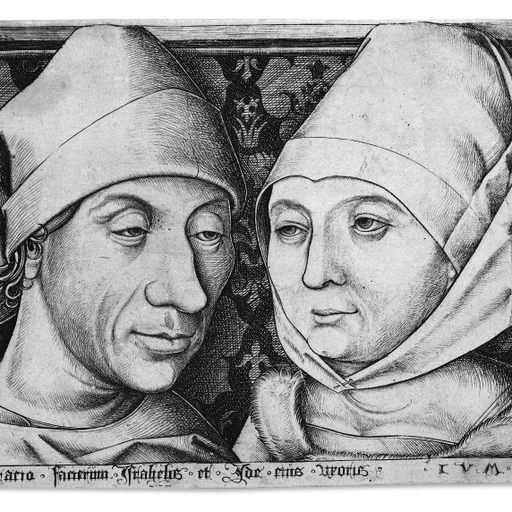
Artist
Israhel van Meckenem (c. 1445 – 10 November 1503), also known as Israhel van Meckenem the Younger, was a German printmaker and goldsmith, perhaps of a Dutch family origin. He was the most prolific engraver of the…