Artwork
Virgin and Child in a Church
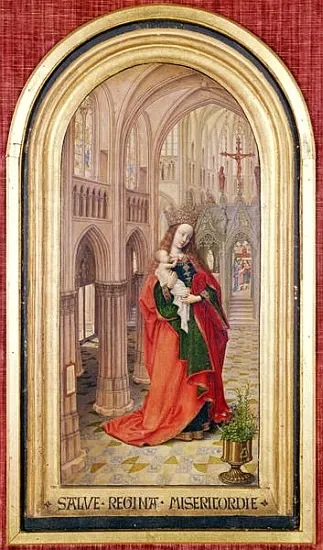
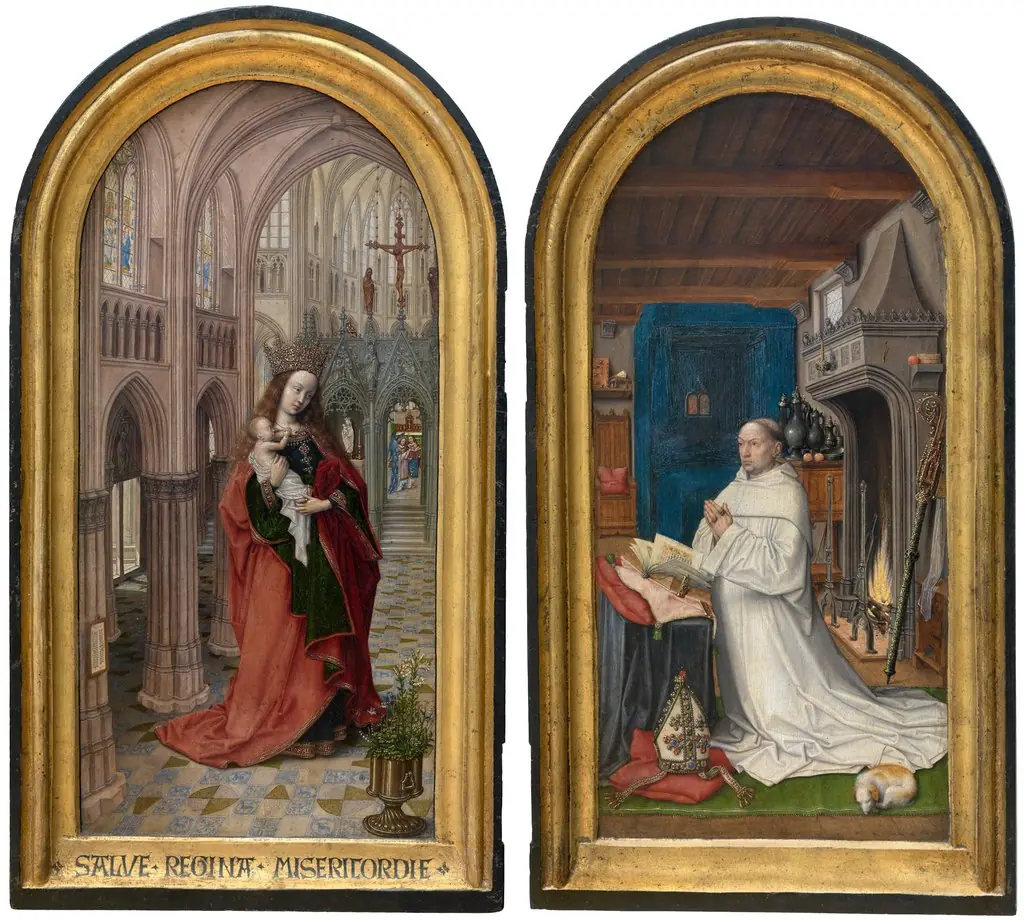
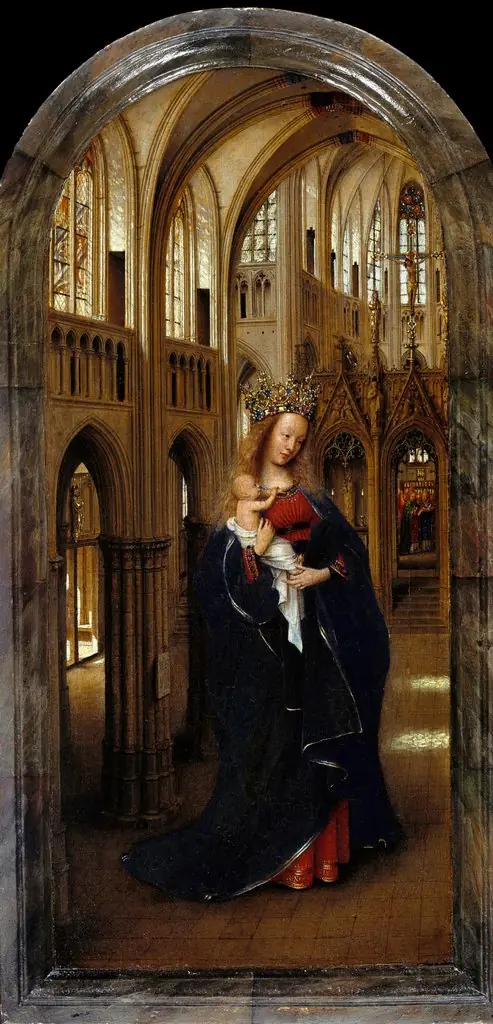
Virgin and Child in a Church is an oil painting by the Northern Renaissance artist Master of 1499. It dates from 1500 and is held in the collection of the Royal Museum of Fine Arts Antwerp.
About this work
The church has a high, vaulted ceiling with many windows, and there's a small plant in a pot on the floor next to the woman.
This painting shows a woman in a red robe holding a baby. She's standing in a large, ornate church with tall arches and columns. The baby is dressed in white and is looking up at the woman. The church has a high, vaulted ceiling with many windows, and there's a small plant in a pot on the floor next to the woman.
The woman is wearing a crown of stars, and the baby is wearing a small crown. The church is decorated with intricate stone carvings and statues. The overall atmosphere of the painting is one of serenity and devotion.
The painting is a beautiful example of religious art from the 15th century. To learn more about the artist's style and techniques, look up the work of Master of 1499.
Overview
Executed in oil around the turn of the sixteenth century, this panel presents the Virgin Mary cradling the infant Christ within an elaborately rendered Gothic nave. The figures occupy the central space of a lofty church interior, surrounded by soaring arches, detailed stonework and a modest pot plant, creating a tranquil devotional scene.
Subject & Meaning
The composition follows a longstanding medieval motif that emphasizes the intimate bond between mother and child as a symbol of divine intercession. Mary's red mantle and the child's white garment highlight their sacred roles, while the crowns of stars suggest heavenly authority, reinforcing the painting’s function as an object of prayer.
Technique & Style
The artist employs the precise oil glazing characteristic of the Northern Renaissance, achieving luminous skin tones and intricate architectural detail. Influences from Hugo van der Goes and Jan van Eyck are evident in the meticulous rendering of textures, from the velvet folds to the stone carvings, and in the balanced spatial perspective that guides the viewer’s eye toward the central figures.
History & Provenance
Attributed to the anonymous Master of 1499, a Flemish painter identified by a dated diptych, the work entered the collection of the Royal Museum of Fine Arts in Antwerp in the early twentieth century. Its provenance prior to museum acquisition remains undocumented, reflecting the common anonymity of many workshop productions of the period.
Context
Created at the close of the fifteenth century, the painting reflects the transitional phase between late medieval devotional imagery and the emerging naturalism of the Northern Renaissance. Its setting within a Gothic church interior mirrors contemporary liturgical spaces, while the serene interaction between mother and child aligns with the period’s emphasis on personal piety.
Artist & collection
Artist
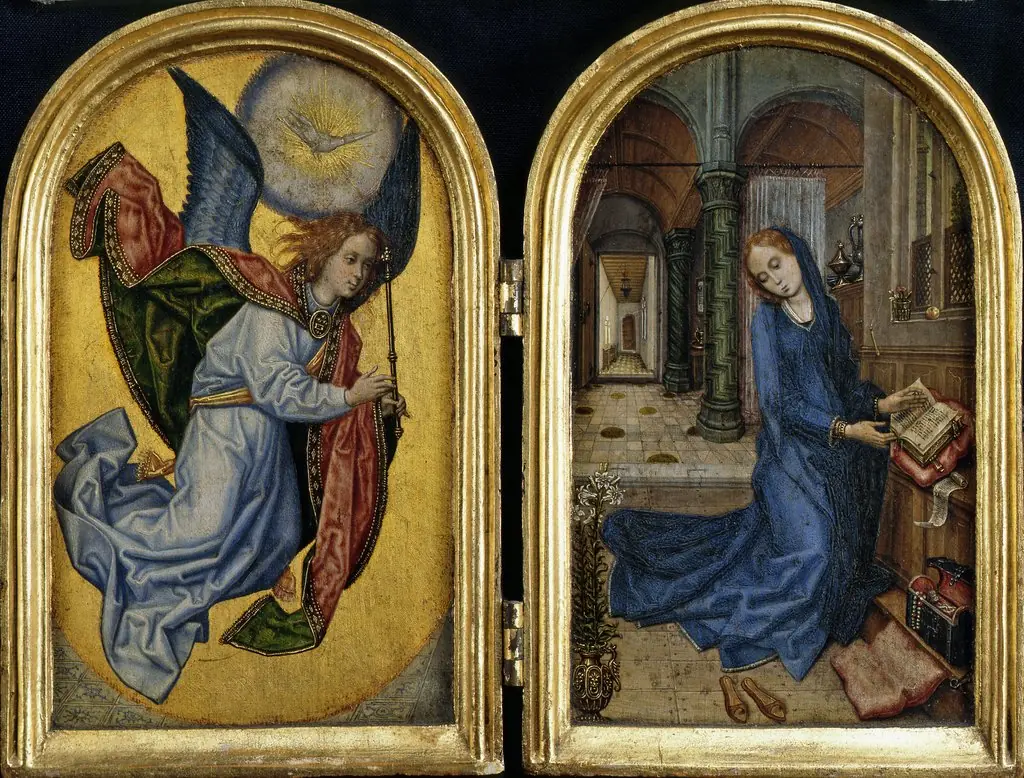
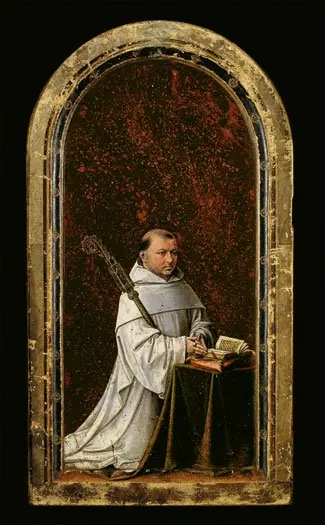
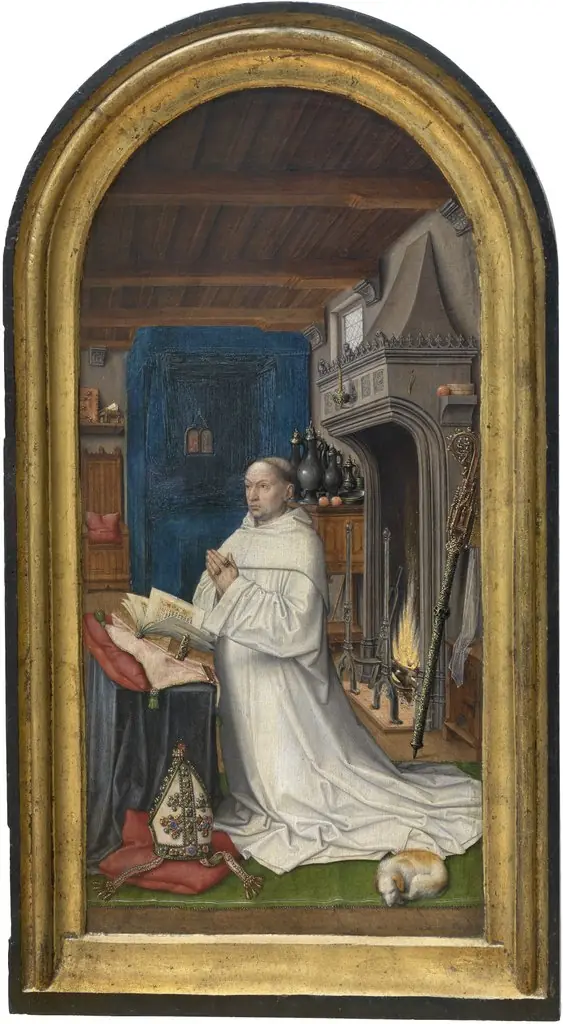
The Master of 1499, sometimes called the Bruges Master of 1499, was a Flemish painter active at the end of the fifteenth century, known from four paintings, all closely related to earlier works by others, and one dated "1499".

 The Virgin and Child
 The Virgin and Child
 The Madonna in the Church
 Our Lady of the Snows
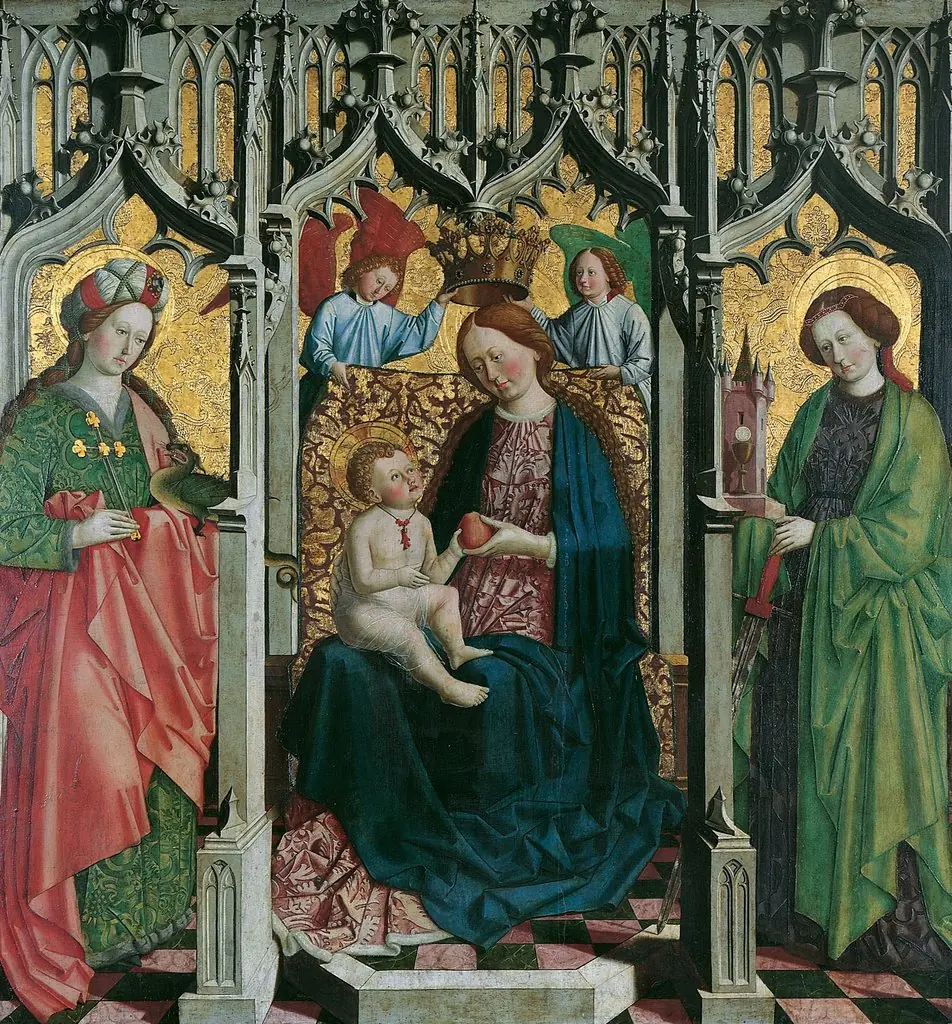 Mary and child enthroned with St. Barbara and St. Margaret
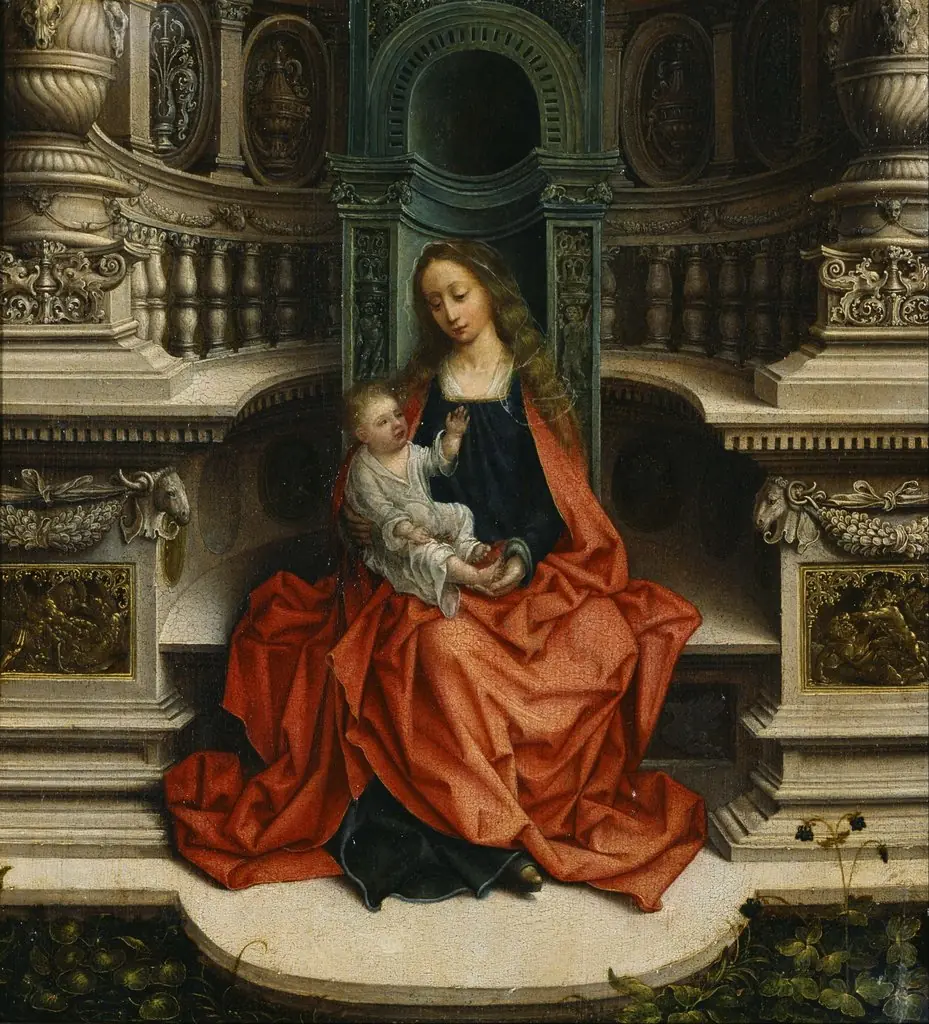 The Madonna and Child Enthroned
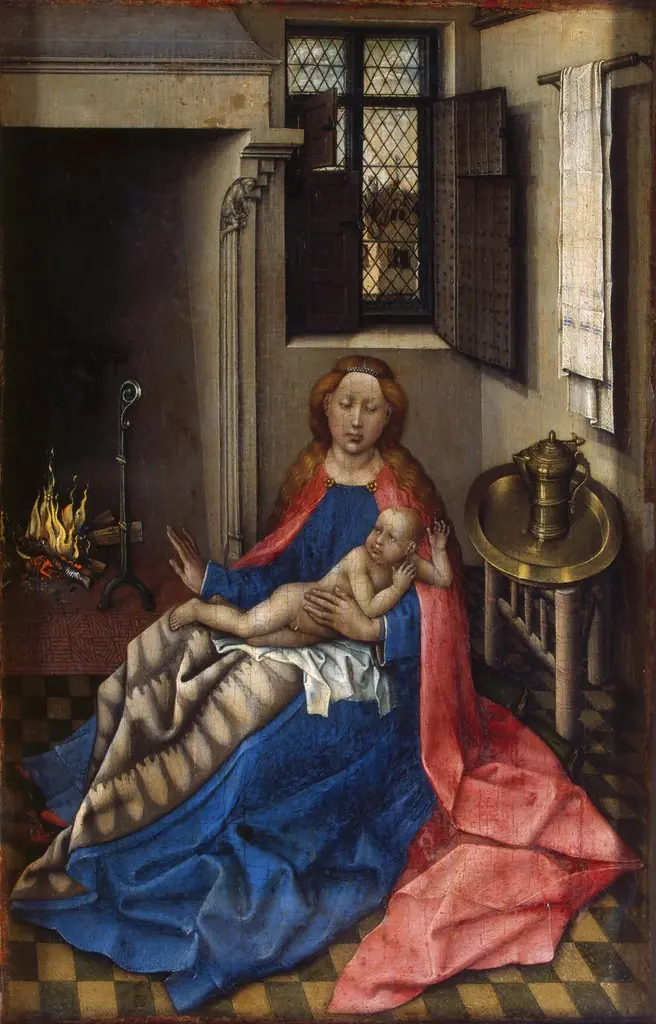 The Virgin and Child by a Fireplace (Right Wing of a Diptych)
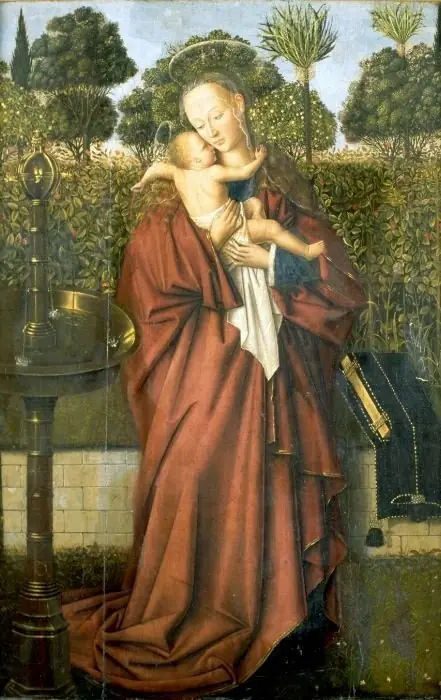 Virgin at the fountain
 Virgin and Child in an Apse
 Durán Madonna
 Madonna and Child with Angels
 Mary enthroned with the Christ child