Artwork
The Holy Family with an Angel
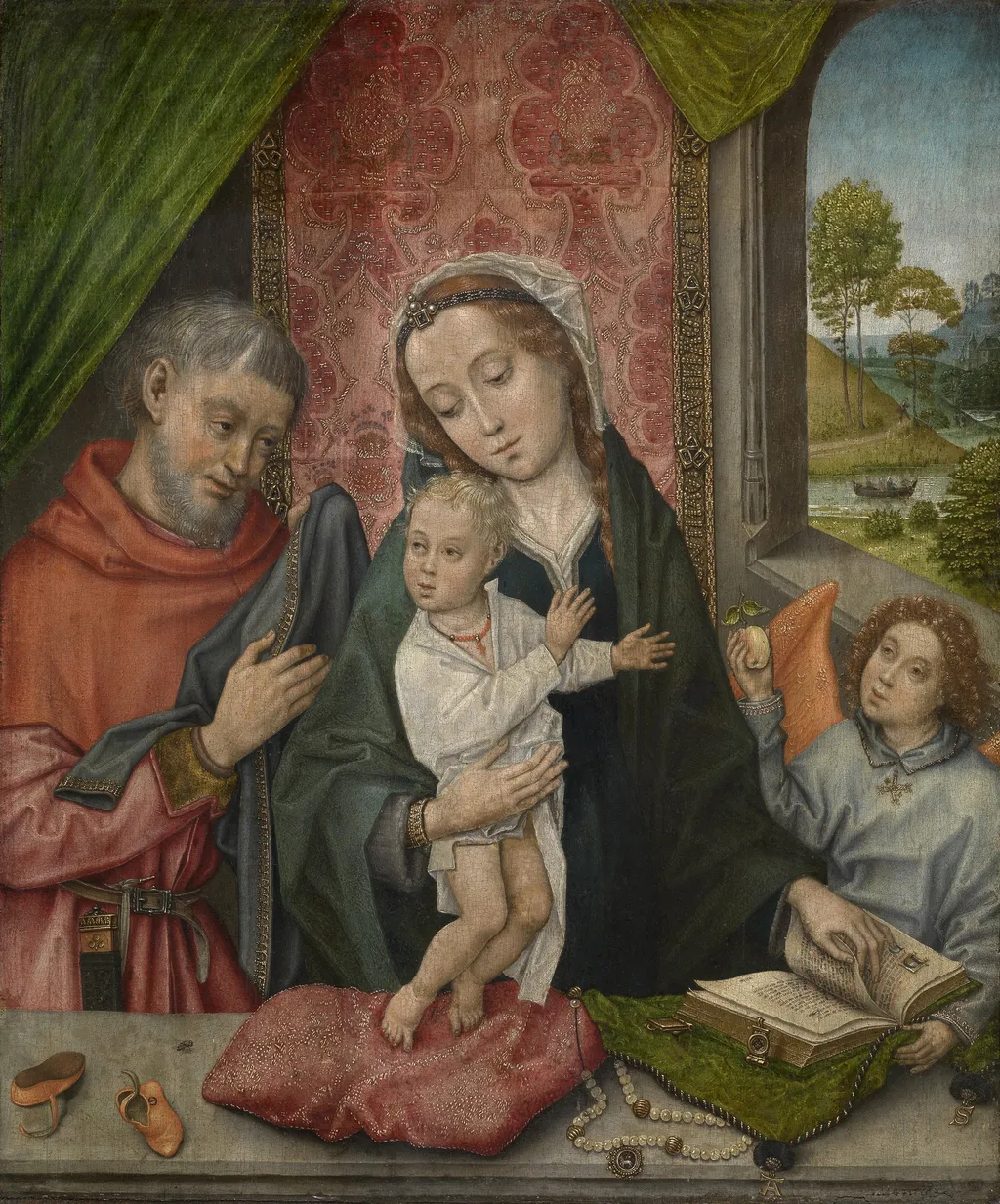
The Holy Family with an Angel is an oil painting by the Northern Renaissance artist Master of 1499. It dates from 1450 and is held in the collection of the Royal Museum of Fine Arts Antwerp.
About this work
Joseph is standing to the left, wearing a red robe and holding a grey cloak.
The painting depicts the Holy Family with an angel. Mary is holding the baby Jesus, who is wearing a white robe. Joseph is standing to the left, wearing a red robe and holding a grey cloak. An angel is sitting on the right, holding a book and an apple.
The background of the painting is a red patterned wall with a green curtain on the left and a window on the right that shows a landscape with trees, a river, and a boat. The overall atmosphere of the painting is serene and intimate.
The Holy Family with an Angel is a beautiful example of early Renaissance art, showcasing the artist's skill in capturing the subtleties of human emotion and the beauty of the natural world. Next, explore more works by the artist, Master of 1499.
Overview
Painted around 1450 in oil on panel, this devotional work is attributed to the Master of 1499, an anonymous Flemish artist named after a signed diptych from 1499. Likely based in Ghent, the painter worked within the Northern Renaissance tradition, drawing inspiration from earlier masters like Hugo van der Goes. The piece remains in the collection of the Royal Museum of Fine Arts Antwerp, where it exemplifies the quiet intensity of mid-fifteenth-century religious imagery.
Subject & Meaning
The composition centers on the Virgin Mary cradling the infant Jesus, with Joseph standing nearby and an angel seated beside them. The angel holds a book and an apple—symbols of divine knowledge and the Fall—suggesting Christ’s redemptive role. The intimate grouping emphasizes familial tenderness, while the angel’s presence bridges earthly and sacred realms, reinforcing the devotional purpose of the image for private contemplation.
Technique & Style
The artist employs fine brushwork to render textures: the soft folds of Mary’s robe, the grain of Joseph’s cloak, and the sheen of the angel’s wings. The background features a patterned red wall and a green curtain, framing a distant landscape visible through a window—trees, a river, and a boat rendered with delicate precision. Light falls evenly, enhancing the calm mood without dramatic contrast, typical of early Flemish panel painting.
History & Provenance
The painting’s origin is tied to the workshop traditions of Ghent, where artists often emulated the detailed realism of van der Goes. Though unsigned, its style aligns with other works from the same hand, identified through comparative analysis of similar compositions. It entered the Royal Museum of Fine Arts Antwerp’s collection in the nineteenth century, where it has remained as part of its core Northern Renaissance holdings.
Context
Created during a period when private devotion was growing among urban elites, the painting reflects the demand for small-scale religious panels for home use. Its restrained palette and focus on quiet intimacy contrast with the grand altarpieces of public churches. The inclusion of symbolic objects like the apple and book reveals a theological depth intended to guide personal meditation rather than public spectacle.
Legacy
The Master of 1499 represents a generation of Flemish painters who preserved the meticulous techniques of the early Netherlandish tradition while adapting them to evolving devotional needs. Though not widely known by name, his work contributes to understanding the continuity of style between van Eyck and later artists. This painting endures as a quiet testament to the spiritual and artistic values of its time.
Own this work as a print
Artist & collection
Artist
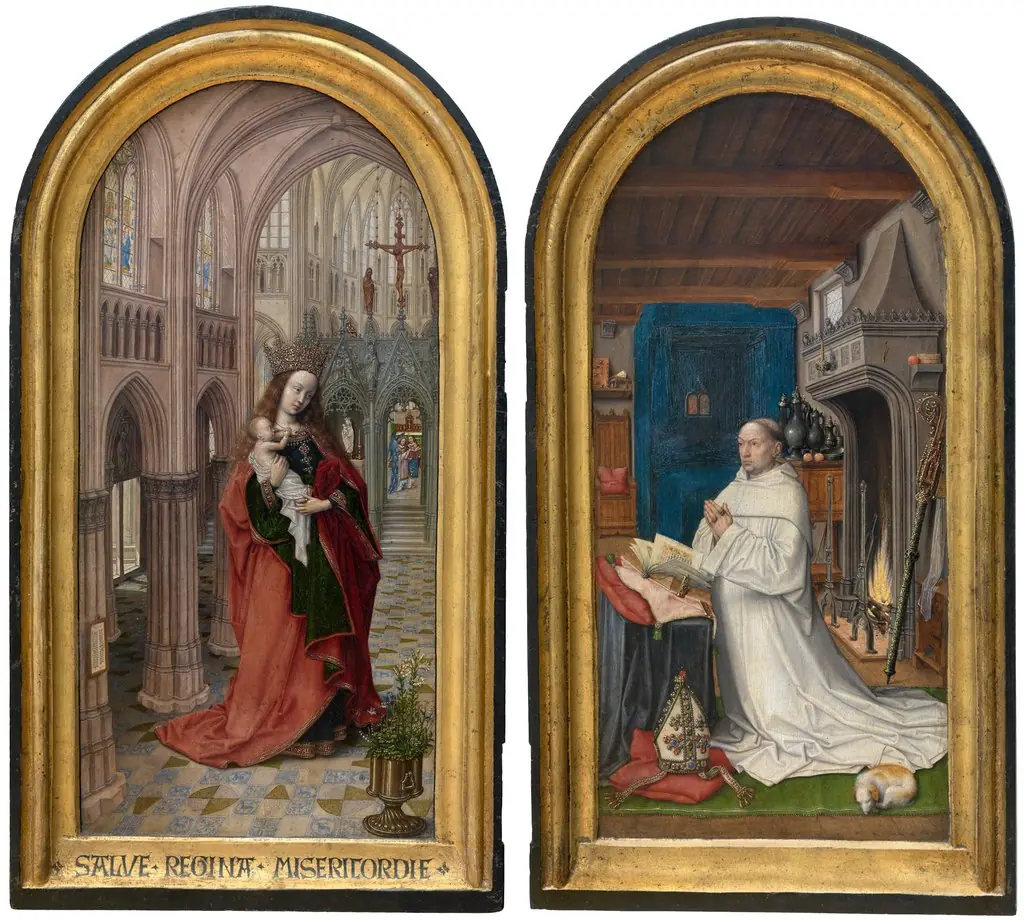
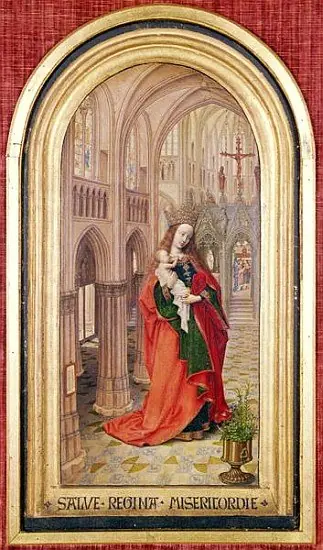
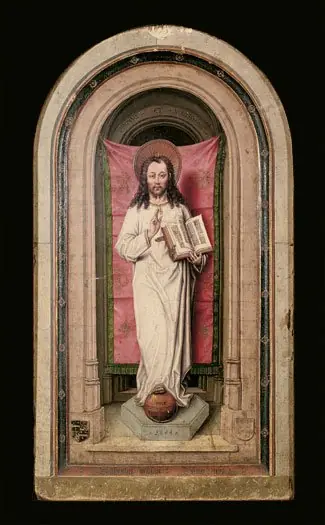
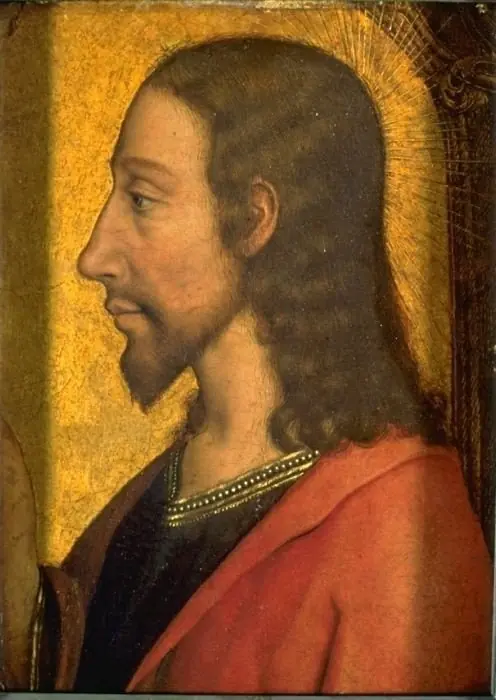
The Master of 1499, sometimes called the Bruges Master of 1499, was a Flemish painter active at the end of the fifteenth century, known from four paintings, all closely related to earlier works by others, and one dated "1499".

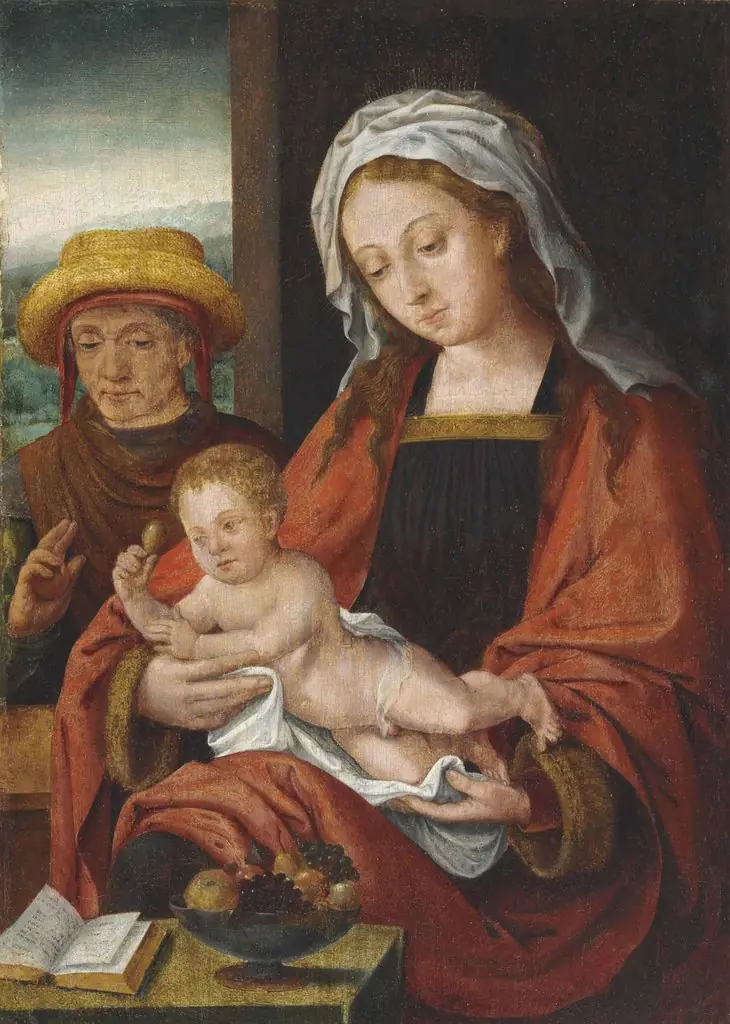 The Holy Family
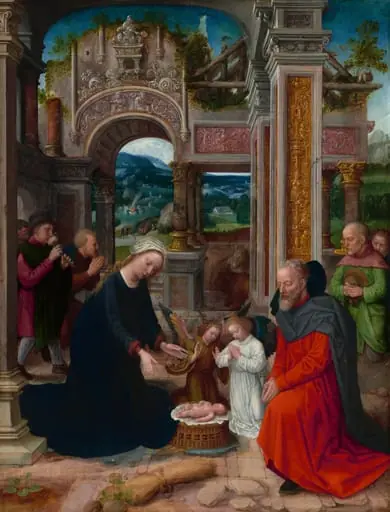 The Adoration of the Shepherds
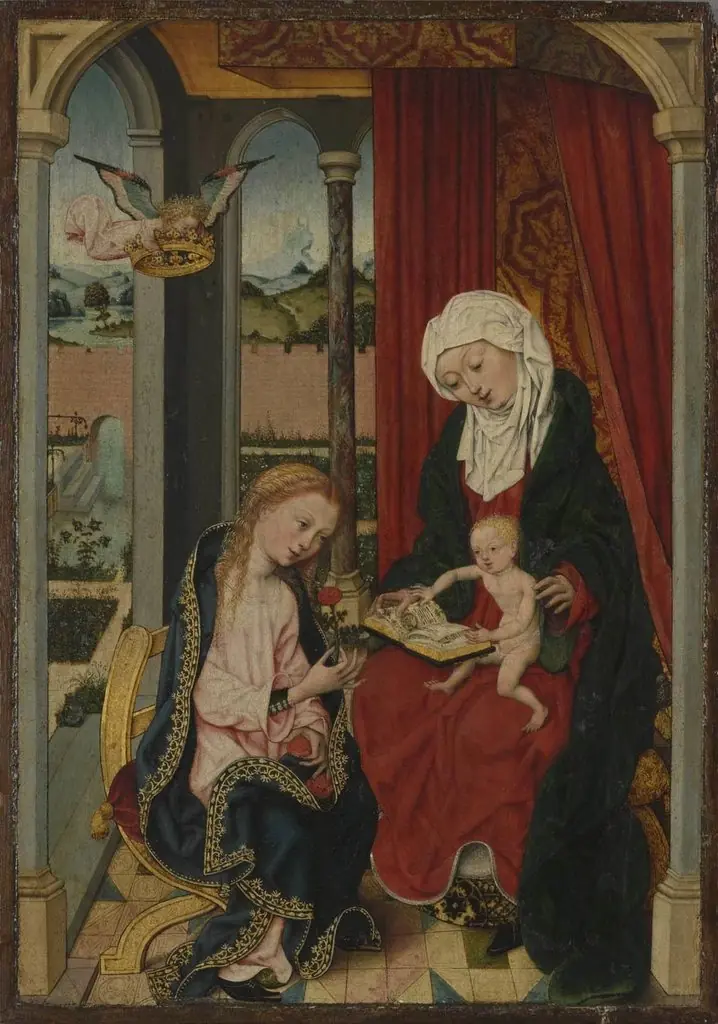 Virgin and Child with Saint Anne
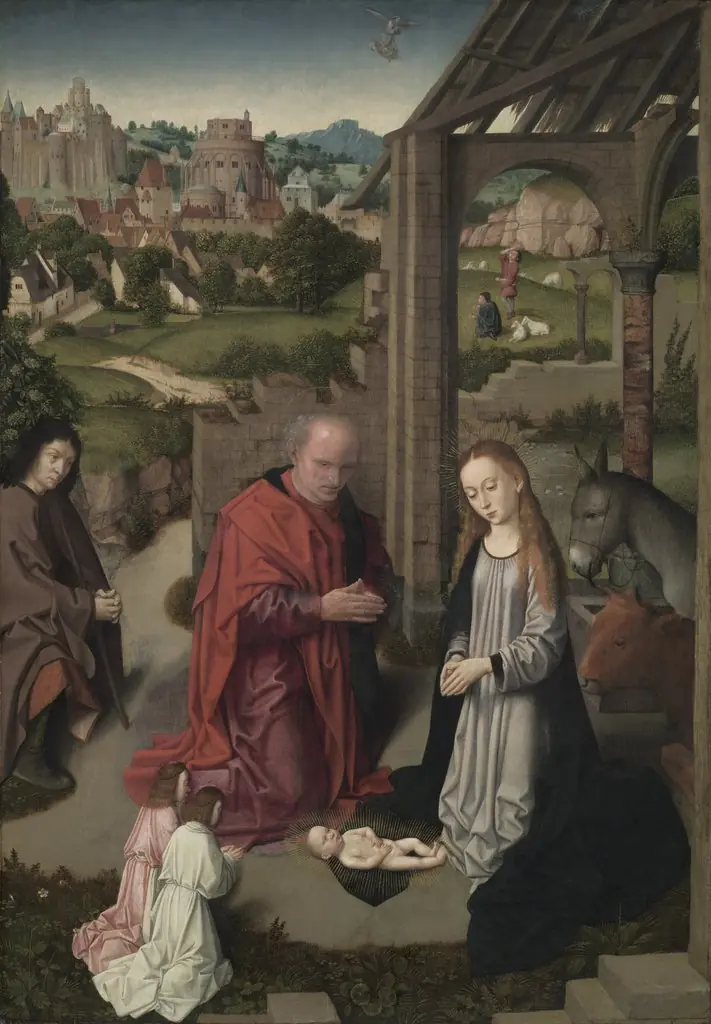 The Nativity
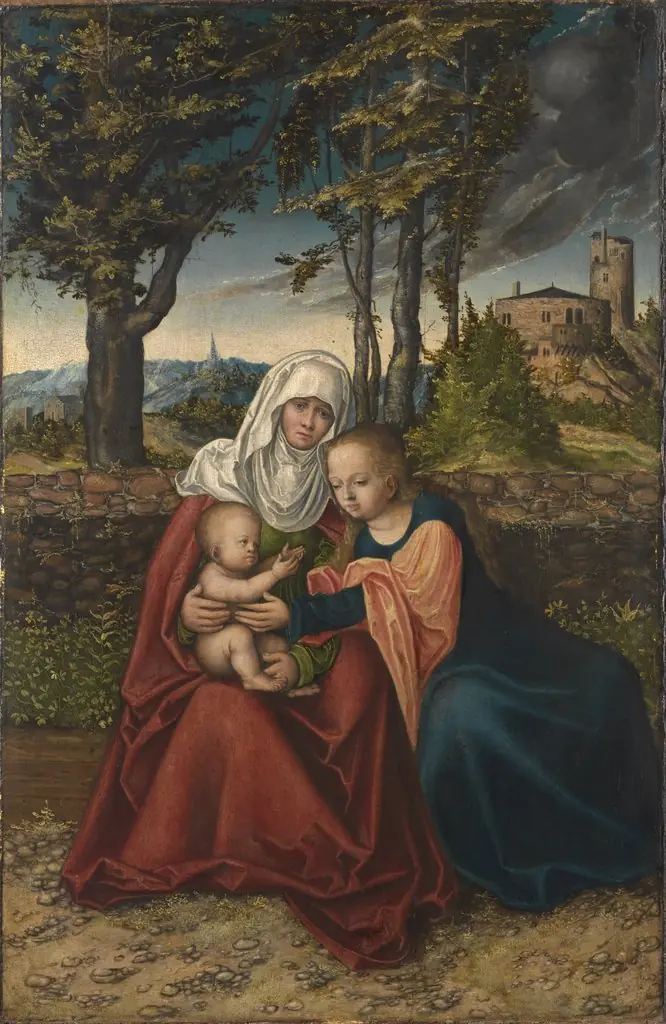 The Virgin and Child with Saint Anne
 Madonna and Child with Saints in the Enclosed Garden
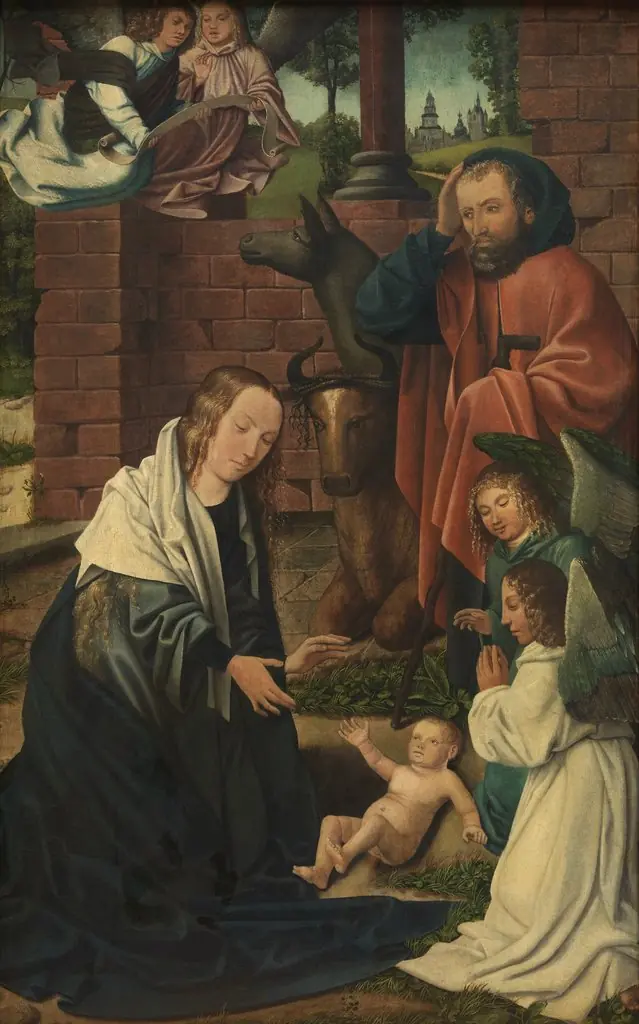 The Nativity
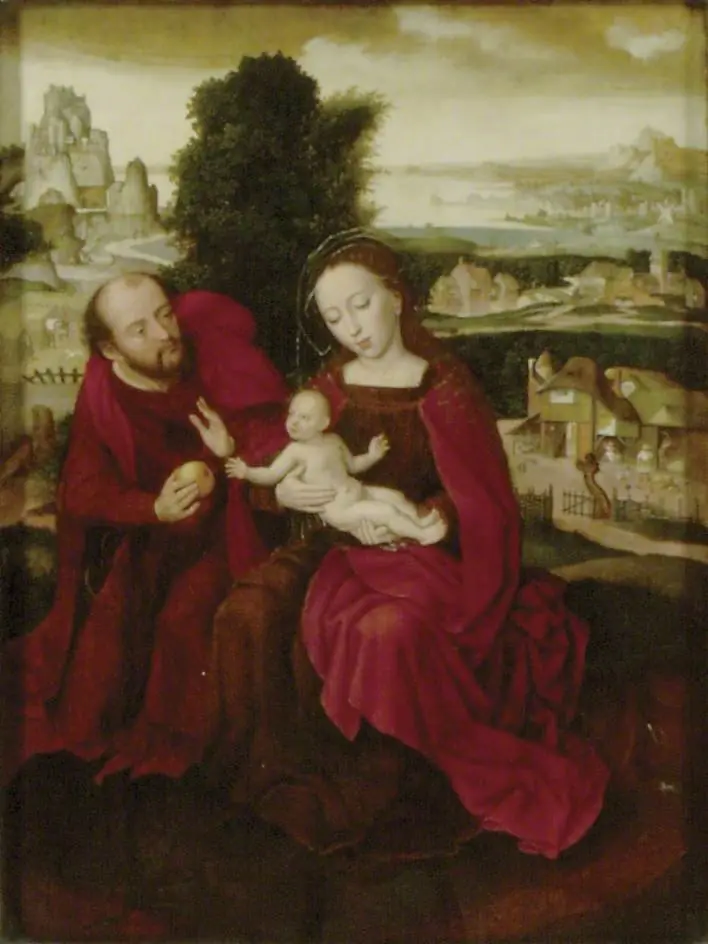 The Holy Family in a Landscape
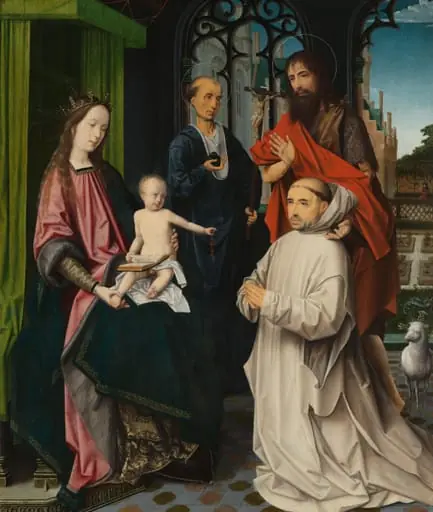 Tronende Maria en Christus, met Sint-Hiëronymus, Johannes de Doper en een kartuizer monnik
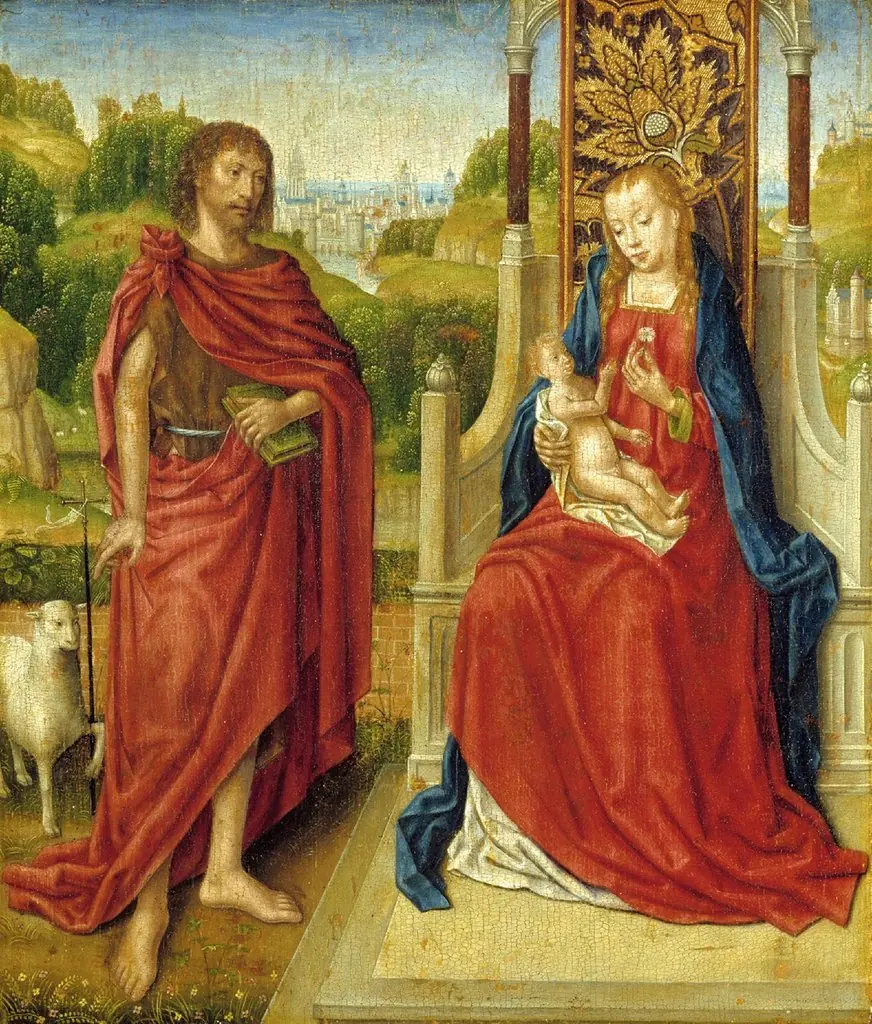 Virgin and Child and Saint John the Baptist
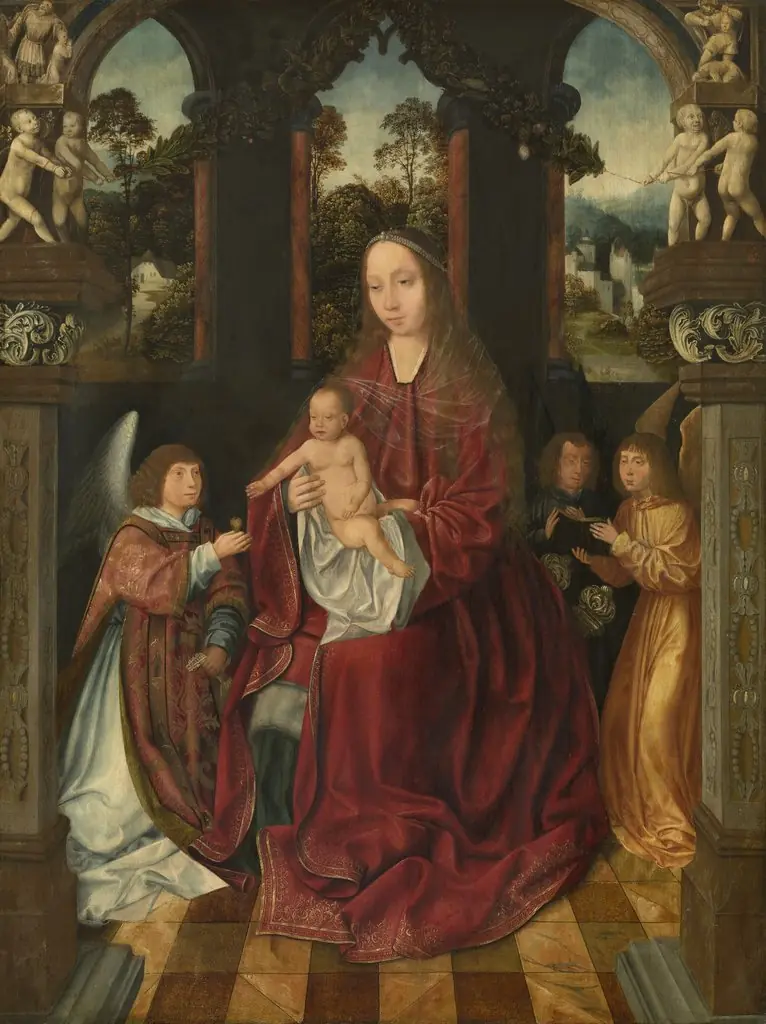 Madonna with Angels
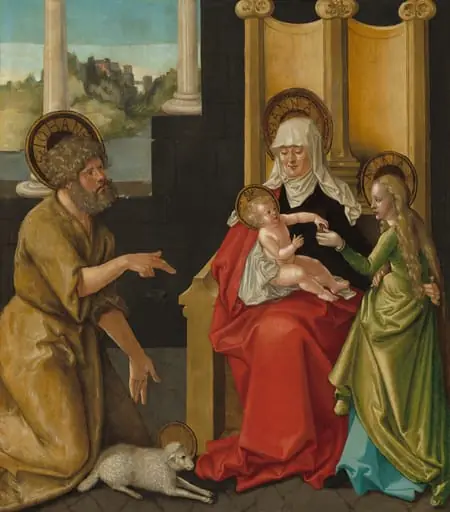 Saint Anne with the Christ Child, the Virgin, and Saint John the Baptist