Artwork
Christiaan de Hondt, abbot of Ter Duinen
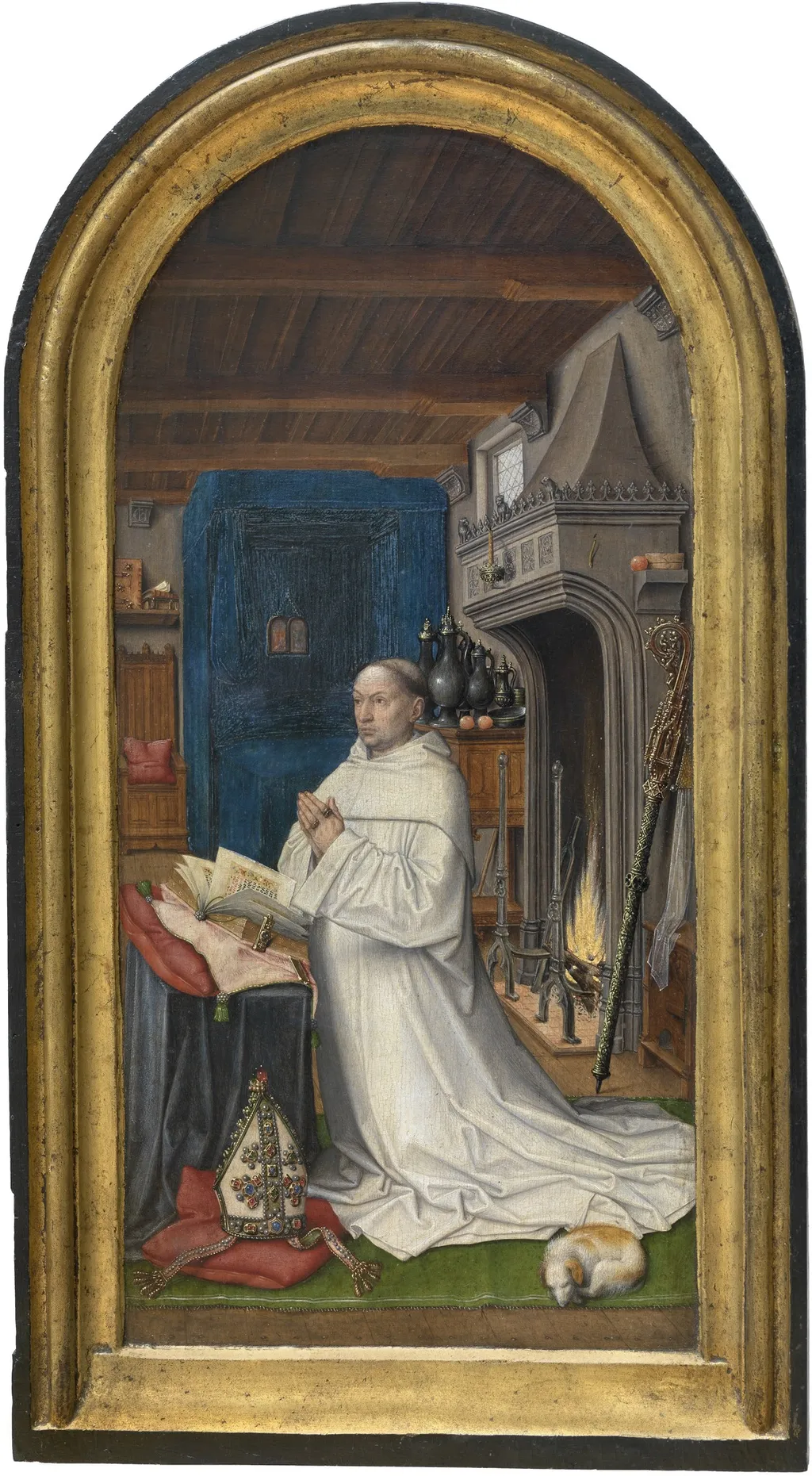
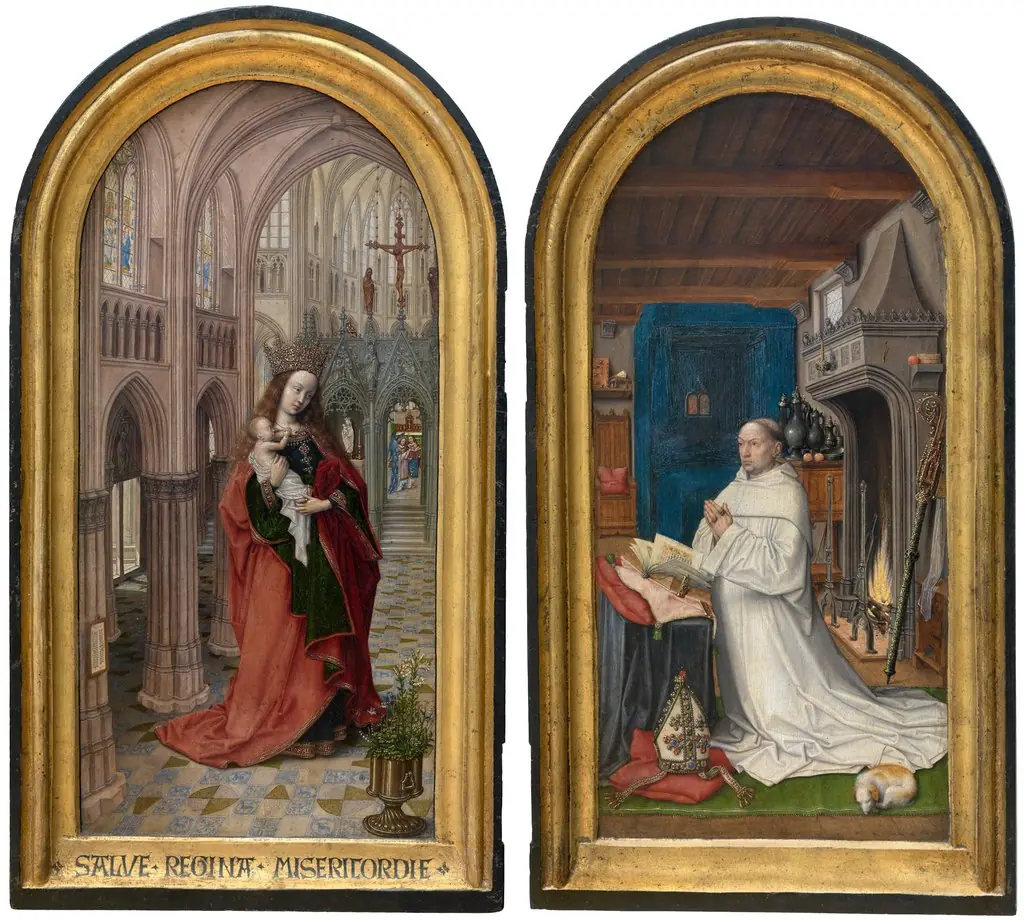
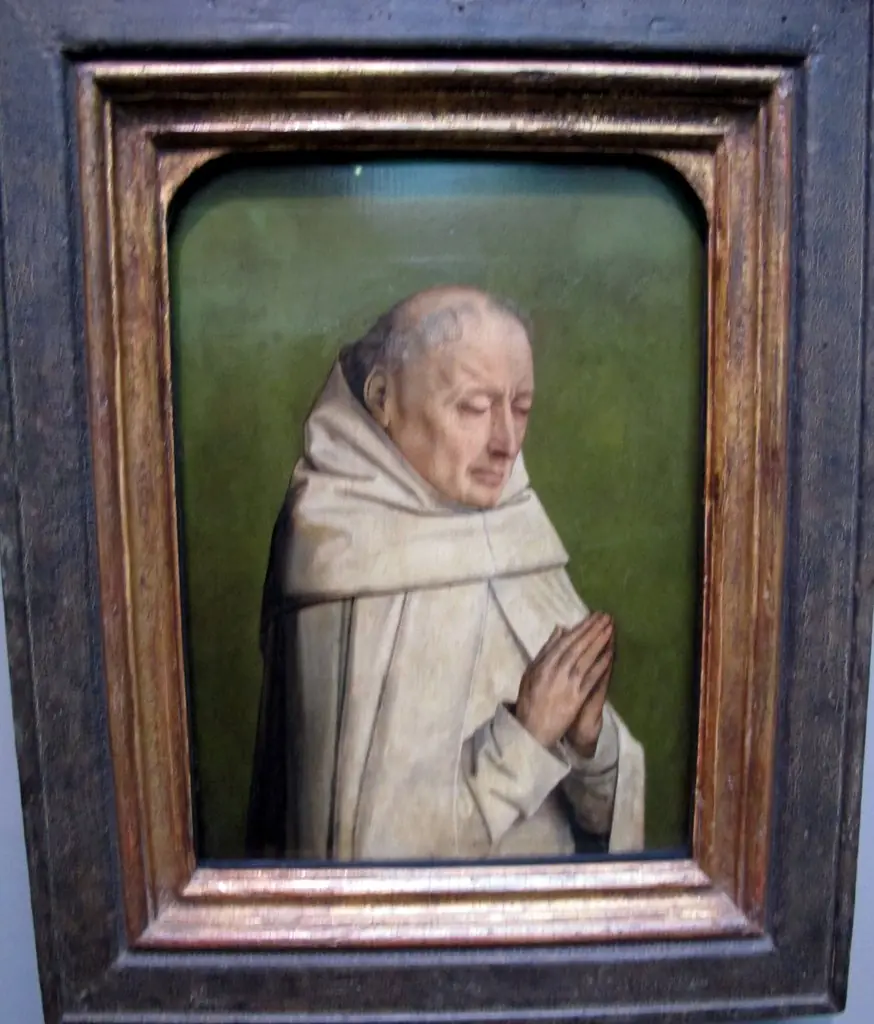
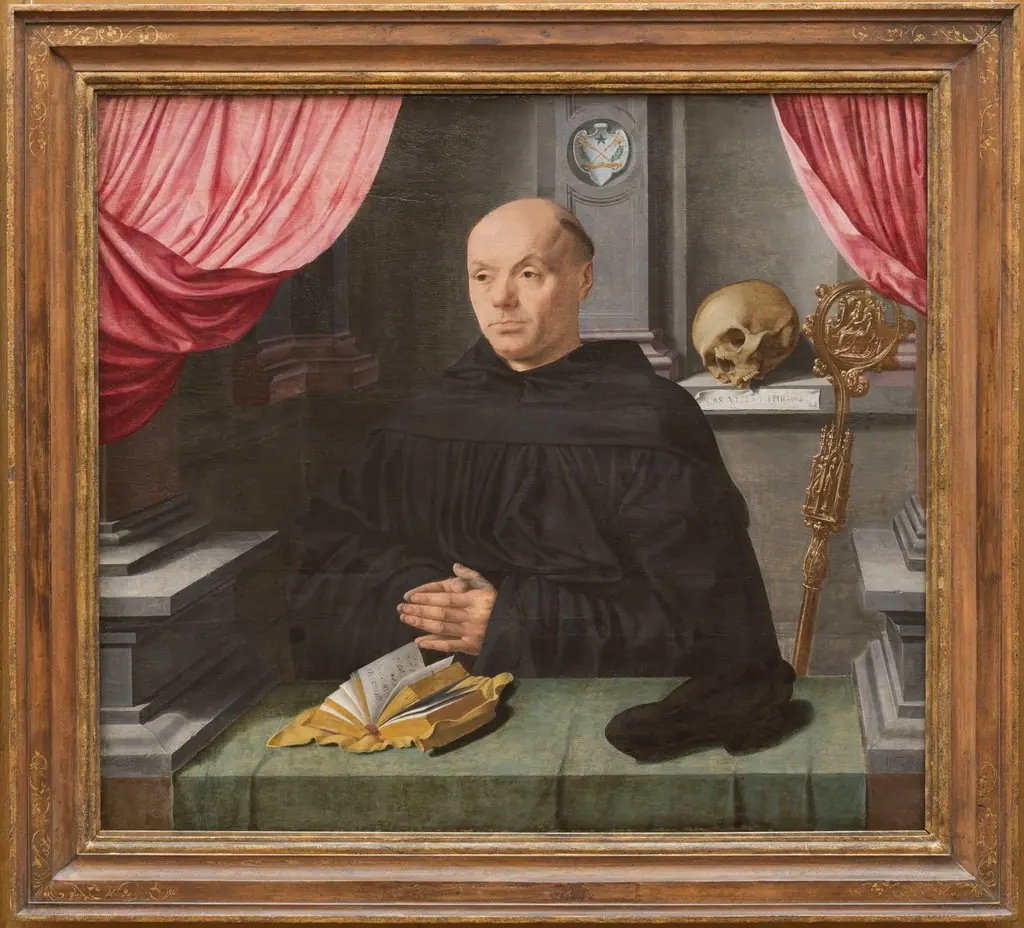
Christiaan de Hondt, abbot of Ter Duinen is a color painting by the Northern Renaissance artist Master of 1499. It dates from 1500 and is held in the collection of the Royal Museum of Fine Arts Antwerp. Created in 1500, this portrait shows Christiaan de Hondt, the abbot of Ter Duinen, rendered in vivid colour.
About this work
Behind him, a dark blue cabinet and a fireplace with a black hood fill the background.
A man in a white robe kneels on a green cloth, praying over an open book. His bald head and serious face stand out against the dim room. Behind him, a dark blue cabinet and a fireplace with a black hood fill the background. A red cushion holds a golden crown, and a small dog lies nearby.
The painting looks old—wooden beams and worn edges frame the scene. The artist used bold colors and sharp light to make the man stand out.
Next, check out the Master of 1499 to see more of their work.
Overview
Created in 1500, this portrait shows Christiaan de Hondt, the abbot of Ter Duinen, rendered in vivid colour. The work is attributed to the anonymous Flemish painter known as the Master of 1499, active in the closing decades of the fifteenth century. It is part of the collection of the Royal Museum of Fine Arts in Antwerp and exemplifies Northern Renaissance portraiture.
Subject & Meaning
The figure is presented kneeling on a green cloth, his white habit contrasting with a solemn, bald head and a grave expression as he prays over an open book. A small dog rests at his feet, a traditional symbol of fidelity, while a golden crown rests on a red cushion, hinting at the abbot’s ecclesiastical authority.
Technique & Style
The painter employs a strong, saturated palette and a sharply defined light source that isolates the abbot from a dimly lit interior. The background includes a dark blue cabinet and a fireplace with a black hood, rendered with precise detail. The handling of colour and form reflects the influence of Hugo van der Goes and the earlier innovations of Jan van Eyck.
History & Provenance
The portrait has remained in the Flemish region since its creation, eventually entering the holdings of the Royal Museum of Fine Arts Antwerp. Its attribution to the Master of 1499 rests on stylistic comparison with other dated works by the same hand, notably a 1499 panel of similar composition.
Context
Produced at the turn of the sixteenth century, the painting belongs to the Northern Renaissance, a period marked by heightened realism and attention to material detail. Portraits of religious leaders such as abbots were common, serving both devotional and commemorative functions within monastic communities.
Artist & collection
Artist
The Master of 1499, sometimes called the Bruges Master of 1499, was a Flemish painter active at the end of the fifteenth century, known from four paintings, all closely related to earlier works by others, and one dated "1499".