Artwork
The Beheading of Saint John the Baptist
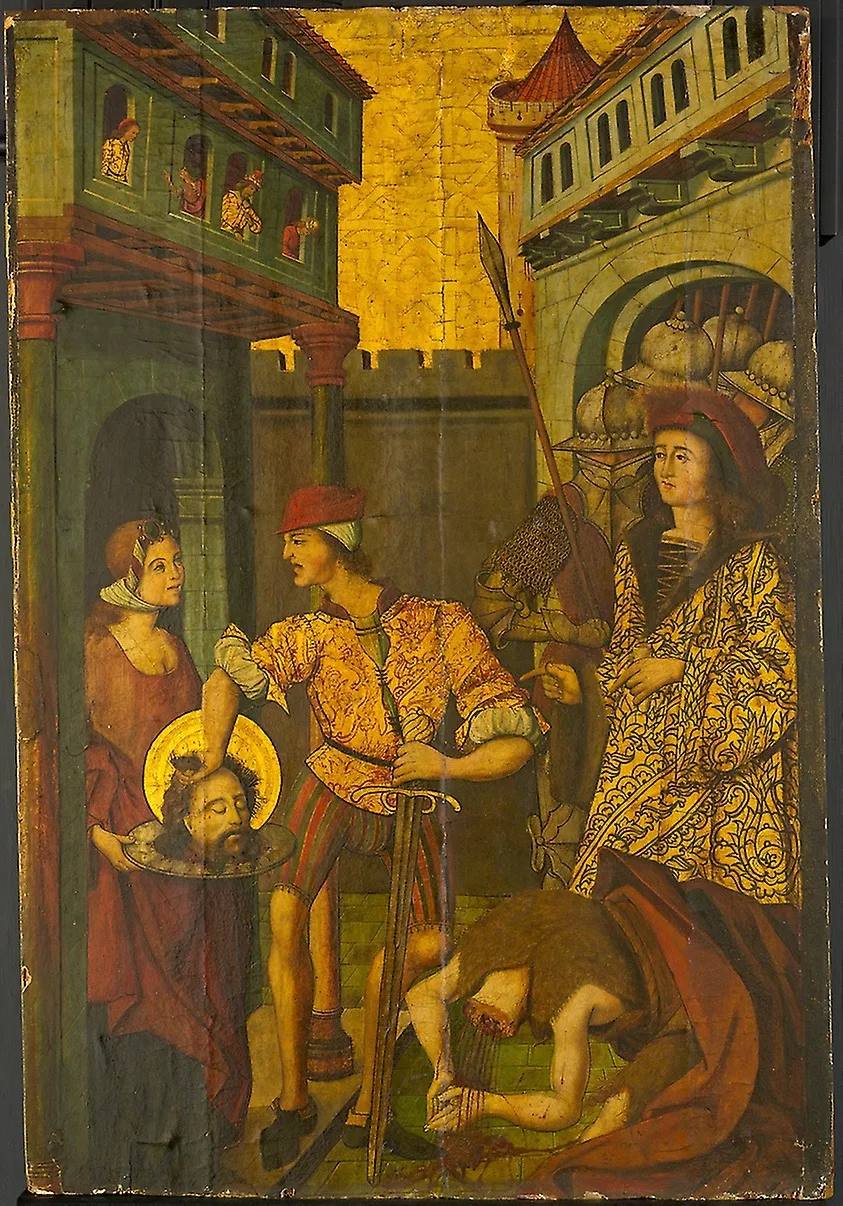
The Beheading of Saint John the Baptist is an unspecified painting by Master of Palanquinos. It dates from 1498 and is held in the collection of the Art Institute of Chicago.
About this work
Overview
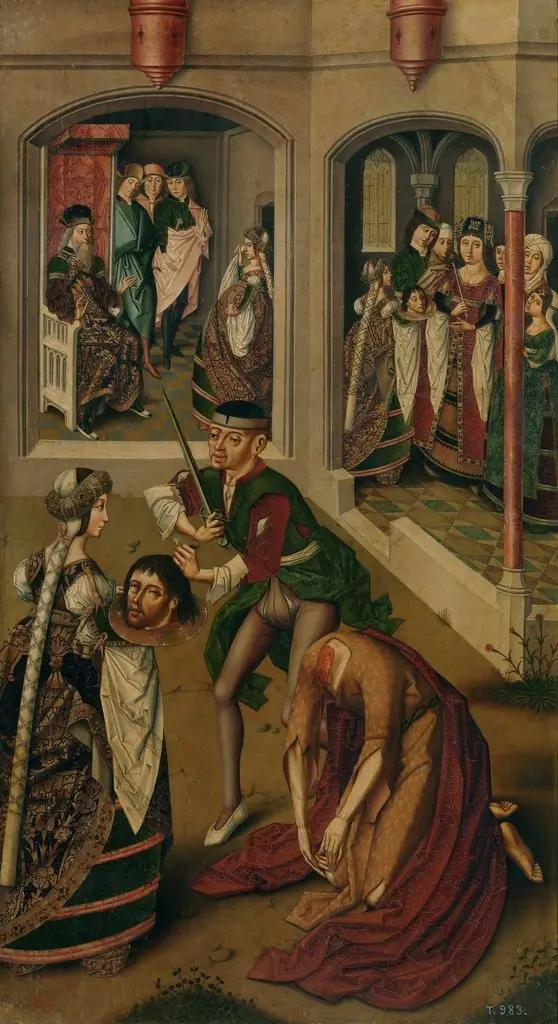
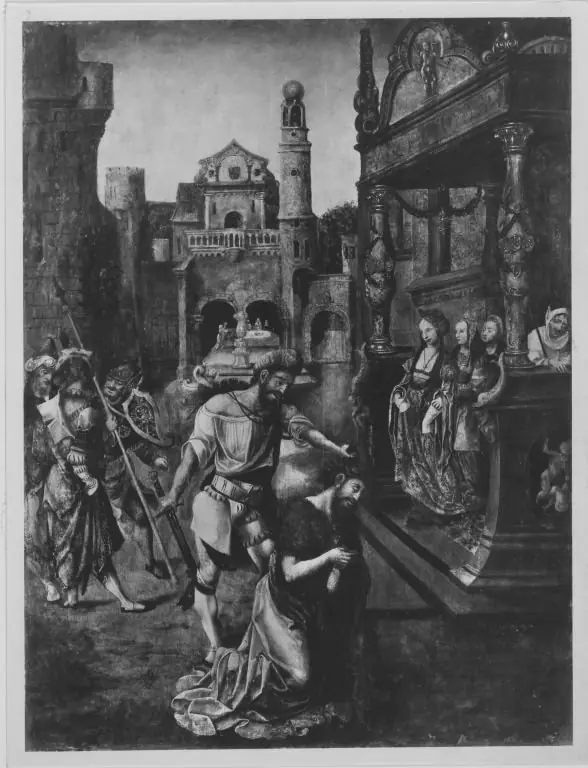
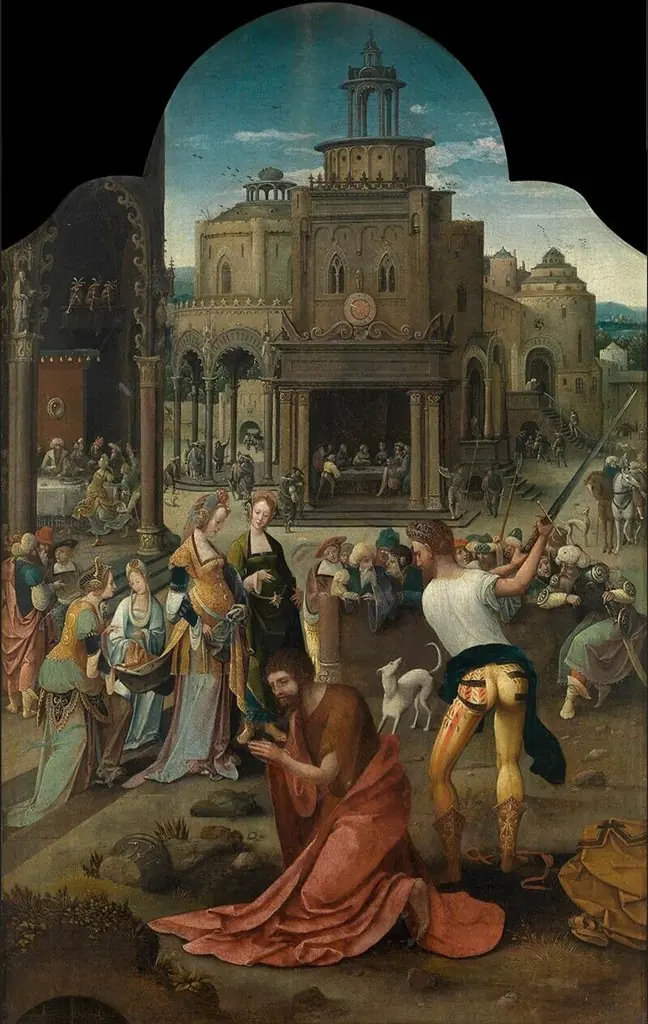
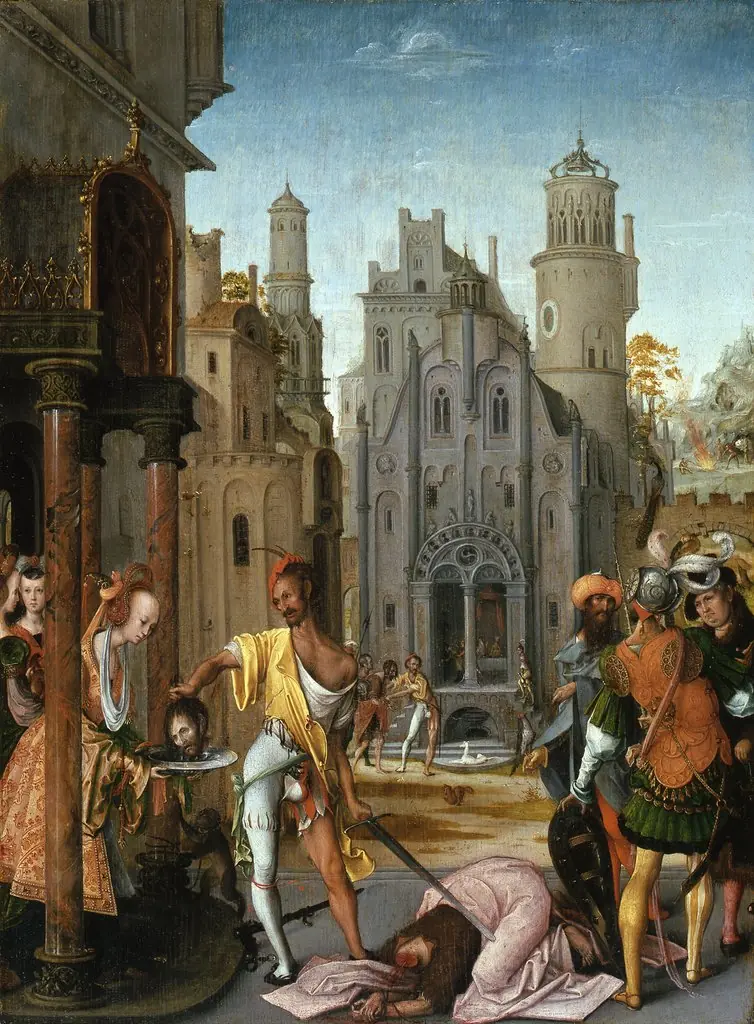
Painted in 1498, this work by the Master of Palanquinos depicts the execution of John the Baptist, a moment from the New Testament. It is one of the few surviving panels attributed to this artist and is currently in the collection of the Art Institute of Chicago. The scene is rendered with a solemn intensity, emphasizing ritual and consequence rather than violence.
Subject & Meaning
The painting illustrates the moment after John the Baptist’s beheading, with his head on a platter held by Salome. A woman in red, likely Salome, presents the head; another observes passively, while a soldier holds the sword. The scene conveys the weight of political retribution and moral consequence, reflecting medieval interpretations of biblical justice and martyrdom.
Technique & Style
Gold leaf accents on garments suggest sacred significance, while the rigid postures and limited spatial depth align with late Gothic conventions.
The artist employs flat, decorative forms with sharp outlines and vivid hues for the figures, contrasting with the subdued, earth-toned architecture behind them. Gold leaf accents on garments suggest sacred significance, while the rigid postures and limited spatial depth align with late Gothic conventions. The composition directs attention to the platter, the focal point of narrative and emotional tension.
History & Provenance
The painting likely originated as part of a devotional altarpiece in a Spanish church, consistent with the Master of Palanquinos’ known regional activity. It entered the Art Institute of Chicago’s collection in the 20th century, following earlier ownership by private collectors in Europe. Its survival is rare, as many similar panels were lost or destroyed during religious upheavals.
Context
Created during the late 15th century, the work reflects the enduring influence of Gothic traditions in Spain, even as Renaissance ideas spread elsewhere. Religious narratives remained central to commissioning, especially scenes of martyrdom that reinforced faith and moral discipline. The artist’s style shows little Italian influence, preserving a distinctly Iberian aesthetic.
Legacy
Though the Master of Palanquinos remains obscure, this painting stands as a key example of late medieval Spanish devotional art. It contributes to scholarly understanding of regional workshop practices and the visual language of martyrdom before the full emergence of Renaissance naturalism in the Iberian Peninsula.
Artist & collection
Artist
This Spanish painter made religious scenes on wooden panels in the late 1400s. See their *Virgin Suckling the Child with Donor* or *The Beheading of Saint John the Baptist*—both show dramatic moments in gold-framed…