Artwork
The massacre of the innocents at Bethlehem
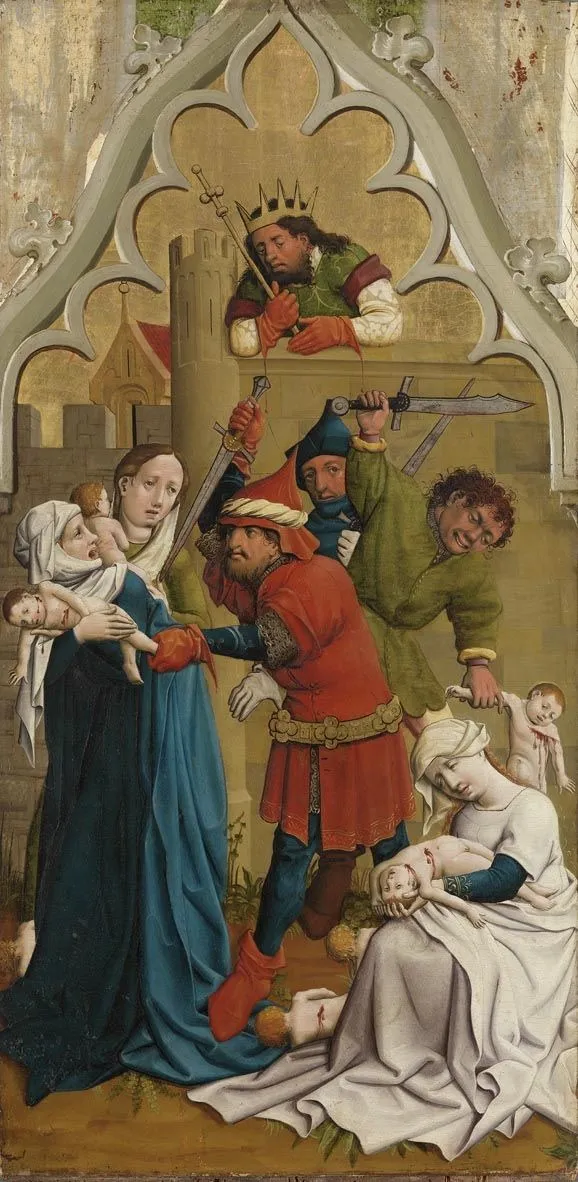
The massacre of the innocents at Bethlehem is an oil painting by the Northern Renaissance artist Master of Schloss Lichtenstein. It dates from 1450 and is held in the collection of the Bavarian State Painting Collections.
About this work
Overview
The work titled *The Massacre of the Innocents at Bethlehem* is an oil painting executed around 1450 by the anonymous figure known as the Master of Schloss Lichtenstein. It is part of the collection of the Alte Pinakothek in Munich. The composition captures a brief, violent episode from the biblical narrative, rendered in a compact, crowded format.
Subject & Meaning
The scene depicts a chaotic encounter in Bethlehem where soldiers confront a mother clutching an infant, another woman lies dead with her child, and a crowned onlooker watches from a window. The juxtaposition of aggressive figures in armor with grieving civilians underscores the brutality of the biblical massacre and invites contemplation of innocence amid political power.
Technique & Style
Rendered in oil on panel, the painting employs layered glazing to achieve depth of colour, particularly in the rich reds of the armor and the deep blues of the woman's garment. The figures are outlined with precise, linear strokes, while the background architecture—suggestive of a church and a fortified structure—provides a shallow spatial setting typical of mid‑15th‑century Northern European art.
History & Provenance
Created circa 1450, the work remained in private collections before entering the holdings of the Alte Pinakothek, where it is displayed among other late Gothic pieces. Its attribution to the Master of Schloss Lichtenstein derives from stylistic analysis linking it to other works bearing similar compositional and decorative traits.
Context
The painting belongs to a tradition of devotional images that visualised New Testament tragedies for contemplation. In the mid‑1400s, such subjects were popular in Germanic regions, serving both liturgical instruction and moral reflection. The inclusion of a crowned observer may reference contemporary concerns about secular authority’s role in religious violence.
Artist & collection

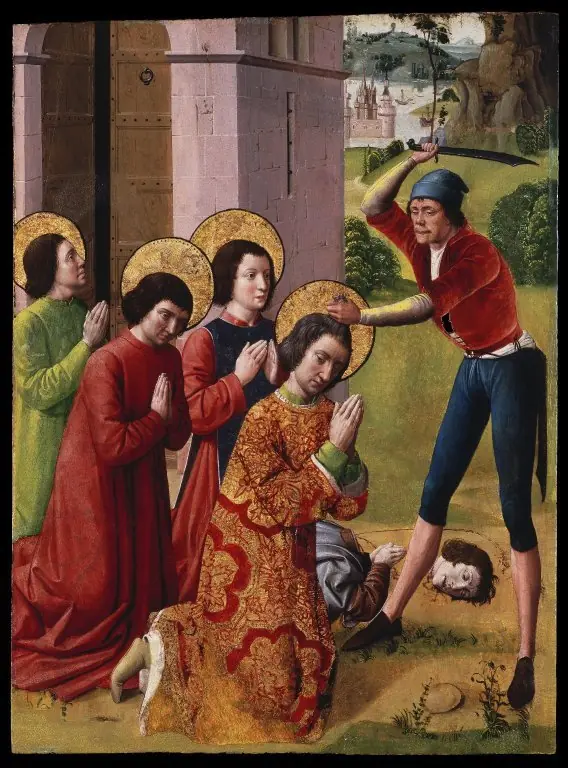 Martyrdom of Saints Cosmas and Damian with their Three Brothers, part of an altarpiece
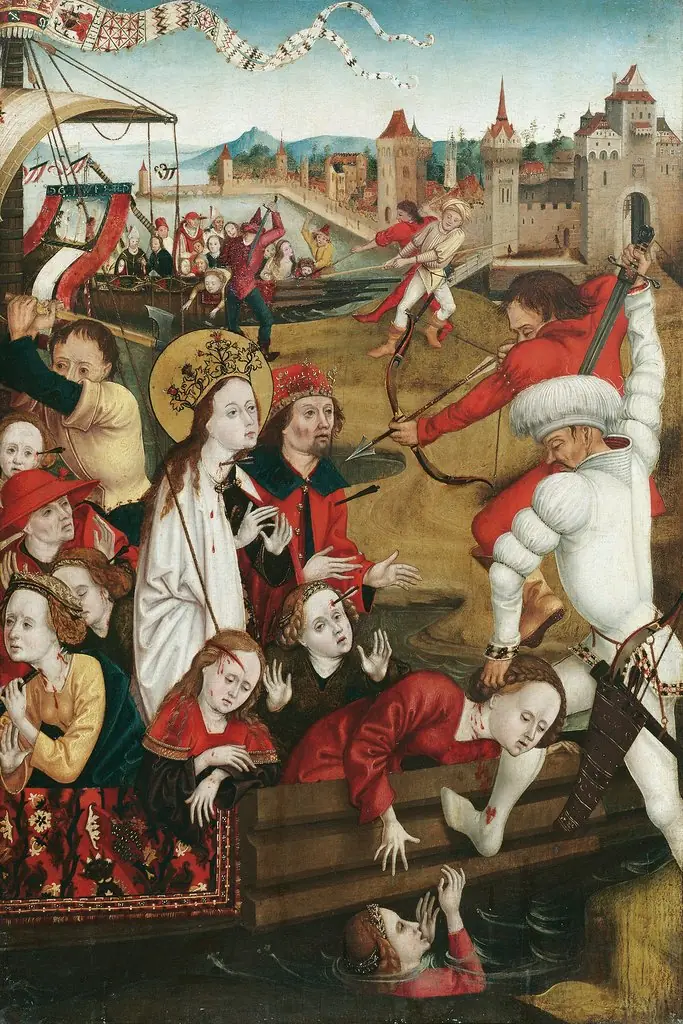 Martyrdom of Saint Ursula and her companions
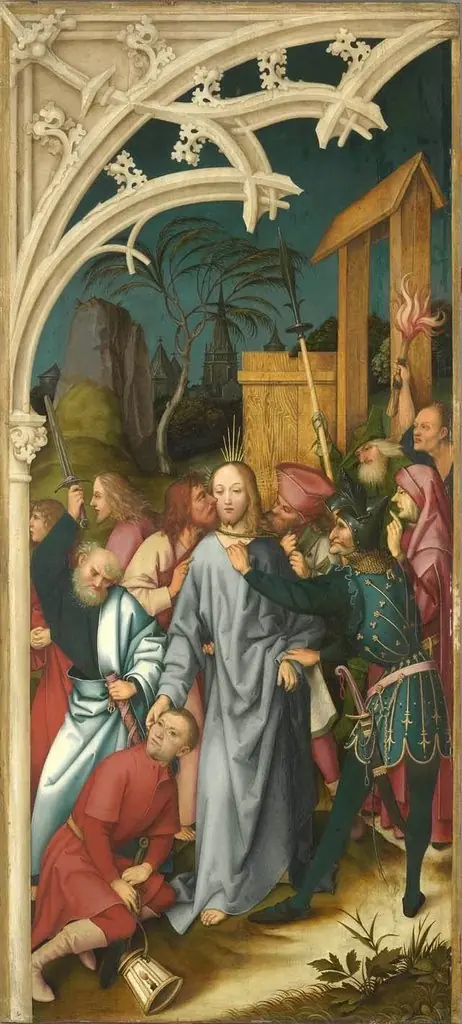 Kaisheimer Altar: Gefangennahme Christi
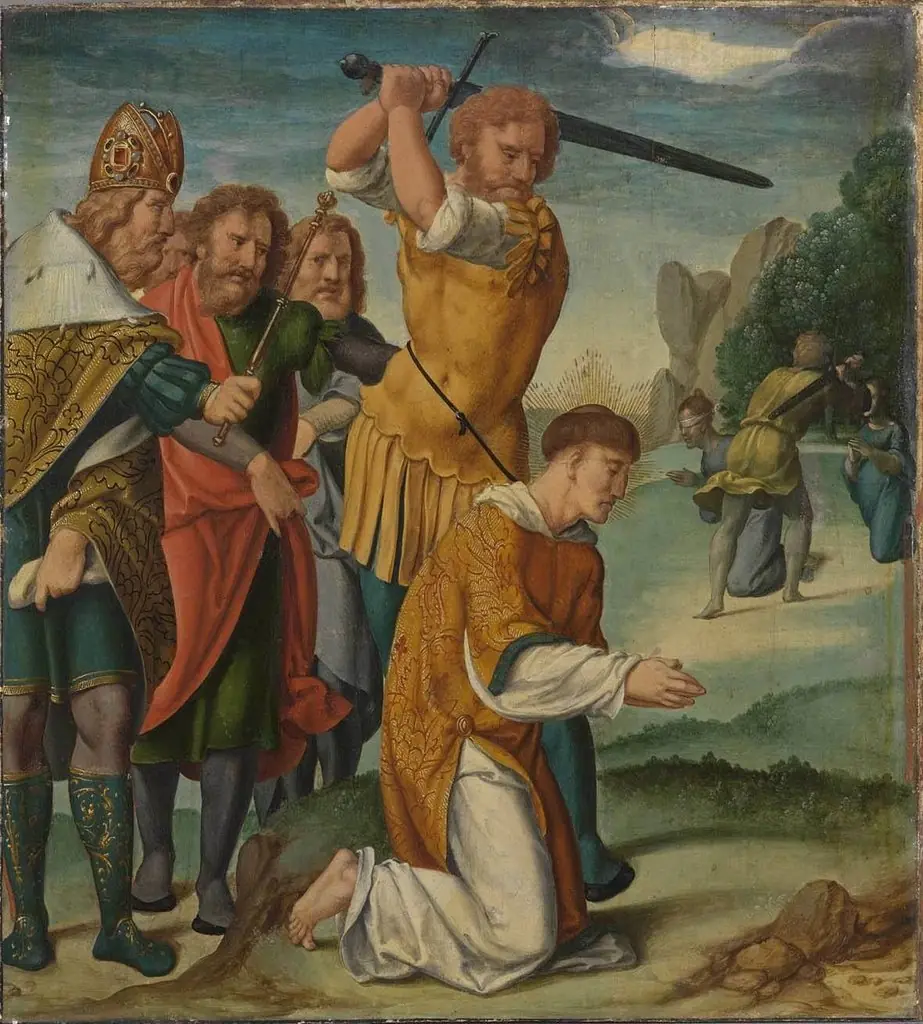 Cyriakus-Folge: Tod des hl. Cyriakus
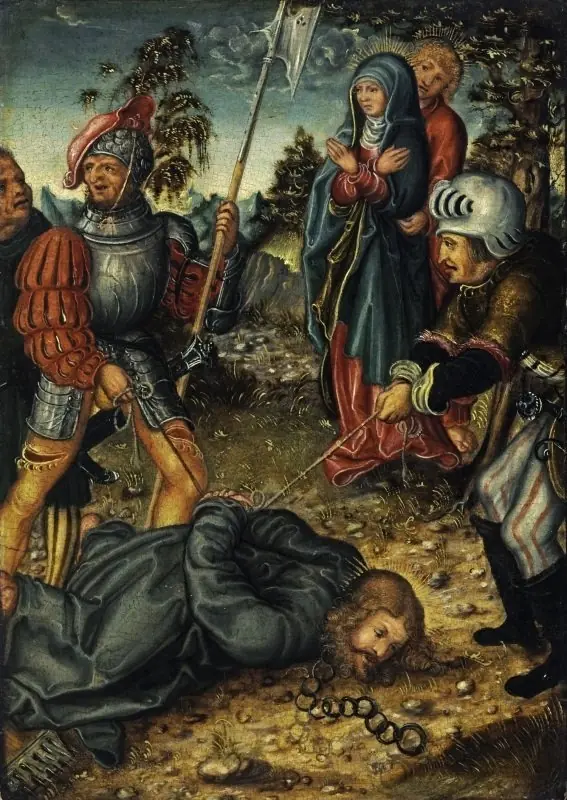 Christ on the road to Calvary
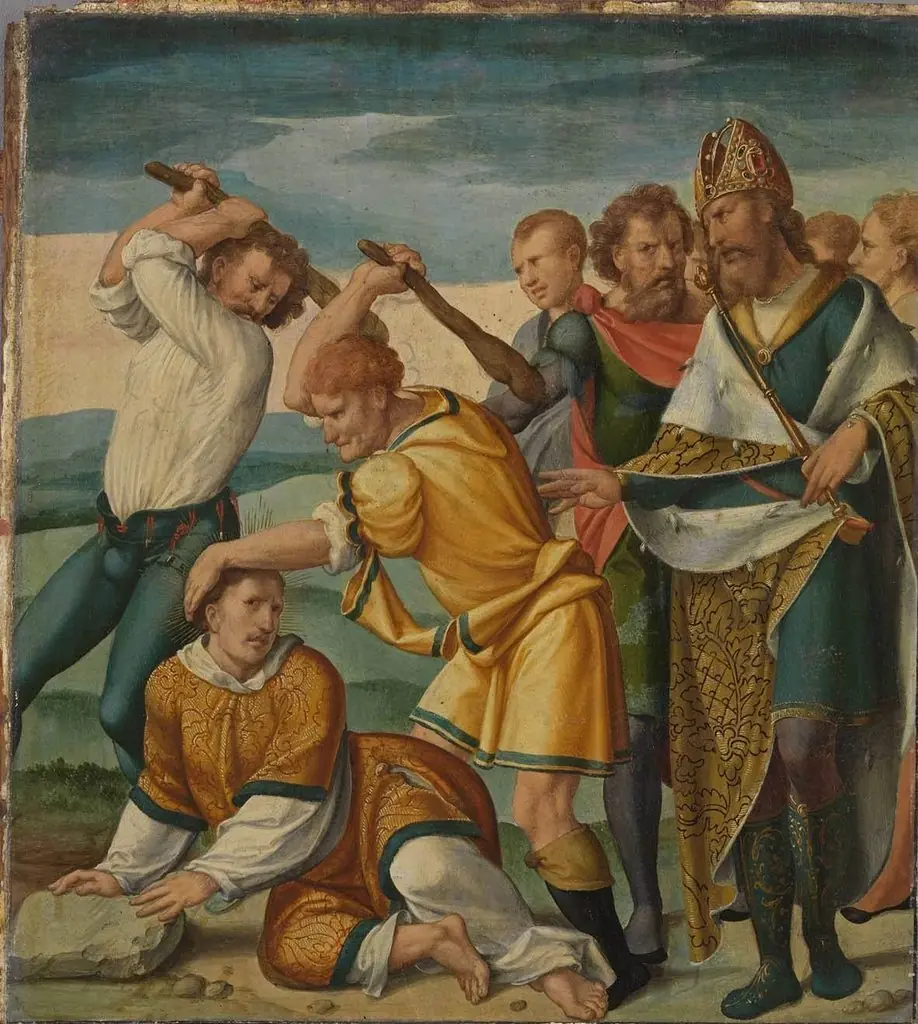 The martyrdom of Saint Cyriacus
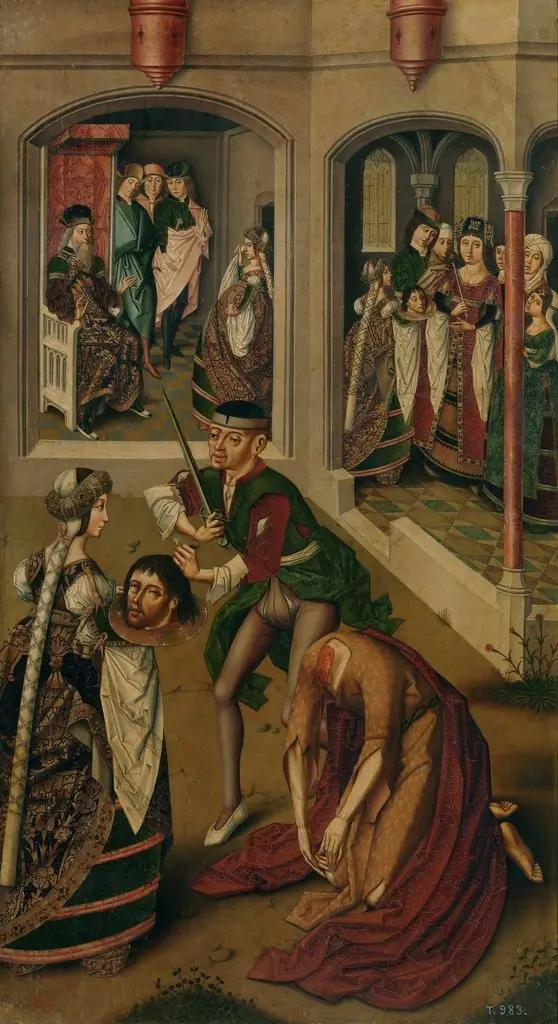 The Beheading of Saint John the Baptist
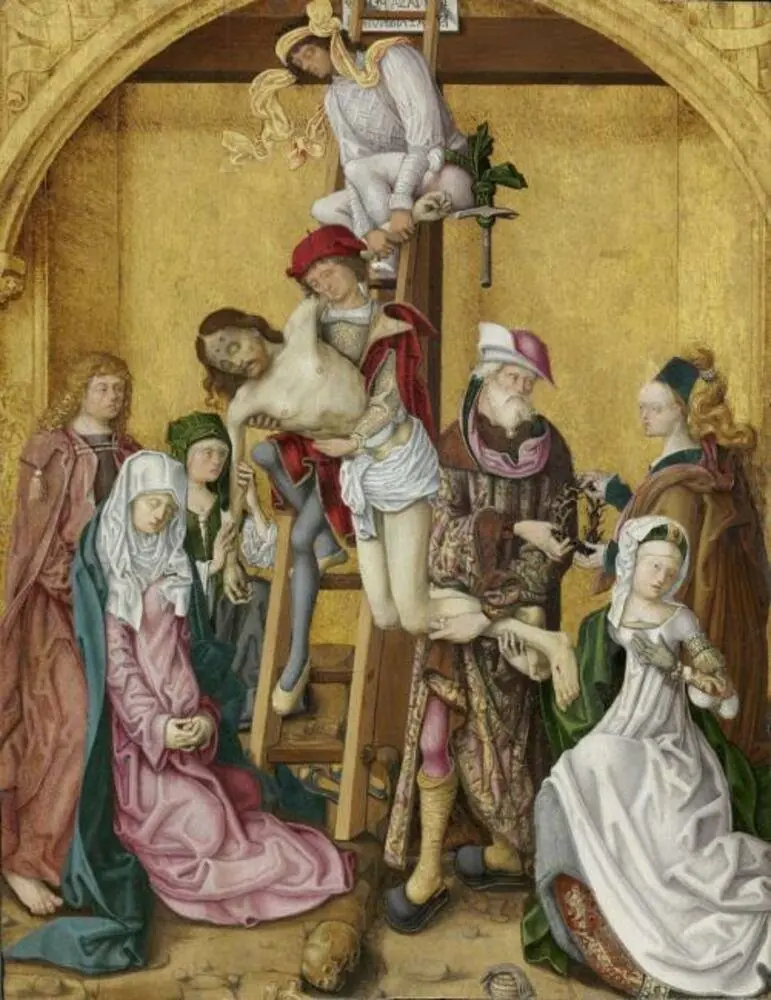 The Descent from the Cross
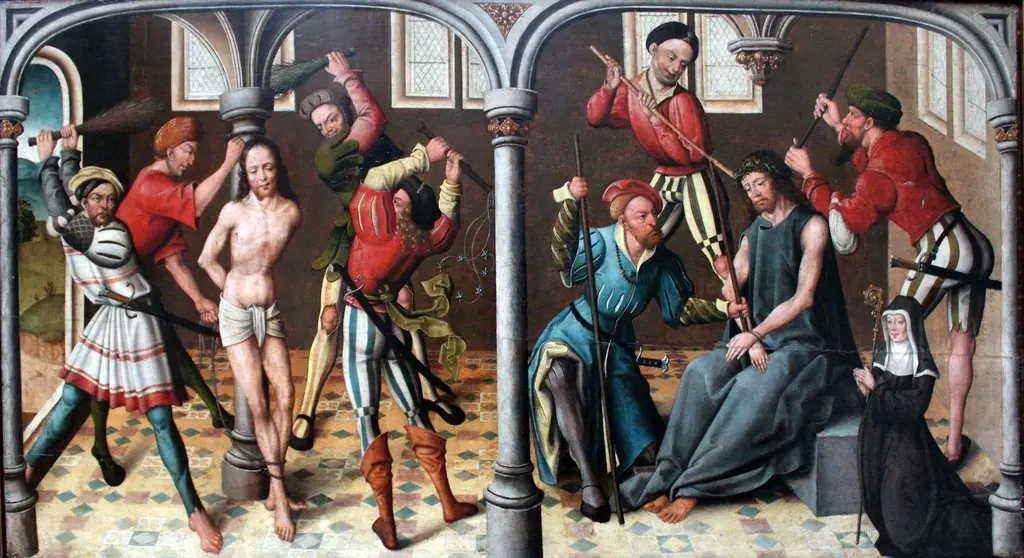 Die Geißelung und Dornenkrönung Christi
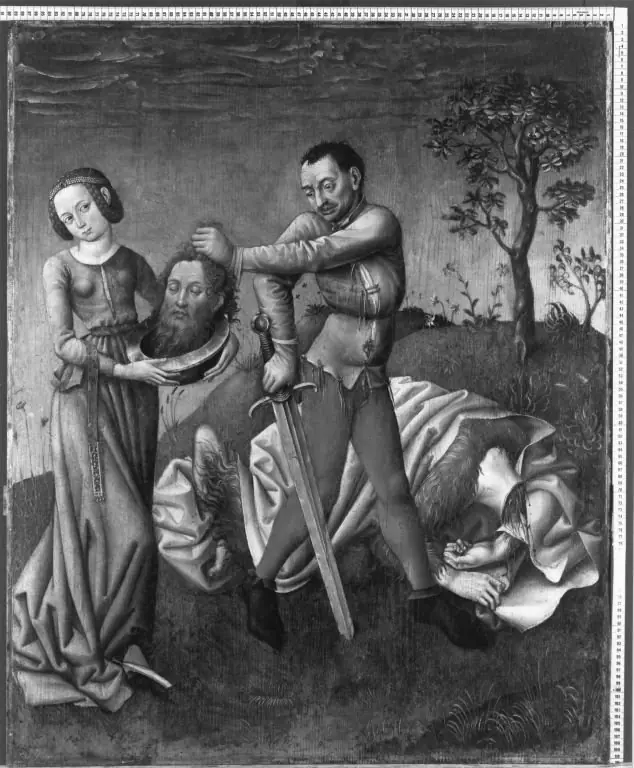 Enthauptung Johannes des Täufers
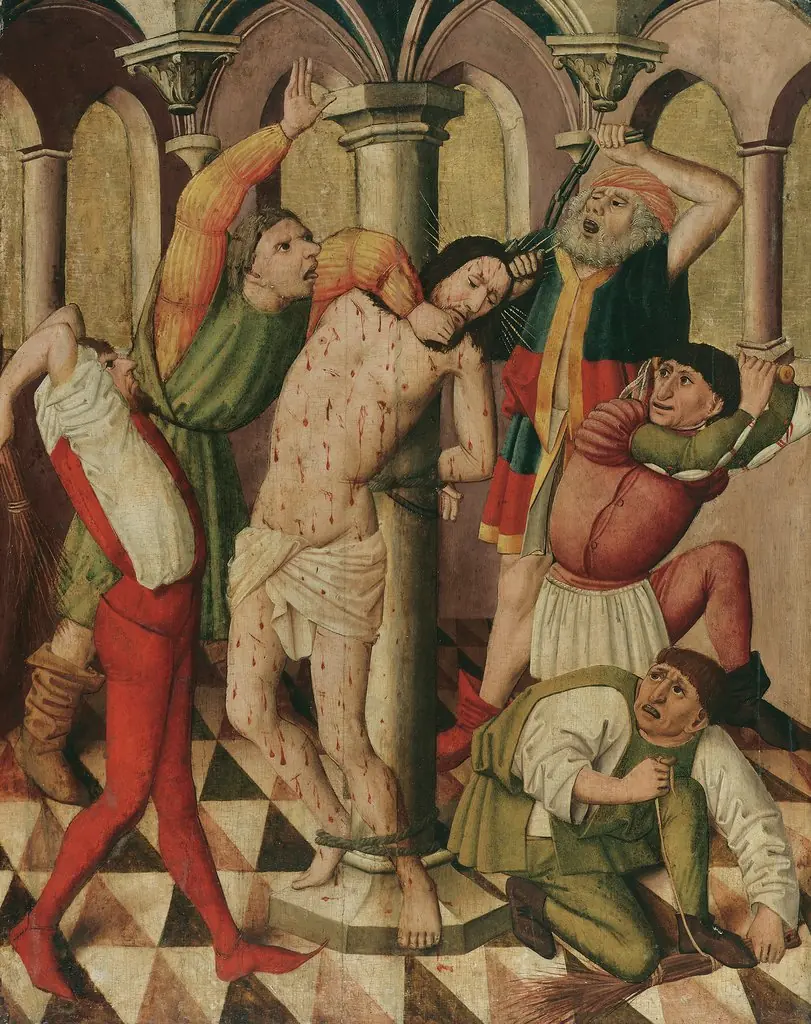 Geißelung Christi
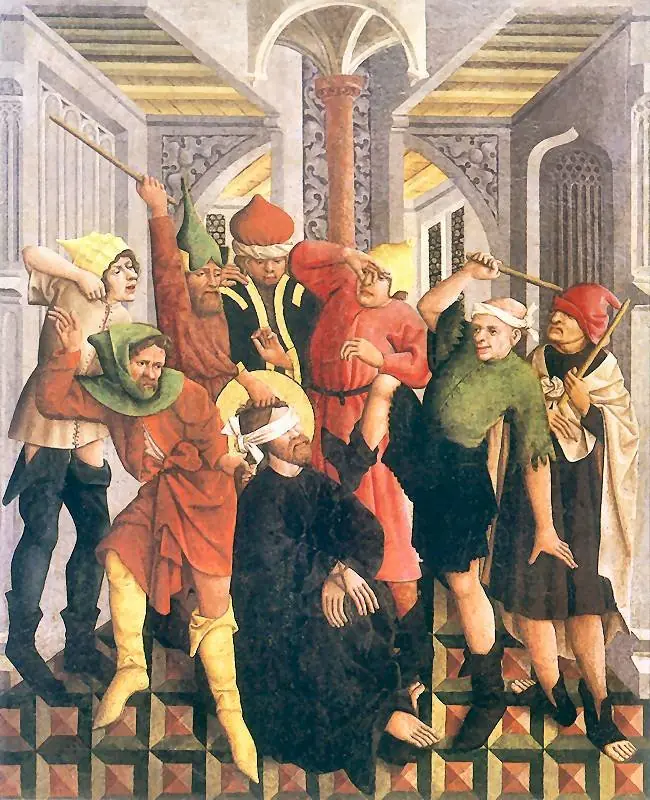 Mocking of Christ (Quarter from Augustinian polyptych)