Artwork
Jesus amongst the Doctors of the Law
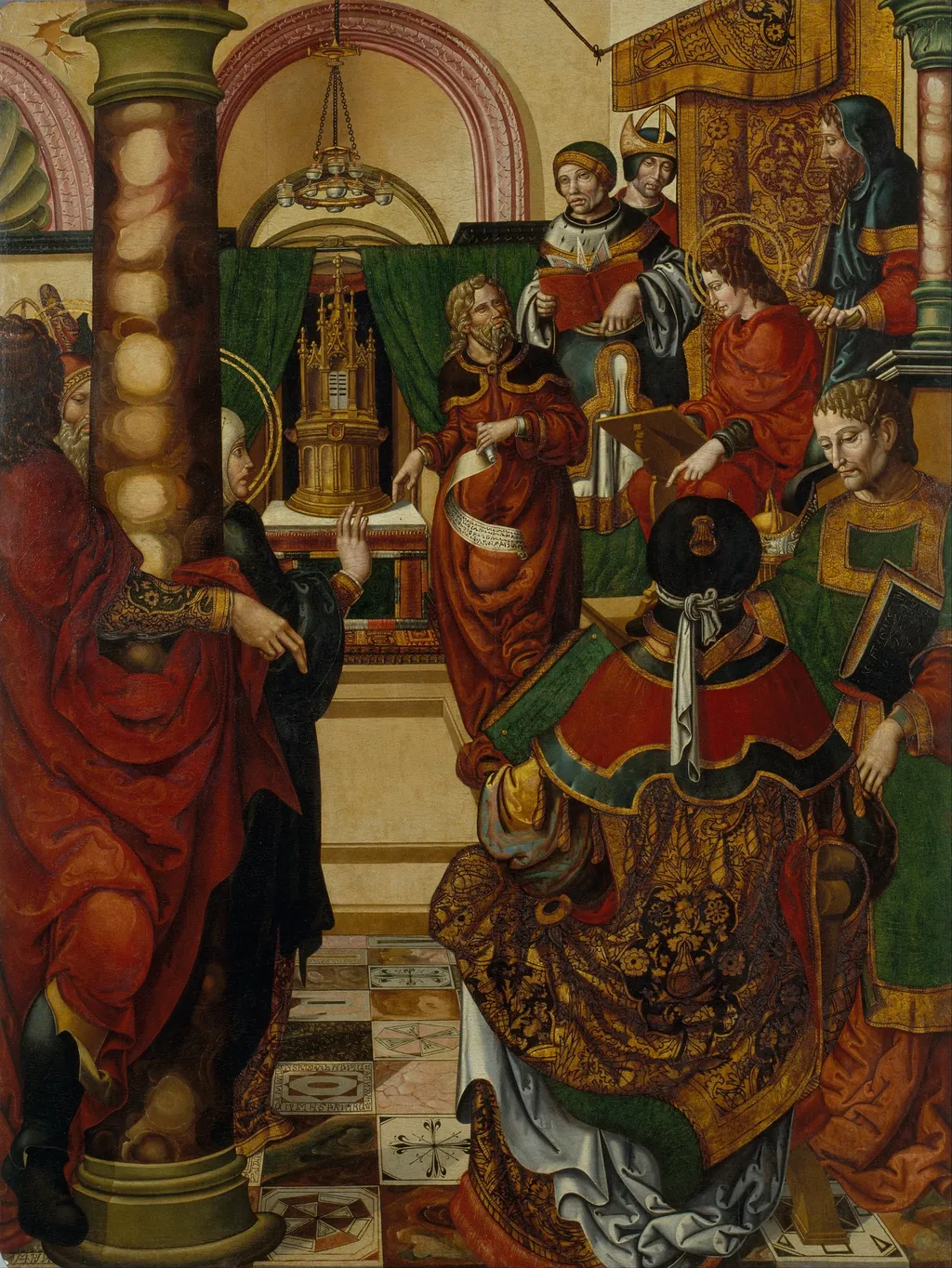
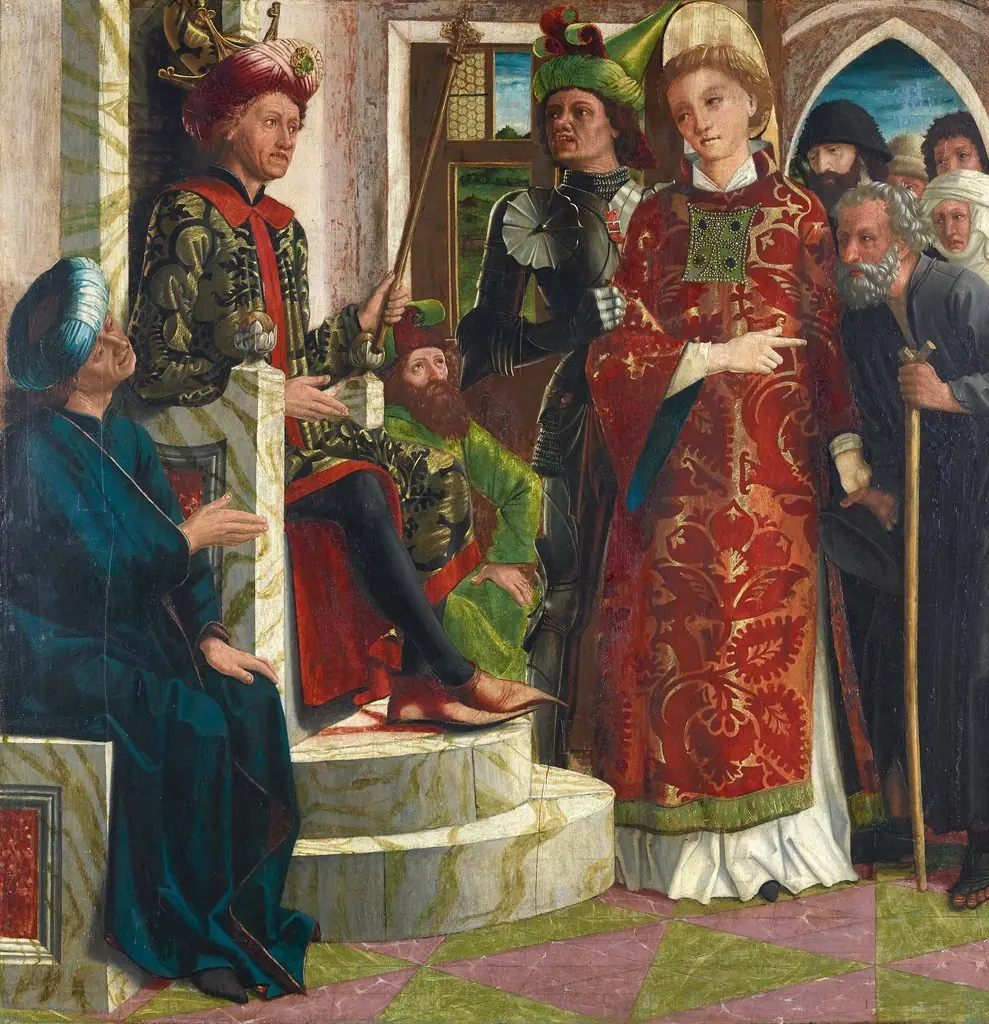
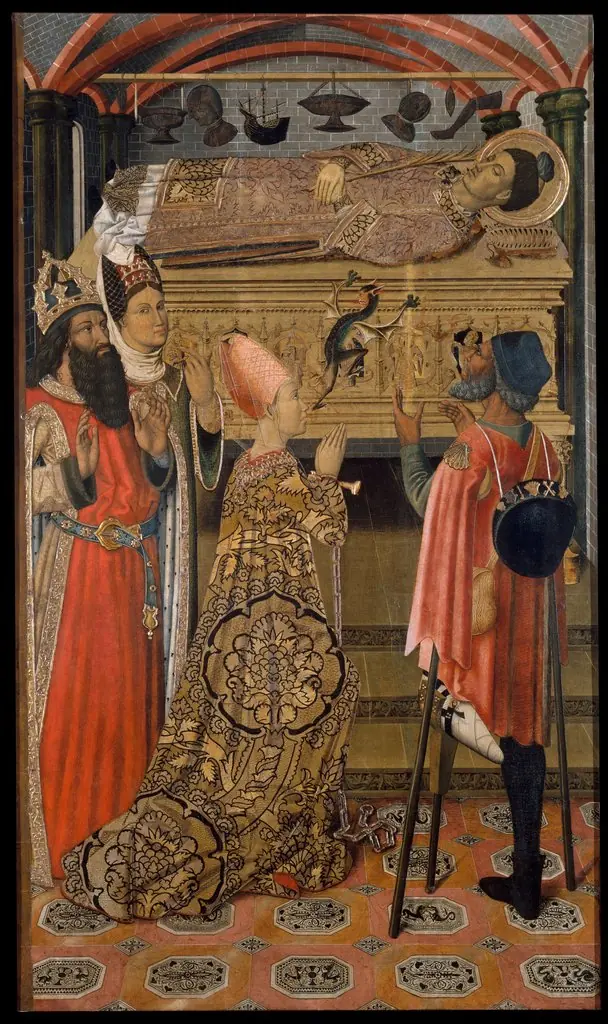
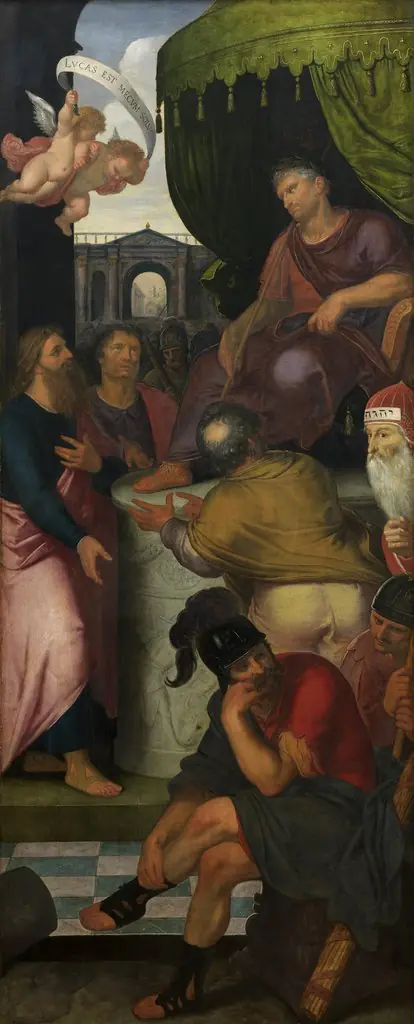
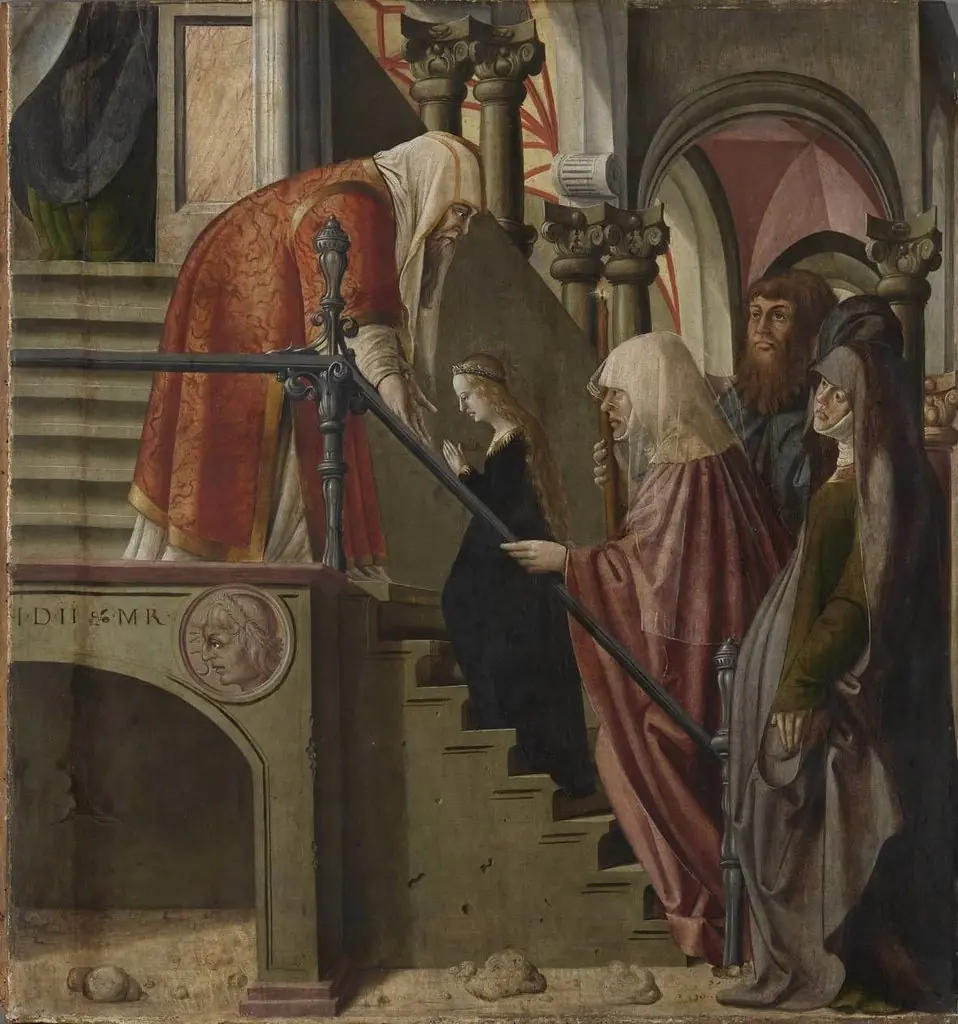
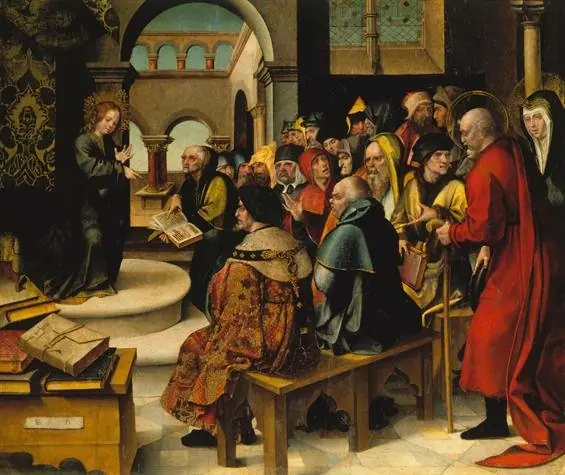
Jesus amongst the Doctors of the Law is an unspecified painting by Master of Sigena. It dates from 1515 and is held in the collection of the Museu Nacional d'Art de Catalunya.
About this work
Overview
Painted around 1515, this work is attributed to the artist known as the Master of Sigena, a figure associated with late Gothic painting in Catalonia.
Painted around 1515, this work is attributed to the artist known as the Master of Sigena, a figure associated with late Gothic painting in Catalonia. It depicts a biblical episode from the Gospel of Luke, in which the twelve-year-old Jesus engages in discussion with Jewish scholars in the Temple. The painting is part of the collection at the Museu Nacional d'Art de Catalunya, where it remains one of the few surviving panel paintings from this regional workshop.
Subject & Meaning
The scene illustrates Jesus, still a child, demonstrating profound understanding of religious law before learned elders. Despite his youth, he is visually centered, drawing the gaze of the surrounding scholars who react with contemplation and astonishment. The composition emphasizes spiritual authority over age, suggesting divine wisdom transcends human learning. The moment captures a turning point in the Gospel narrative, where Jesus' identity begins to emerge publicly.
Technique & Style
Executed in tempera on wood, the painting features fine linear detail and a flattened spatial perspective typical of late Gothic traditions. Figures are rendered with elongated proportions and expressive gestures, while rich pigments—especially the crimson of Jesus’ robe—create focal contrast. Architectural elements like arches and columns frame the scene with rhythmic symmetry, reinforcing the sacred setting without naturalistic depth. Facial expressions are carefully modeled to convey intellectual tension.
History & Provenance
The panel originally formed part of a larger altarpiece commissioned for the monastery of Sigena in Aragon. It was likely moved to Barcelona in the 19th century following the dissolution of religious houses. The Museu Nacional d'Art de Catalunya acquired it as part of a broader effort to preserve regional ecclesiastical art. Its attribution to the Master of Sigena was established through stylistic comparison with other surviving works from the same workshop.
Context
Created during a period when devotional imagery in Catalonia was still rooted in medieval conventions, the painting reflects a transition between Gothic and early Renaissance sensibilities. While Italian art was embracing perspective and naturalism, Catalan workshops retained symbolic composition and hierarchical scale. This work aligns with regional traditions that prioritized theological clarity over spatial realism, catering to monastic and liturgical audiences.
Legacy
The painting stands as a representative example of late Gothic religious art in northeastern Spain. Though the Master of Sigena remains an anonymous figure, this panel and its companions offer insight into the visual culture of monastic communities before the Reformation. It contributes to scholarly understanding of how biblical narratives were interpreted and transmitted through regional artistic practices in the early 16th century.
Artist & collection
Artist
This anonymous Spanish painter worked in the early 1500s, leaving behind only two surviving panels.

![Christ among the Doctors [obverse], by Bernard Van Orley](https://artifactworldgallery.com/img/bernard-van-orley--christ-among-the-doctors-obverse--78795f311364e613-w320.webp)