Artwork
Christ before Pilate, with Christ Led to Annas, the Mocking of Christ, the Denial by Peter, and Christ before Caiaphas
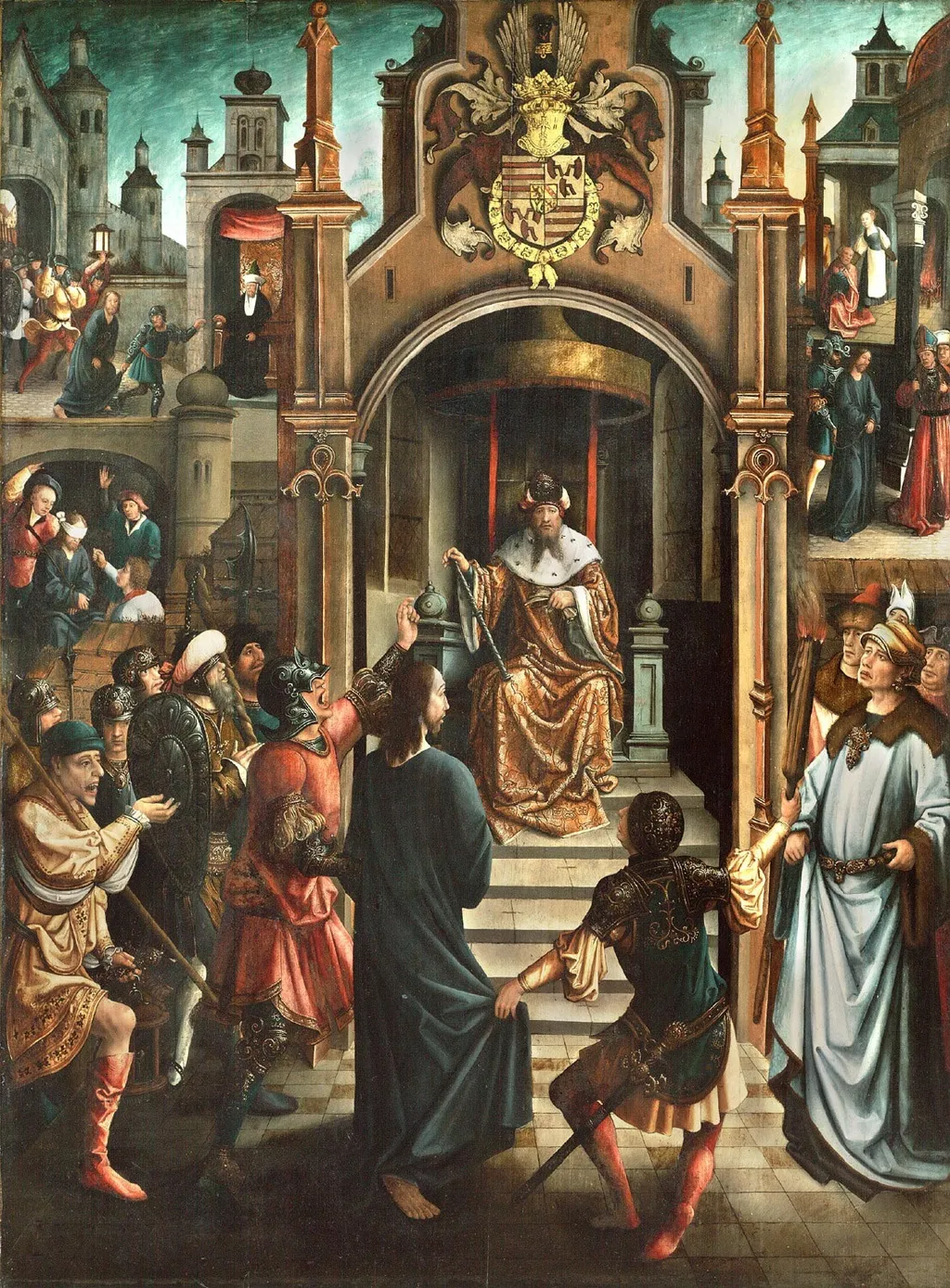
Christ before Pilate, with Christ Led to Annas, the Mocking of Christ, the Denial by Peter, and Christ before Caiaphas is an oil painting by the Northern Renaissance artist Master of the Beighem Altarpiece. It dates from 1530 and is held in the collection of the Philadelphia Museum of Art.
About this work
Overview
This oil painting, created in 1530 by the Master of the Beighem Altarpiece, depicts multiple scenes from the Passion of Christ. It showcases the artist's skill in rendering detailed, emotionally charged narratives.
Subject & Meaning
The painting presents a complex narrative, combining Christ's appearances before Pilate and Caiaphas, his mocking, and Peter's denial. These scenes, drawn from Christian scripture, are densely packed into a single composition, inviting the viewer to explore the various storylines.
Technique & Style
Executed in a Gothic style with classical influences, the painting features intricate clothing, architectural elements, and a vivid color palette. The artist's use of bold hues and subtle shading creates a sense of depth and drama, drawing the viewer into the unfolding events.
History & Provenance
The painting is now held in the Philadelphia Museum of Art, a testament to its enduring significance. Created during the Northern Renaissance, it reflects the period's focus on detailed, emotionally charged representations of religious themes.
Artist & collection
Artist
Master of the Beighem Altarpiece
The Master of the Beighem Altarpiece is a little-known Flemish painter who was active in Brussels during the first third of the sixteenth century, using a Gothic style with classical influences.

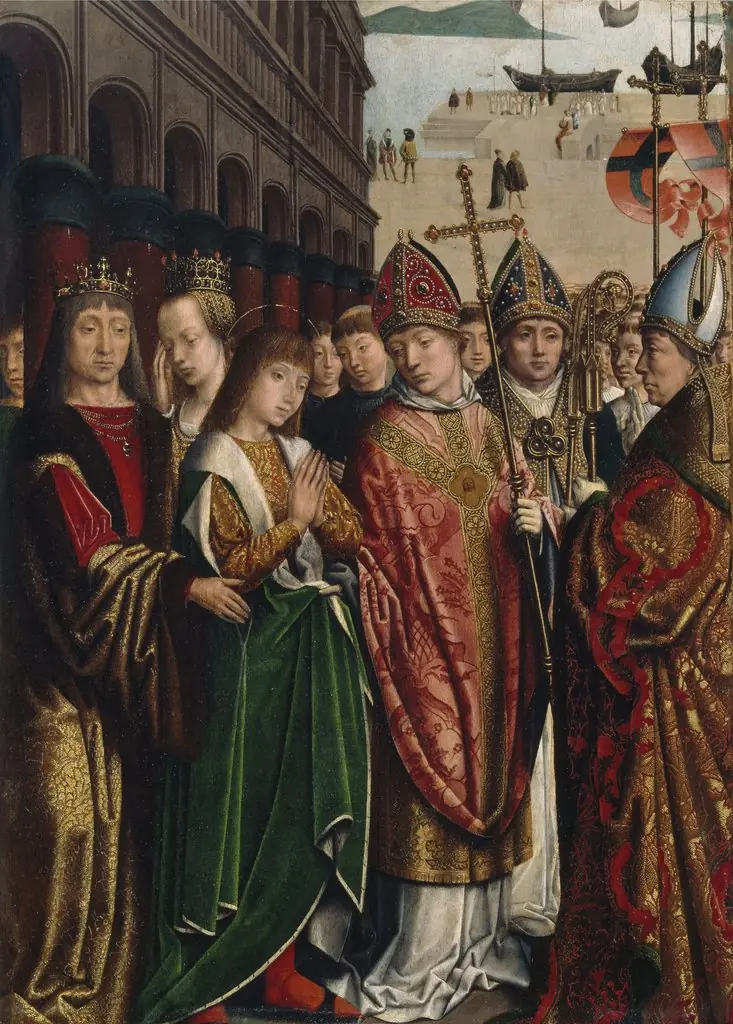 Saint Rumbold Taking Leave of his Parents
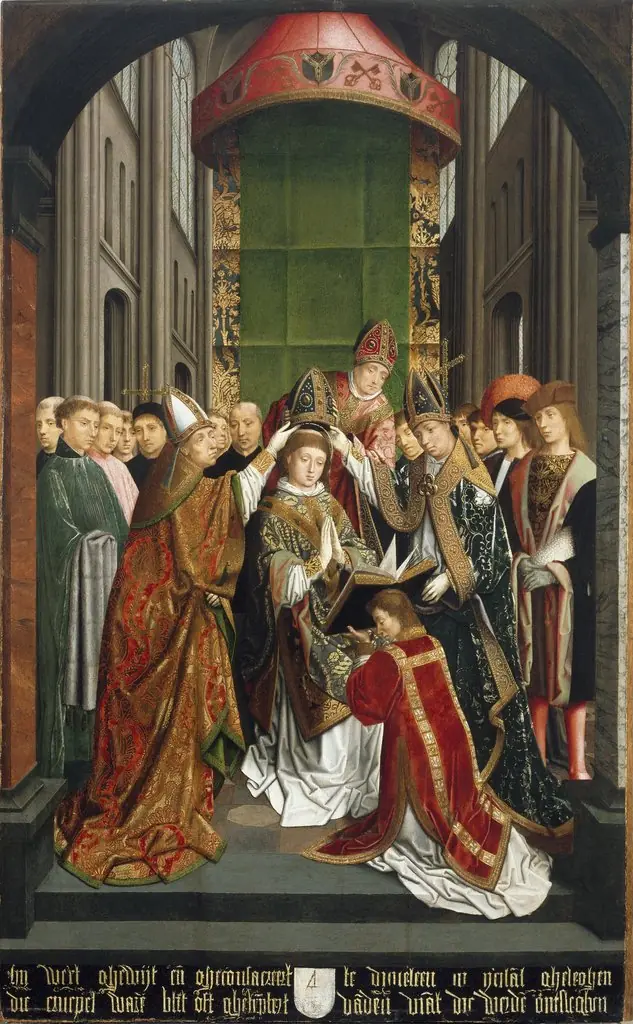 The Enthronement of Saint Romold as Bishop of Dublin
 Episodes from the Life of a Bishop Saint
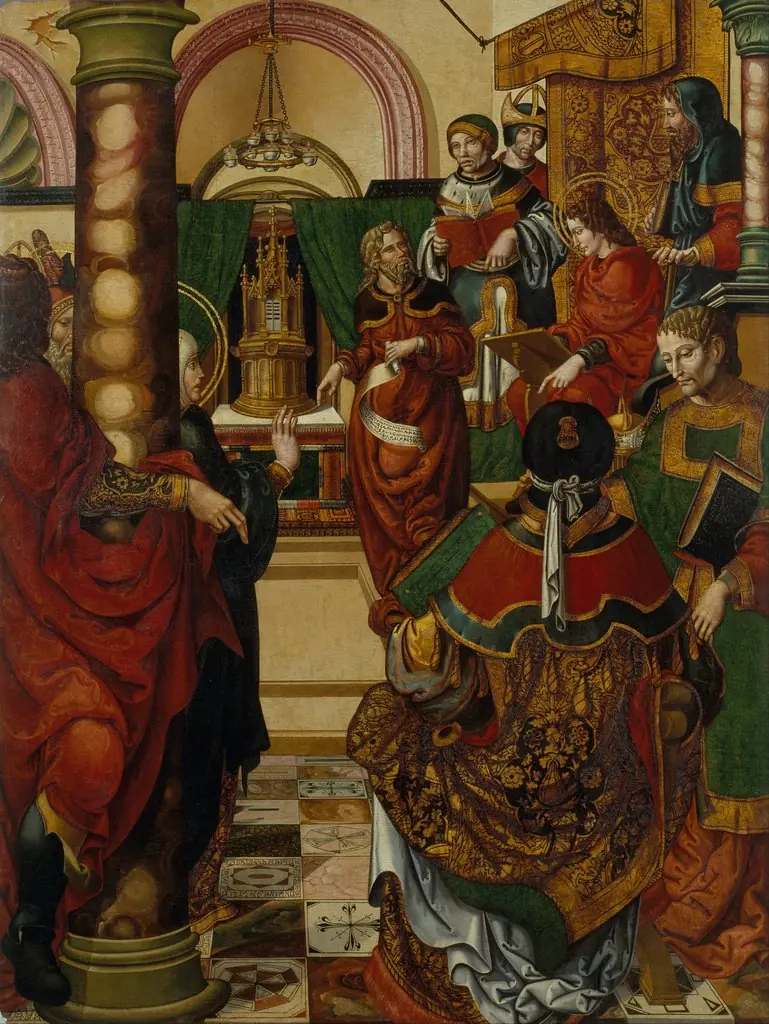 Jesus amongst the Doctors of the Law
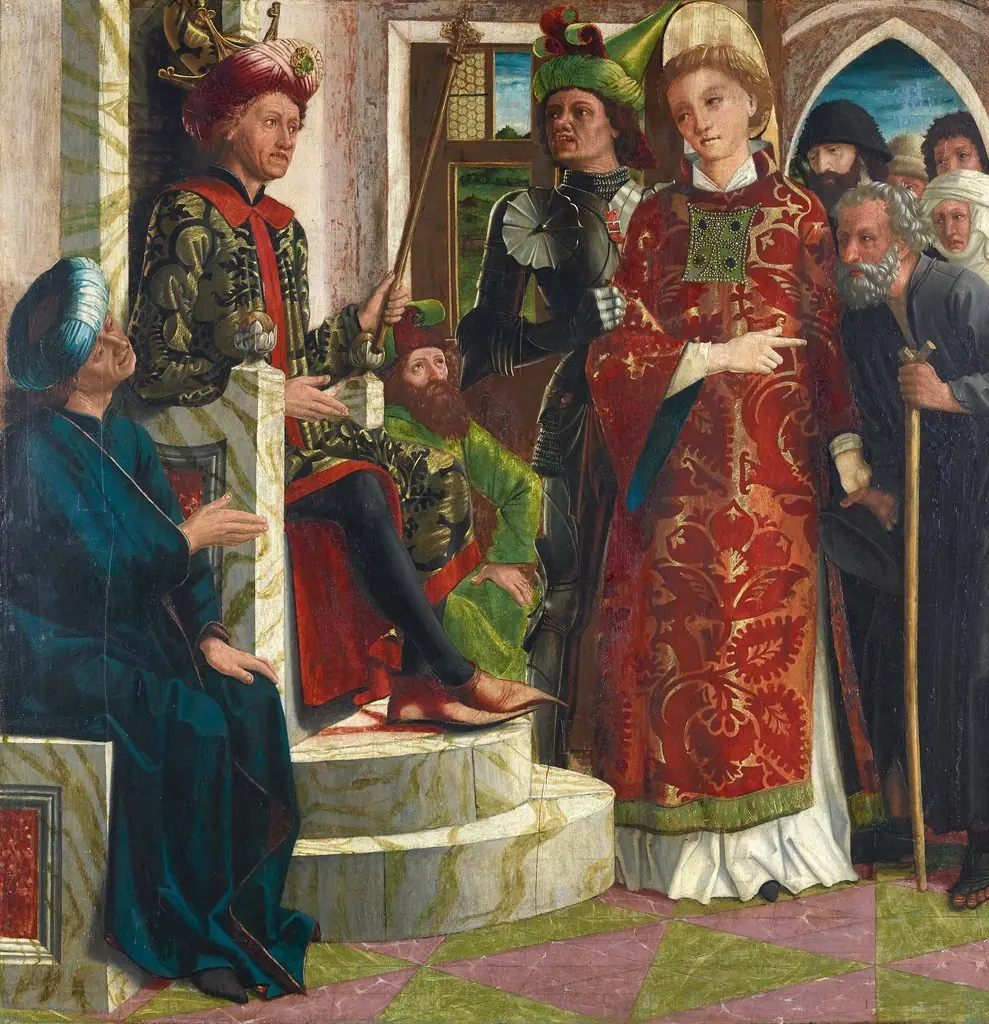 Der hl. Laurentius vor Kaiser Decius
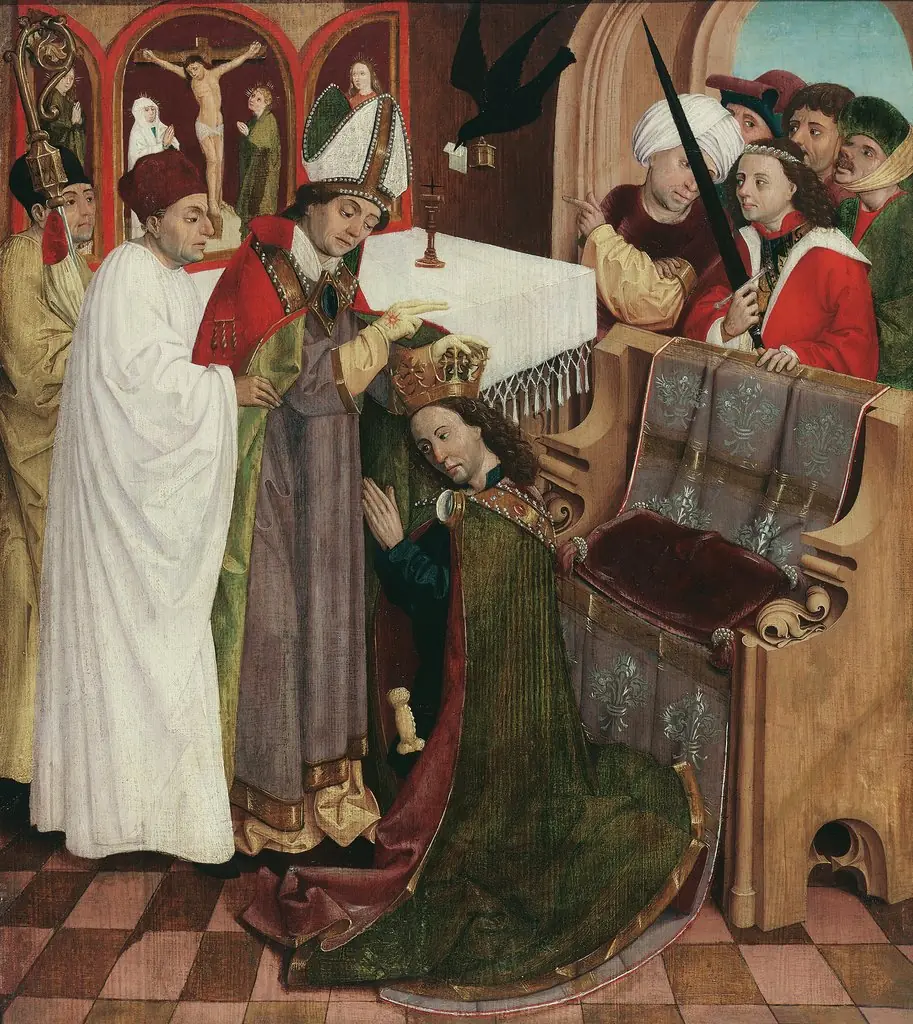 The coronation of St. Oswald
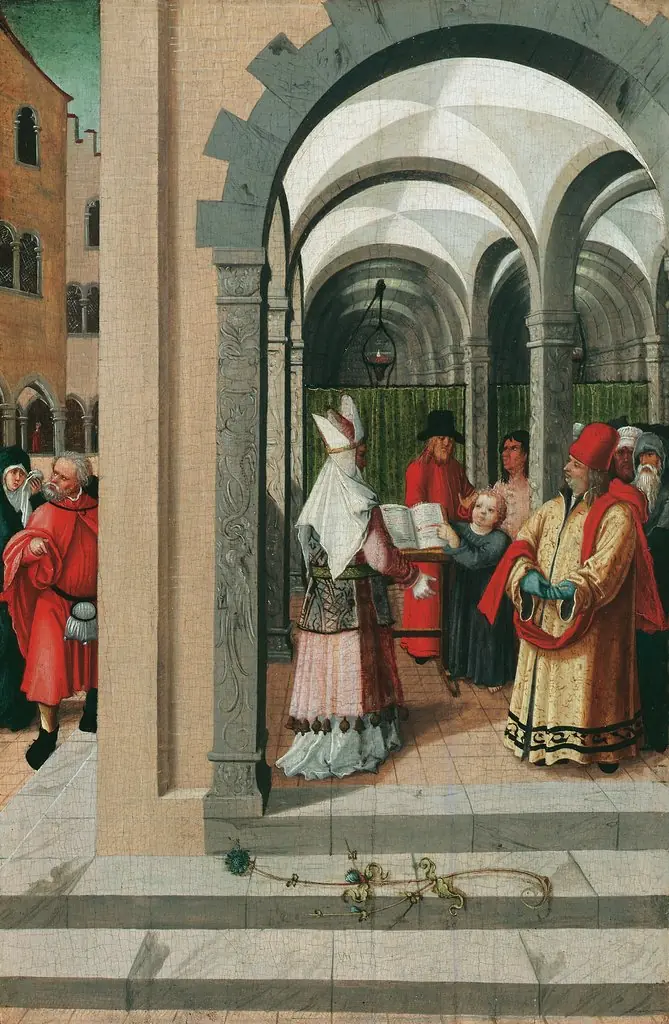 Der zwölfjährige Jesus im Tempel
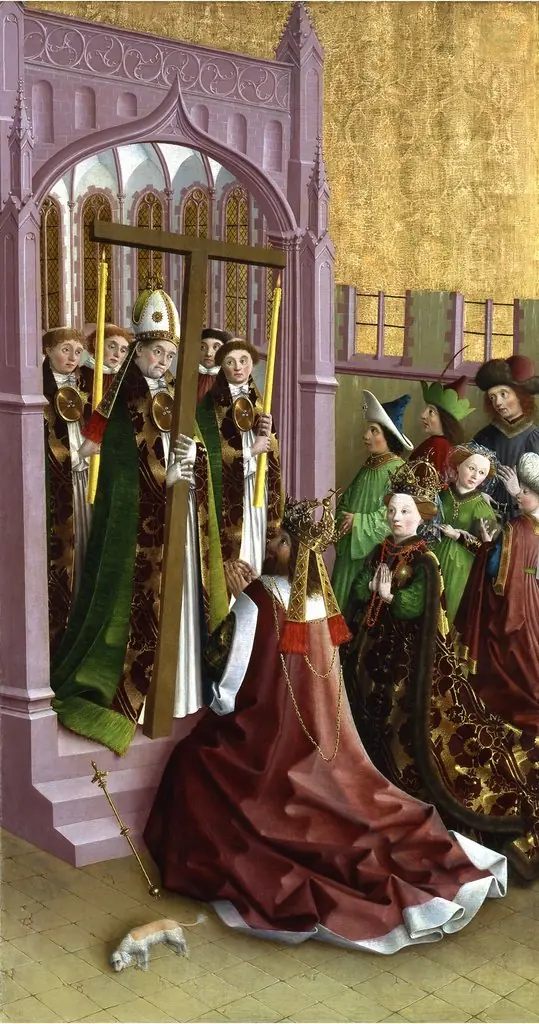 Darmstadt Altarpiece: Constantine and His Mother Helena Venerating the True Cross
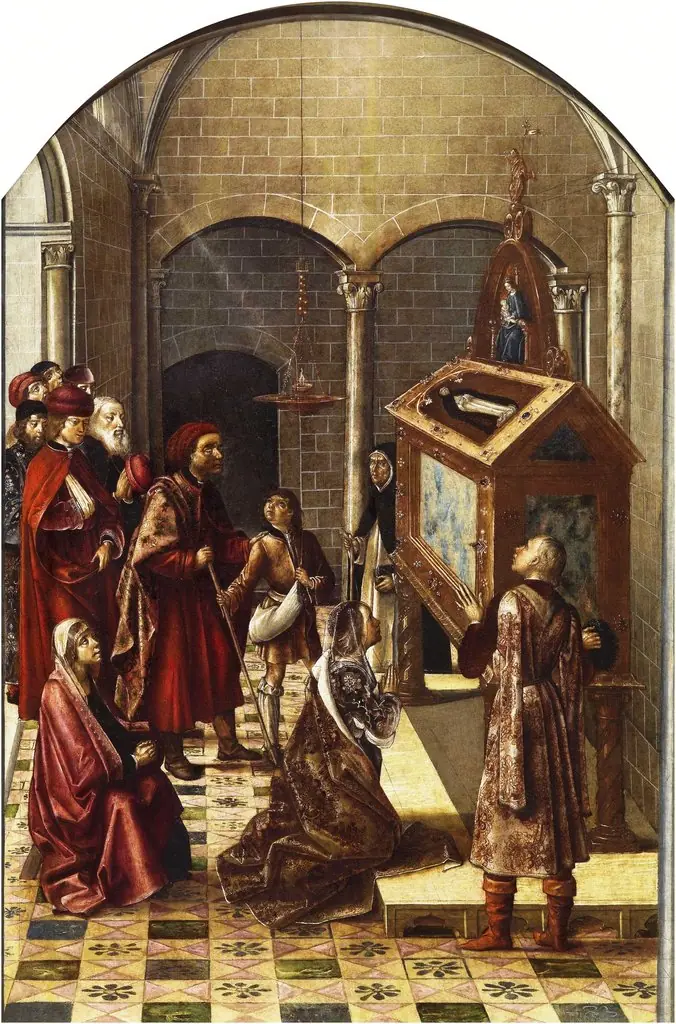 The Adoration of the Tomb of Saint Peter Martyr
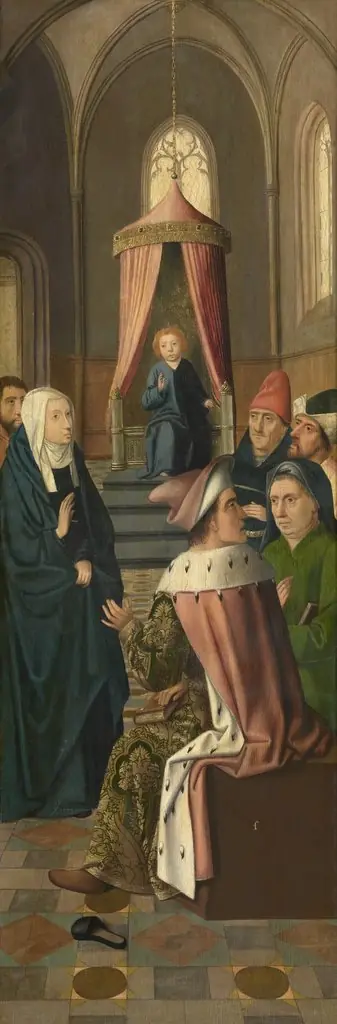 Christ's Dispute with the Doctors