Artwork
Initial D with David
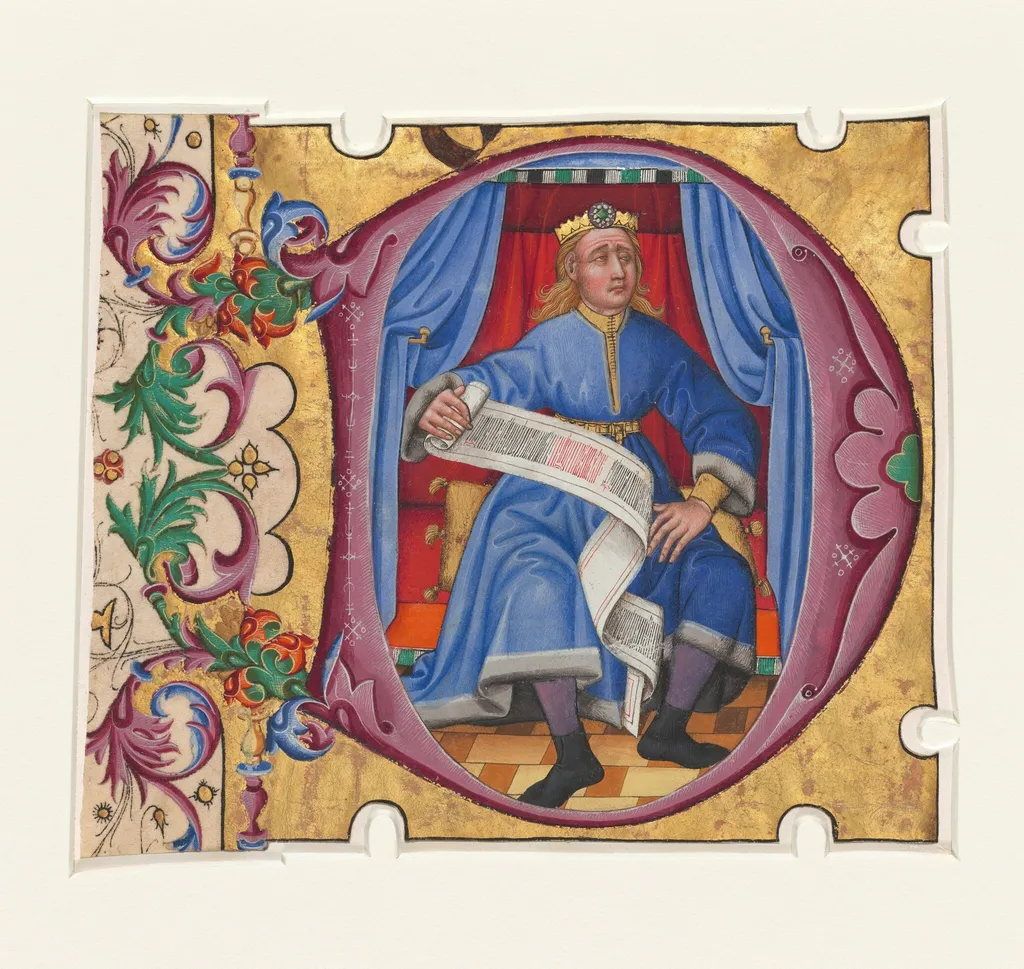
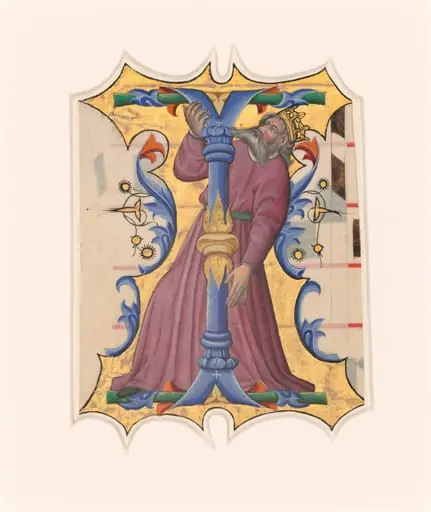
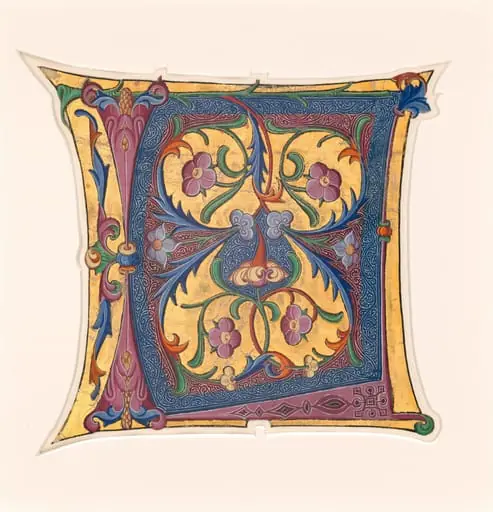
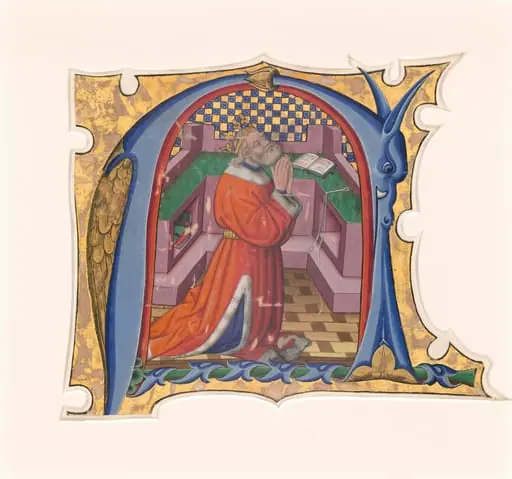
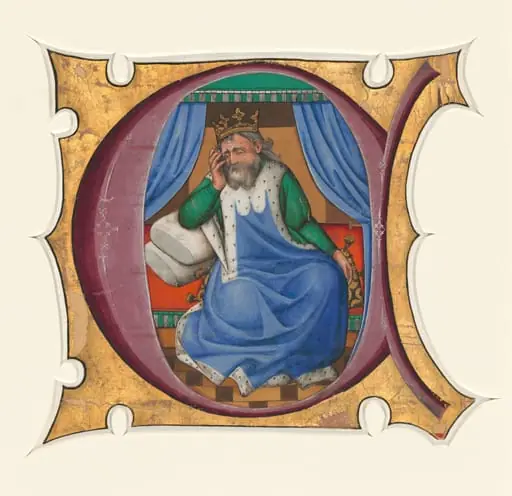
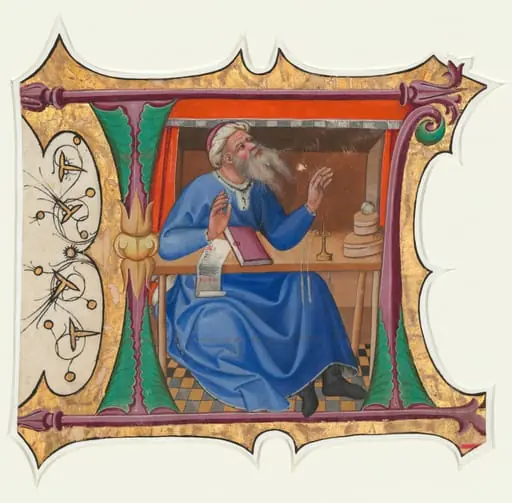
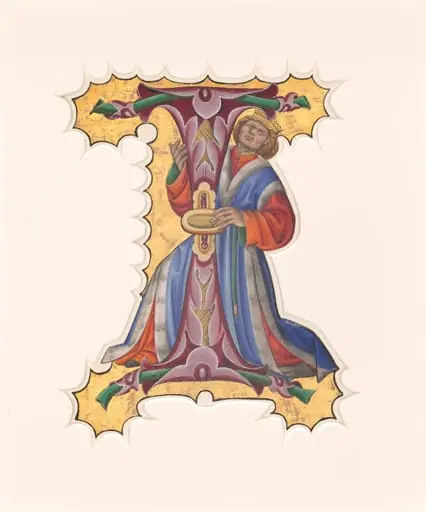
Initial D with David is a drawing by the Renaissance artist Master of the Cypresses. It dates from 1434 and is held in the collection of the National Gallery of Art. Created circa 1434, this miniature on vellum presents a single illuminated initial that incorporates a figure of the biblical King David.
About this work
Overview
Created circa 1434, this miniature on vellum presents a single illuminated initial that incorporates a figure of the biblical King David.
Created circa 1434, this miniature on vellum presents a single illuminated initial that incorporates a figure of the biblical King David. The image occupies a compact space suitable for a private devotional book, with David shown kneeling and holding the oversized sword associated with his defeat of Goliath. A slender green cypress rises behind him, set against a flat gold field that emphasizes the figure’s red robe.
Subject & Meaning
The composition draws on the David‑Goliath narrative, symbolizing triumph over overwhelming odds. By placing David within a decorative initial, the work links the moral exemplar to the act of reading and prayer, encouraging contemplation of divine assistance. The cypress, a recurring motif in the artist’s oeuvre, may allude to endurance and resurrection, reinforcing the theme of victorious perseverance.
Technique & Style
Executed with egg‑tempera pigments mixed with yolk, the colors retain their luminosity after six centuries. The figure’s modeling shows the influence of Giotto’s solid forms, while the attention to surface detail and subtle shading reflects early Netherlandish practices. The gold background, applied as leaf, provides a non‑spatial setting that focuses the viewer on the symbolic gesture of the sword and the vivid red garment.
History & Provenance
The work is attributed to the anonymous Master of the Cypresses, a Seville‑based painter and illuminator active between 1420 and 1440. Art historian Diego Angulo Íñiguez first identified the hand in 1928, noting the characteristic pointed cypresses in his decorative initials. The miniature likely originated in a choirbook for Seville Cathedral, though its exact original volume remains unknown.
Context
During the early 15th century, Seville’s manuscript workshops blended Italian and Northern European visual vocabularies, producing richly colored, highly detailed miniatures for elite patrons. The Master of the Cypresses contributed to this cross‑cultural exchange, integrating Giottesque volumetry with the meticulous surface treatment typical of the Low Countries, thereby creating a distinctive regional style within devotional art.
Artist & collection

Artist
The Master of the Cypresses is a notname invented by the art historian Diego Angulo Íñiguez in 1928 for a painter and manuscript illuminator working in Seville around the years 1420–1440.