Artwork
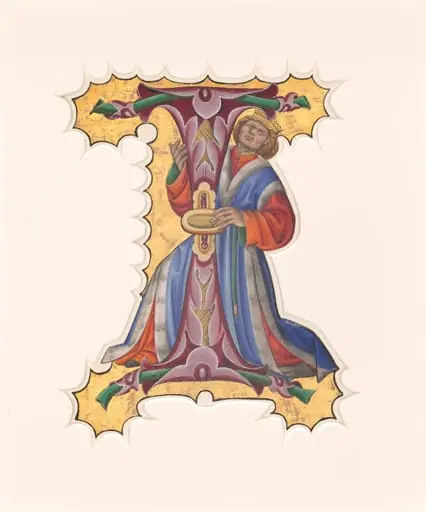
Initial T with a group of Benedictine monks singing before an altar from which issues water
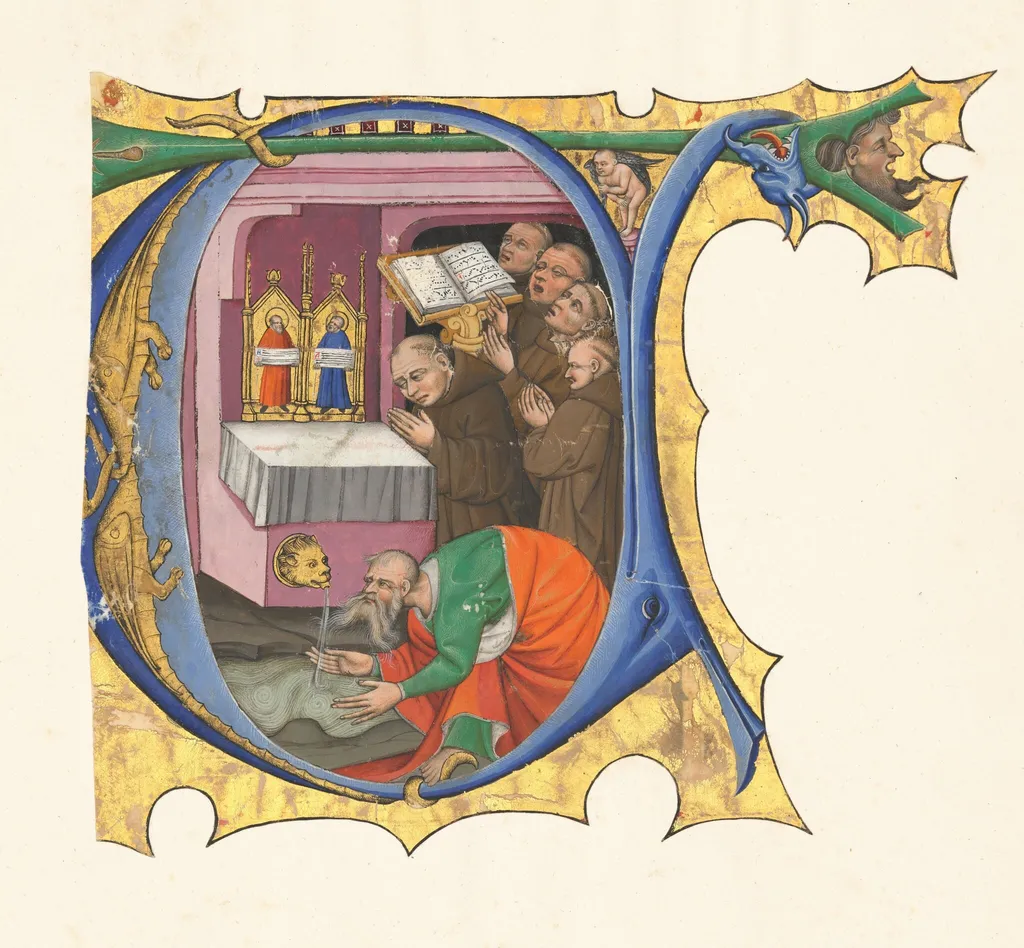
Initial T with a group of Benedictine monks singing before an altar from which issues water is a drawing by the Renaissance artist Master of the Cypresses. It dates from 1434 and is held in the collection of the National Gallery of Art. Created around 1434, this miniature on vellum presents an elaborate initial T framing a liturgical scene.
About this work
Overview
Created around 1434, this miniature on vellum presents an elaborate initial T framing a liturgical scene. Benedictine monks are shown singing before an altar from which water flows, a visual reference to a consecration rite. The work exemplifies the manuscript illumination practice of early 15th‑century Spain and is presently housed in the National Gallery of Art, Washington.
Subject & Meaning
The composition illustrates a church consecration, a ritual in which water is poured over the altar to signify sanctification. The gathering of Benedictine monks, identifiable by their black habits and hoods, emphasizes communal prayer and the monastic role in the ceremony.
Technique & Style
Executed in miniature on vellum, the piece employs fine brushwork to render delicate details such as the shimmering water and the soft, luminous colors reminiscent of stained‑glass light. The artist’s handling of space and figure reflects a synthesis of Italian compositional balance and early Netherlandish attention to surface texture.
History & Provenance
Attributed to the anonymous Master of the Cypresses, an illuminator active in Seville between 1420 and 1440, the work is linked to a series of choirbooks for Seville Cathedral distinguished by recurring cypress motifs. Its later acquisition by the National Gallery of Art placed it within a public collection for scholarly study.
Context
During the early 15th century, Seville’s ecclesiastical art was shaped by cross‑regional influences, importing Italian linear perspective and Netherlandish realism into local manuscript production. This miniature reflects that cultural exchange, integrating foreign stylistic elements within a distinctly Spanish devotional framework.
Artist & collection

Artist
The Master of the Cypresses is a notname invented by the art historian Diego Angulo Íñiguez in 1928 for a painter and manuscript illuminator working in Seville around the years 1420–1440.

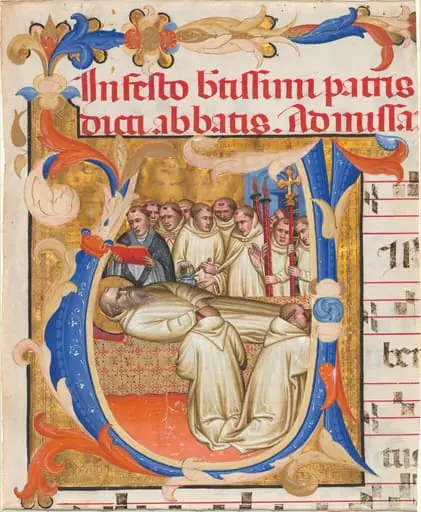 Death of Saint Benedict
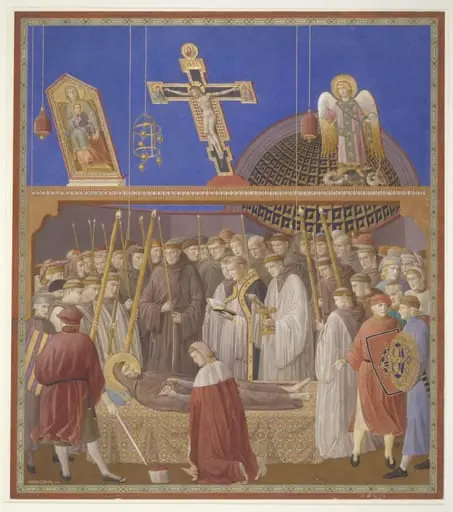 Copy after the painting Death of St Francis by the Master of the St Francis cycle in the Upper Church, San Francesco, Assisi
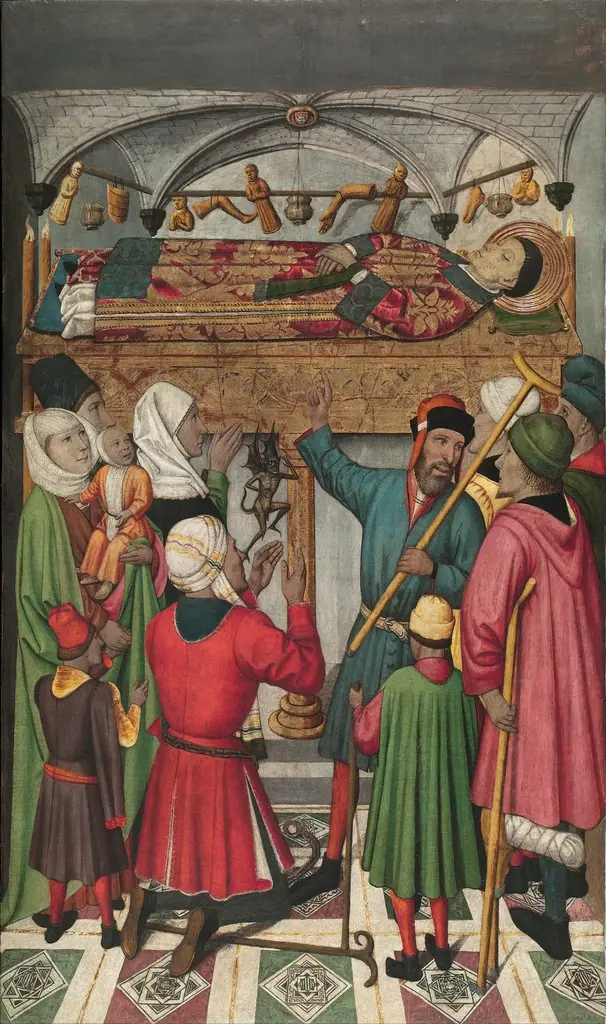 Posthumous Miracles by Saint Vincent
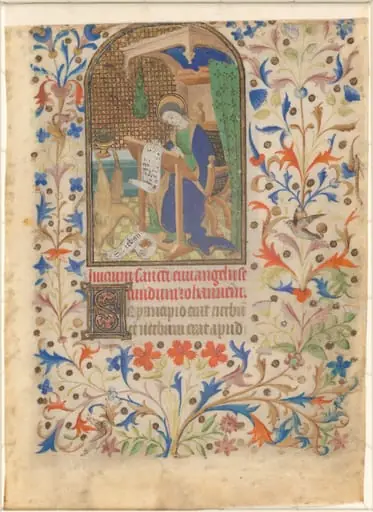 Saint John
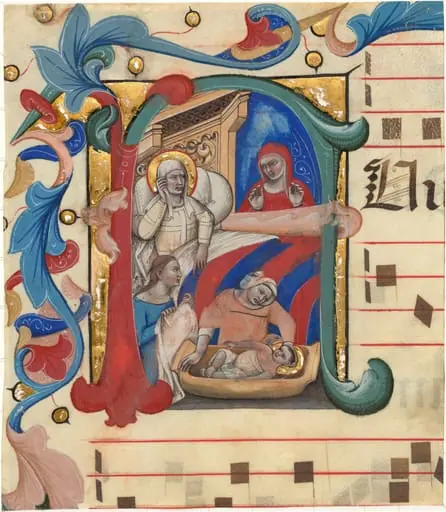 Birth of John the Baptist
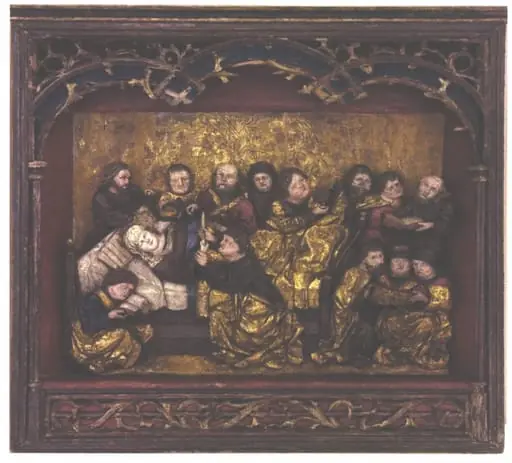 Adormirea Maicii Domnului
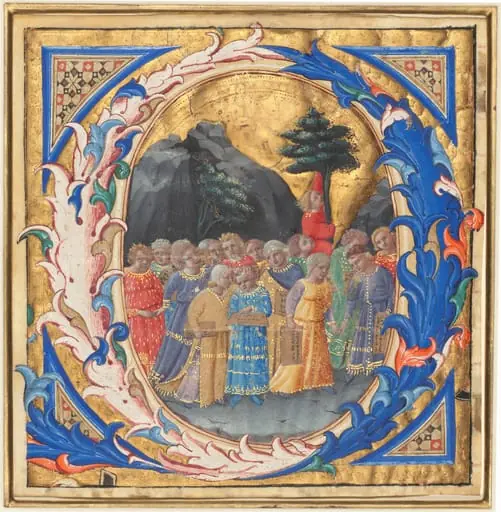 Initial Q with a Procession of Children
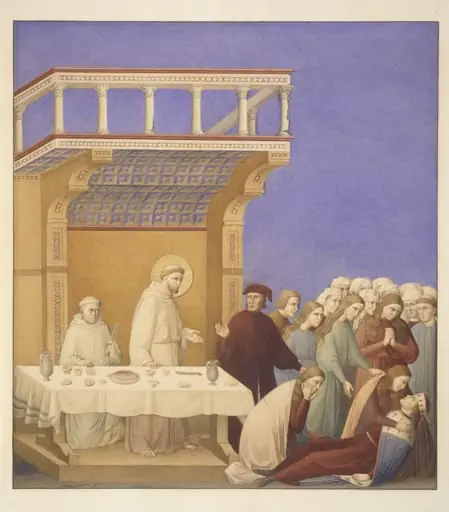 Copy after the painting Death of the Knight of Celano by the Master of the St Francis cycle in the Upper Church, San Francesco, Assisi
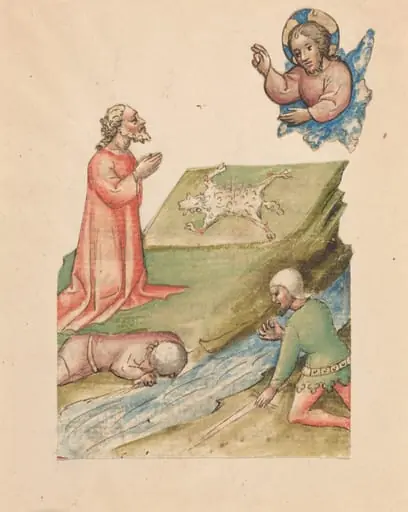 Gideon and the Fleece, with the Selection of Gideon's Army