Artwork
Virgin and Child in a Landscape
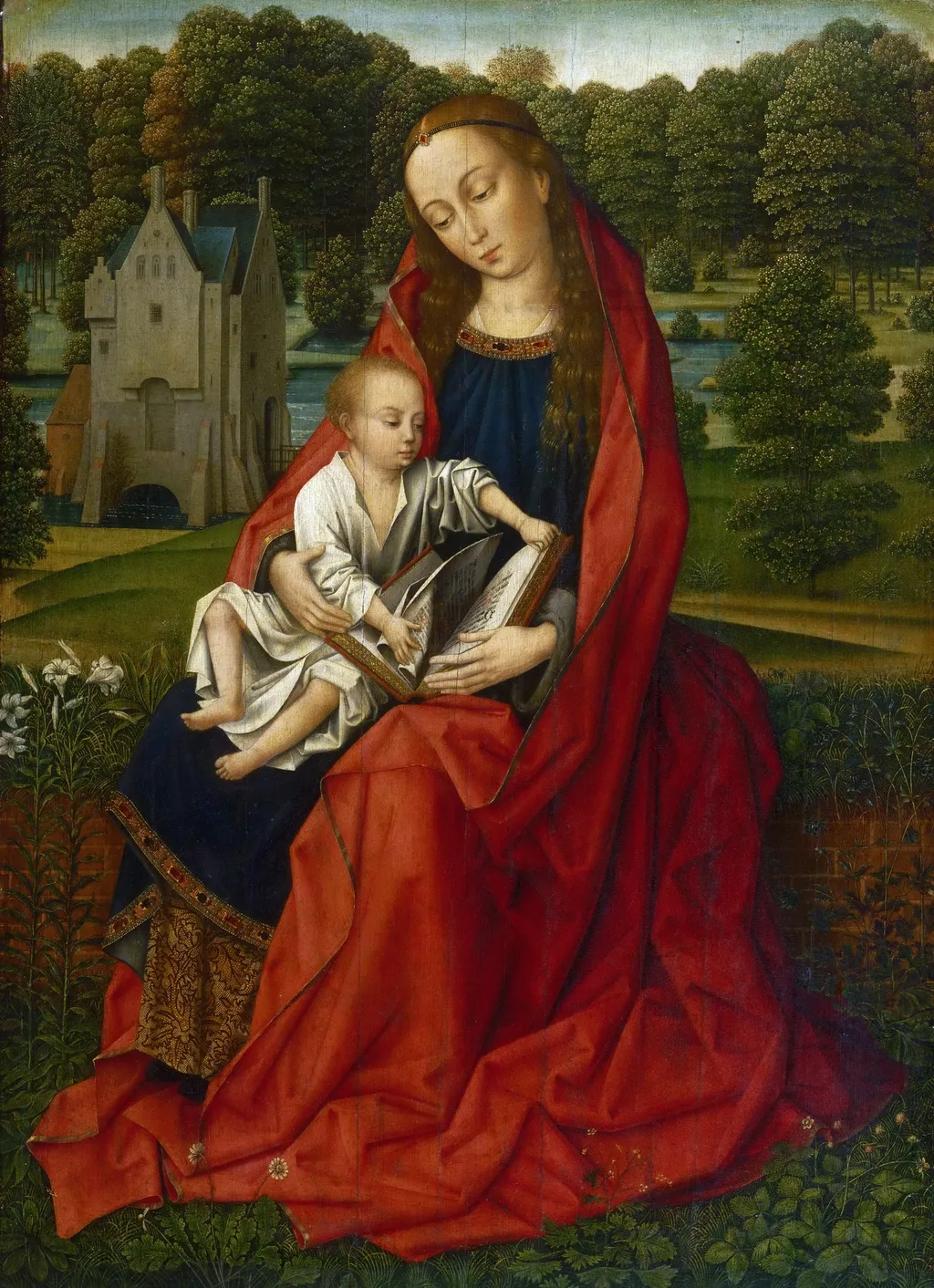
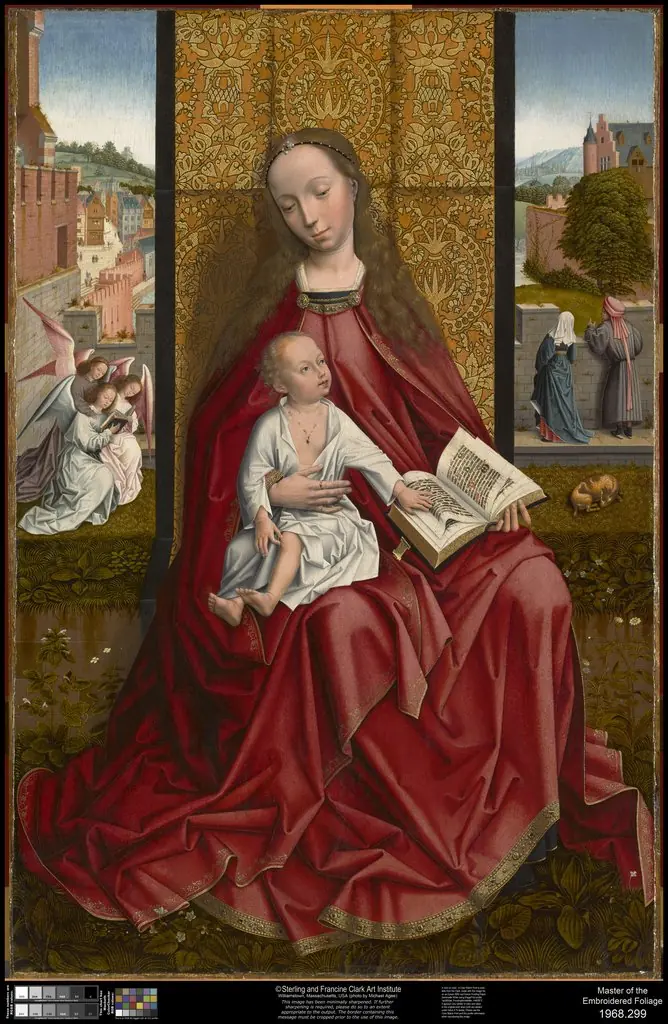
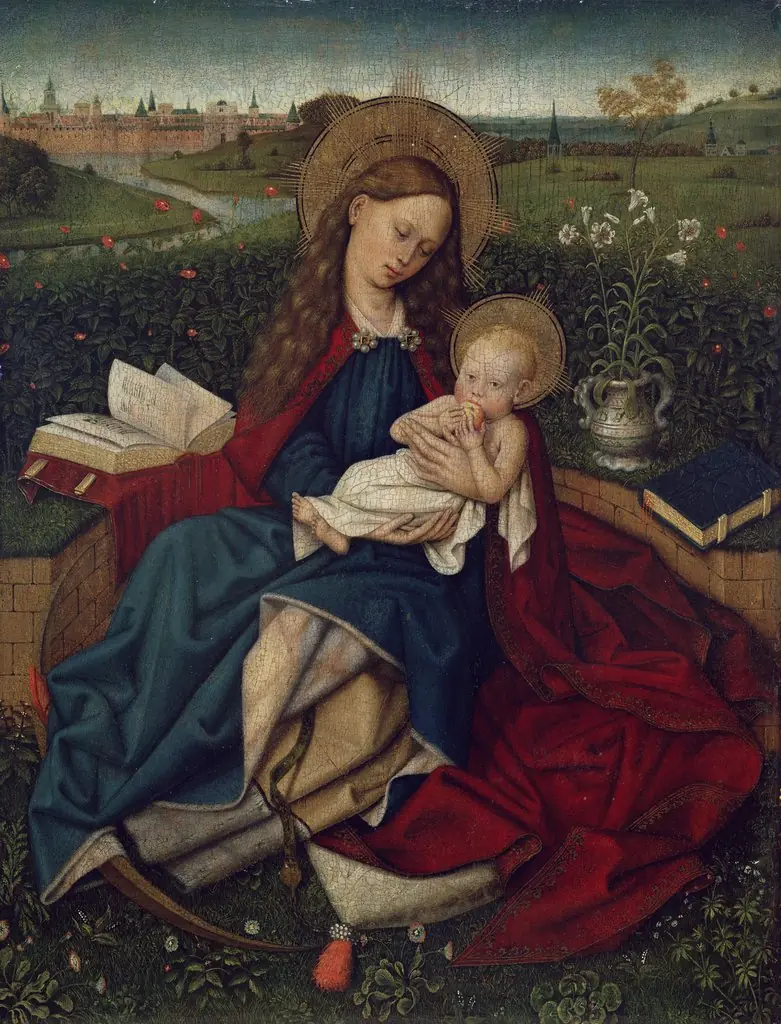
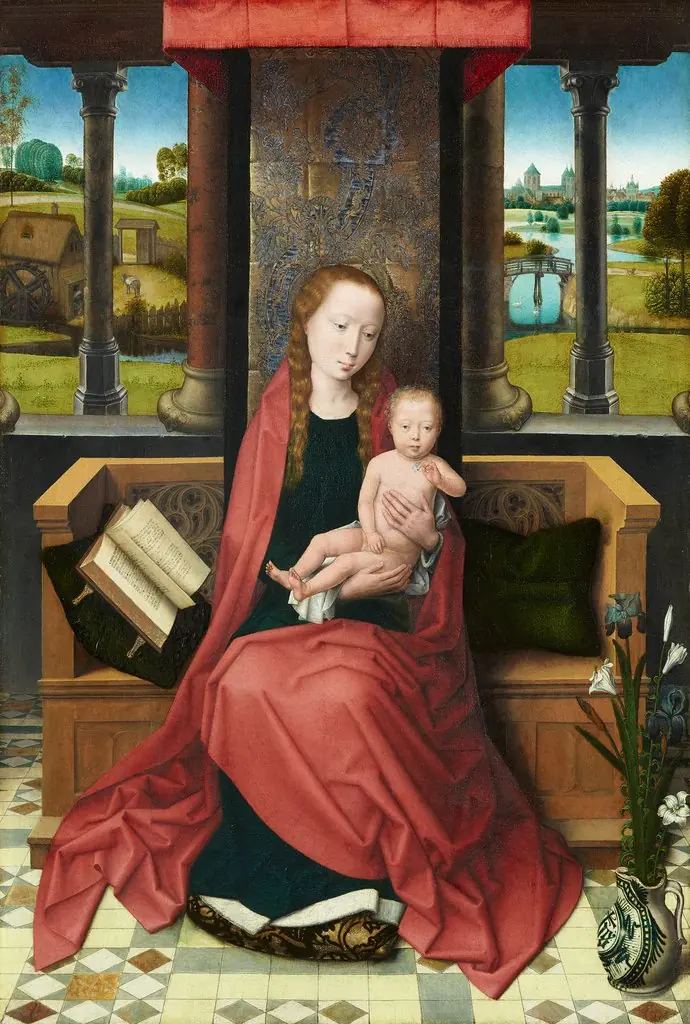
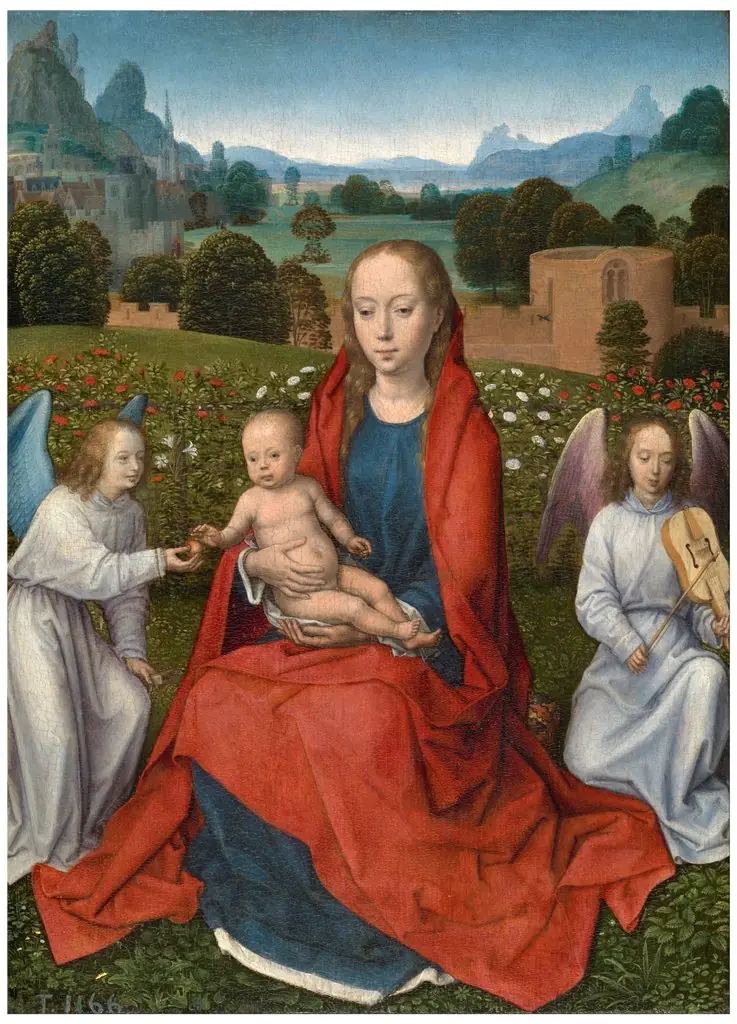
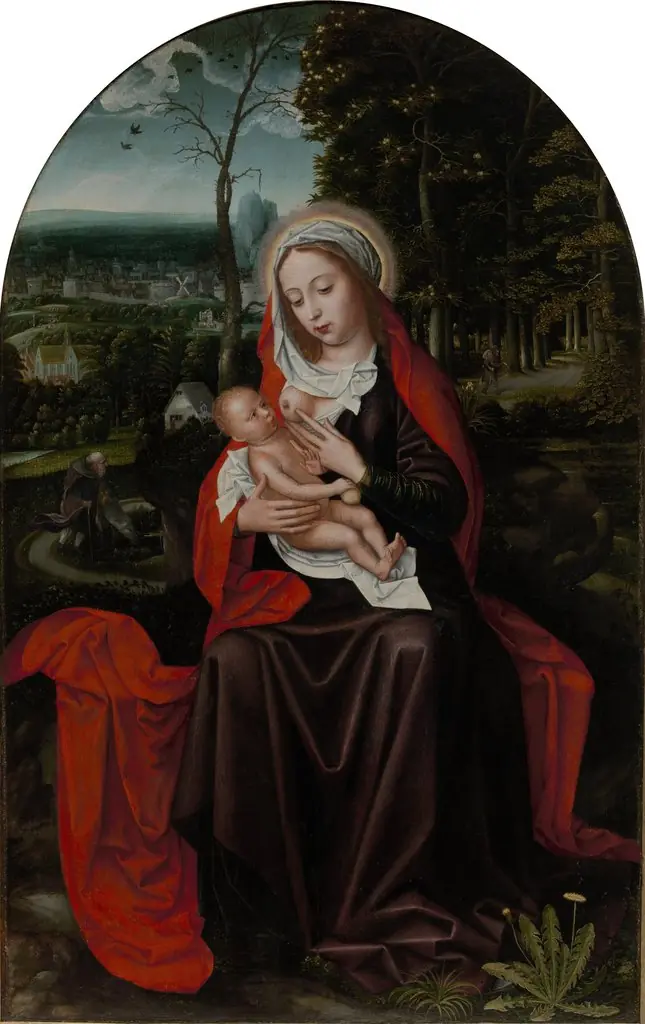
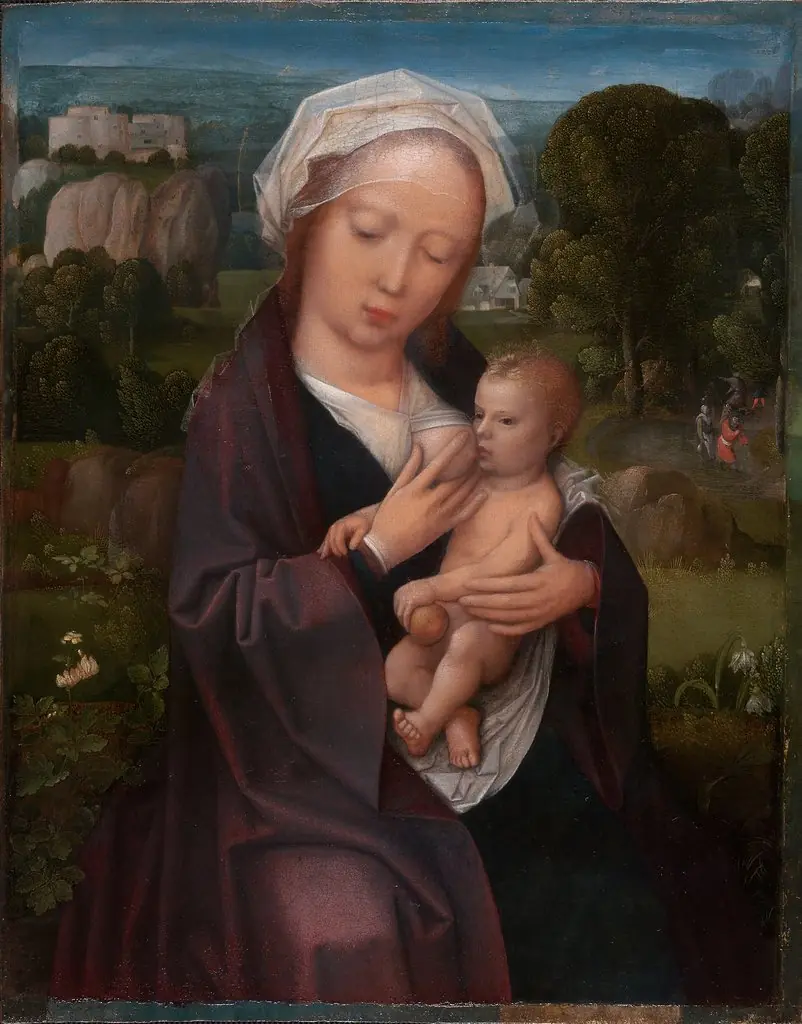
Virgin and Child in a Landscape is an oil painting by the Northern Renaissance artist Master of the Embroidered Foliage. It dates from 1500 and is held in the collection of the Philadelphia Museum of Art. Executed circa 1500, this oil on panel presents a Virgin and Child set within an open landscape.
About this work
Overview
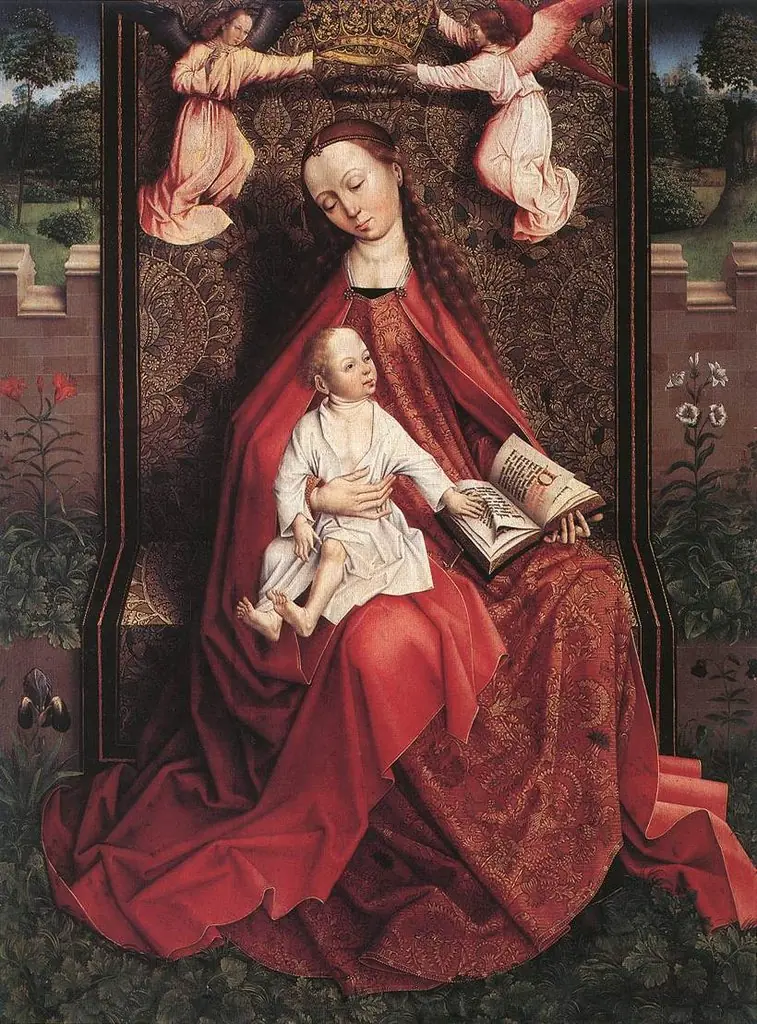
Executed circa 1500, this oil on panel presents a Virgin and Child set within an open landscape. The figures are rendered in a calm, intimate pose, with the mother in a deep blue garment trimmed in gold and a red mantle, while the infant holds a small dark book. Behind them a modest castle and a stand of trees recede into the distance, creating a tranquil backdrop.
Subject & Meaning
The child's focus on the book suggests contemplation of scripture or prayer, emphasizing the theological link between the divine word and the infant Christ.
The composition portrays the Virgin Mary with the infant Jesus, a conventional devotional theme. The child's focus on the book suggests contemplation of scripture or prayer, emphasizing the theological link between the divine word and the infant Christ. The serene setting underscores the notion of a protected, sacred space, aligning with contemporary devotional practices that favored personal, contemplative imagery.
Technique & Style
The painter employs layered glazing to achieve luminous skin tones and rich textile colors, a hallmark of Northern Renaissance oil work. Foliage and background elements display intricate, embroidery‑like patterns, a stylistic trait that gave the anonymous creator his modern designation. Fine brushwork delineates the delicate folds of the garments and the subtle modeling of the figures.
History & Provenance
Attributed to the so‑called Master of the Embroidered Foliage, an anonymous workshop active in Bruges and Brussels between roughly 1480 and 1510, the work was first grouped with similar paintings by Max Jakob Friedländer in 1926. Its provenance prior to modern collection records remains undocumented, reflecting the common anonymity of many early Netherlandish productions.
Context
The painting belongs to the Northern Renaissance, a period marked by heightened naturalism and detailed observation in the Low Countries. Its landscape setting reflects a shift from strictly interior devotional scenes toward integrating figures within recognizable, yet idealized, outdoor environments, a trend that influenced subsequent Flemish artists.
Own this work as a print
Artist & collection
Artist
Master of the Embroidered Foliage
The Master of the Embroidered Foliage (active c. 1480 – c. 1510) is the Notname for an Early Netherlandish painter or a group of painters who worked out of Bruges and Brussels. In 1926 the German art historian Max…