Artwork
Durán Madonna
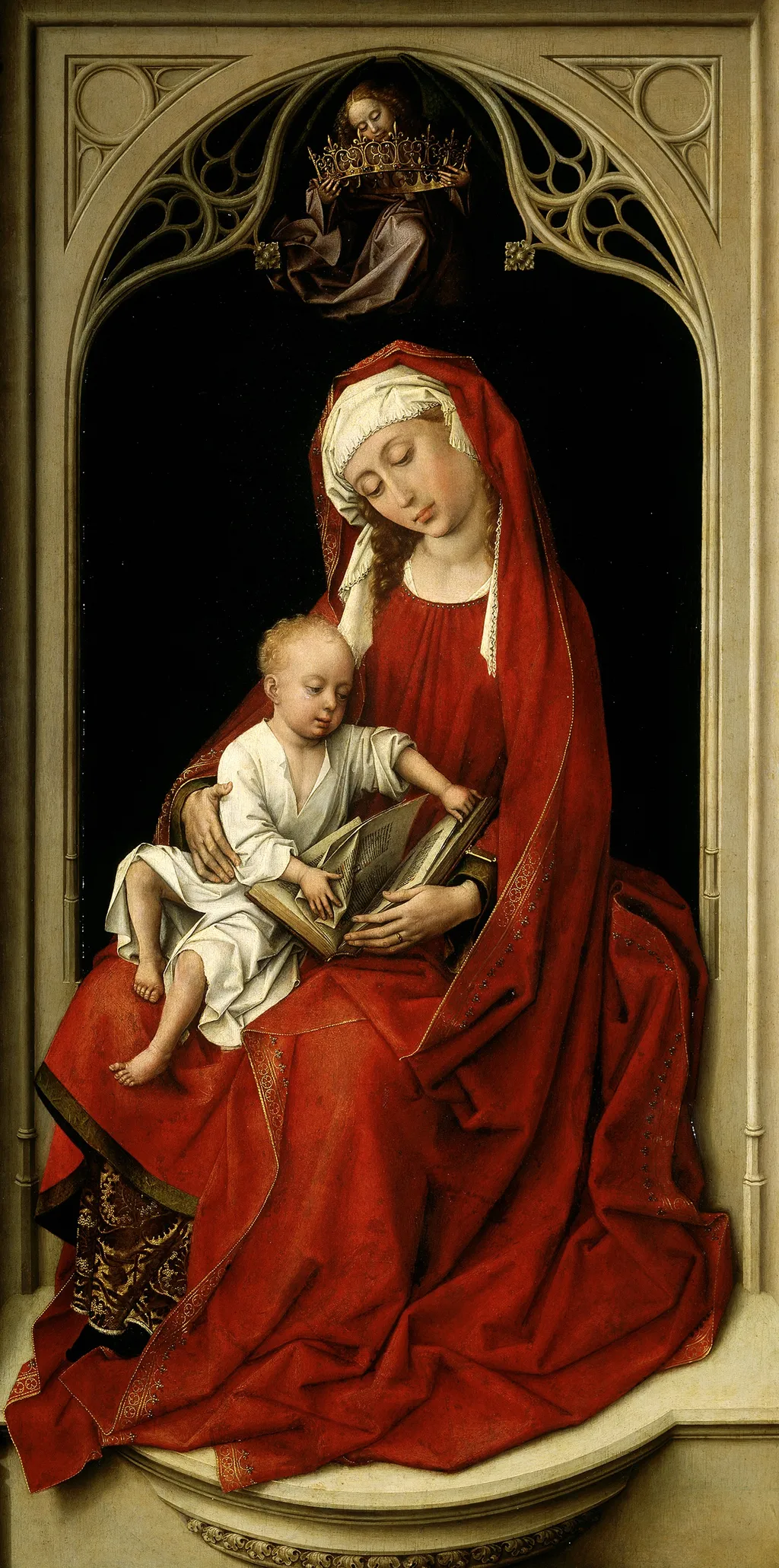
Durán Madonna is an oil painting by the Northern Renaissance artist Rogier van der Weyden. It dates from 1435 and is held in the collection of the Museo del Prado.
About this work
Van Weyden moves the Virgin and Child onto a projecting plinth, giving them a sculptural feel, and sets them in a Gothic niche rather than a flat background.
Durán Madonna is a wood panel painting by Rogier van der Weyden, dated around 1435.
The work follows Jan van Eyck’s Ince Hall Madonna and was widely copied. Van Weyden moves the Virgin and Child onto a projecting plinth, giving them a sculptural feel, and sets them in a Gothic niche rather than a flat background. Mary wears a long red robe edged with gold thread, and the child playfully turns the pages
Overview
Rogier van der Weyden’s Durán Madonna is an oil painting on oak panel, dated to the mid‑1430s. The work shows the Virgin Mary seated on a raised platform, holding the infant Christ as they both look toward an open manuscript. The composition reflects a transition from flat backgrounds to a shallow architectural setting.
Subject & Meaning
The central figures are the Virgin in a long red robe trimmed with gold‑thread and the child Jesus, who appears to turn the pages of a holy book. Their gentle interaction suggests a contemplative devotion, emphasizing the intimacy of mother and son while highlighting the importance of scripture.
Technique & Style
Van der Weyden employs oil on wood to achieve subtle modelling of flesh and fabric, creating a three‑dimensional effect. By placing the pair on a projecting plinth within a Gothic niche, he gives the scene a sculptural presence that departs from the flatter settings of earlier Netherlandish works.
History & Provenance
The painting was executed between 1435 and 1438 and entered the collection of the Prado Museum in Madrid. It draws directly on Jan van Eyck’s Ince Hall Madonna, a model that was widely replicated in the following decades.
Context
During the early 15th century, Netherlandish artists were experimenting with spatial depth and iconographic detail. Van der Weyden’s adaptation of van Eyck’s composition reflects this trend, while his use of a niche and plinth anticipates later developments in devotional imagery.
Artist & collection
Artist
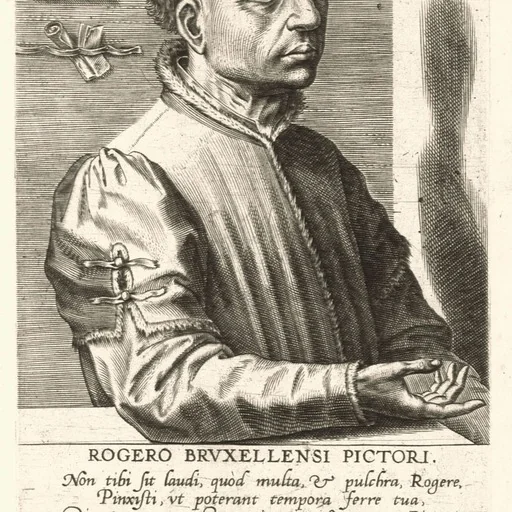
Rogier van der Weyden (Dutch: ; 1399 or 1400 – 18 June 1464), initially known as Roger de la Pasture (French: ), was an early Netherlandish painter whose surviving works consist mainly of religious triptychs,…

![The Saint Anne Altarpiece: Saint Anne with the Virgin and Child [middle panel], by Gerard David](https://artifactworldgallery.com/img/gerard-david--the-saint-anne-altarpiece-saint-anne-with-the-virgin-and-chi--781e919f9012a004-w320.webp)