Artwork
The Madonna of Humility
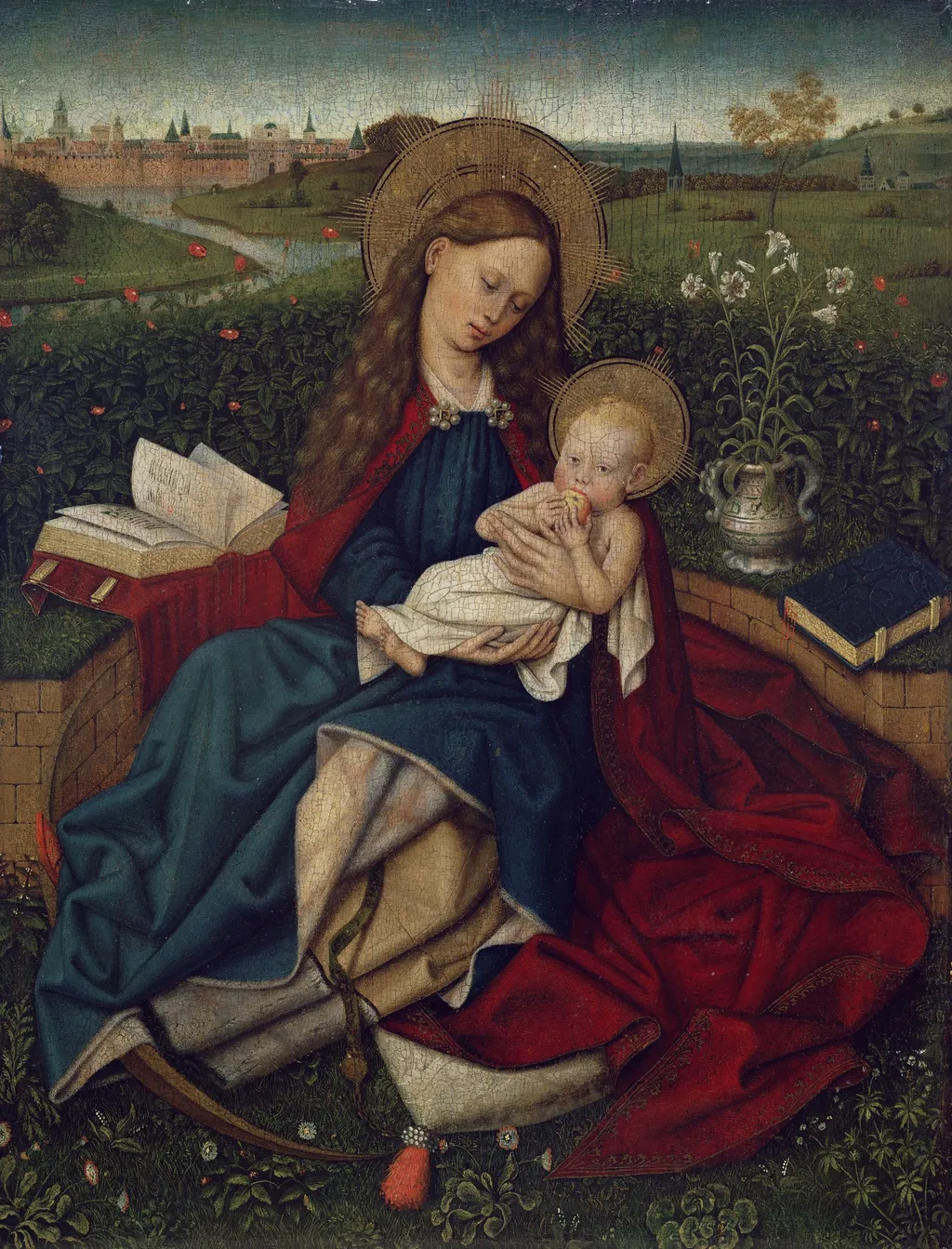
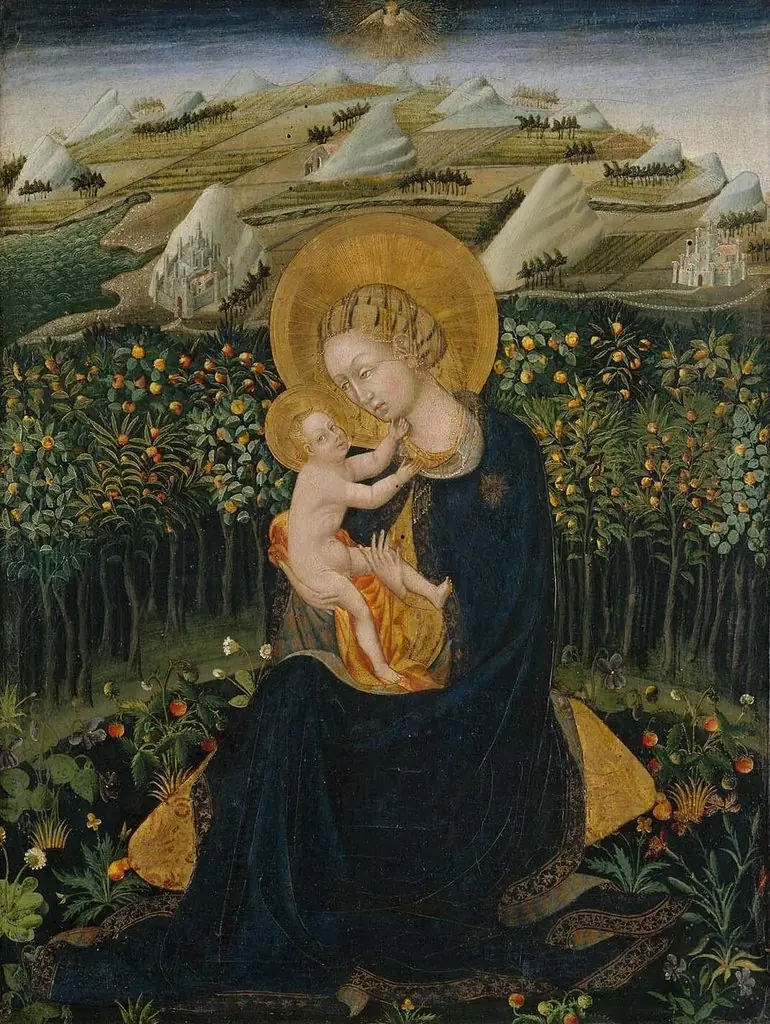
The Madonna of Humility is an oil painting by the Early Renaissance artist Unknown. It dates from 1450 and is held in the collection of the J. Paul Getty Museum. The work presents a modest depiction of the Virgin Mary seated on the earth, cradling the infant Jesus.
About this work
Overview
The work presents a modest depiction of the Virgin Mary seated on the earth, cradling the infant Jesus. She wears a blue garment beneath a red mantle, and a golden halo crowns her head. The child is swaddled in white fabric and holds an apple, set against a verdant landscape that stretches to distant hills, trees, and water under a pale sky.
Subject & Meaning
The apple in the infant’s hand alludes to the biblical fruit of knowledge, underscoring Christ’s role as the redeemed humanity.
The composition follows the traditional Madonna of Humility iconography, emphasizing the Virgin’s earthly simplicity by placing her directly on the ground rather than a throne. The apple in the infant’s hand alludes to the biblical fruit of knowledge, underscoring Christ’s role as the redeemed humanity. The serene expressions and gentle interaction convey a sense of divine tenderness and approachable sanctity.
Technique & Style
Executed in oil paint, the piece displays careful modeling of form through subtle gradations of light and shadow, suggesting a nuanced use of chiaroscuro. The artist renders textures—fabric folds, foliage, water—with fine detail, while the overall palette balances cool blues and greens with warm reds and golds, creating a harmonious visual equilibrium.
Context
The painting aligns with late medieval and early Renaissance devotional art, where intimate portrayals of the Virgin and Child were intended for private contemplation. Its naturalistic background reflects a growing interest in integrating sacred figures within recognizable landscapes, a trend that marked the transition toward more human-centered religious imagery.
Artist & collection

 Domestic Scene
 Giacomo and Cardinal Marco, investing Andrea, Abbot of San Zeno, with his Benefice
 The Nymph of Fontainebleau
 Portrait of a Woman
 Madonna and Child with Saints in the Enclosed Garden
 Venus and Minerva
 Family Group of Four on Sofa
 Wall painting from Room H of the Villa of P. Fannius Synistor at Boscoreale
 Virgin and Child in a Landscape
 Madonna by a Grassy Bank
 Virgin and Child
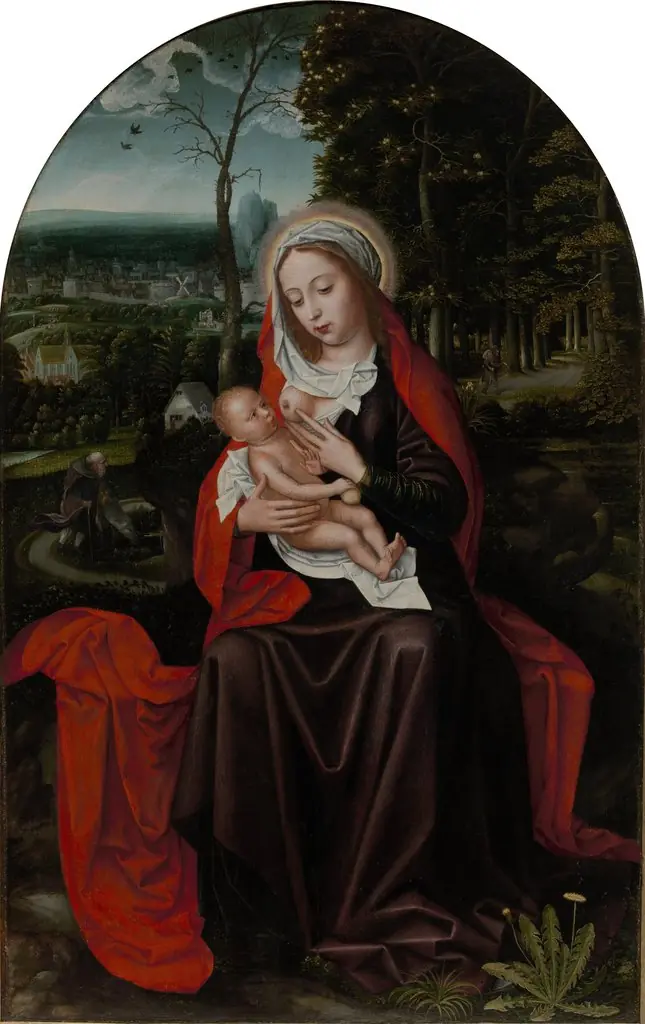 Rest on the flight into Egypt
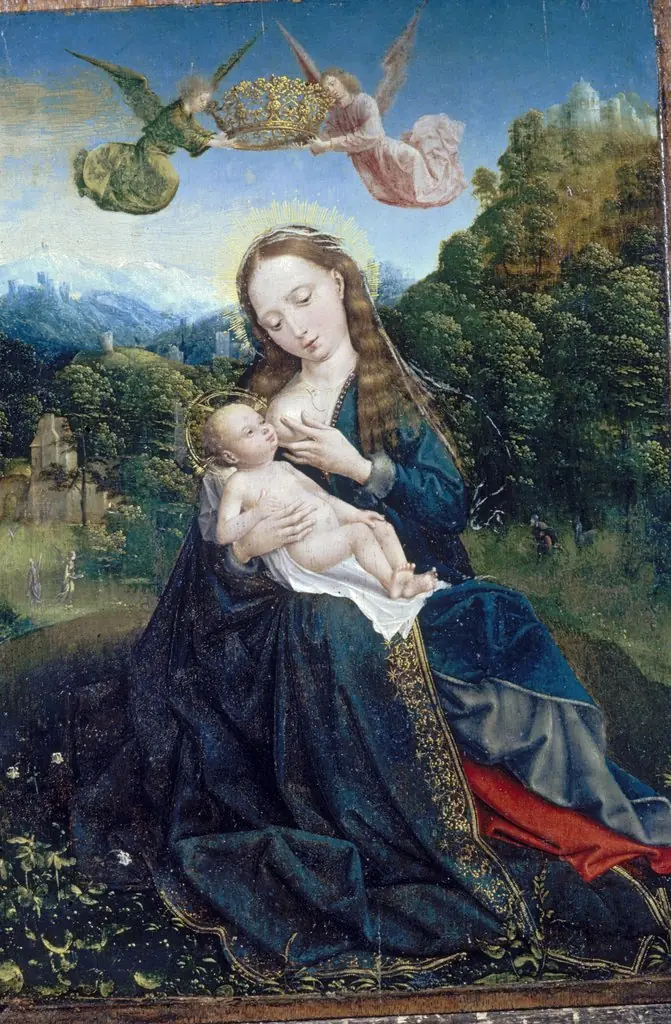 Rest on the Flight into Egypt
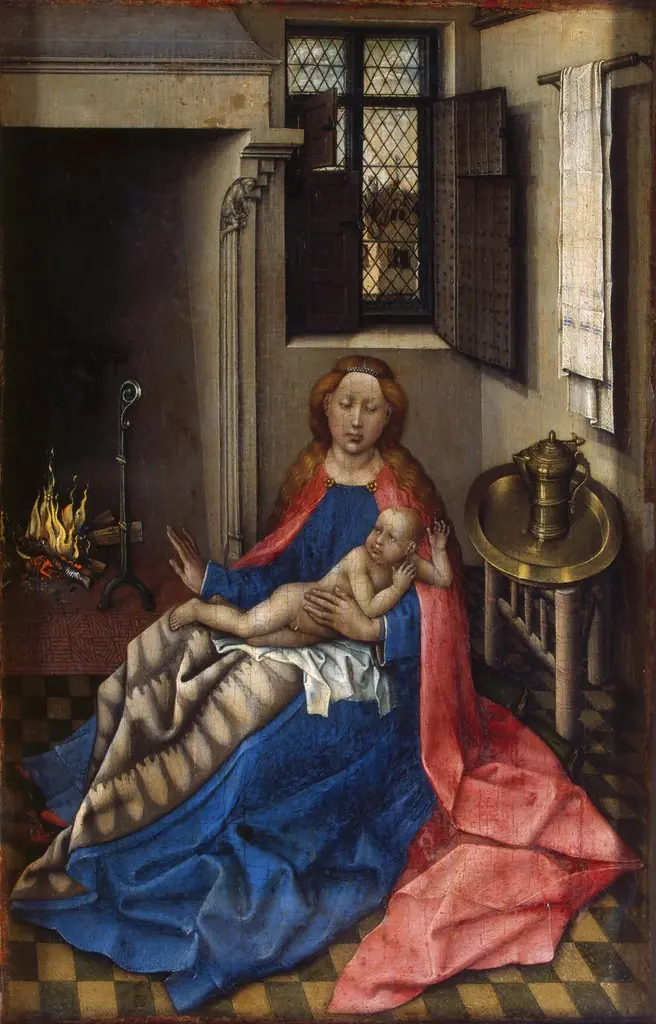 The Virgin and Child by a Fireplace (Right Wing of a Diptych)
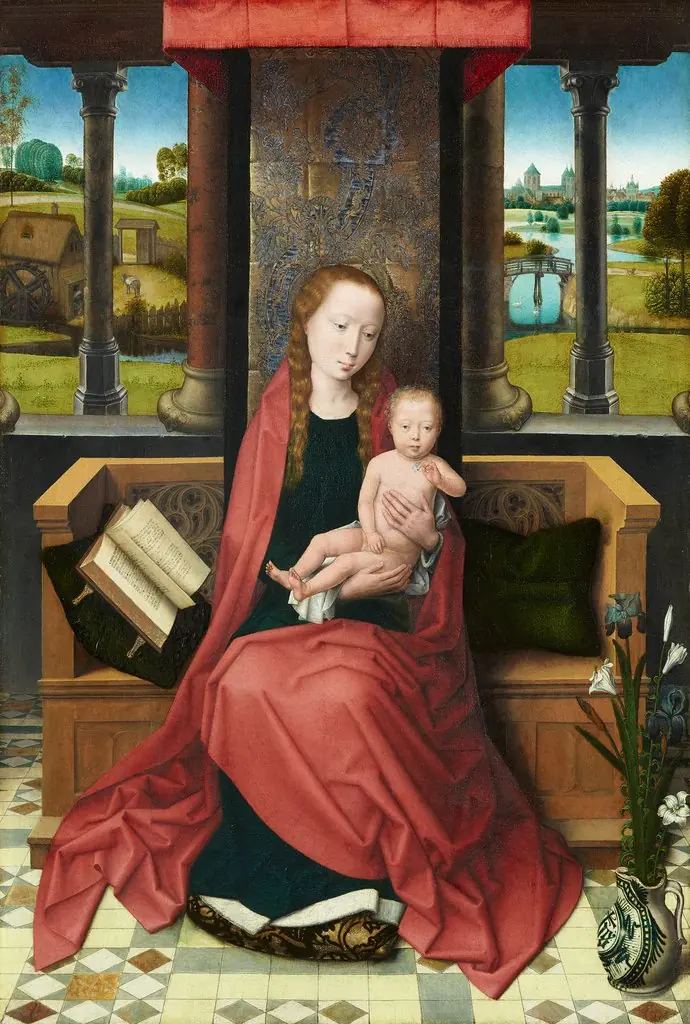 The Virgin and Child Enthroned
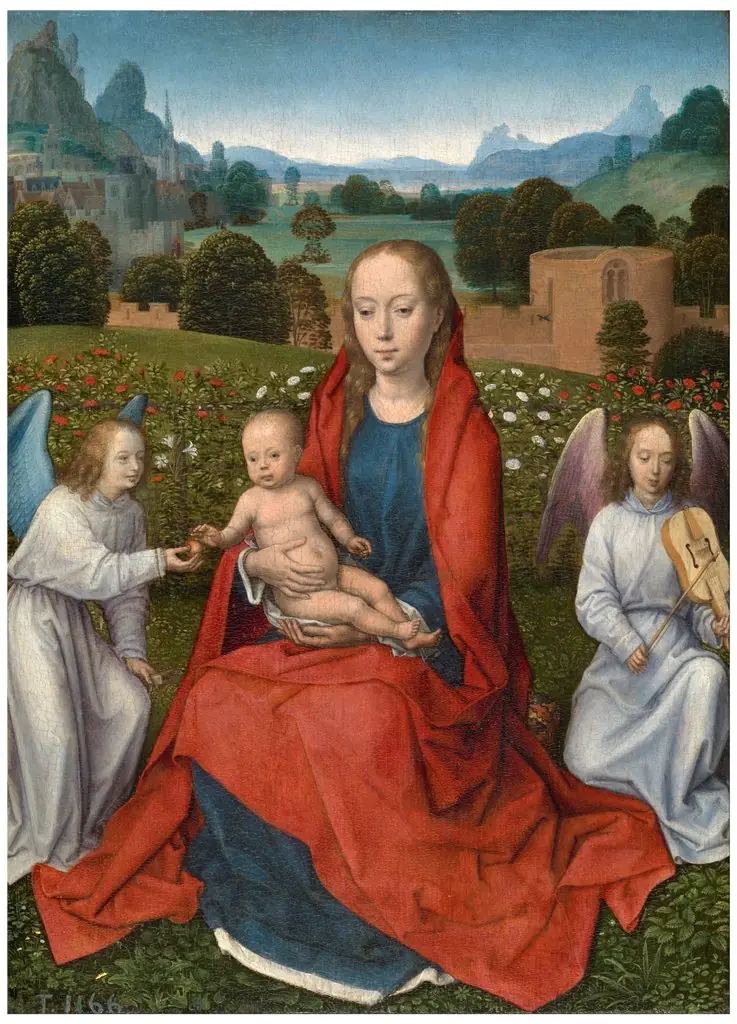 Virgin and Child with two angels
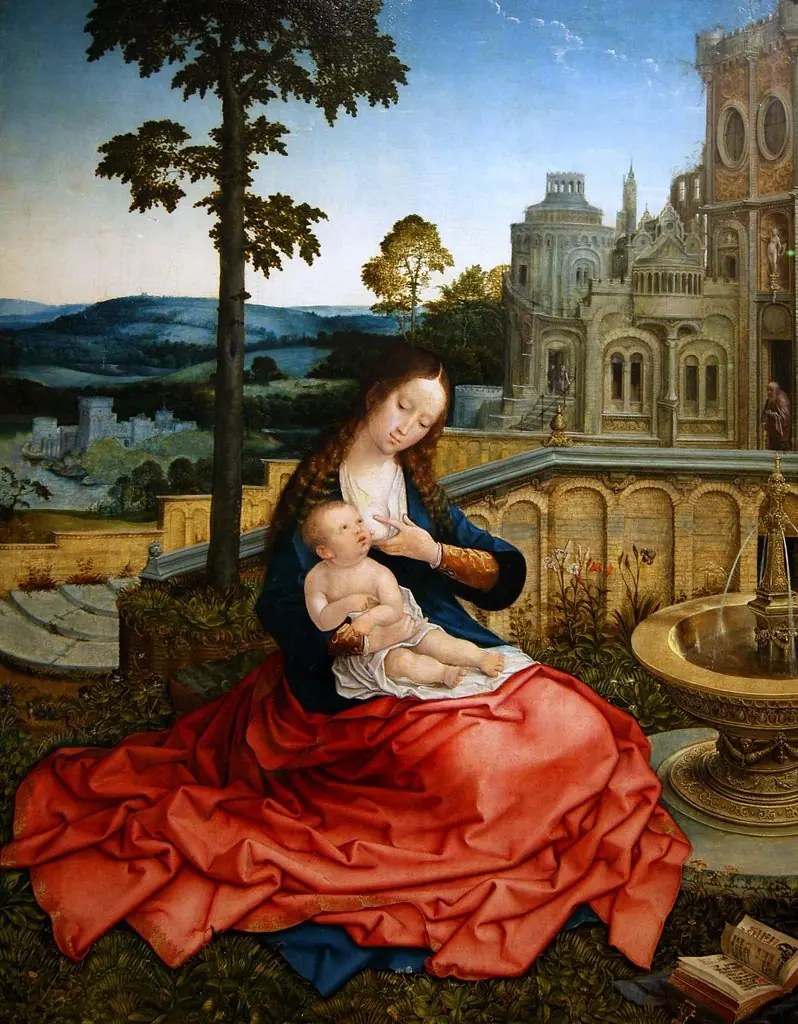 Virgin and Child near a Fountain
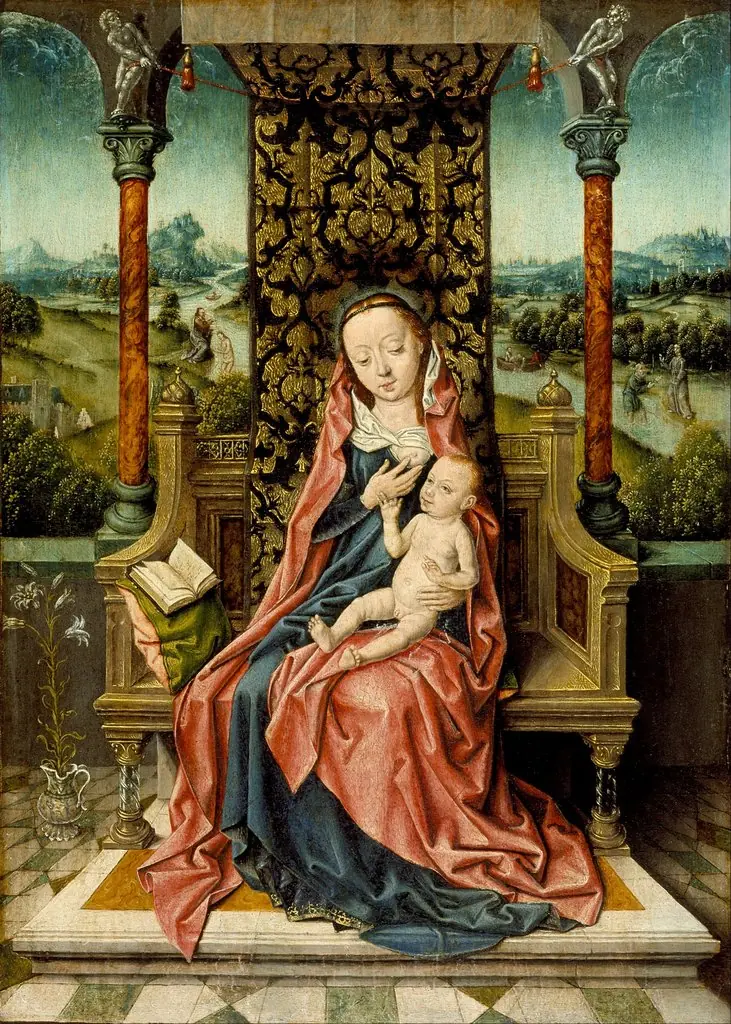 Madonna and Child Enthroned
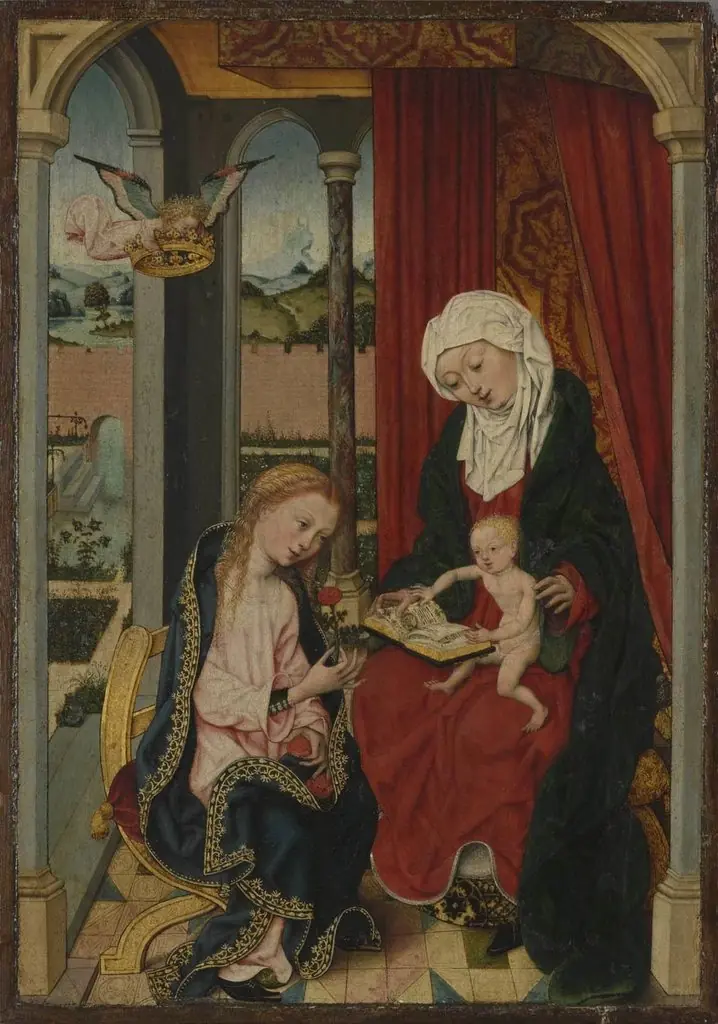 Virgin and Child with Saint Anne
 Madonna of Humility