Artwork
The visitation
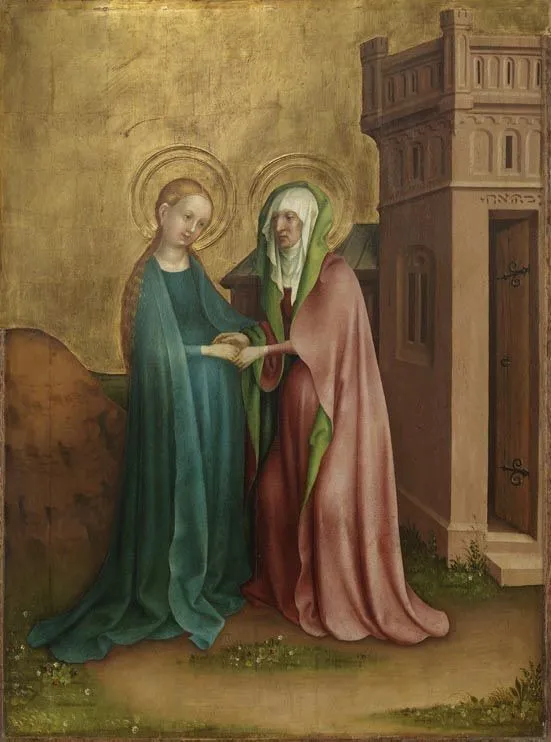
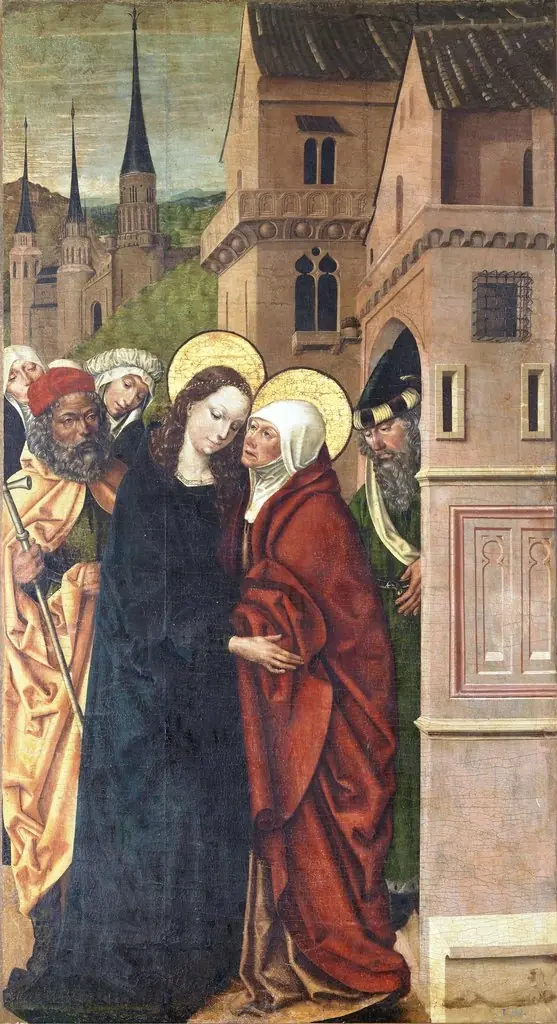
The visitation is an oil painting by the Northern Renaissance artist Master of the Heisterbach Altar. It dates from 1440 and is held in the collection of the Bavarian State Painting Collections.
About this work
Overview
Created around 1440, this oil painting titled “The Visitation” is attributed to the anonymous workshop known as the Master of the Heisterbach Altar. Executed in tempera‑oil on panel, the work now belongs to the collection of the Alte Pinakothek in Munich. It depicts a moment from the biblical narrative of the Virgin Mary’s visit to her cousin Elizabeth, rendered in a compact, interior setting.
Subject & Meaning
Two female figures stand before a stone façade; the left figure, cloaked in blue and crowned with a golden halo, reaches out to hold the hand of the woman on the right, who wears a pink mantle and a green headscarf. Their gestures and down‑cast gazes convey a quiet exchange of greeting and shared revelation, reflecting the theological emphasis on humility and divine encounter.
Technique & Style
The artist employed layered glazing to achieve a subtle luminosity across the faces and garments, allowing light to penetrate the pigments and create a gentle glow. Contrasting illuminated areas with deeper shadows enhances the three‑dimensionality of the figures and the architectural backdrop, a method that demanded careful control of oil transparency in the mid‑15th century.
History & Provenance
The painting emerged from a Germanic workshop active in the early Renaissance, identified by scholars through stylistic links to the Heisterbach altar commission. It entered the Alte Pinakothek’s holdings during the museum’s 19th‑century acquisitions of medieval German art, where it has remained a representative example of devotional panel painting.
Context
The work reflects the period’s shift toward more intimate, humanized religious scenes, moving away from the grandiose compositions of earlier Gothic art. The inclusion of a modest stone building and a solitary tower situates the narrative within a recognizable, everyday environment, aligning with contemporary devotional practices that emphasized personal piety.
Artist & collection