Artwork
The Visitation
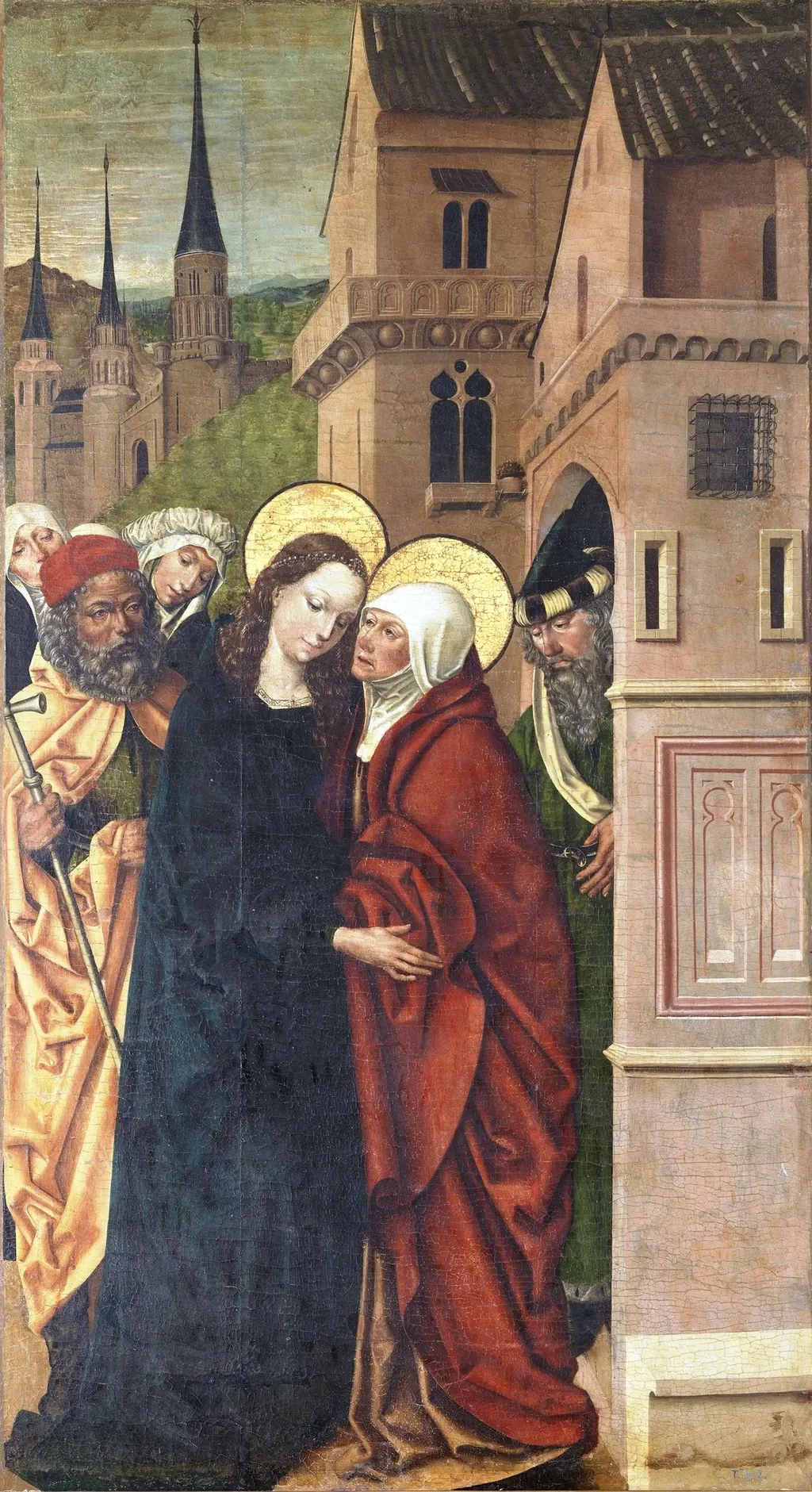
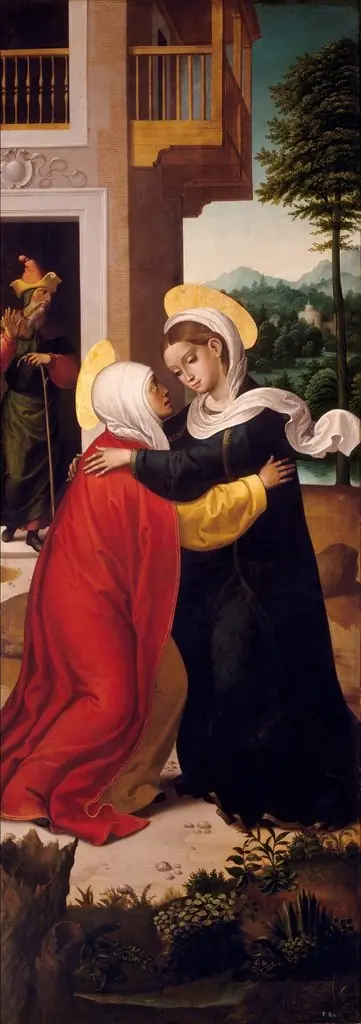
The Visitation is a mixed painting by the Early Renaissance artist Maestro de la Sisla. It dates from 1500 and is held in the collection of the Museo del Prado.
About this work
Overview
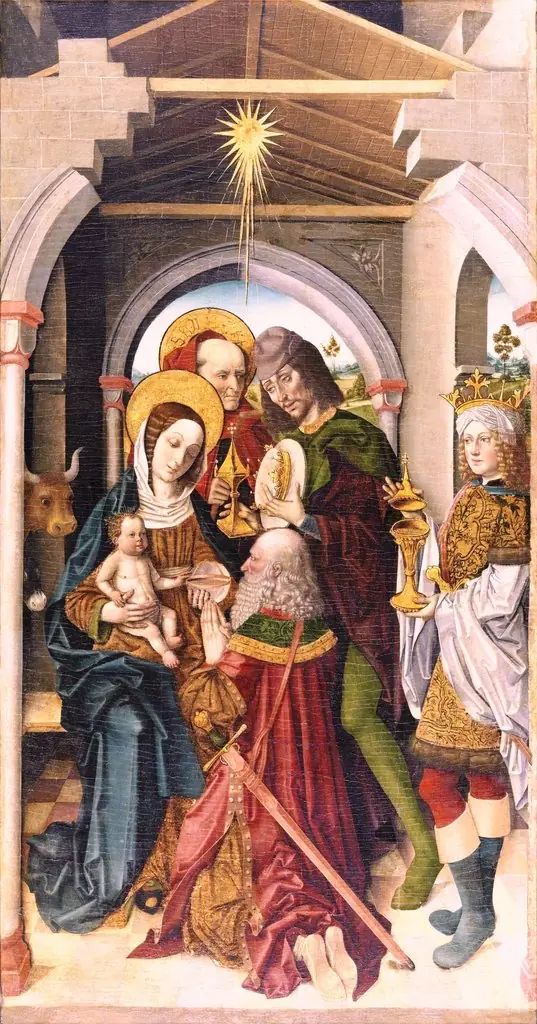
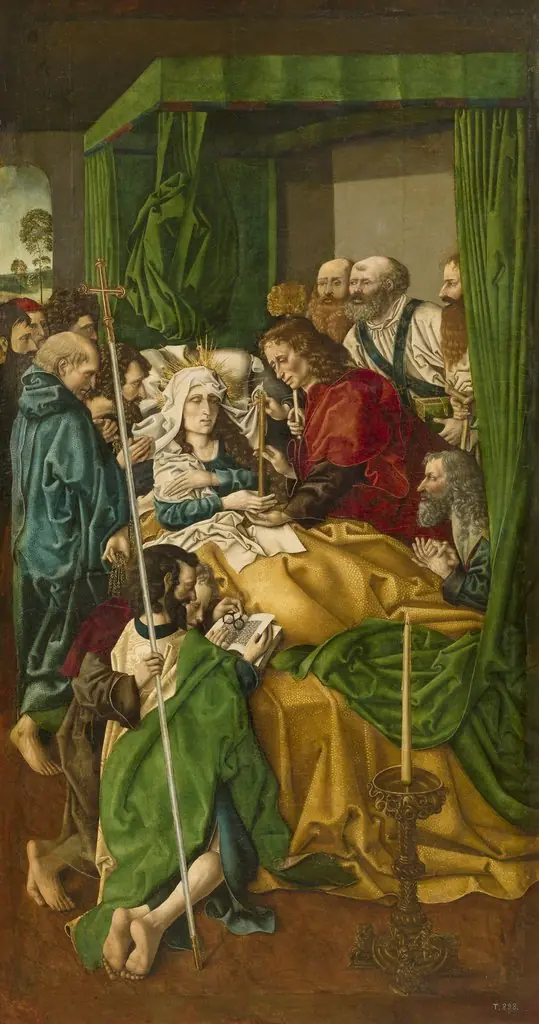
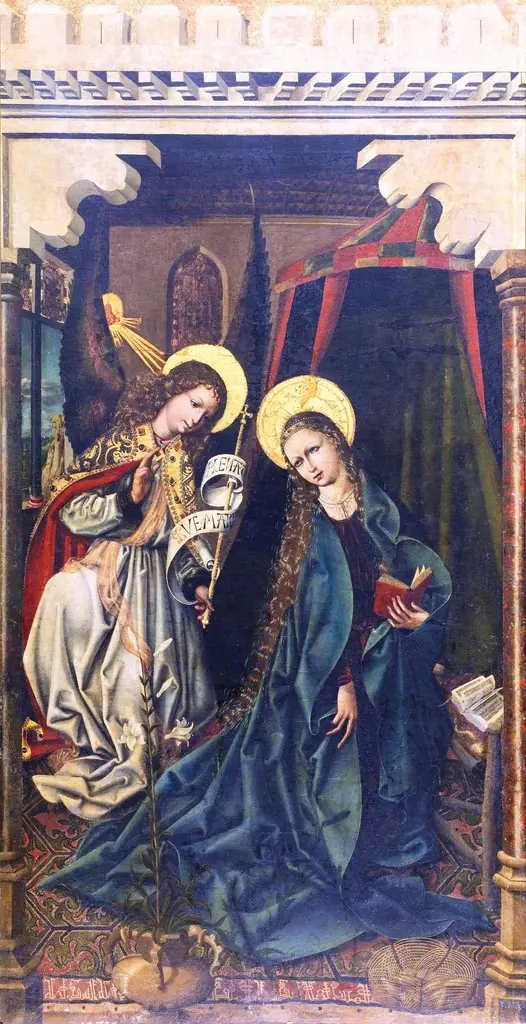
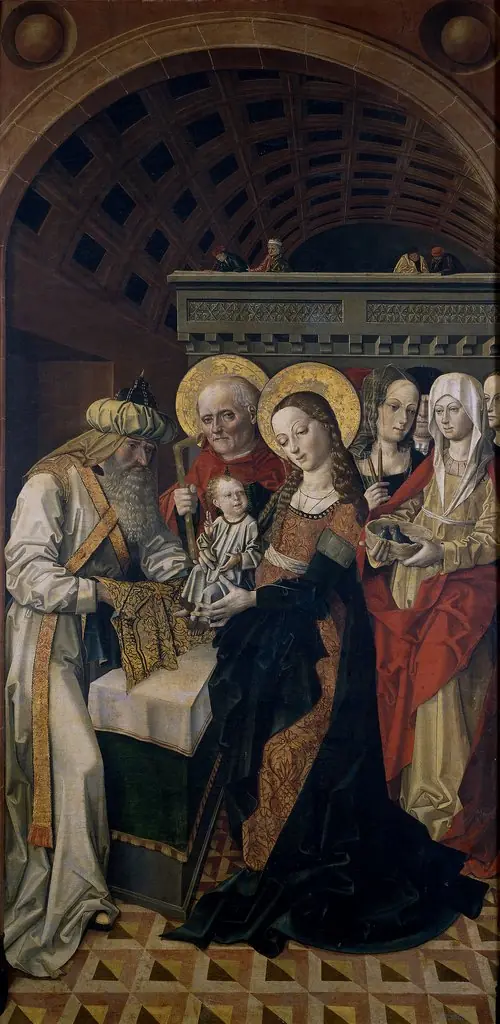
Created circa 1500, The Visitation is a mixed‑technique panel attributed to the anonymous Master of La Sisla, an early‑Renaissance painter linked to the altarpiece of the former Monastery of Santa María de Sisla, now in the Prado Museum. The composition presents the biblical encounter between the Virgin Mary and her cousin Elizabeth, set before an architectural backdrop.
Subject & Meaning
The central figures are the two women: Mary, dressed in a dark garment, and Elizabeth, highlighted in a vivid red robe. Their interaction—Elizabeth’s hand on Mary’s arm and a spoken exchange—conveys the moment of mutual recognition of their unborn children, a theme emphasizing divine promise and familial devotion.
Technique & Style
The work employs a combination of tempera and oil, typical of the period’s experimental approaches. Coloration is rich yet rendered with a flattened spatial quality, and the figures are depicted with solemn expressions. Architectural elements are stylized, featuring a stone edifice with towers, small windows, and a balcony that frames the scene.
History & Provenance
The panel originated as part of the altarpiece for the Monastery of Santa María de Sisla. After the monastery’s dissolution, the piece entered the collection of the Museo del Prado, where it remains displayed as part of the museum’s early Renaissance holdings.
Context
During the early 1500s, Visitation scenes were common in devotional art, serving both liturgical and didactic purposes. The Master of La Sisla’s work reflects regional artistic trends in Castile, integrating local architectural motifs with the broader iconographic conventions of the period.
Artist & collection
Artist
The Master of La Sisla (active c.1500) is the name given to an anonymous artist who painted the panels for the altarpiece at the Monastery of Santa María de Sisla, near Toledo; now preserved at the Museo del Prado.