Artwork
The Visitation
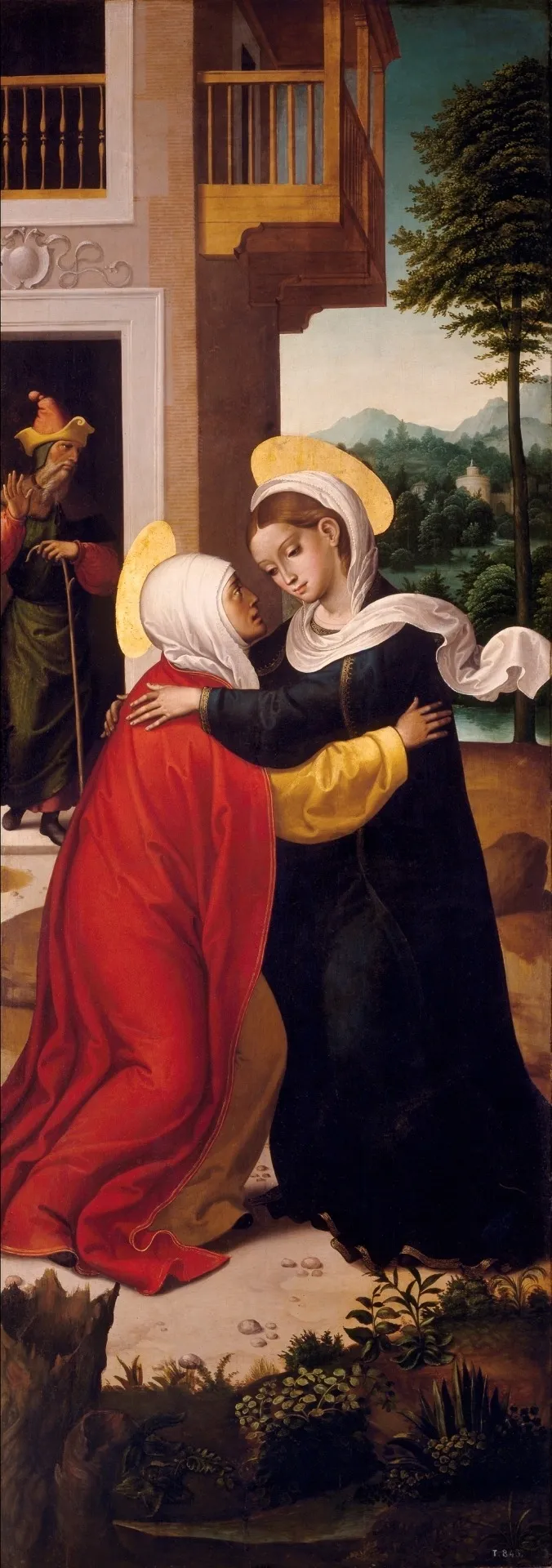
The Visitation is an oil painting by the Mannerist artist Juan Correa de Vivar. It dates from 1533 and is held in the collection of the Museo del Prado.
About this work
Overview
Juan Correa de Vivar’s oil on canvas, dated 1533, portrays the biblical episode of the Visitation. The composition is set in an open courtyard where two women embrace, while an elderly figure observes from a distance. Architectural elements such as arched doorways and a balcony frame the scene, and a landscape of trees and hills recedes beyond.
Subject & Meaning
The central focus is the meeting of the Virgin Mary and her cousin Elizabeth, a moment traditionally associated with the announcement of Christ’s birth. The intimate gesture between the women underscores themes of familial love and shared destiny, while the inclusion of a skull—a memento mori—reminds viewers of mortality and the spiritual significance of the encounter.
Technique & Style
Correa de Vivar employs chiaroscuro to model forms, allowing light to illuminate the figures against a darker courtyard. The vivid red of Mary’s dress contrasts with the muted tones of Elizabeth’s attire and the elder’s brown robes, creating visual hierarchy. Fine brushwork renders architectural details, while broader strokes suggest the distant hills, lending depth to the overall space.
History & Provenance
Completed in the early sixteenth century, the painting entered the collection of the Museo del Prado, where it remains on display. Its attribution to Correa de Vivar has been confirmed through stylistic analysis and archival records linking the work to the artist’s known output during the 1530s.
Context
The work reflects the Spanish Renaissance’s synthesis of religious narrative and humanist concern for individual emotion. By situating the Visitation in a recognizable courtyard rather than an idealized setting, Correa de Vivar aligns the sacred event with everyday experience, a trend common among Iberian painters of the period.
Artist & collection