Artwork
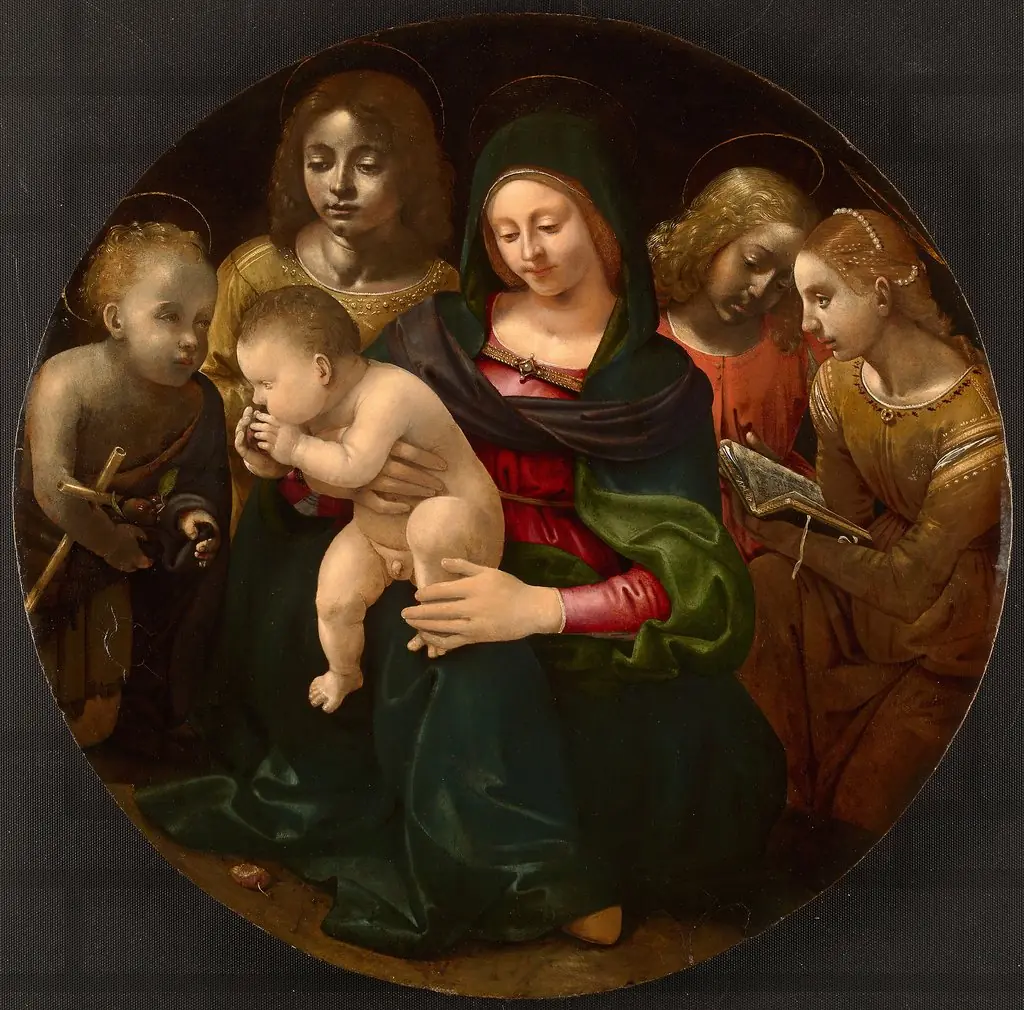
Virgin and Child with the Young Saint John the Baptist, Saint Cecilia, and Angels
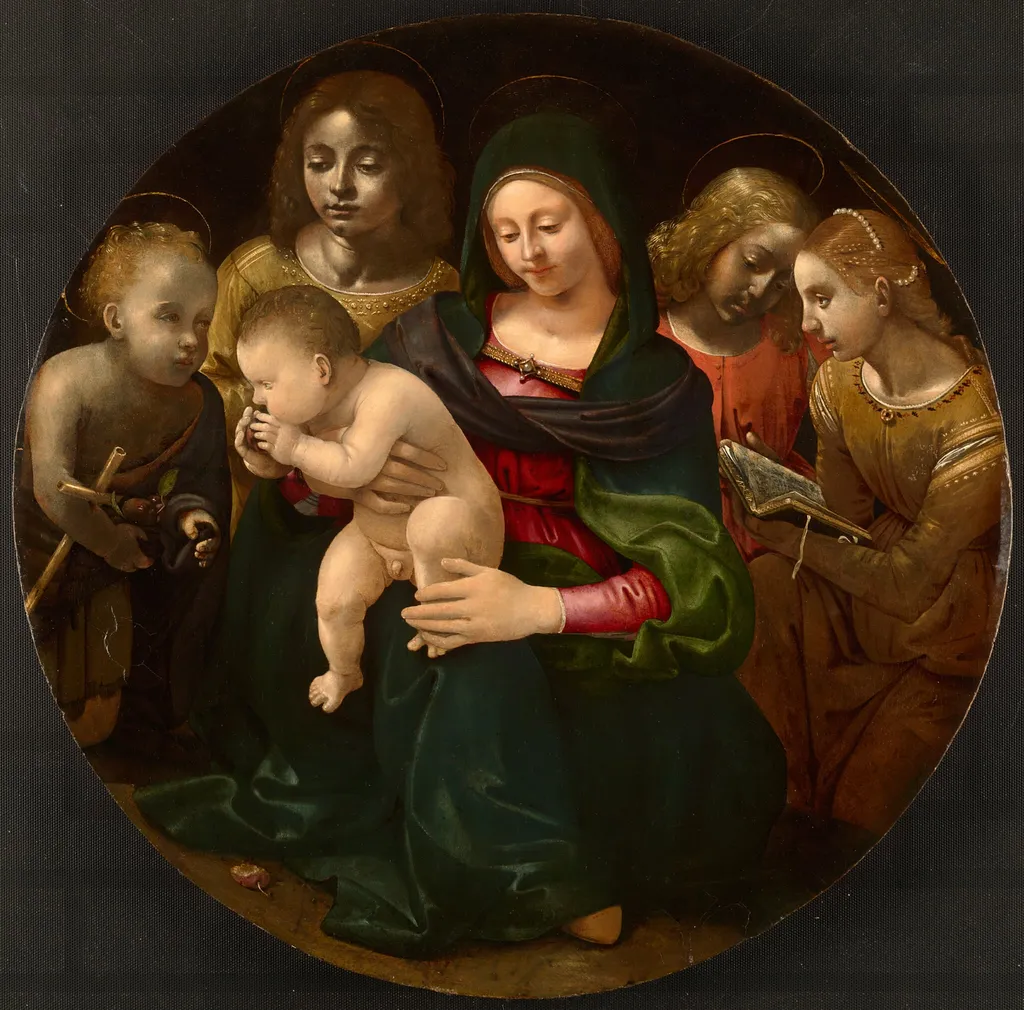
Virgin and Child with the Young Saint John the Baptist, Saint Cecilia, and Angels is an oil painting by the Early Renaissance artist Piero di Cosimo. It dates from 1505 and is held in the collection of the Art Institute of Chicago.
About this work
Overview
Virgin and Child with the Young Saint John the Baptist, Saint Cecilia, and Angels is a Renaissance oil painting on panel by Piero di Cosimo, characterized by its serene yet inventive depiction of a sacred scene.
Subject & Meaning
The painting portrays a peaceful encounter between the Virgin and Child, the young Saint John the Baptist offering plums to Jesus, and Saint Cecilia singing from a music book, accompanied by wingless angels. The composition conveys a sense of intimate devotion and harmony.
Technique & Style
Piero di Cosimo employed a distinctive technique, evident in the shadowed effects around the secondary figures, which were added over a pre-existing dark background, with thin paint layers allowing the underlying tone to show through, creating depth.
History & Provenance
While the exact date and original commission of the painting are not specified, it reflects Piero di Cosimo's reputation for reinterpreting traditional themes with unique imaginative elements, typical of his unorthodox approach in 15th-century Florence.
Context
This work sits within the broader context of Renaissance art's revival of religious themes, yet distinguishes itself through Piero di Cosimo's unconventional choices, such as wingless angels and the specific interaction between the figures.
Artist & collection

Artist
Piero di Cosimo, also known as Piero di Lorenzo, was an Italian Renaissance painter, who continued to use an essentially Early Renaissance style into the 16th century.

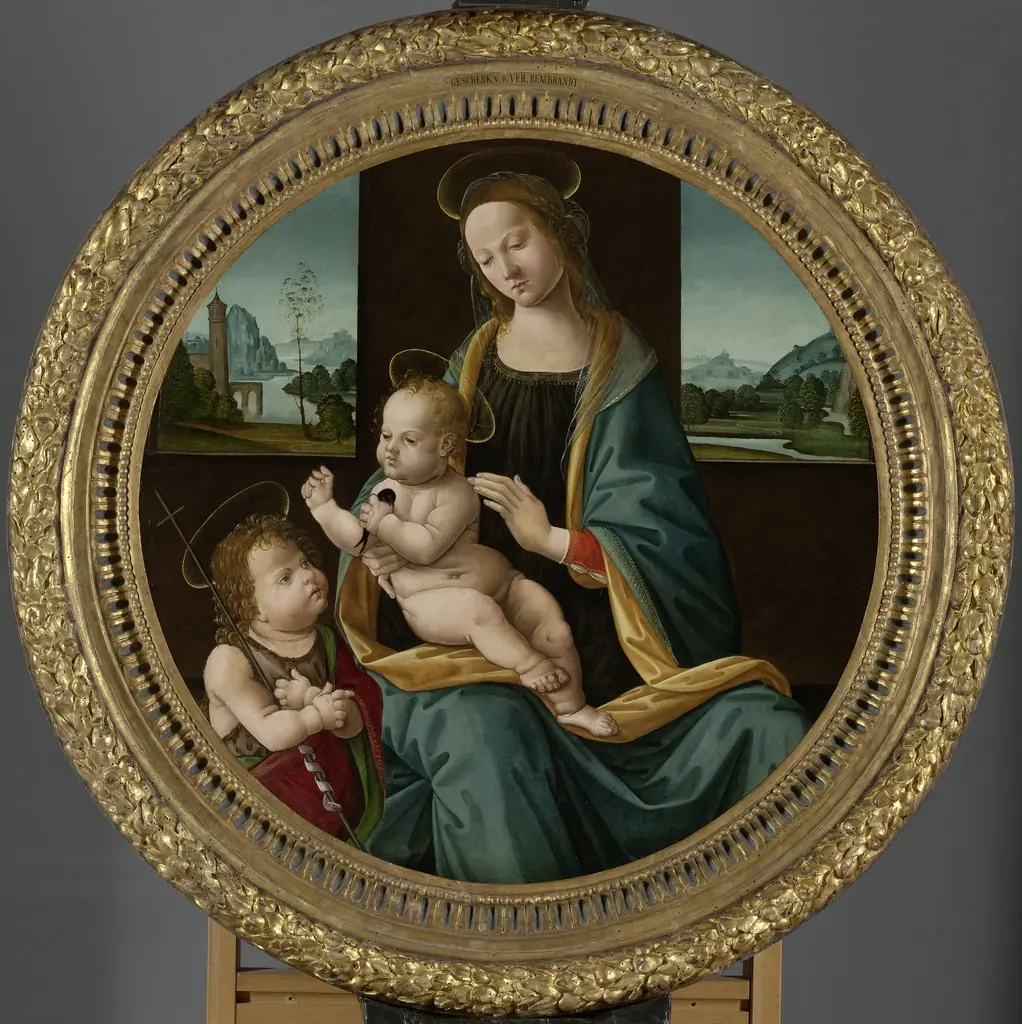 Virgin and Child with the Infant Saint John the Baptist
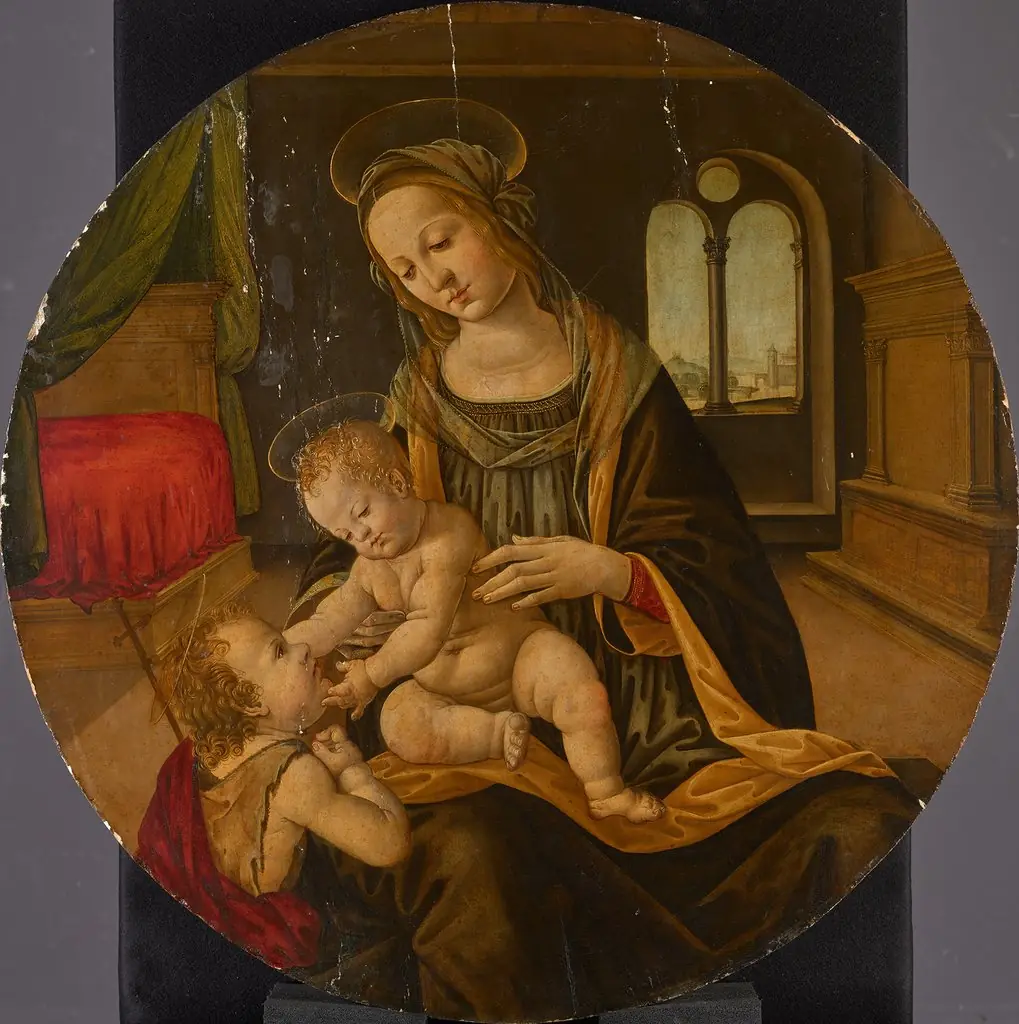 The Virgin with the Child and Young St. John
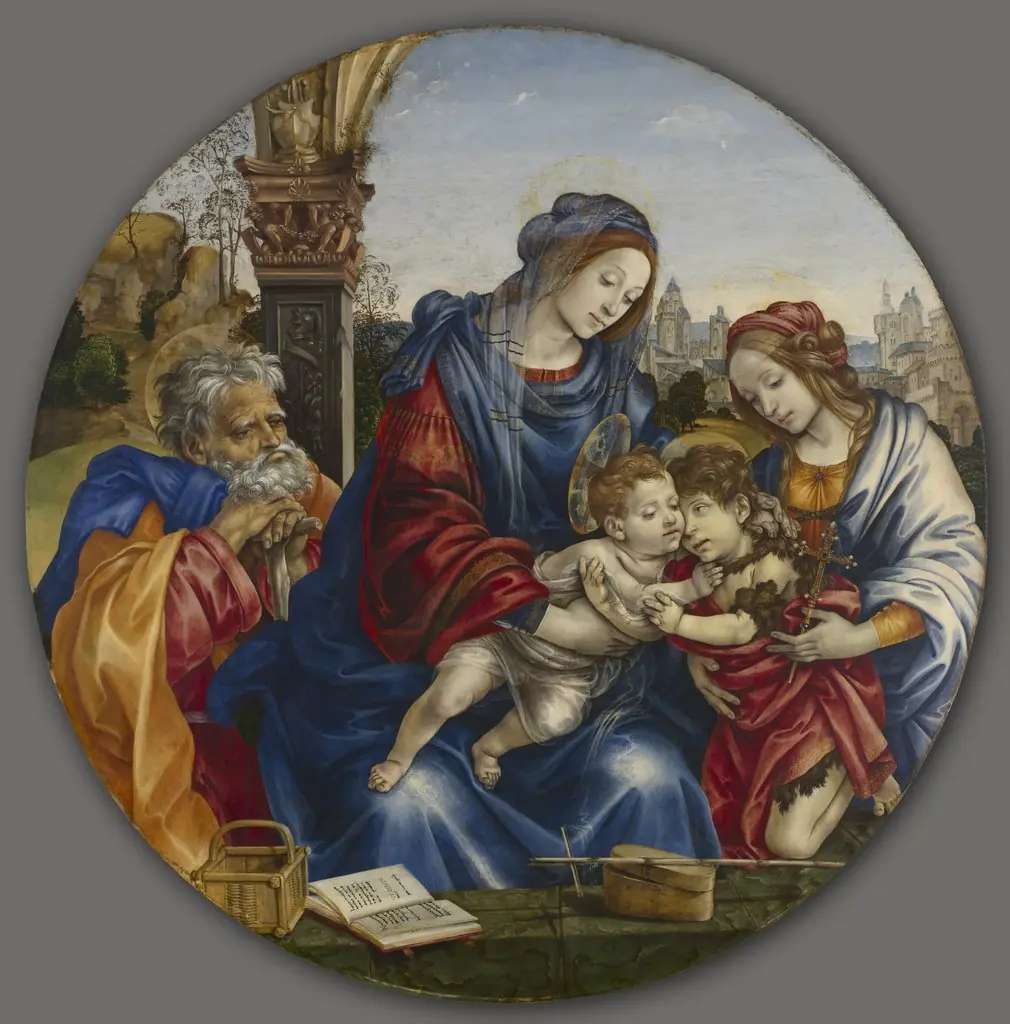 The Holy Family with Saint John the Baptist and Saint Margaret
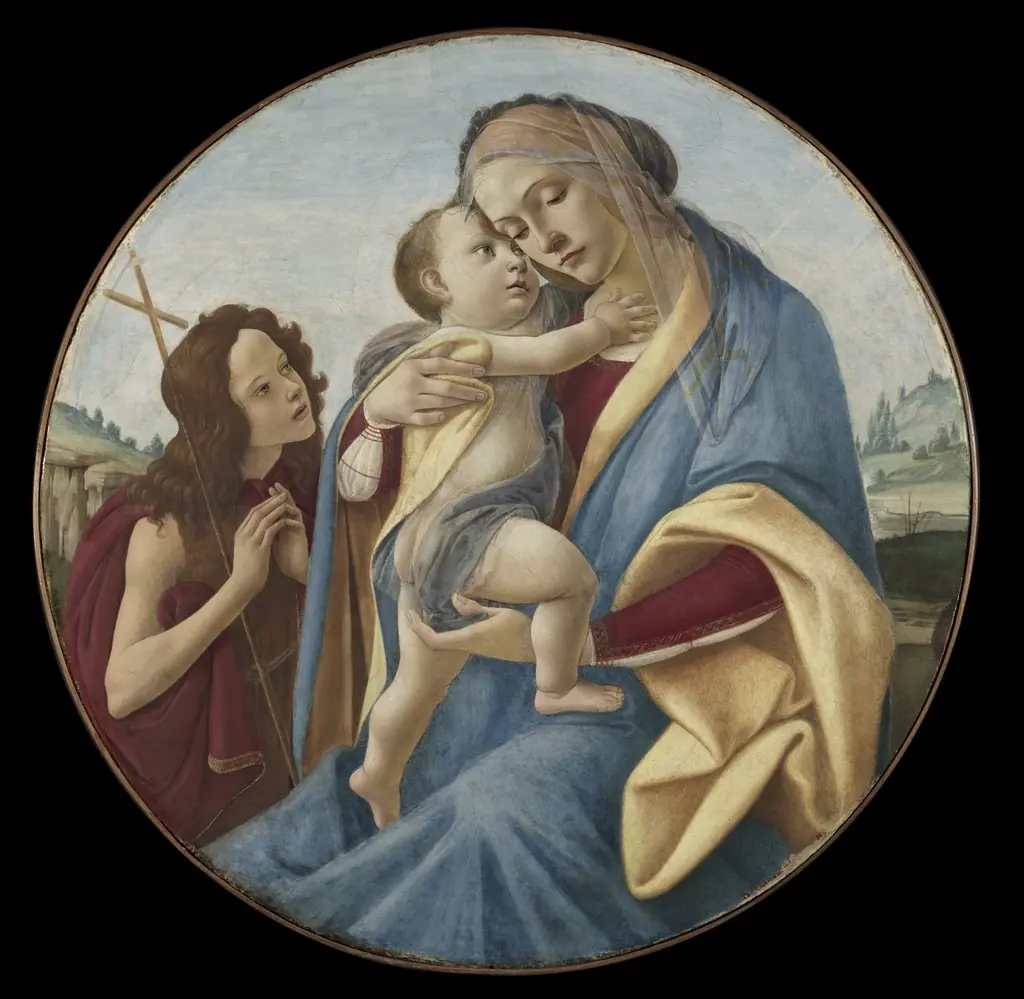 Virgin and Child with the Young Saint John the Baptist
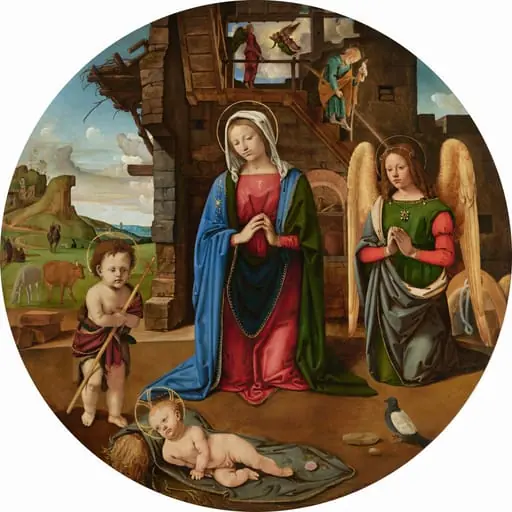
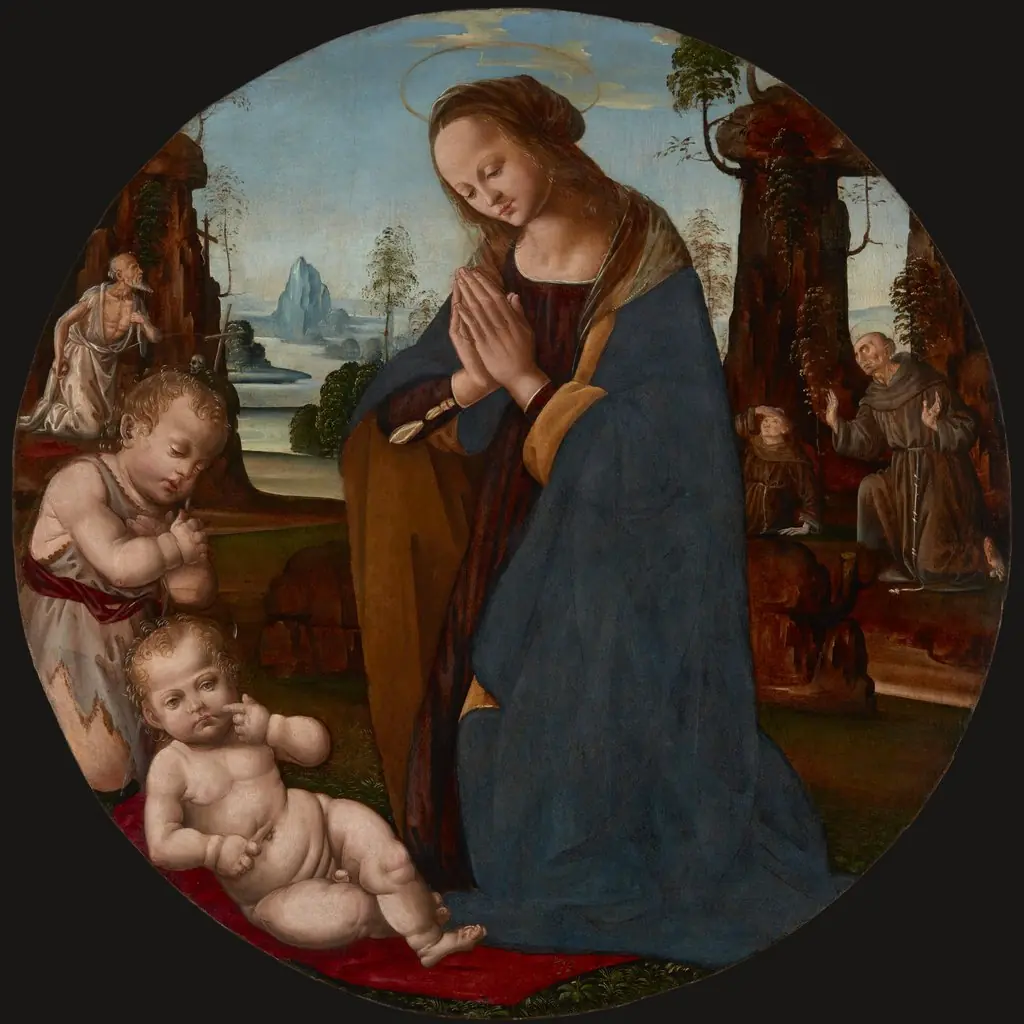 Adoration of the Child with Young St John the Baptist – Tondo
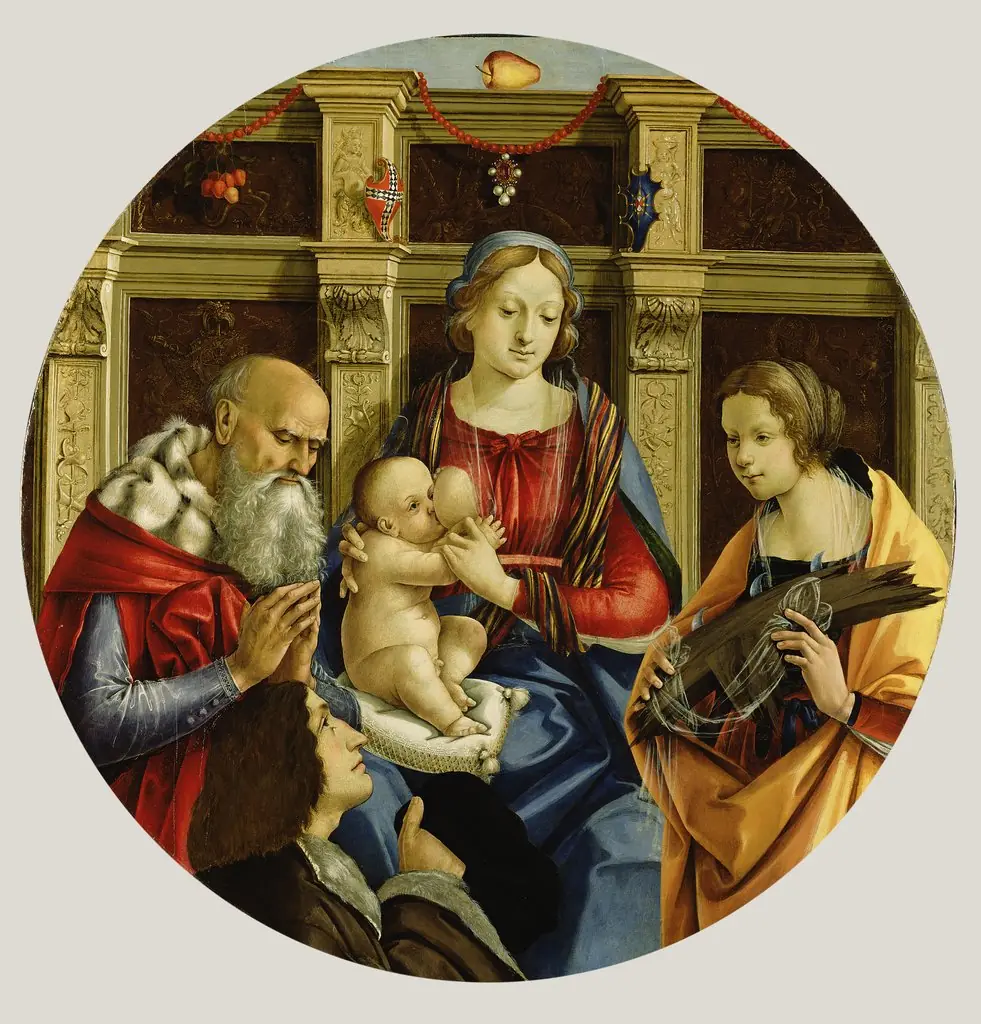 Madonna and Child with a Male Saint, Catherine of Alexandria and a Donor
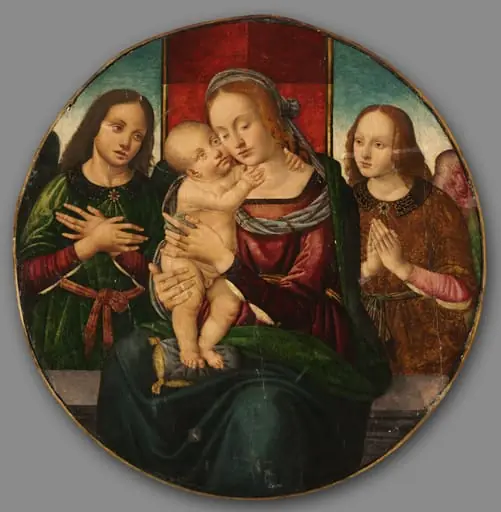 Virgin and Child with Angels
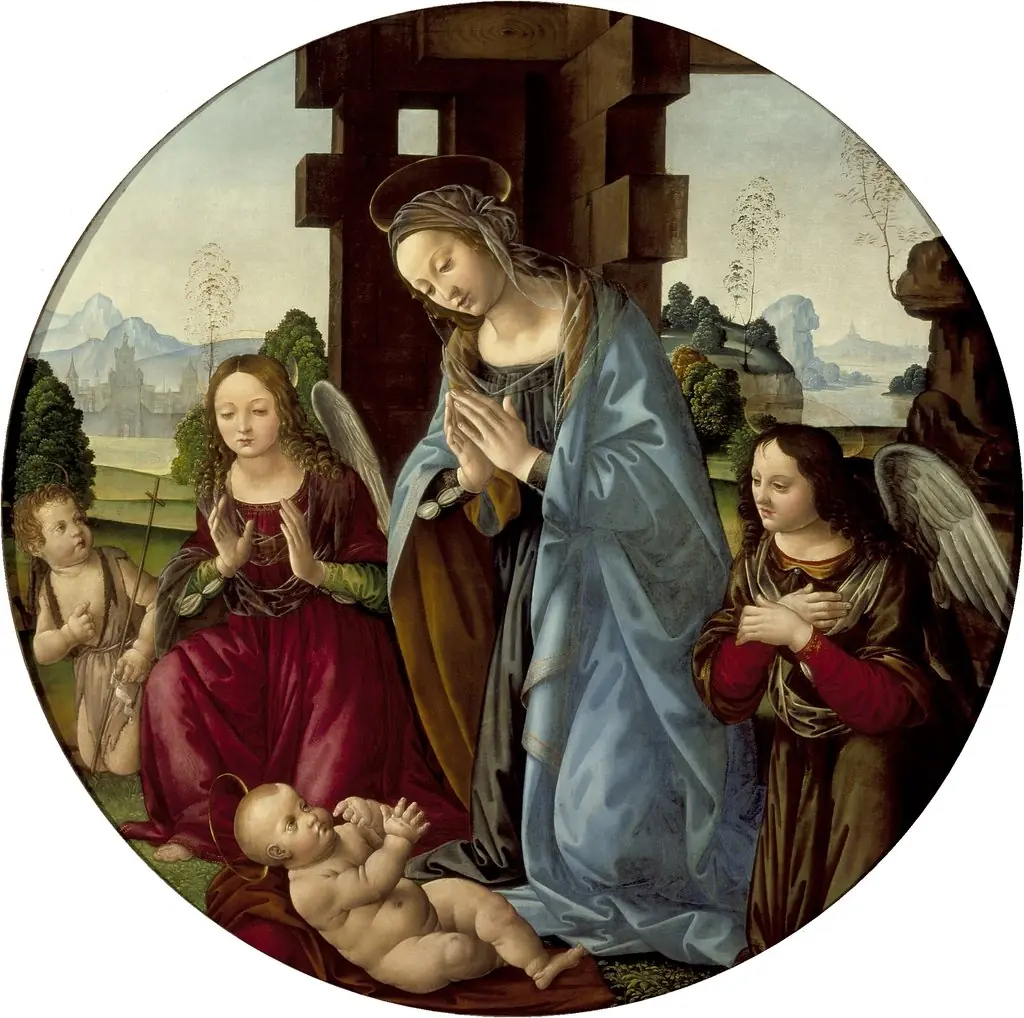 Virgin Adoring the Christ Child with St. John the Baptist and Two Angels
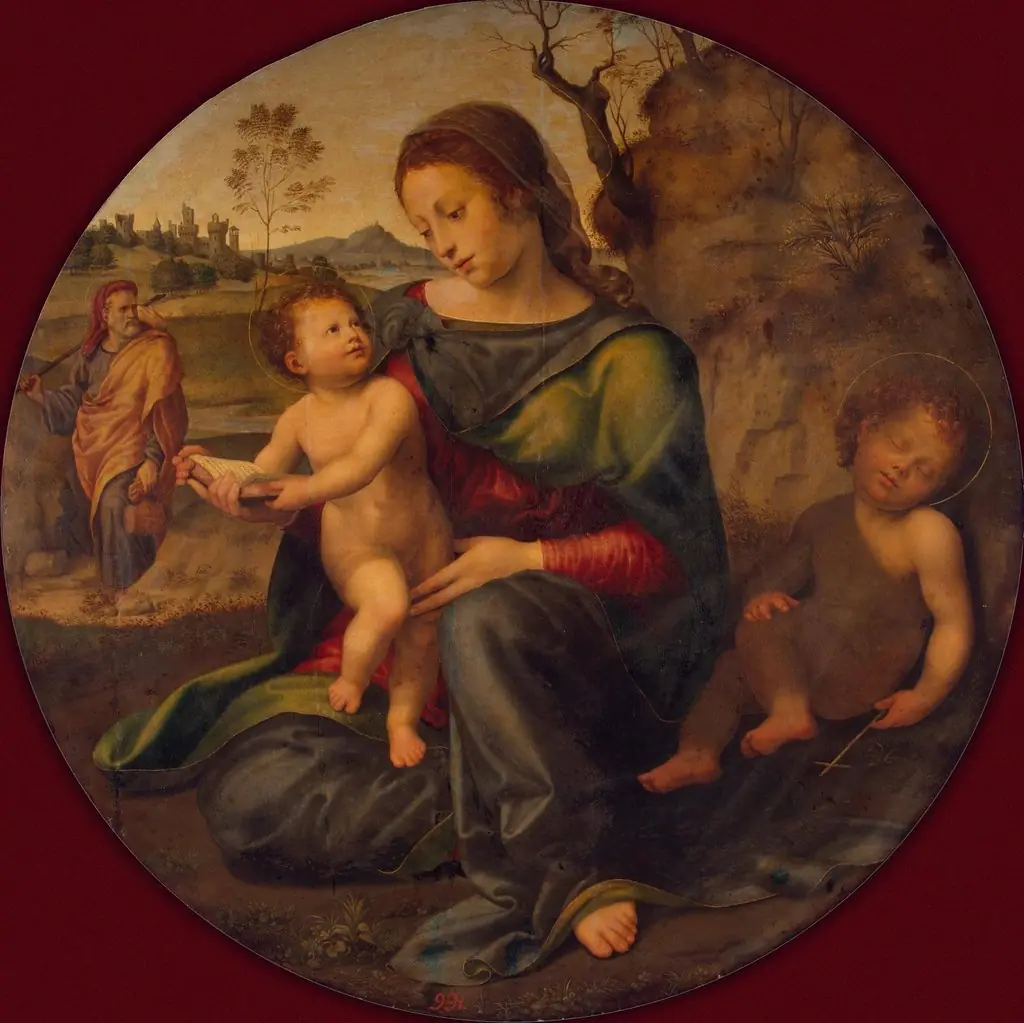 Holy Family with St John the Baptist
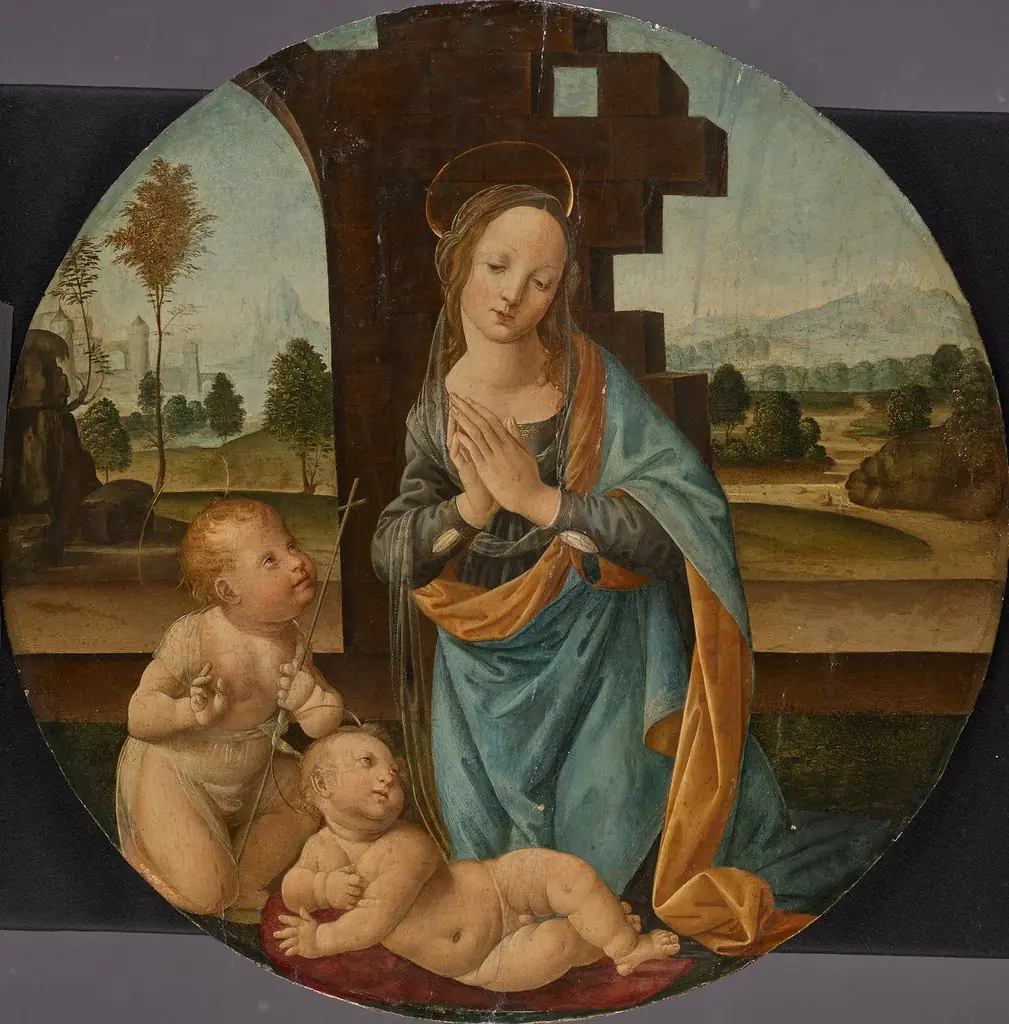 The Virgin and Child with the Young St. John
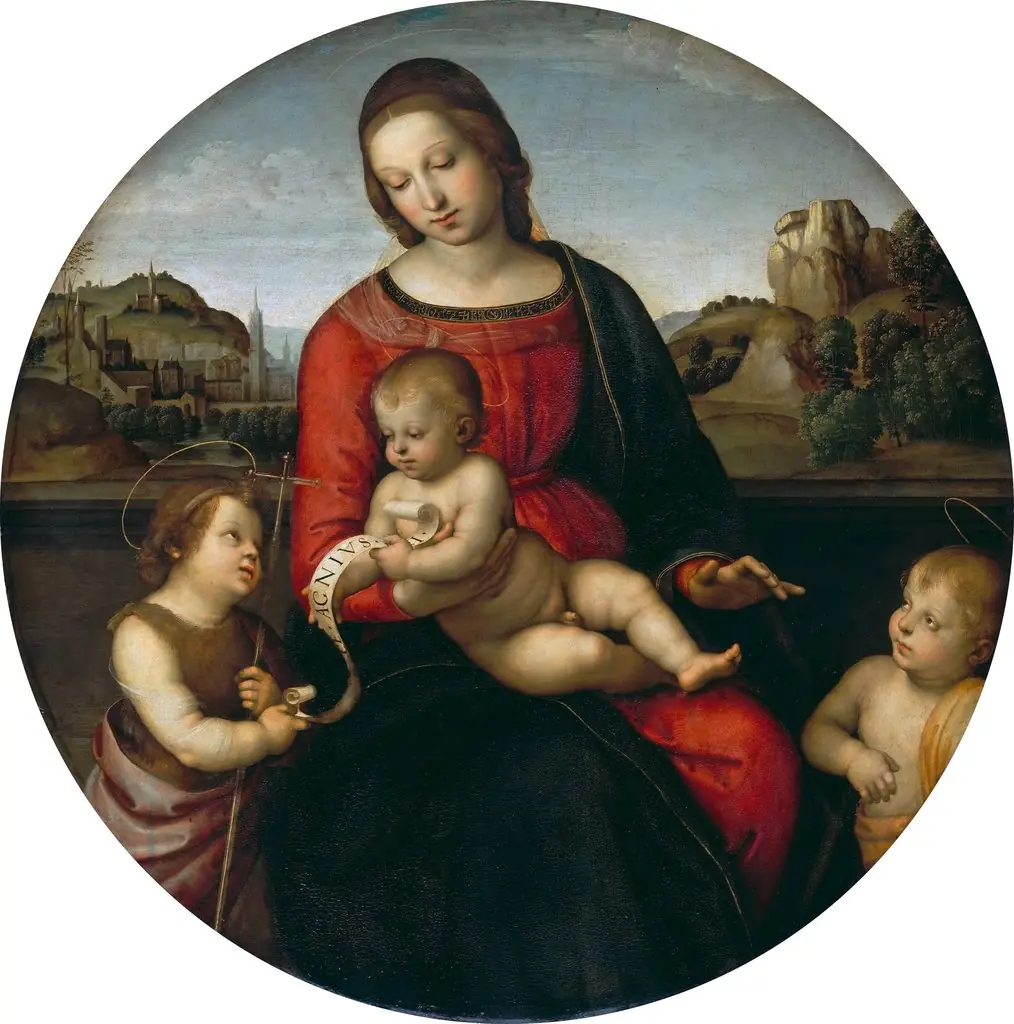 Terranuova Madonna