Artwork
Epitaph for the Nun Janne Colijns
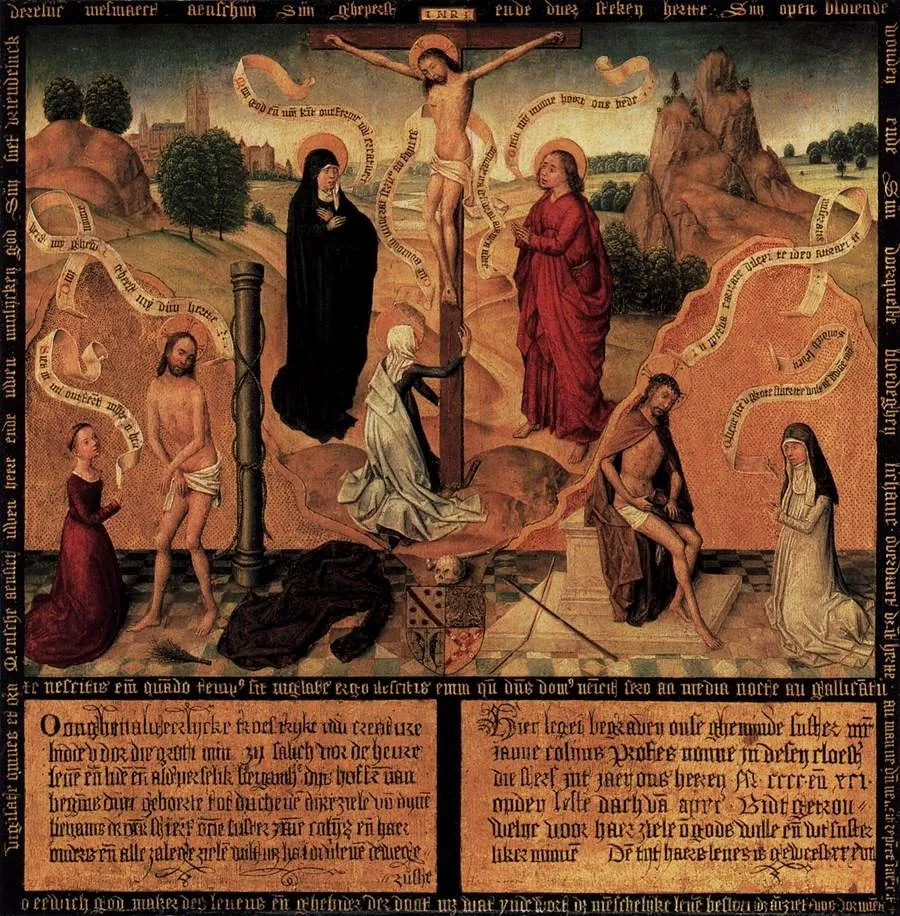
Epitaph for the Nun Janne Colijns is an oil painting by the Northern Renaissance artist Master of the Legend of Saint Barbara. It dates from 1493 and is held in the collection of the Gemäldegalerie Berlin. Painted in 1493, this oil-on-panel work commemorates Janne Colijns, a nun who likely commissioned it for her burial.
About this work
Overview
The painting is now part of the Gemäldegalerie Berlin’s collection, where it remains a quiet testament to personal piety in a time of religious transition.
Painted in 1493, this oil-on-panel work commemorates Janne Colijns, a nun who likely commissioned it for her burial. Attributed to the Master of the Legend of Saint Barbara, it reflects the devotional practices of late 15th-century Northern Europe. The painting is now part of the Gemäldegalerie Berlin’s collection, where it remains a quiet testament to personal piety in a time of religious transition.
Subject & Meaning
The scene depicts Christ on the cross, flanked by mourners including a nun in a black habit, possibly Janne Colijns herself, and a woman in red, perhaps a family member. Two inscribed memorial boxes in the foreground suggest prayers for the soul’s salvation. The composition merges the sacred with the personal, transforming the crucifixion into a private act of remembrance and spiritual intercession.
Technique & Style
Oil paint allows for fine detail in fabric folds, facial expressions, and atmospheric depth. The artist employs chiaroscuro to model forms with subtle light and shadow, enhancing the three-dimensionality of figures. The landscape behind—rolling hills, distant architecture, and trees—echoes Northern Renaissance traditions of naturalistic background detail, grounding the sacred event in a tangible world.
History & Provenance
Commissioned shortly before or after Janne Colijns’s death, the painting likely originated in a convent or private chapel in the Low Countries. It entered the Gemäldegalerie Berlin’s collection in the 19th century, following the secularization of religious institutions. Its survival through centuries of upheaval underscores its significance as a personal and devotional artifact rather than a public altarpiece.
Context
Created during the late Gothic period, just before the Reformation, the painting reflects a Catholic culture in which prayer for the dead was central. The inclusion of a specific nun and memorial inscriptions aligns with contemporary practices of endowing devotional art for soul salvation. Such works were common in female religious communities, where personal piety and artistic patronage intersected.
Legacy
Though the artist’s identity remains anonymous, the painting stands as an example of intimate Northern Renaissance portraiture fused with religious narrative. It preserves the voice of a woman otherwise lost to history, offering insight into how lay and religious individuals used art to navigate mortality, memory, and faith in a pre-Reformation world.
Artist & collection
Artist
Master of the Legend of Saint Barbara
This anonymous Flemish artist painted detailed oil panels in the 1400s, often showing scenes from saints’ lives or Bible stories.

 The Holy Trinity with the Virgin Mary and St John the Evangelist
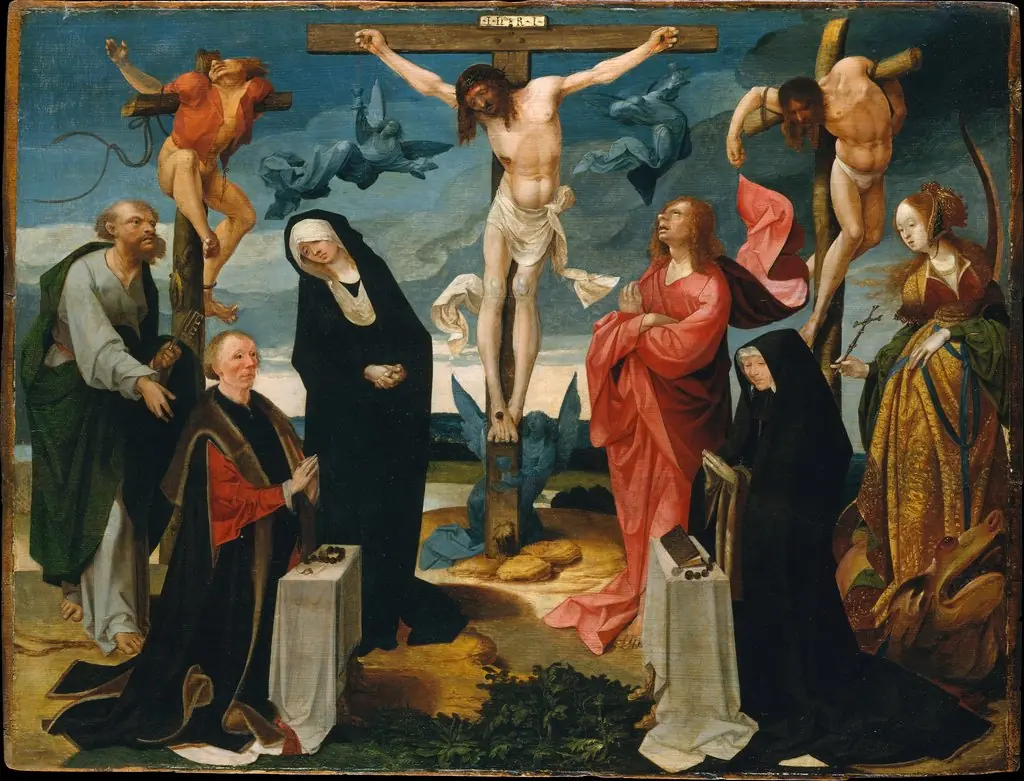 The Crucifixion with Donors and Saints Peter and Margaret
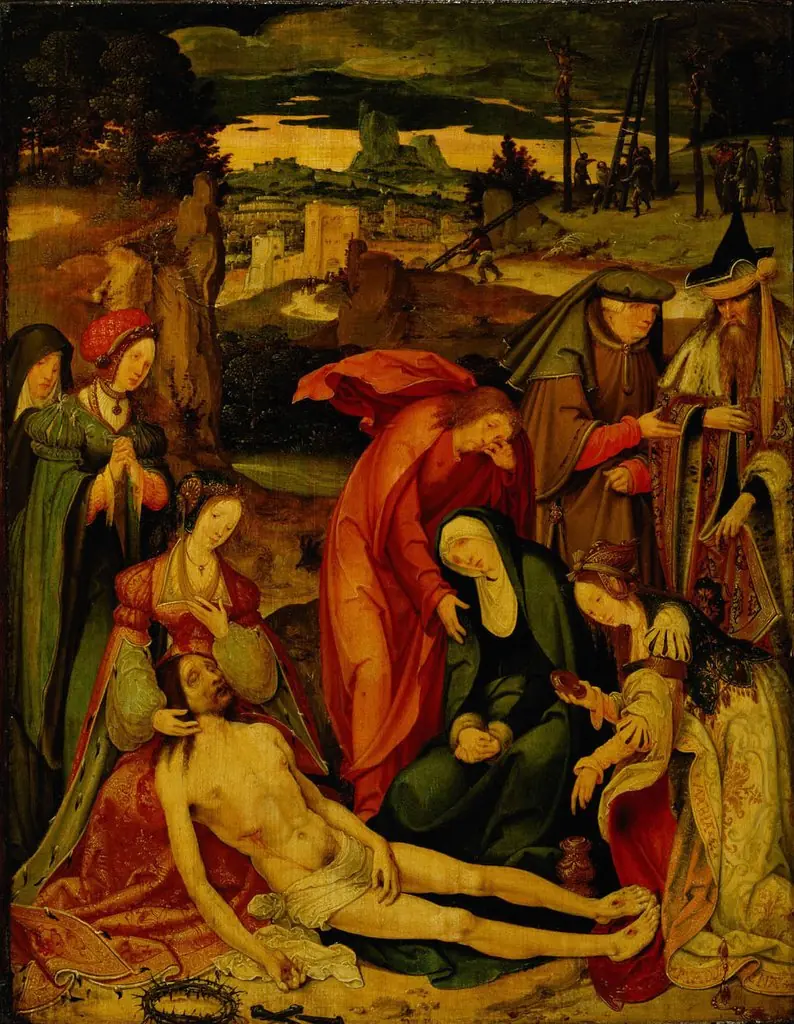 The Lamentation
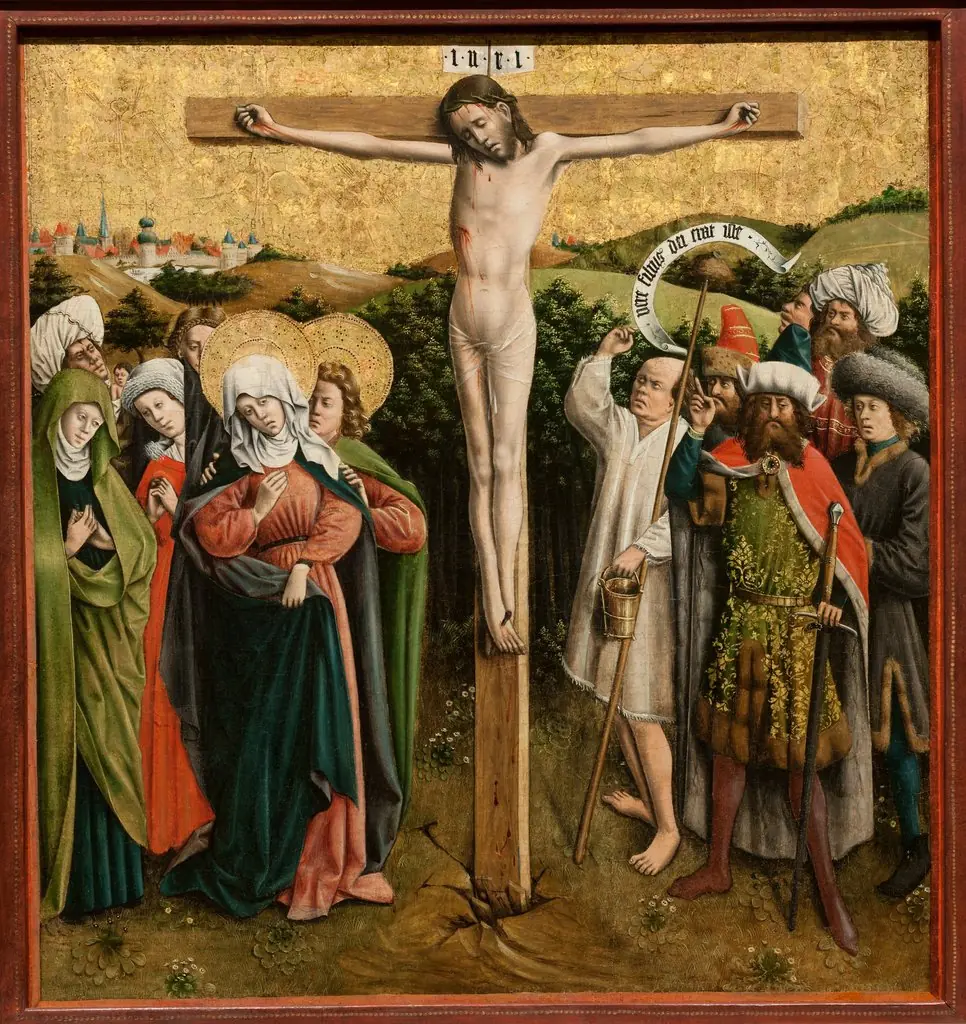 Altarpiece with The Passion of Christ
 Răstignirea
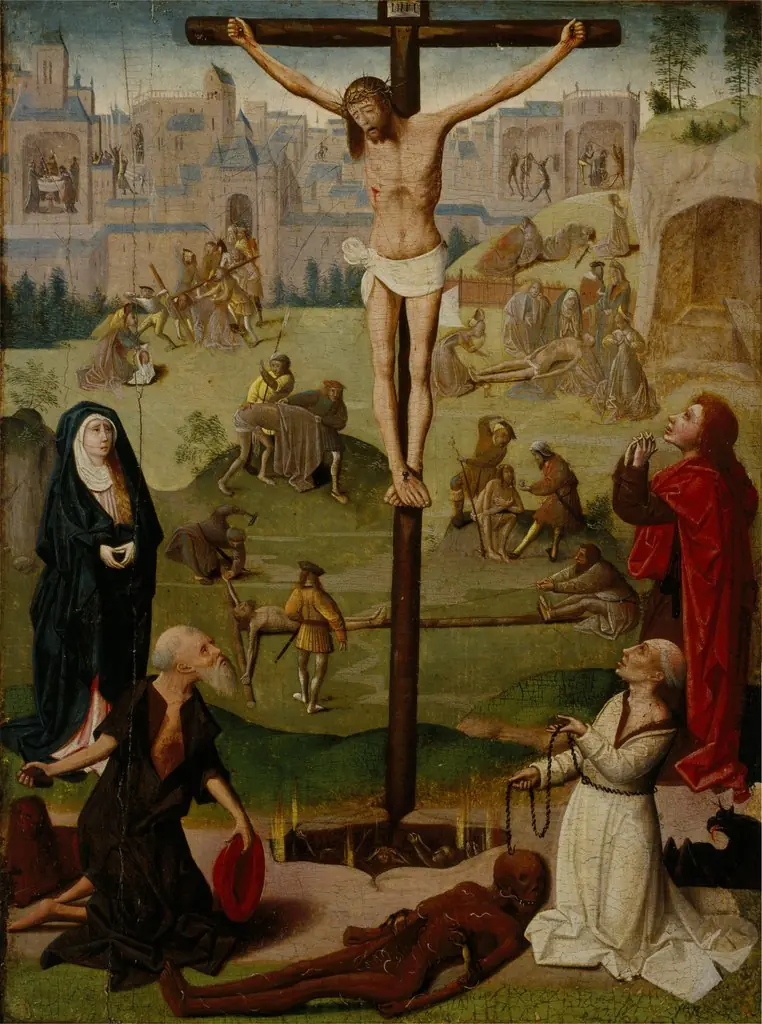 The Crucifixion with St Jerome and St Dominic and Scenes from the Passion
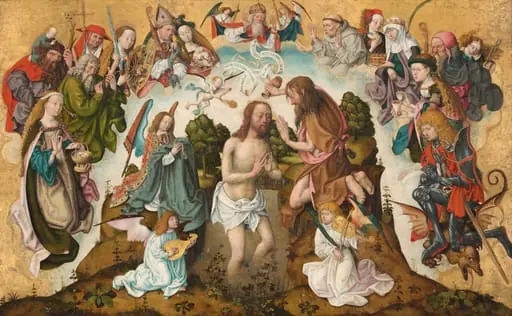 The Baptism of Christ
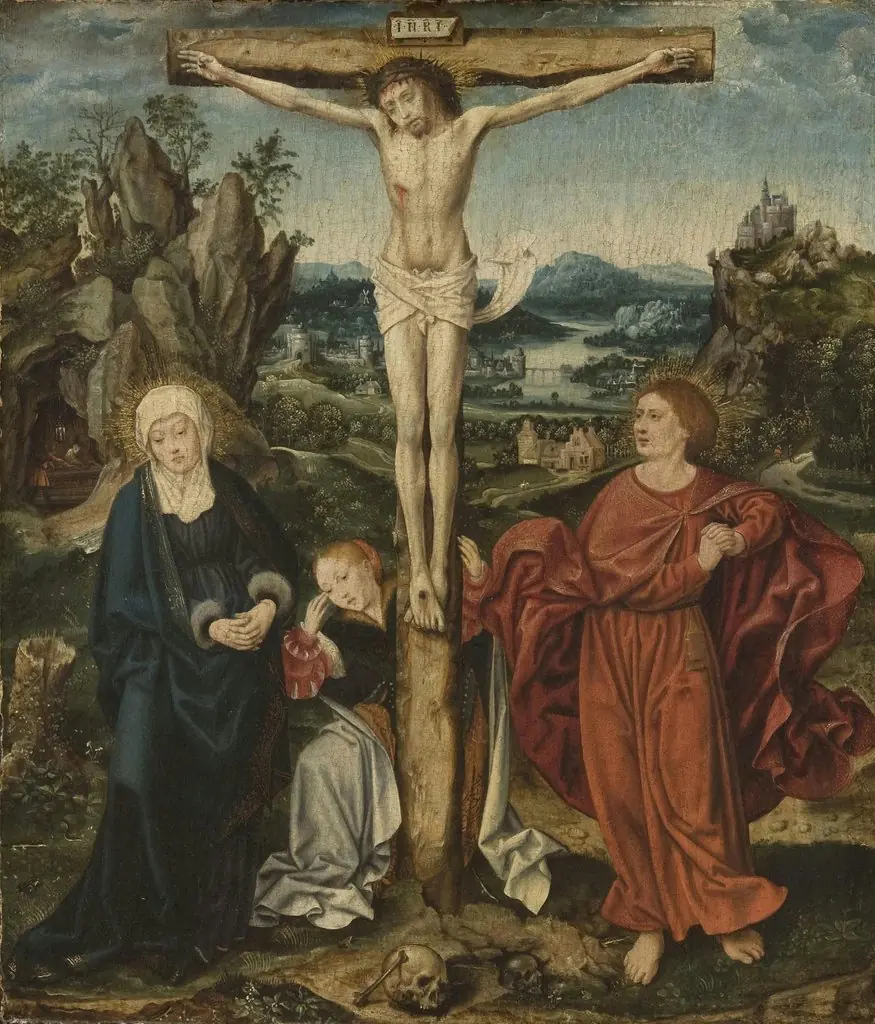 Crucifixion
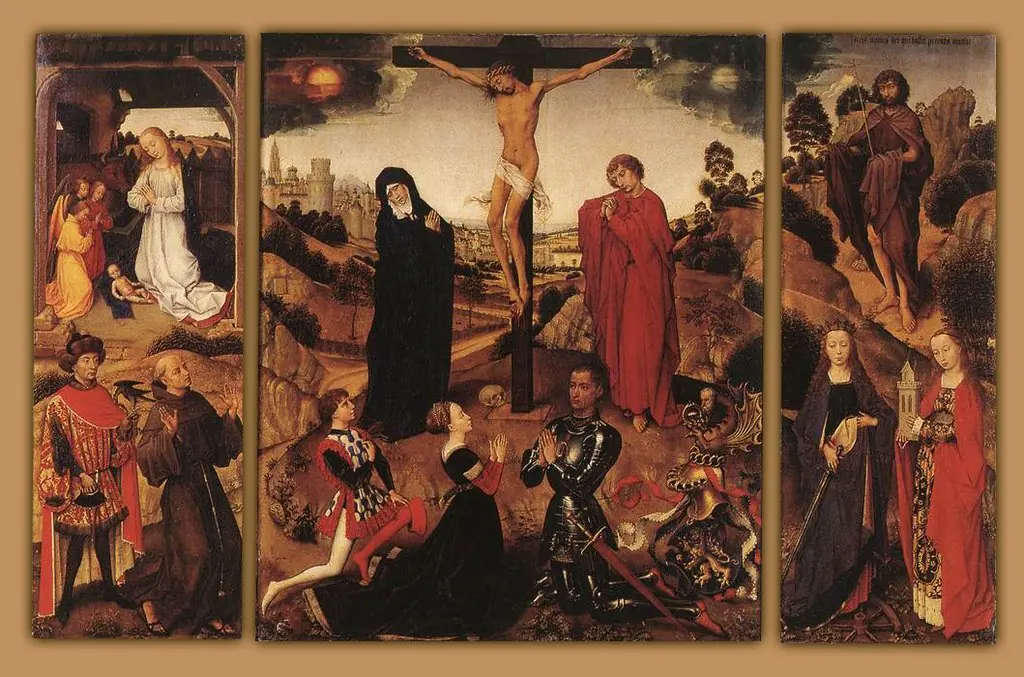 Sforza Triptych
 Calvary of Hendrik van Rijn
 The Crucifixion
 An Allegory of the Old and New Testaments