Artwork
Nun
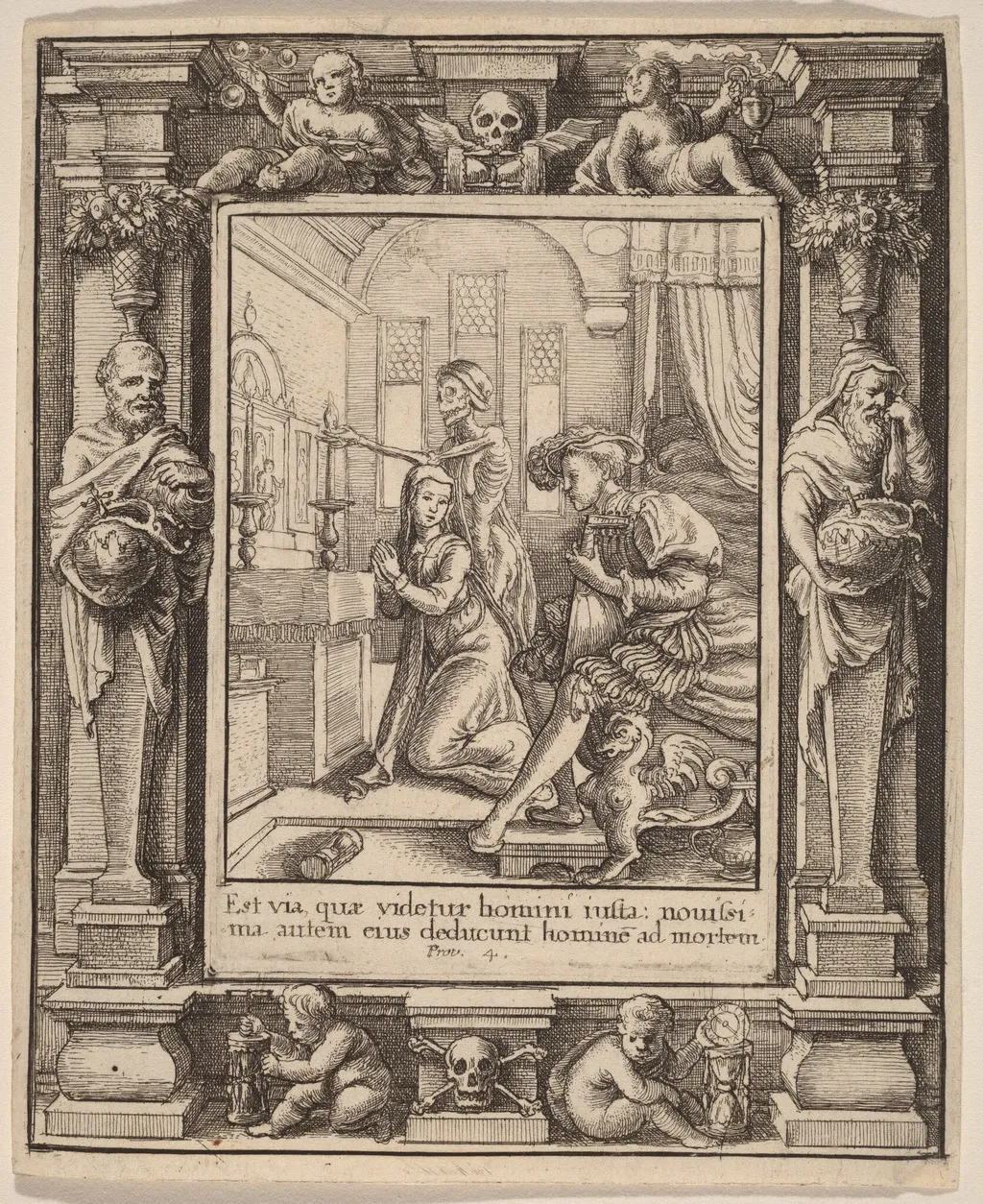
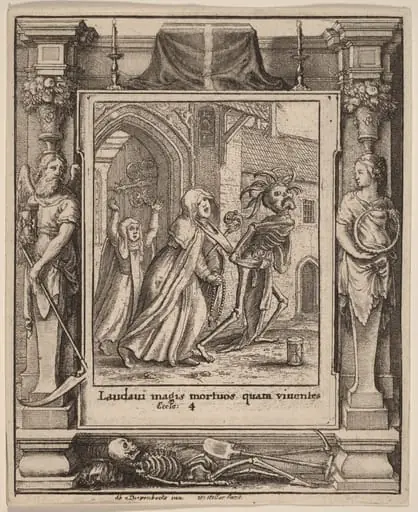
Nun is an ink print by the Baroque artist Wenceslaus Hollar. It dates from 1651 and is held in the collection of the National Gallery of Art.
About this work
Overview
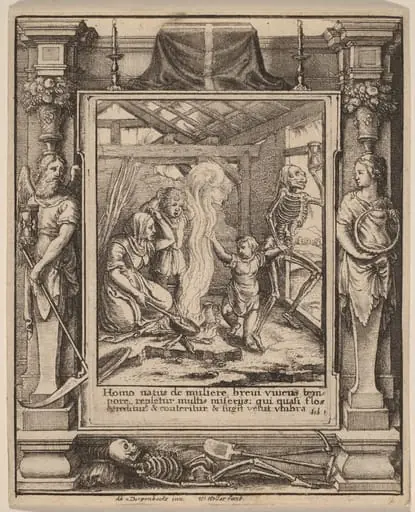
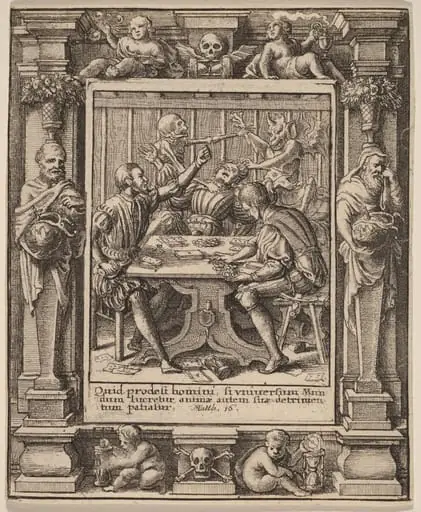
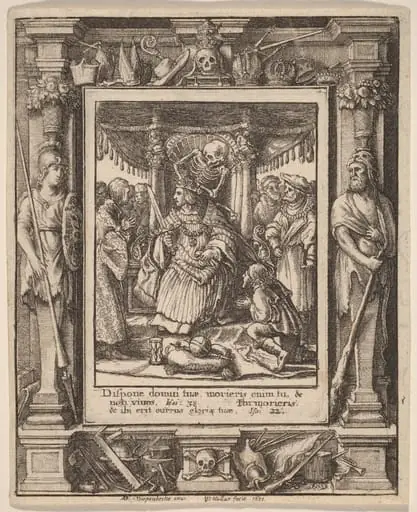
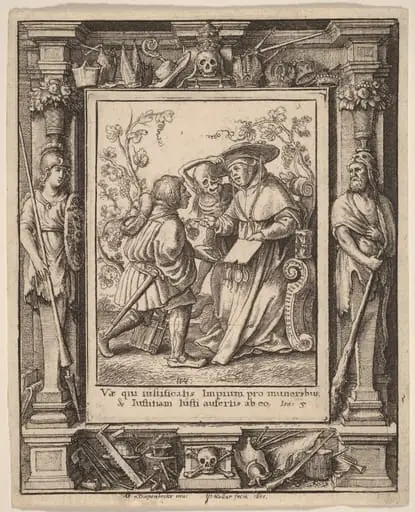
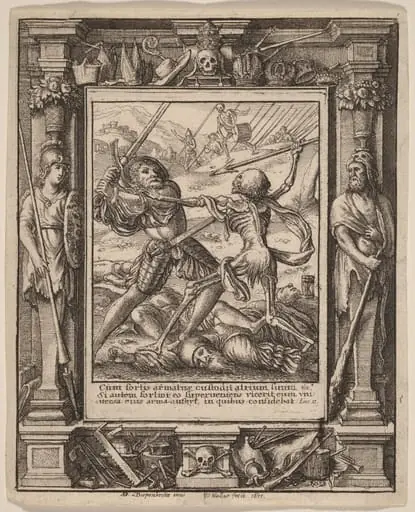
Wenceslaus Hollar’s 1651 print *Nun* presents a kneeling woman in a monastic habit, accompanied by a robed figure, within an interior populated by symbolic objects such as skulls, books, and hourglasses. The composition is framed by an elaborate border titled *Democritus and Heraclitus*, filled with miniature figures and allegorical motifs that reinforce the work’s moralizing tone.
Subject & Meaning
The Latin inscription at the bottom warns that the path appearing just to humanity ultimately leads to death, underscoring a moral lesson.
The central scene depicts a nun in prayer, flanked by a companion and overseen by cherubic figures holding a skull and a book, suggesting contemplation of mortality and knowledge. The surrounding border adds further allegory: bearded men bearing a scroll and a skull, and playful cherubs with skulls and hourglasses, all echoing the transitory nature of life. The Latin inscription at the bottom warns that the path appearing just to humanity ultimately leads to death, underscoring a moral lesson.
Technique & Style
Executed as an etching, the print showcases Hollar’s precise line work and meticulous texturing, hallmarks of his printmaking practice. Fine hatching creates depth in the architectural elements—arched windows, heavy curtains, and a bed—while the densely populated border demonstrates his skill in rendering minute figures and intricate symbols within a confined space.
History & Provenance
Born in Prague in 1607, Hollar relocated to England where he spent most of his career, producing cityscapes, landscapes, and a range of prints. *Nun* was produced in 1651, during his mature period in London, and survives in collections that catalogue his work under reference Pennington 233A. Hollar died in London in 1677, leaving a substantial body of prints that document his technical mastery.
Context
The print reflects 17th‑century European preoccupations with vanitas themes, using symbols of death and time to remind viewers of earthly impermanence. By pairing a religious figure with classical philosophers in the border, Hollar links monastic devotion to broader intellectual debates about the nature of truth and mortality that were prevalent in the early modern period.
Artist & collection
Artist
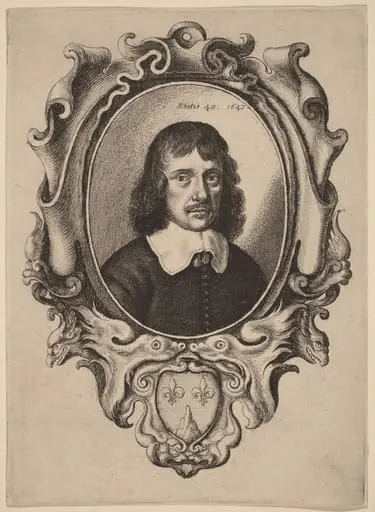
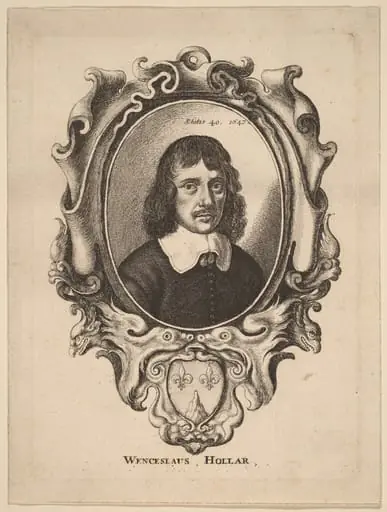
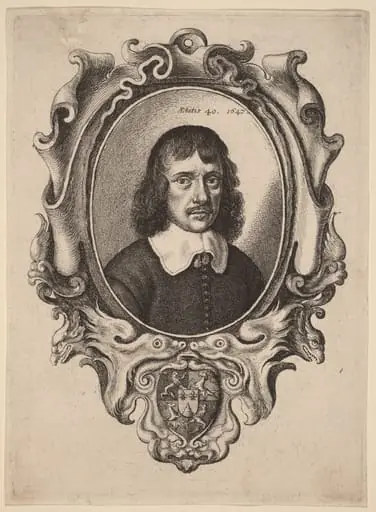
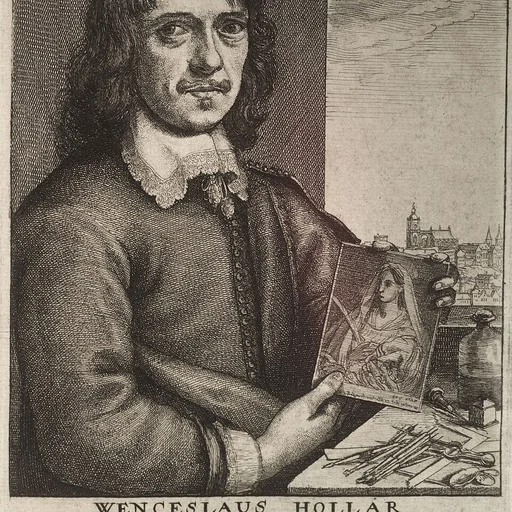
Wenceslaus Hollar (Czech: Václav Hollar (Czech pronunciation: ), German: Wenzel Hollar; 23 July 1607 – 25 March 1677) was a Czech engraver, etcher and painter.