Artwork
Ainer frawen von Stainerkirchen ...
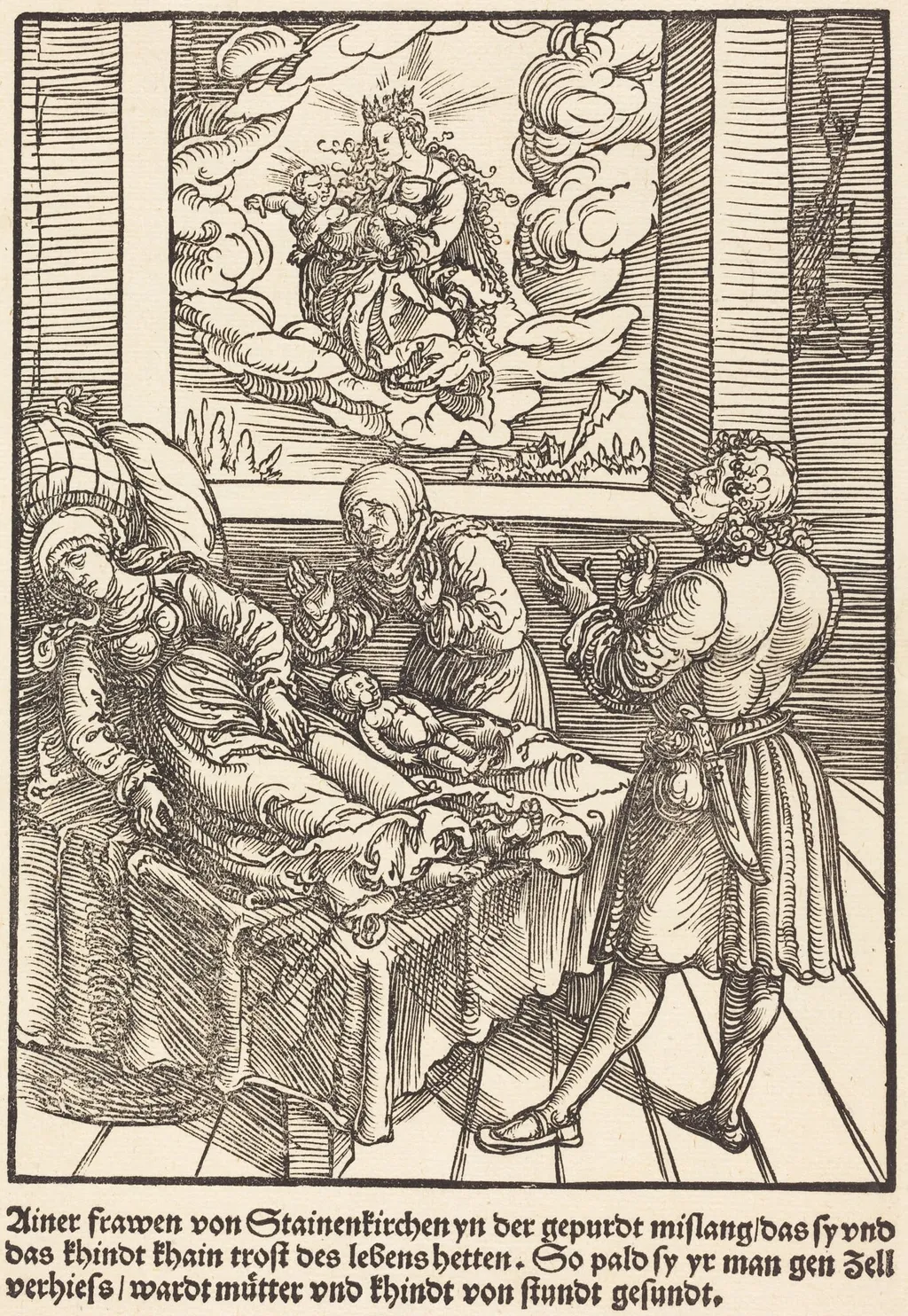
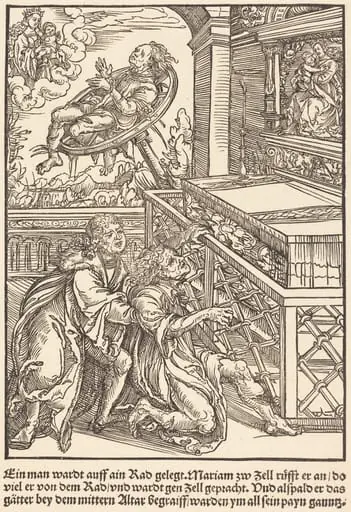
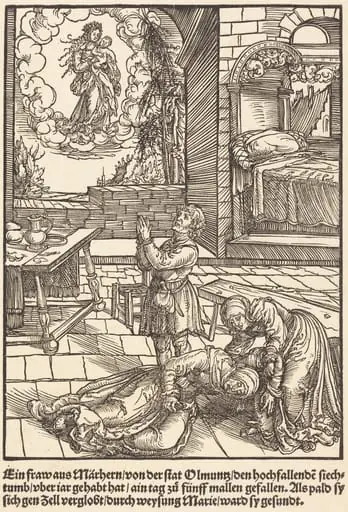
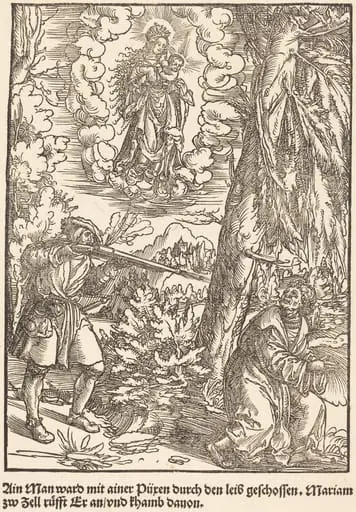
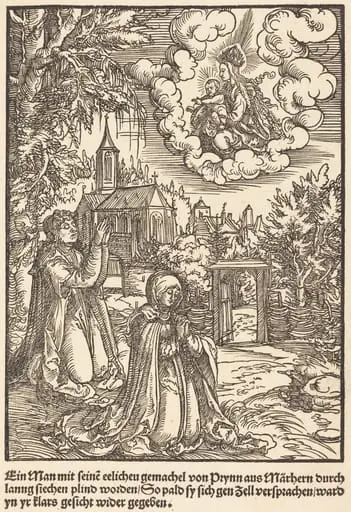
Ainer frawen von Stainerkirchen ... is an ink print by the Renaissance artist Master of the Miracles of Mariazell. It dates from 1503 and is held in the collection of the National Gallery of Art.
About this work
Overview
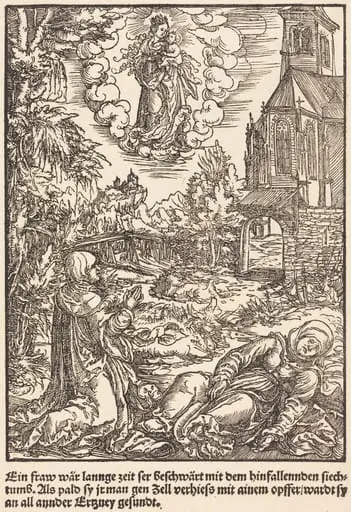
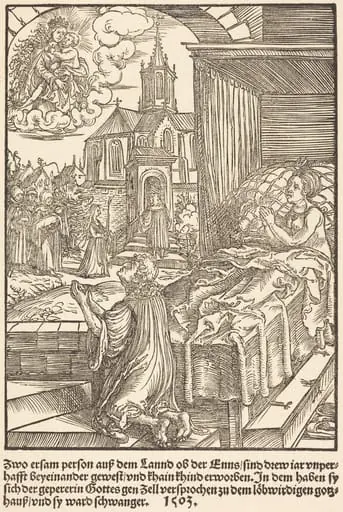
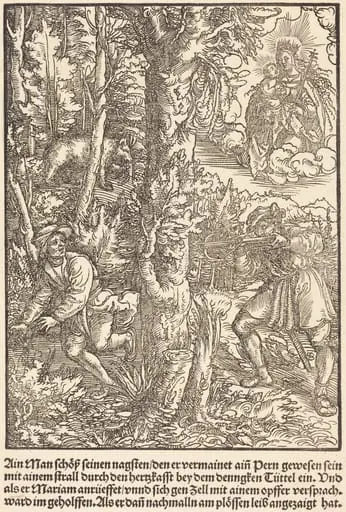
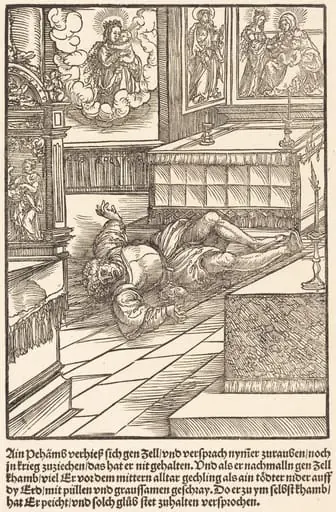
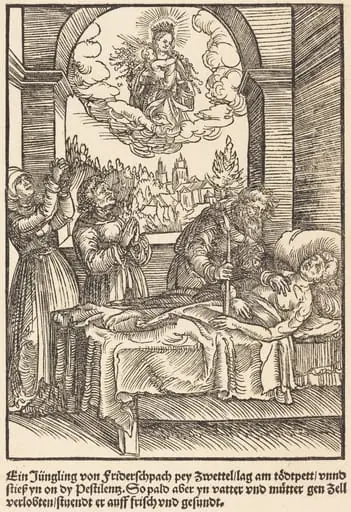
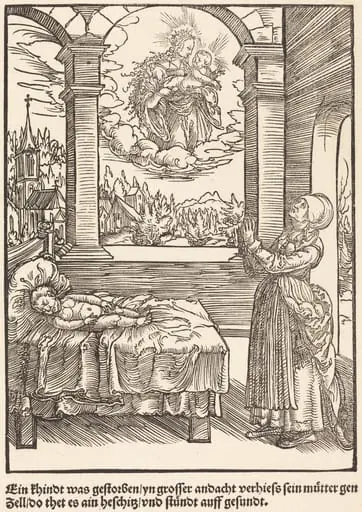
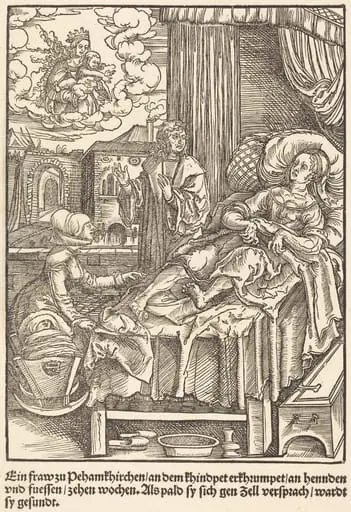
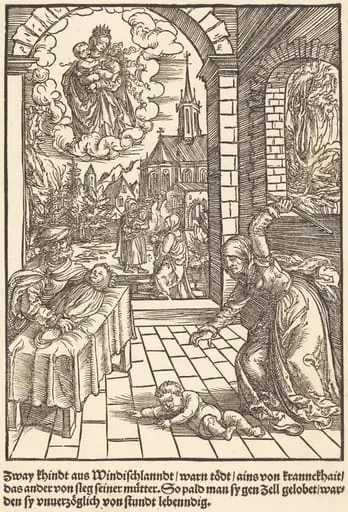
Created around 1503, this woodcut on laid paper is attributed to the anonymous artist known as the Master of the Miracles of Mariazell. Executed in the early Renaissance, the print presents a domestic interior populated by three women and an infant, rendered with fine line work and subtle shading characteristic of the period’s graphic arts.
Subject & Meaning
The central focus is a newborn lying on a table, observed by a standing woman who appears to be attending to the child. To the left, a seated woman occupies a chair, while a third figure on the right gazes upward at a painted image on the wall—a depiction of a mother holding a baby, framed by clouds and a radiant sunburst, suggesting a devotional or symbolic reference to the Virgin and Child.
Technique & Style
The print employs the woodcut method, where the artist carved the design into a wooden block and transferred the image onto laid paper. The work displays the precise, linear quality of Renaissance printmaking, with intricate hatching to model forms and create depth, while the composition balances narrative detail with decorative elements such as the celestial framing of the wall picture.
History & Provenance
The piece is part of the collection of the National Gallery of Art in Washington, D.C., which holds a notable assemblage of early Renaissance prints. Its attribution to the Master of the Miracles of Mariazell reflects scholarly consensus based on stylistic parallels with other works bearing similar devotional motifs and technical execution.
Context
During the early sixteenth century, woodcut prints served both as vehicles for religious imagery and as means of disseminating domestic scenes to a broader audience. This work reflects contemporary interests in maternal themes and the integration of painted iconography within interior settings, aligning with broader trends in Central European devotional art.
Artist & collection

Artist
Master of the Miracles of Mariazell
Master of the Miracles of Mariazell (1500–1503) was an artist.