Artwork
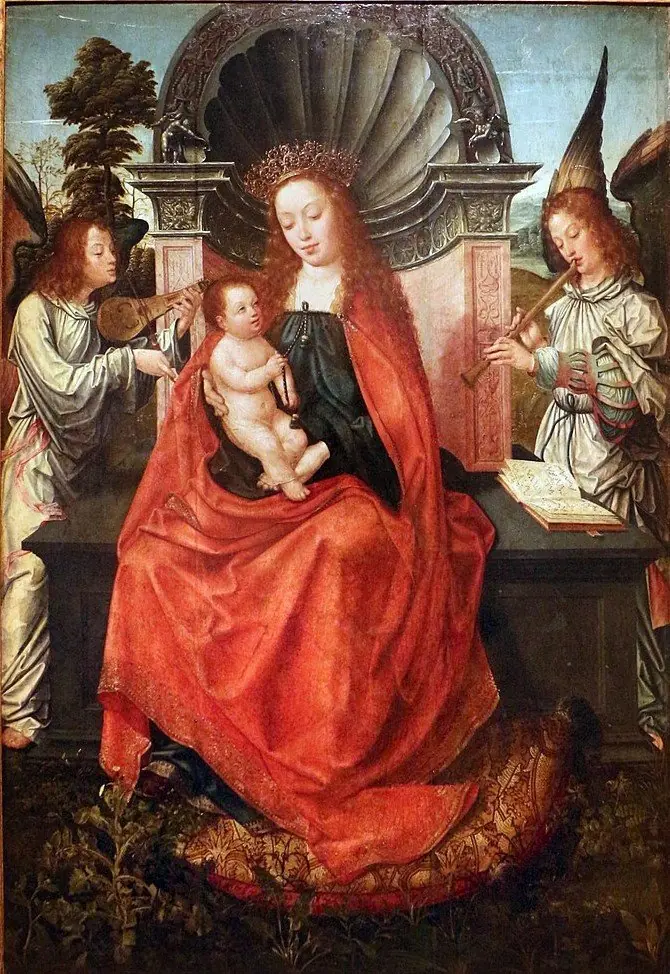
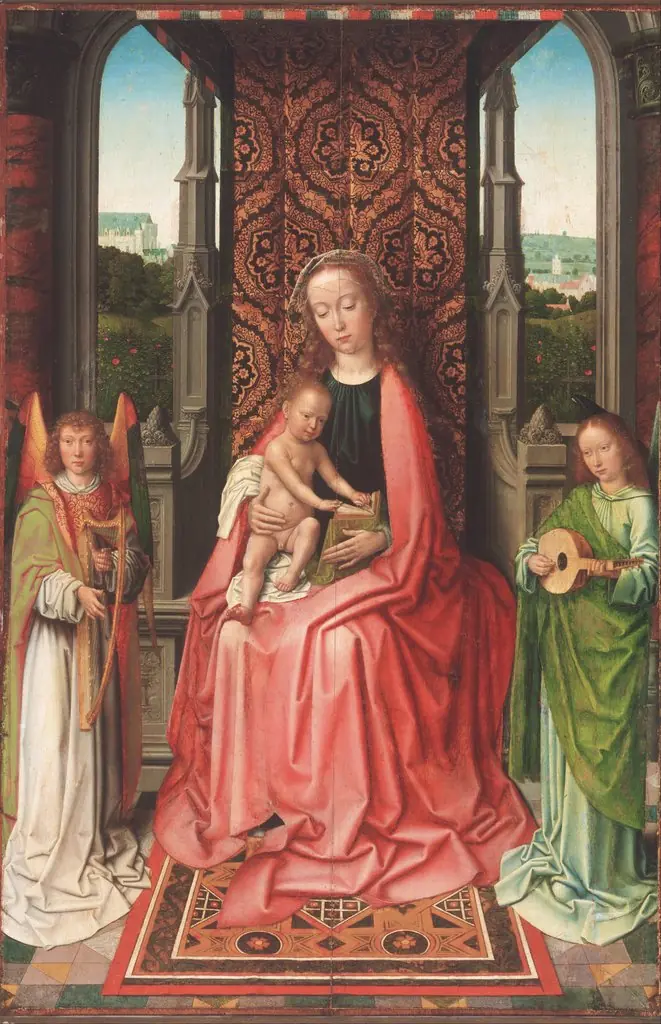
Maria met Kind en musicerende engelen
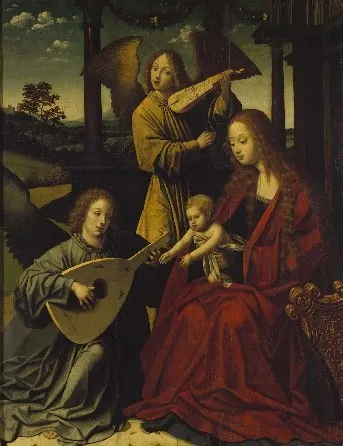
Maria met Kind en musicerende engelen is an oil painting by the Northern Renaissance artist Master of the Morrison Triptych. It dates from 1513 and is held in the collection of the Royal Museums of Fine Arts of Belgium.
About this work
Overview
The painting is held in the collection of the Royal Museums of Fine Arts of Belgium, reflecting its significance in early 16th-century religious art.
Painted in 1513 by an anonymous artist known as the Master of the Morrison Triptych, this oil-on-panel work originates from Antwerp during the Northern Renaissance. It presents a devotional scene centered on the Virgin Mary and the Christ Child, framed by two celestial musicians. The painting is held in the collection of the Royal Museums of Fine Arts of Belgium, reflecting its significance in early 16th-century religious art.
Subject & Meaning
The composition centers on the Virgin Mary as a figure of quiet reverence, holding the Christ Child while surrounded by angels engaged in sacred music. The presence of musical angels symbolizes heavenly harmony and divine praise, reinforcing the theological idea of Mary as the throne of wisdom. The serene atmosphere invites contemplation, aligning with devotional practices of the period that emphasized intimate spiritual connection.
Technique & Style
Oil paint allows for subtle gradations of tone and rich surface detail, particularly in the textures of fabric and skin. The Virgin’s crimson robe contrasts with the softer grays and yellows of the angels’ garments, drawing focus to her form. Delicate chiaroscuro models the figures with gentle light, enhancing their three-dimensionality without dramatic intensity. The landscape background, though simplified, provides spatial depth through atmospheric perspective.
History & Provenance
The painting’s early ownership is undocumented, but its style and technique align with Antwerp workshop practices of the early 1500s. It entered the Royal Museums of Fine Arts of Belgium’s collection in the 19th century, likely through state acquisitions or donations. The artist remains unidentified, known only by the name derived from a related triptych in the Morrison collection, a common practice for anonymous Northern Renaissance painters.
Context
Created during a period of flourishing religious art in the Low Countries, the painting reflects the devotional culture of urban centers like Antwerp, where private patrons commissioned works for personal prayer. The inclusion of angelic musicians echoes liturgical traditions and the growing popularity of Marian devotion. Artists often blended naturalistic detail with symbolic elements to serve both aesthetic and spiritual ends.
Legacy
Though the artist’s identity is lost, the painting contributes to the understanding of anonymous Northern Renaissance workshops that produced consistent, high-quality devotional imagery. Its preservation in a major European museum ensures continued study of stylistic conventions and iconographic choices in early 16th-century Flemish art, offering insight into the visual language of private piety.
Artist & collection
Artist
Master of the Morrison Triptych
The Master of the Morrison Triptych is the name given to an unknown Early Netherlandish painter active in Antwerp around 1500–1510.

Museum
Royal Museums of Fine Arts of Belgium
Continue through works from the same source collection.
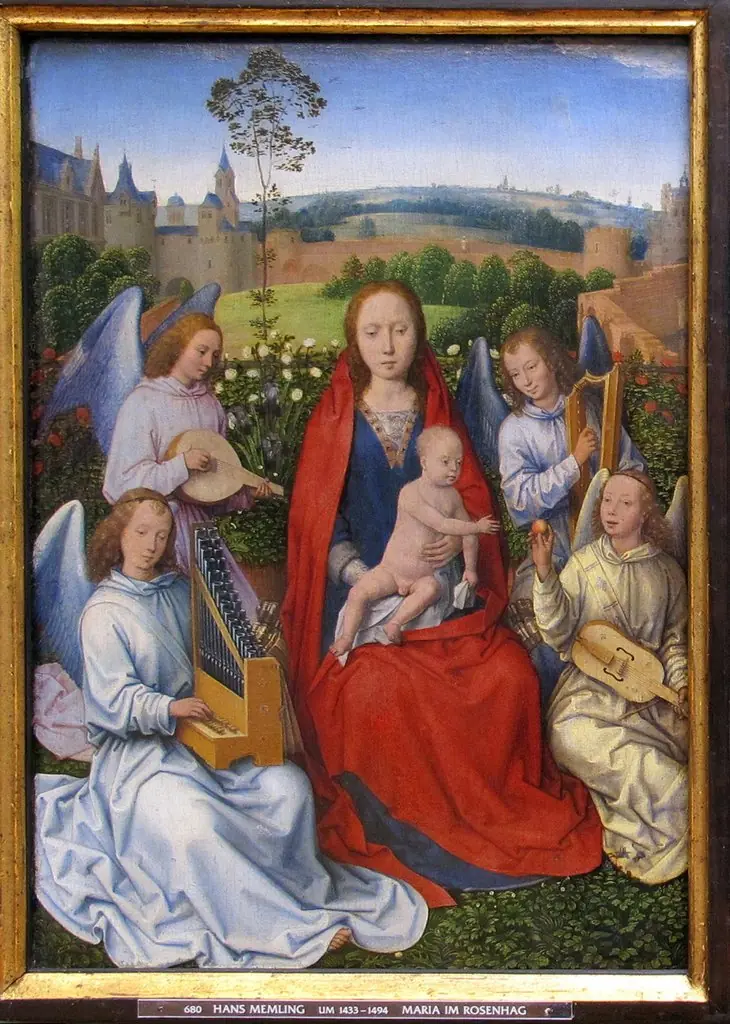 Madonna of the Rose Bower
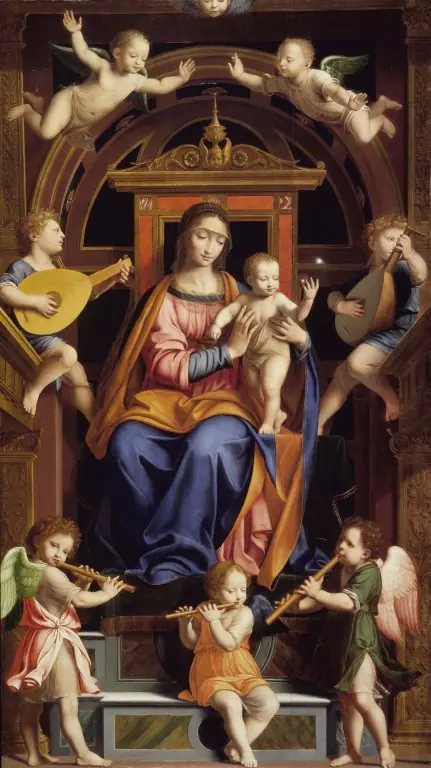 Madonna and Child Enthroned with Angels
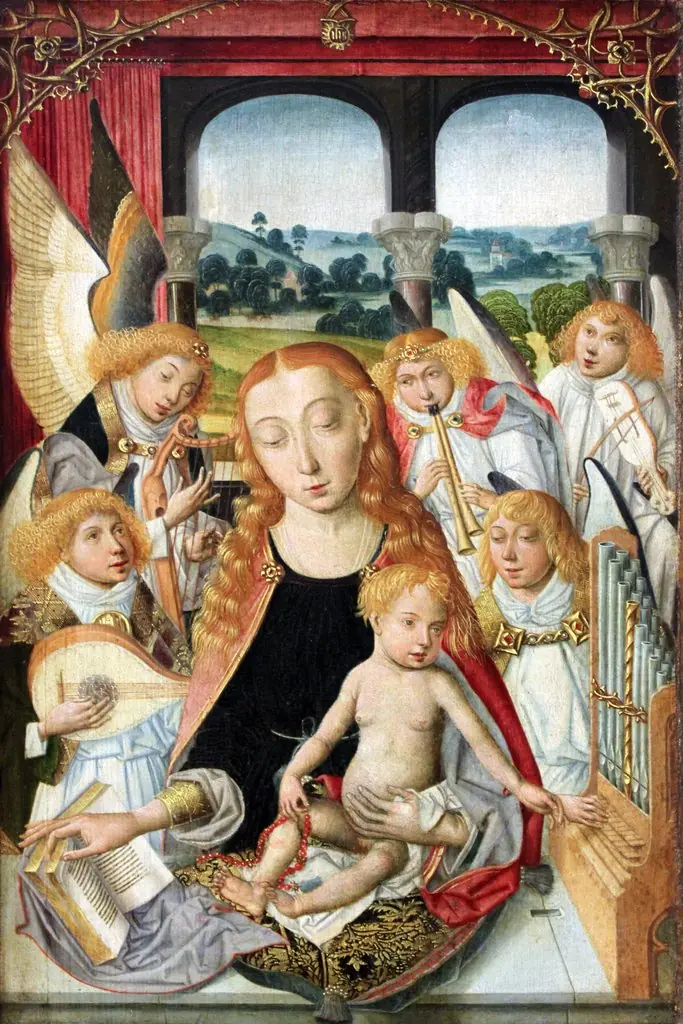 Virgin with Angels Playing Musical Instruments
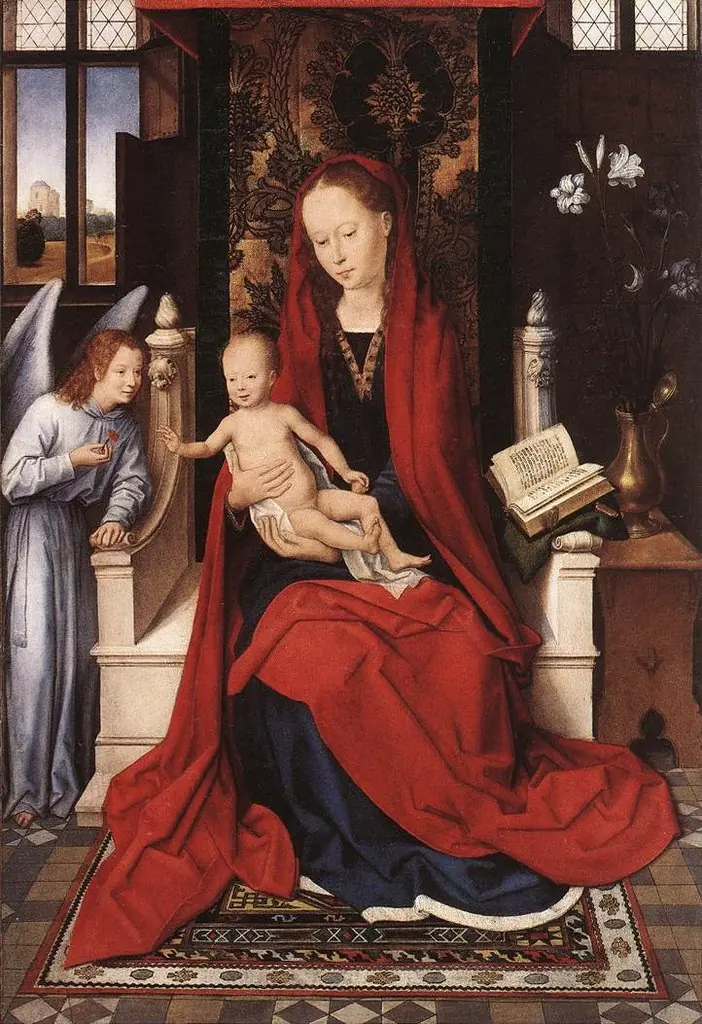 Enthroned Madonna and Child with Angel
 The Virgin and Child with Saint John the Baptist and an Angel
 A Virgem Maria e o Menino Jesus com Anjos
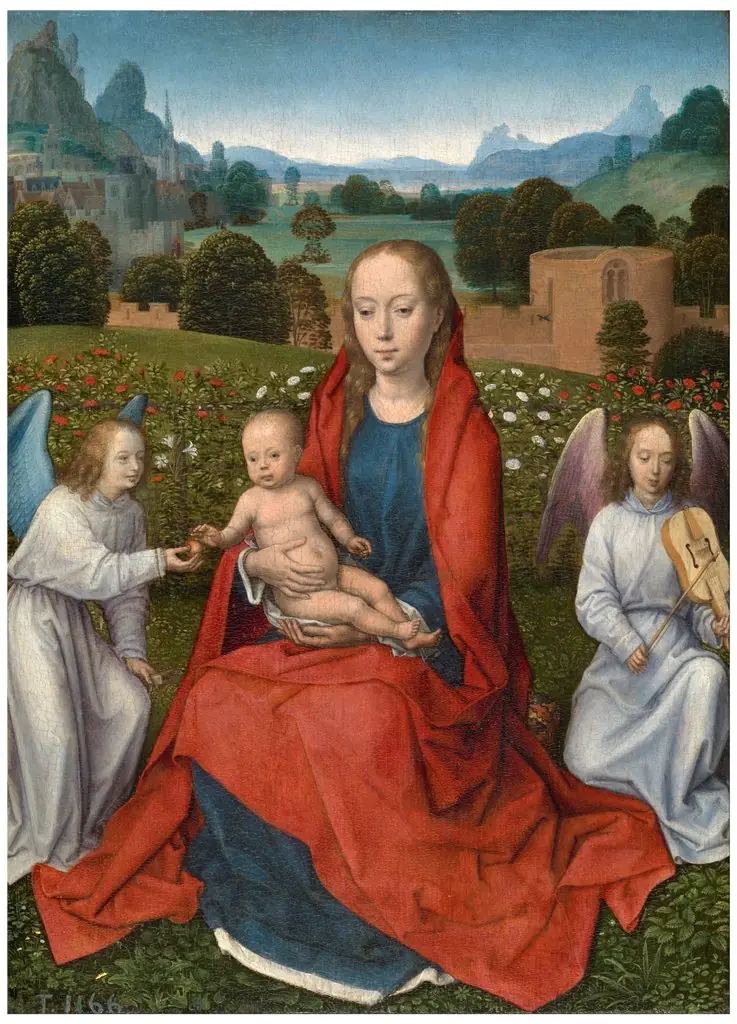 Virgin and Child with two angels
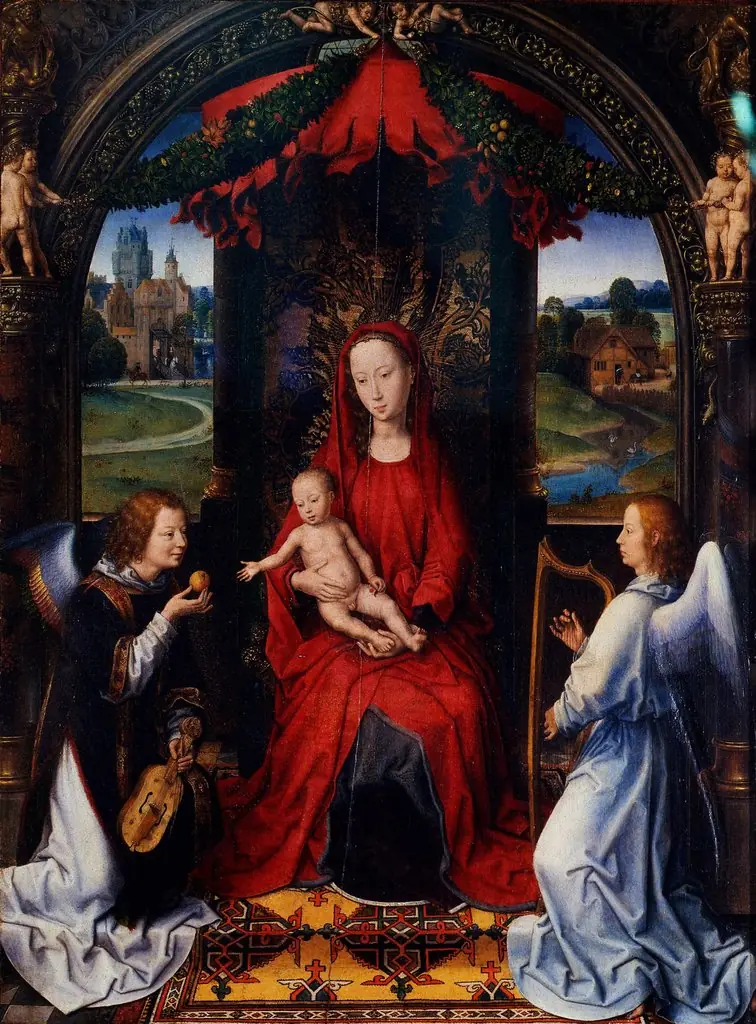 Madonna enthroned with child and two musical angels
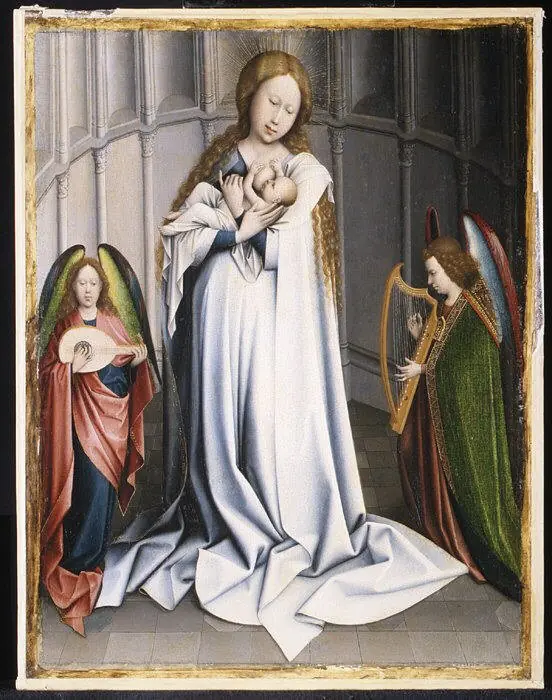 Virgin and Child in an Apse
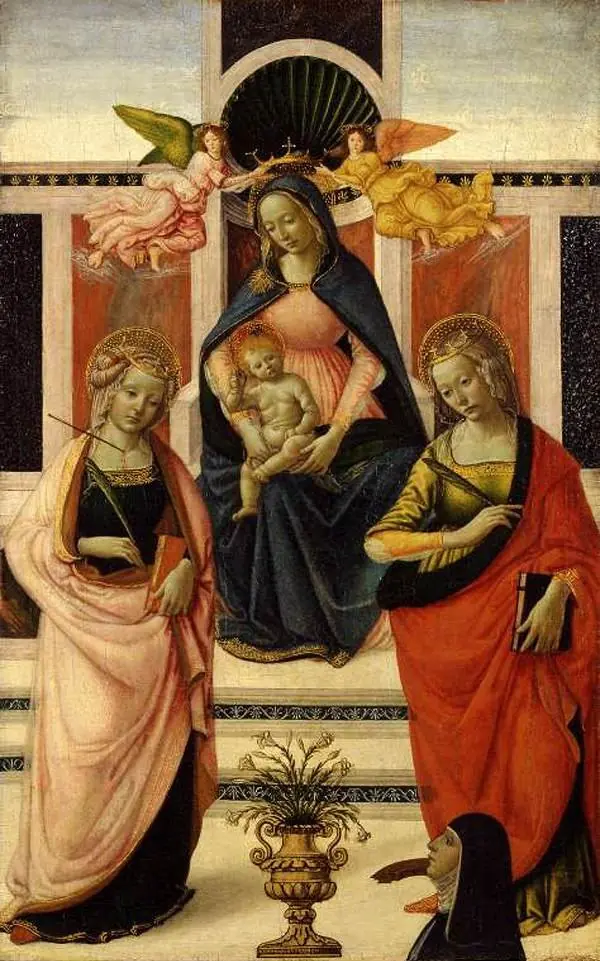 Virgin and Child enthroned between St Ursula and St Catherine
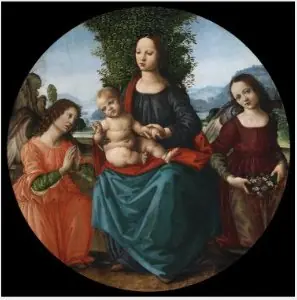 The Virgin and Child with Two Angels
 Enthroned Virgin and Child, with Angels