Artwork
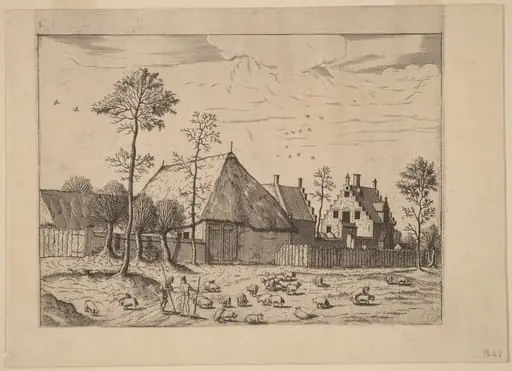
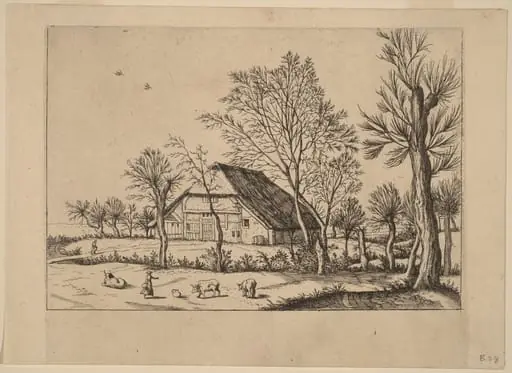
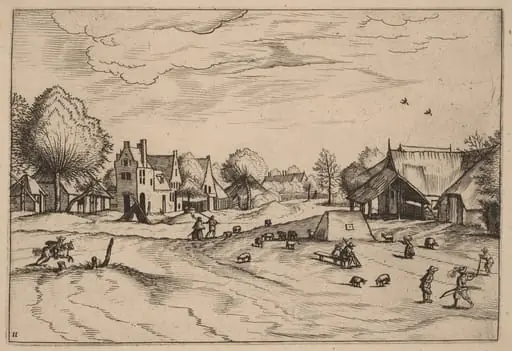
View of Villages in Brabant and Campine: Shepherds with Flock
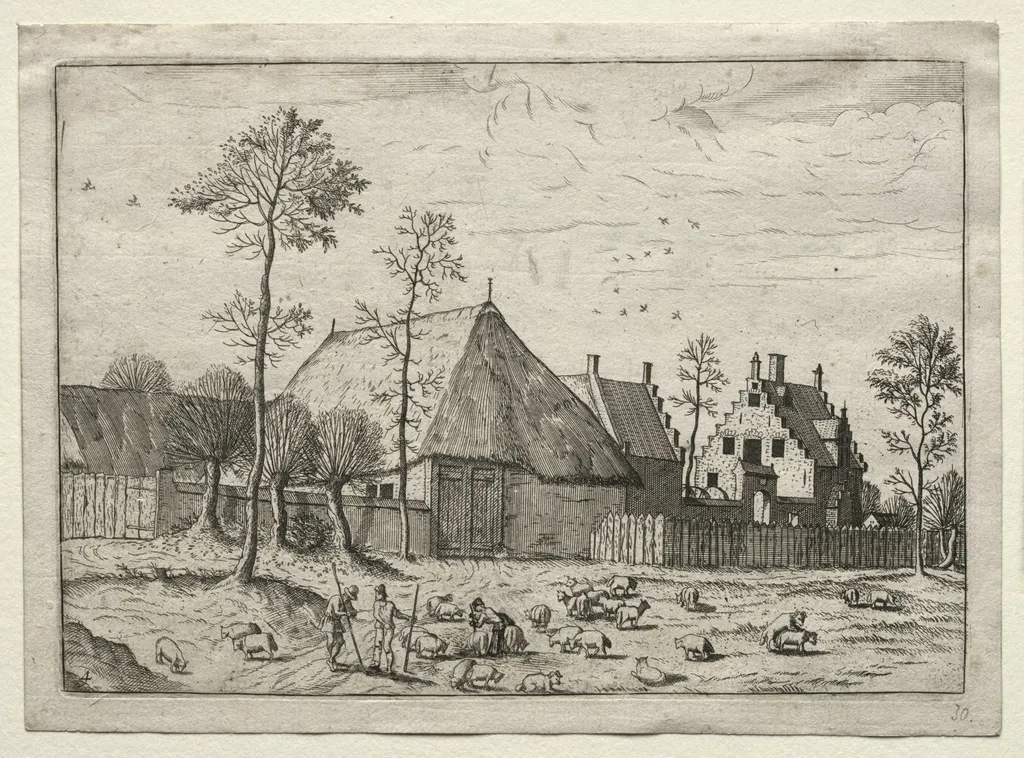
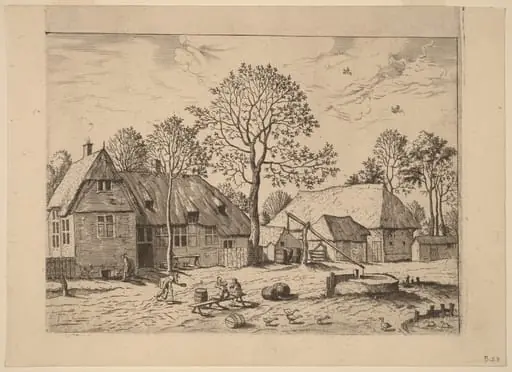
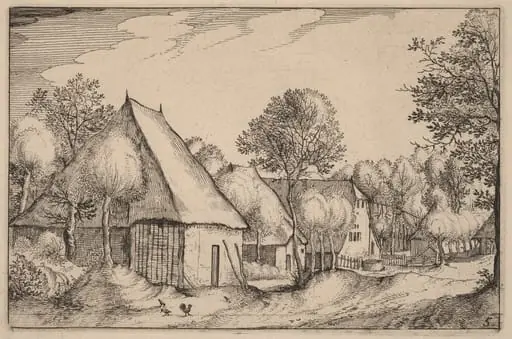
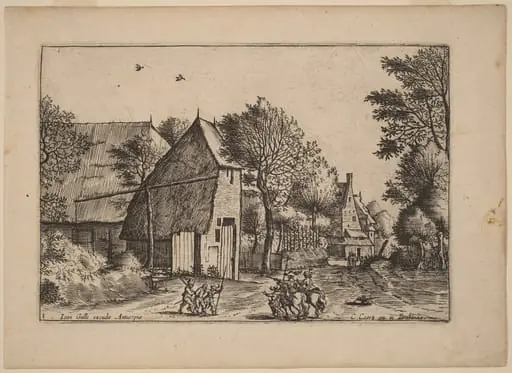
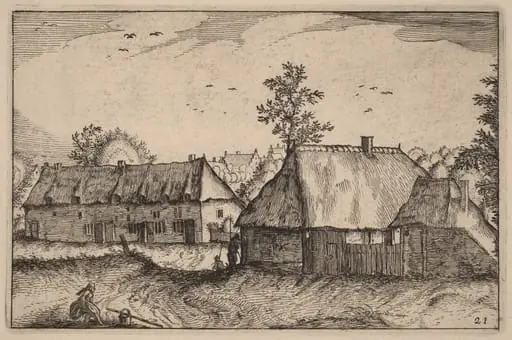
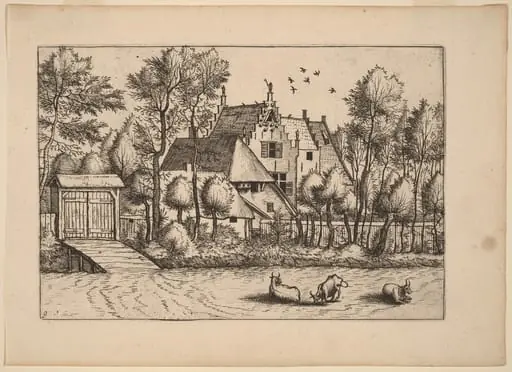
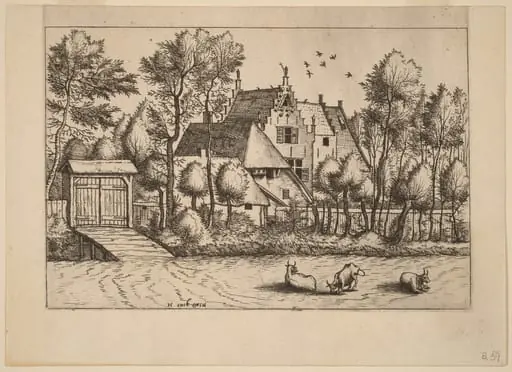
View of Villages in Brabant and Campine: Shepherds with Flock is a print by the Renaissance artist Master of the Small Landscapes. It dates from 1559 and is held in the collection of the Cleveland Museum of Art. This print, dated around 1559, depicts a tranquil rural scene in the Brabant and Campine regions of the Low Countries.
About this work
Overview
This print, dated around 1559, depicts a tranquil rural scene in the Brabant and Campine regions of the Low Countries.
This print, dated around 1559, depicts a tranquil rural scene in the Brabant and Campine regions of the Low Countries. Attributed to the anonymous artist known as the Master of the Small Landscapes, it belongs to a series of small-scale topographical prints that focus on everyday rural life rather than grand narratives or mythological themes. The work is held in the collection of The Cleveland Museum of Art.
Subject & Meaning
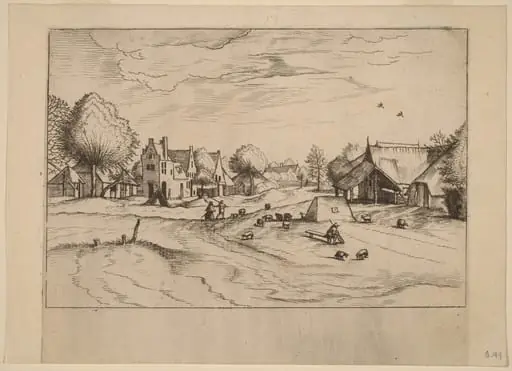
The scene centers on shepherds tending their flock across a gently rolling countryside dotted with modest villages. No dramatic events unfold; instead, the quiet rhythm of agricultural labor is emphasized. The composition suggests an interest in documenting ordinary existence, offering a record of land use, settlement patterns, and rural livelihoods in mid-16th-century northern Europe.
Technique & Style
Executed as a woodcut or engraving, the print employs fine, controlled lines to render terrain, buildings, and figures with restrained detail. The perspective is flattened, favoring a panoramic view over spatial depth. Buildings and trees are simplified, yet their arrangement conveys a sense of place. The absence of overt ornamentation reflects a documentary impulse rather than decorative intent.
History & Provenance
The print is part of a broader corpus of small landscapes produced in Antwerp during the 1550s, likely for a growing market of middle-class collectors interested in regional topography. Its attribution to the Master of the Small Landscapes is based on stylistic consistency across a group of unsigned works. The Cleveland Museum of Art acquired the print as part of its early modern European print collection.
Context
These prints emerged during a period of increasing cartographic interest and urbanization in the Low Countries. As cities expanded, there was a cultural fascination with the countryside as both a source of sustenance and a symbol of stability. The Master’s works reflect this shift, transforming landscape from mere backdrop into a subject worthy of quiet observation.
Legacy
The series influenced later generations of Northern European printmakers who turned to landscape as an independent genre. By focusing on unidealized, everyday scenes, the Master of the Small Landscapes helped lay groundwork for the Dutch landscape tradition of the 17th century, shifting artistic attention from the sacred to the secular and the local.
Own this work as a print
Artist & collection

Artist
Master of the Small Landscapes
The Master of the Small Landscapes was a Flemish artist from the mid-16th century known for his landscape drawings.