Artwork
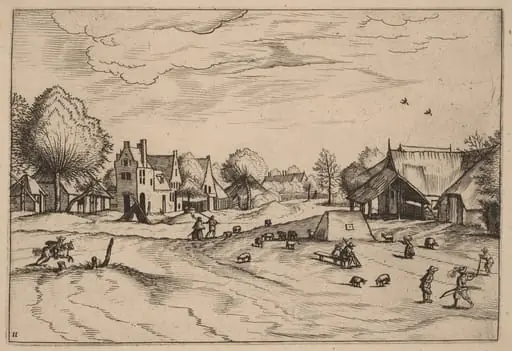
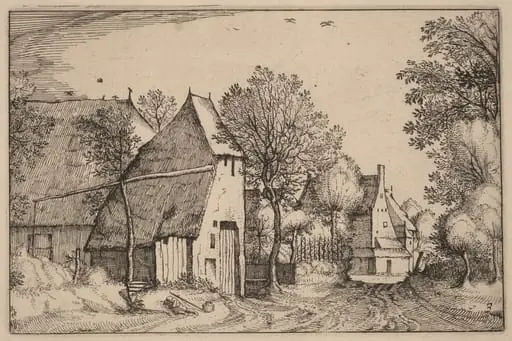
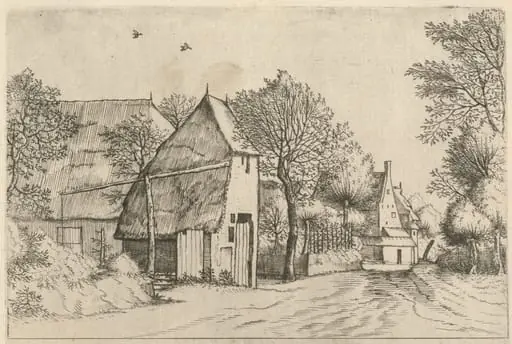
Village Road with Draw Well
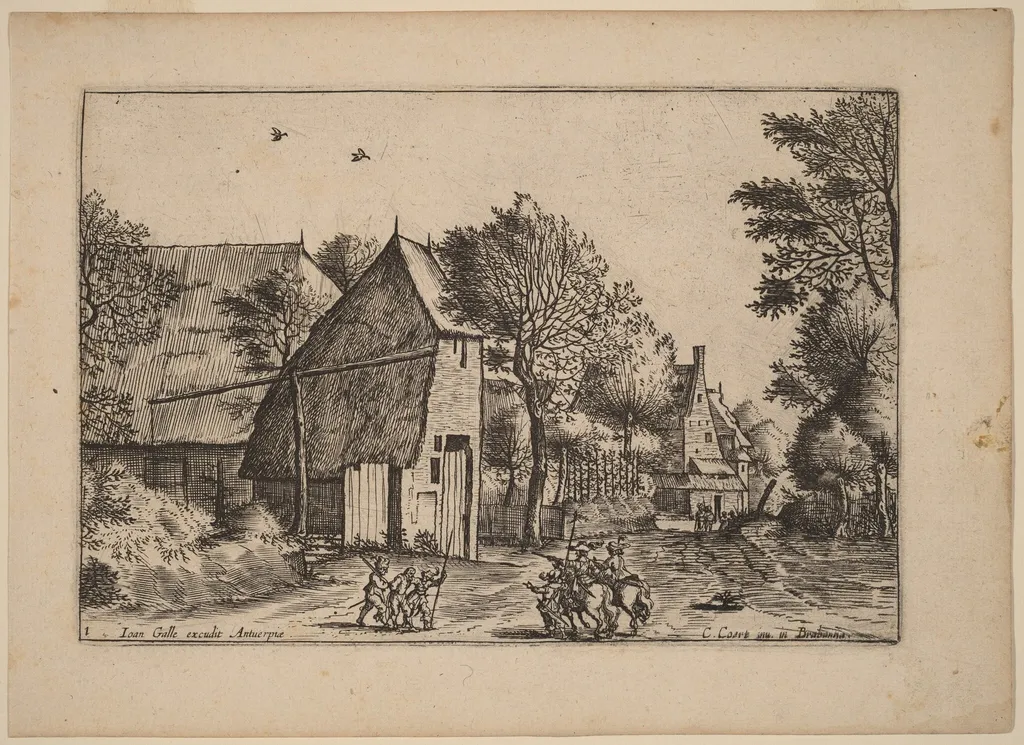
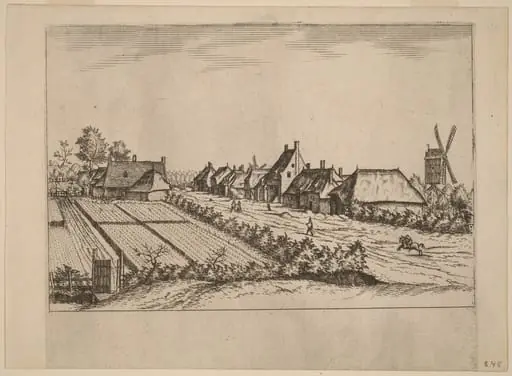
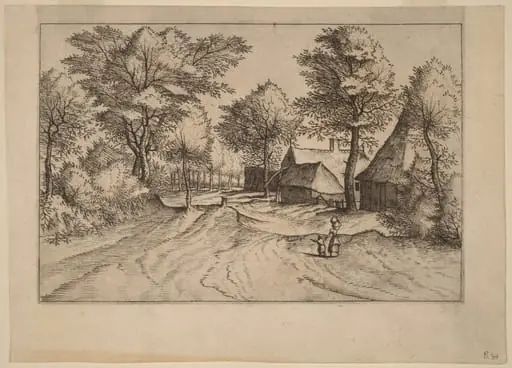
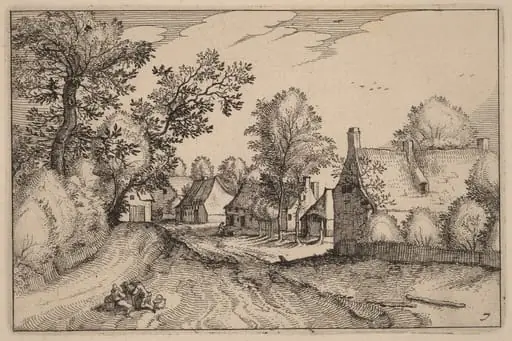
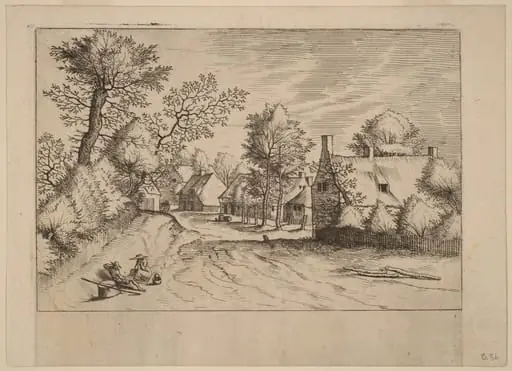
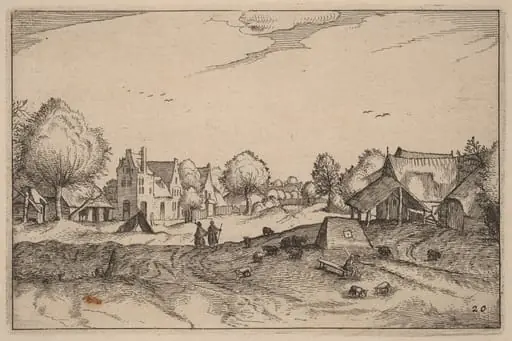
Village Road with Draw Well is an ink print by the Baroque artist Johannes van Doetechum the Elder. It is held in the collection of the National Gallery of Art.
About this work
Overview
Based in Haarlem after his early years in Deventer, he specialized in reproductive prints and cartography.
Johannes van Doetecum the Elder, a Dutch printmaker active in the late 16th century, produced *Village Road with Draw Well* in 1676 as an etching enhanced with engraving. Based in Haarlem after his early years in Deventer, he specialized in reproductive prints and cartography. This work exemplifies his practice of translating genre scenes into detailed graphic form, blending technical precision with observational clarity to capture everyday rural life.
Subject & Meaning
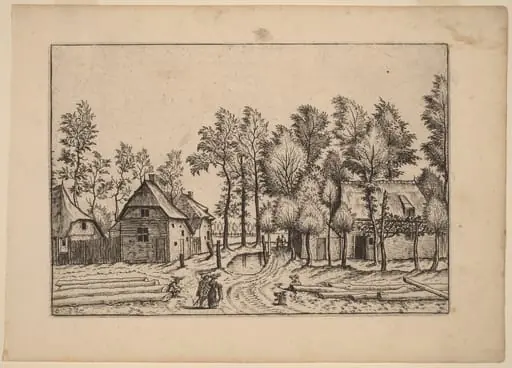
The scene portrays a quiet village lane centered on a stone-paved path and a deep draw well, a common feature in rural Dutch communities. Figures—a woman with a basket, two men conversing near a fence, and chickens foraging—suggest unremarkable daily routines. No narrative climax is present; instead, the image conveys stillness and routine, reflecting the dignity of ordinary labor and the rhythms of village existence without idealization.
Technique & Style
Doetecum began with etching to establish the composition’s broad tones and contours, then refined details using engraving—adding fine, controlled lines for texture and definition. This dual method allowed for both atmospheric softness in shadows and crisp clarity in elements like fence slats and stone edges. The road’s gentle curve directs the viewer’s gaze inward, enhancing depth without overt dramatic emphasis, characteristic of his restrained graphic style.
History & Provenance
Created in 1676, the print belongs to Doetecum’s later period, when he focused on reproducing earlier Netherlandish scenes, particularly those by Pieter Bruegel the Elder. Though the exact provenance of this specific impression is undocumented, it aligns with his broader output of prints circulated among collectors and artisans. His reputation as a skilled reproductive engraver ensured wide dissemination of such works across Northern Europe.
Context
In late 17th-century Holland, prints like this served both artistic and documentary functions. Rural scenes appealed to urban audiences seeking connection to agrarian life, while technical precision reflected the era’s broader interest in observation and detail. Doetecum’s work emerged within a thriving print culture that valued accuracy and accessibility, positioning him as a bridge between earlier Netherlandish traditions and contemporary printmaking practices.
Legacy
Doetecum’s prints, including this one, contributed to the preservation and dissemination of genre imagery associated with Bruegel’s legacy. Though less celebrated than his subjects, his technical diligence influenced later engravers in the Netherlands. His work remains a reference for understanding how 17th-century printmakers translated painterly compositions into reproducible, widely accessible graphic forms.
Artist & collection

Artist
Johannes van Doetechum the Elder
Joannes van Doetecum the Elder (1530 – 1605) was a Dutch engraver-cartographer known for his etched works after genre scenes by Pieter Bruegel the Elder and maps of various cities in the Netherlands.