Artwork
Madonna and Child
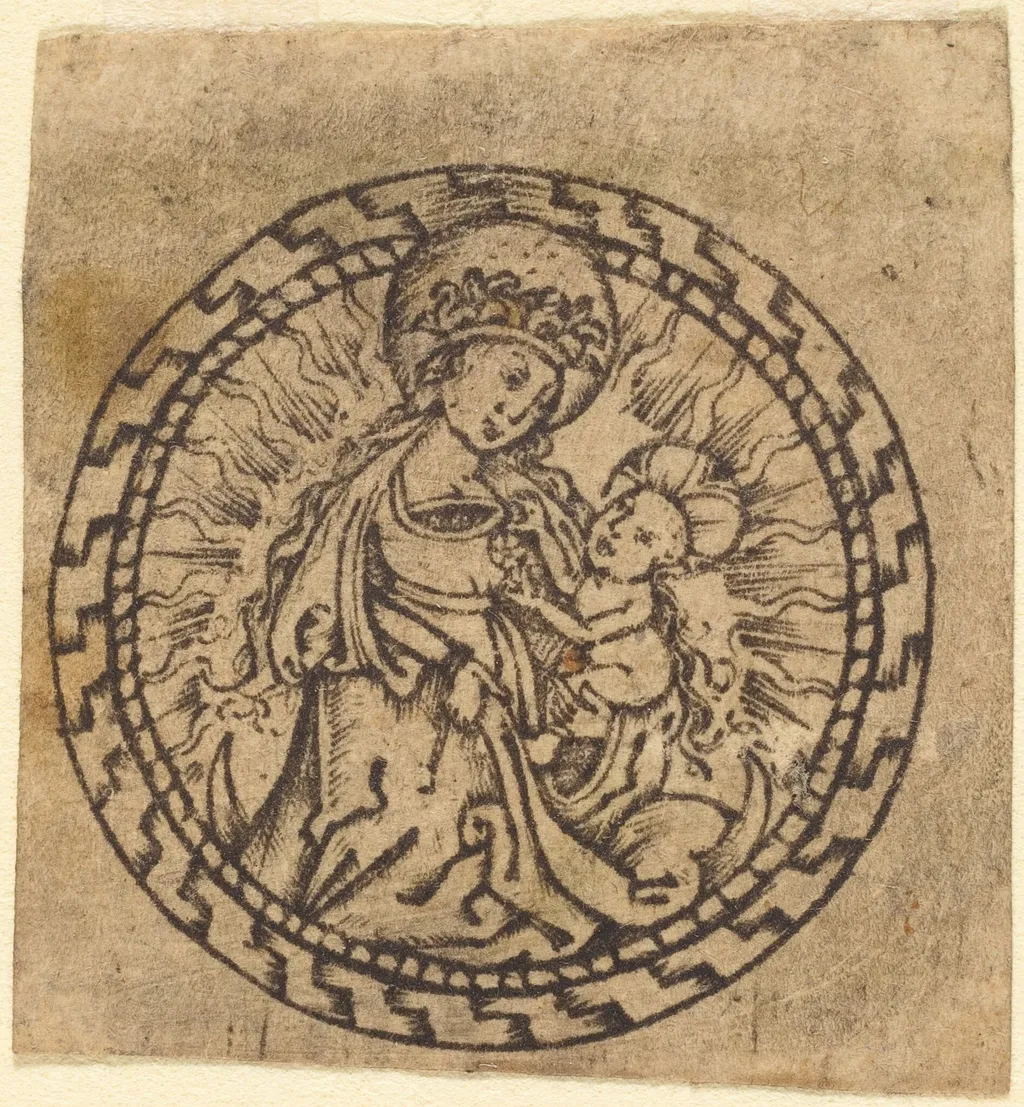
Madonna and Child is an ink print by Master with the Flower Borders. It dates from 1450 and is held in the collection of the National Gallery of Art.
About this work
Overview
Madonna and Child is a small devotional print executed as an engraving around 1450. The work is attributed to the anonymous figure known as the Master with the Flower Borders, a specialist in intricate ornamental framing. The image presents the Virgin holding the infant Christ within a circular composition, surrounded by dense decorative foliage.
Subject & Meaning
The central motif follows the conventional medieval iconography of the Virgin and Child, emphasizing tenderness and the intimate bond between mother and son. The infant’s gesture of reaching toward his mother reinforces themes of devotion and the human aspect of the divine figure.
Technique & Style
The engraving is characterized by fine, repetitive incised lines that build texture and tonal variation without the use of color. The surrounding foliage consists of tightly coiled, leaf‑like motifs rendered through a series of small, parallel strokes, creating a dense, ornamental border typical of the Master’s hand.
History & Provenance
Created in the mid‑15th century, the print reflects the growing popularity of portable religious images for private contemplation. While the original metal plate has not survived, surviving impressions have been documented in several European collections, confirming its circulation among devotional objects of the period.
Context
The work belongs to a broader tradition of Northern European engraving in the early Renaissance, where artists explored the possibilities of line to suggest volume and space. The decorative border aligns with contemporary manuscript illumination, linking printmaking to the visual language of illuminated books.
Artist & collection


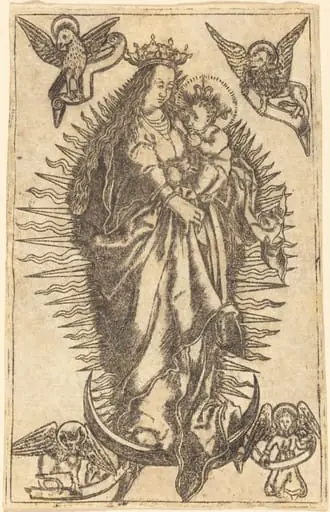 Madonna and Child
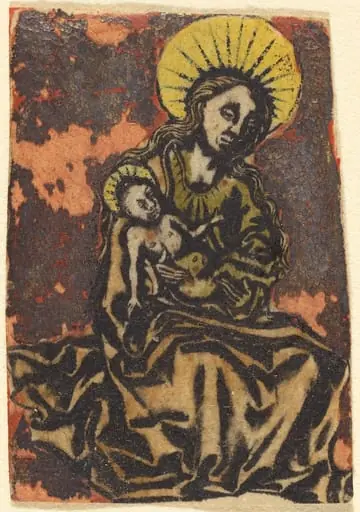 Madonna and Child
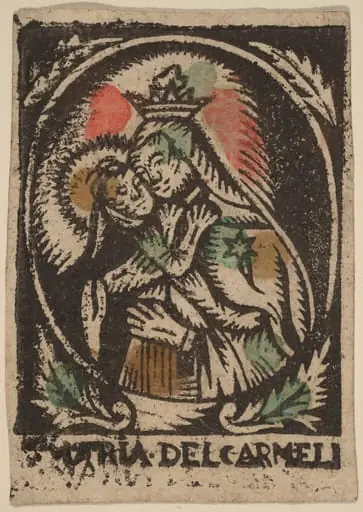 Madonna and Child
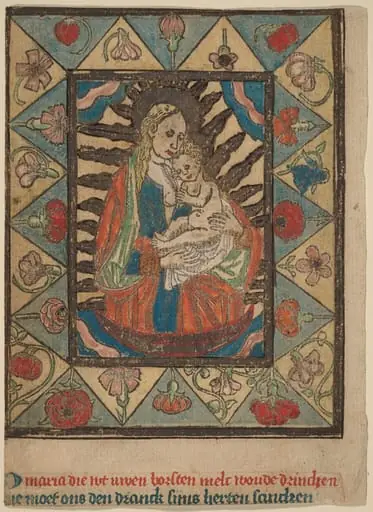 The Madonna and Child
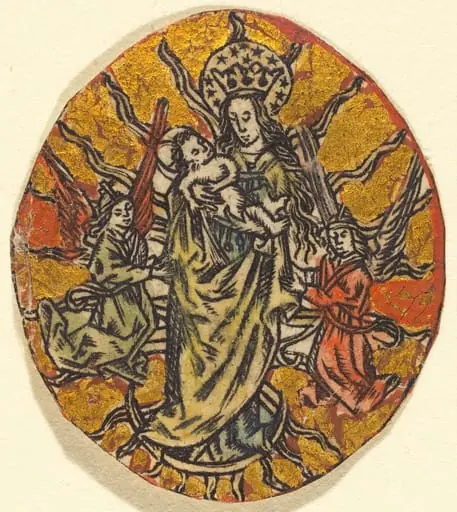 Madonna and Child
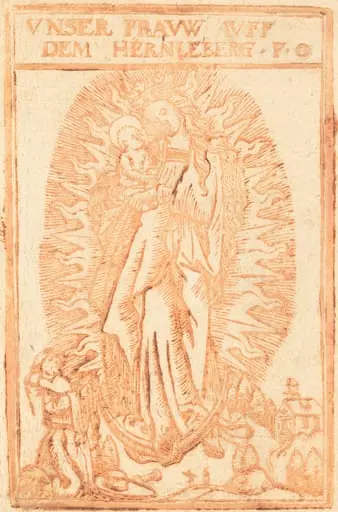 Madonna of the Hernleberg
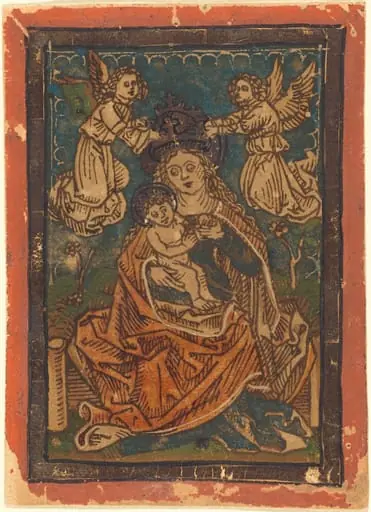 Madonna and Child Seated on a Grassy Bank with Angels
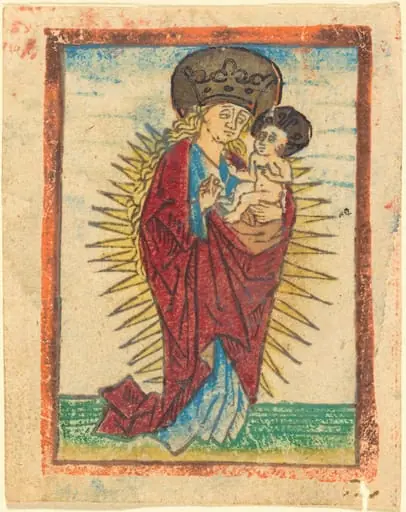 Madonna and Child in a Glory
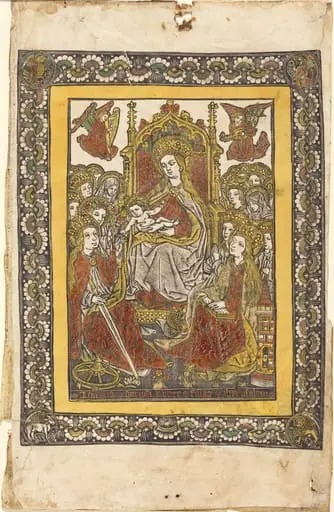 The Madonna Enthroned with Eighteen Holy Women
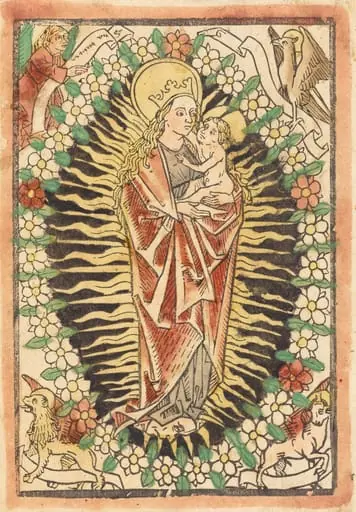 Madonna and Child in a Rosary
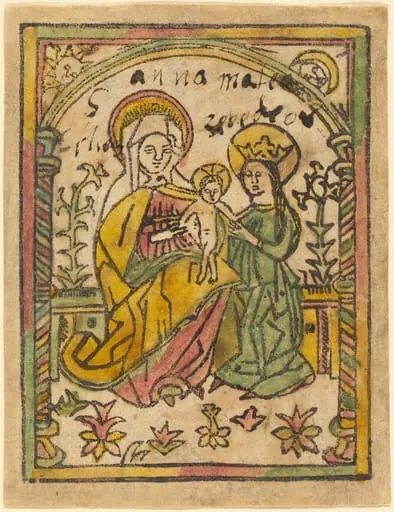 Saint Anne with the Madonna and Child
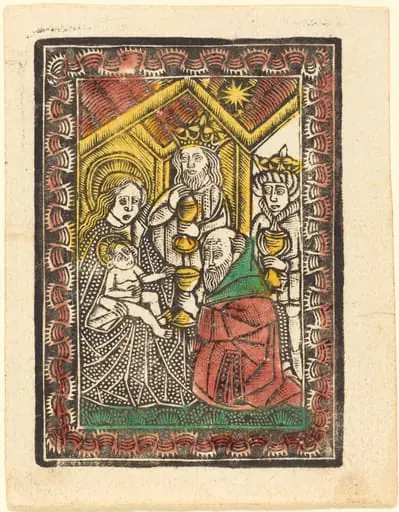 The Adoration of the Magi