Artwork
Madonna of the Hernleberg
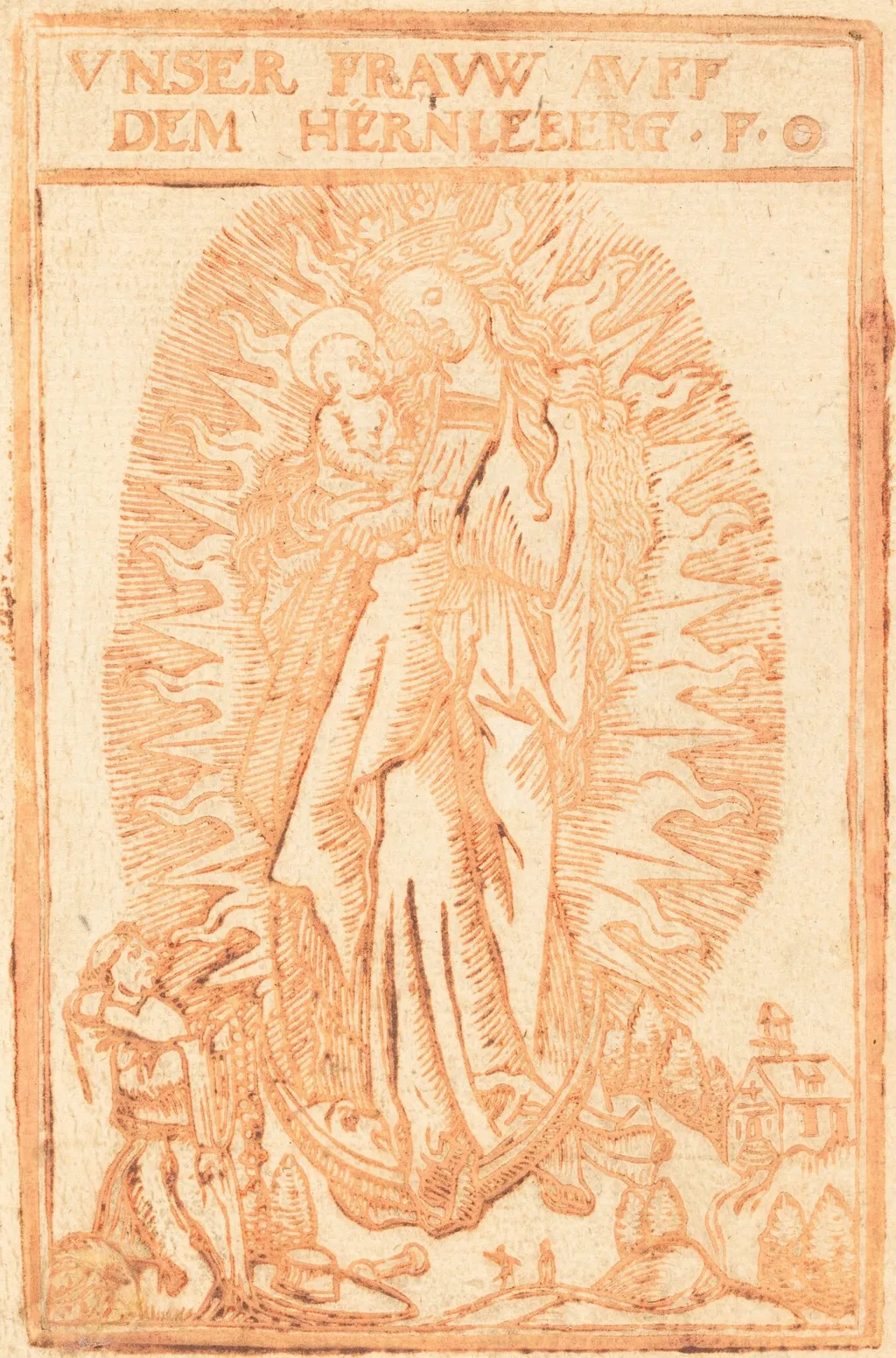
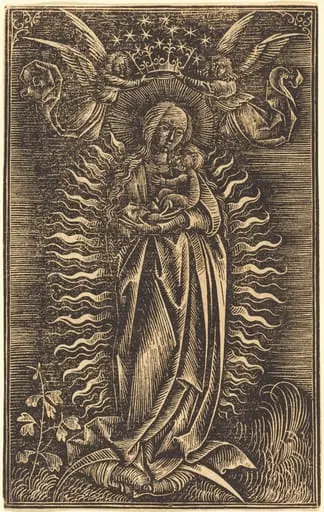
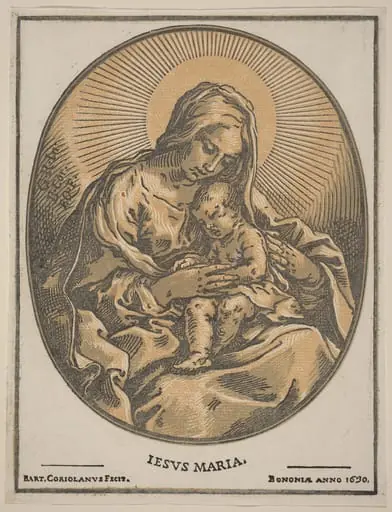
Madonna of the Hernleberg is an ink print by the Baroque artist German 17th Century. It dates from 1626 and is held in the collection of the National Gallery of Art. The work is a woodcut print executed in orange ink on laid paper.
About this work
Overview
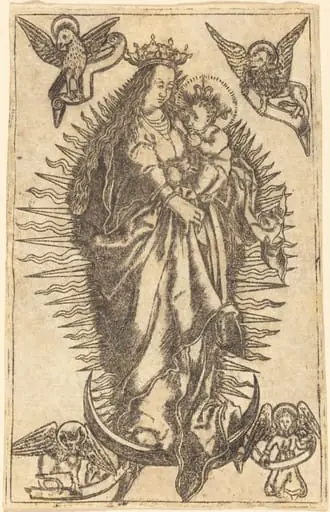
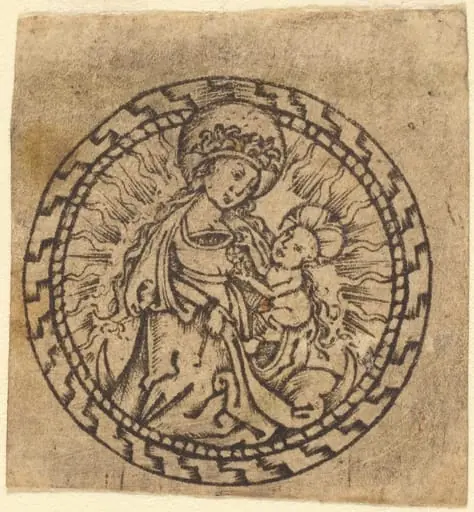
The work is a woodcut print executed in orange ink on laid paper. It presents a seated female figure, identified as the Virgin Mary, cradling an infant, both adorned with halos. A circular frame surrounds the pair, from which radiating lines suggest emanating light, creating a calm, devotional atmosphere.
Subject & Meaning
The composition emphasizes the sacred bond between mother and child, a common motif in Christian iconography. The halos denote holiness, while the gentle gestures and soft shading convey tenderness and reverence, inviting contemplation of the divine maternity and its role in devotional practice.
Technique & Style
Carved from a single wooden block, the image was printed in a single orange hue onto laid paper, a surface characterized by its ribbed texture. The use of a limited palette and bold line work highlights the stark contrast between figure and background, while the radiating circular motif demonstrates the artist’s control of line to suggest illumination.
History & Provenance
The print’s origin dates to the period when woodcut was a primary method for reproducing religious images for private devotion. Specific details of its creation, such as the artist’s identity or original commission, remain undocumented, and the work has circulated among collections of early print media, reflecting its role as a widely disseminated devotional image.
Artist & collection

Artist
This artist worked in 17th-century central Europe, turning myth and history into small bronze and ink scenes.

![Allegorical Female Figure in a Landscape [recto], by German 17th Century](https://artifactworldgallery.com/img/german-17th-century--allegorical-female-figure-in-a-landscape-recto--0263f304d6fc0dc9-w320.webp)