Artwork
Print Collection
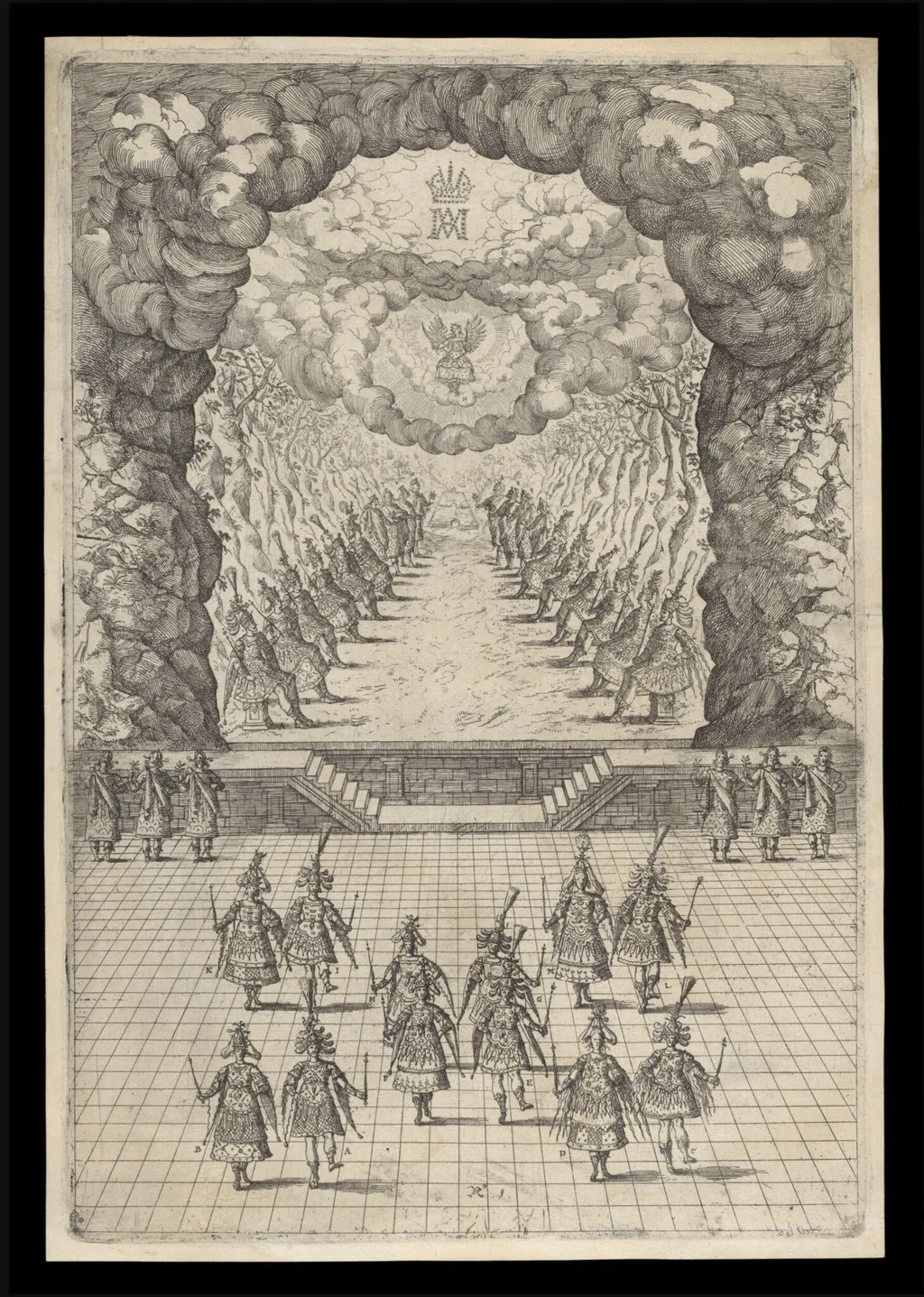
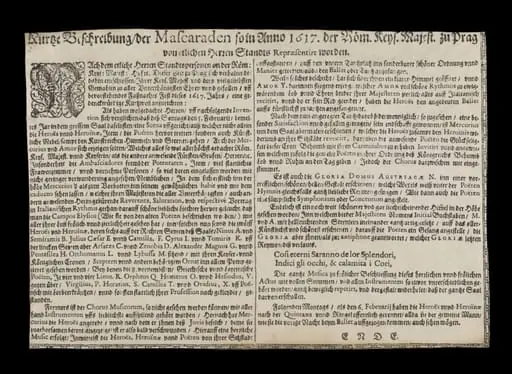
Print Collection is a print by the Baroque artist Mat'a. It dates from 1617 and is held in the collection of the Victoria and Albert Museum.
About this work
The print is titled "Print Collection" and was made by Mat'a in 1617.
It's an allegory, which is a way of telling a story through symbols.
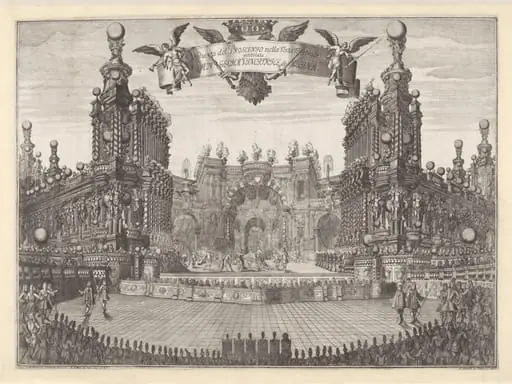
The print shows a court dance at Prague Castle, inspired by Italian musical theatre, and this dance was performed for the emperor.
You can learn more about this style by looking into the Baroque movement.
Overview
This 1617 print, titled “Print Collection” and attributed to the artist Mat’a, records a ceremonial court dance known as the Phasma Dionysiacum Pragense. The scene unfolds within the walls of Prague Castle, where noble participants performed the spectacle before the emperor.
Subject & Meaning
The work functions as an allegory, using the dance to evoke themes drawn from classical Dionysian festivities. By staging the performance for the imperial audience, the print underscores the political and cultural prestige of the Habsburg court.
Technique & Style
Executed as a print, the image employs the linear clarity and compositional balance typical of early seventeenth‑century graphic art. Its decorative elements echo the theatrical conventions of contemporary Italian musical theatre, reflecting a cross‑regional exchange of artistic ideas.
Context
The dance took place in 1617, a period when the Baroque aesthetic began to influence Central European courts. Italian opera and ballet were increasingly imported, shaping local court entertainments and signaling the Habsburgs’ alignment with broader European cultural trends.
History & Provenance
The print originates from the original court archives of Prague Castle, where it likely served as a record of the event. Its survival in the Print Collection suggests it was preserved as part of the imperial documentation of ceremonial occasions.
Artist & collection
Artist
This 17th-century printmaker made detailed sheets filled with people, buildings, and scenes from daily life.

 H Beard Print Collection
 H Beard Print Collection
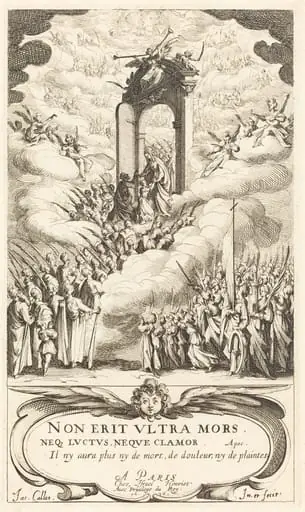 Frontispiece for "The Calendar of Saints"
 H Beard Print Collection
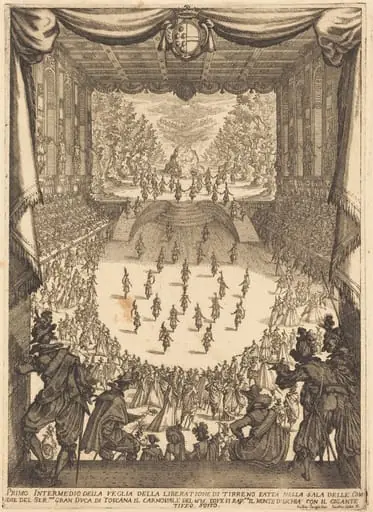 First Intermezzo
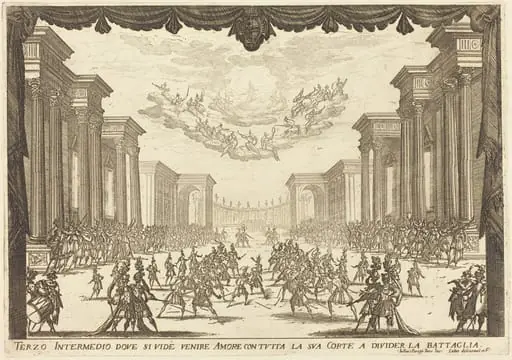 Third Intermezzo
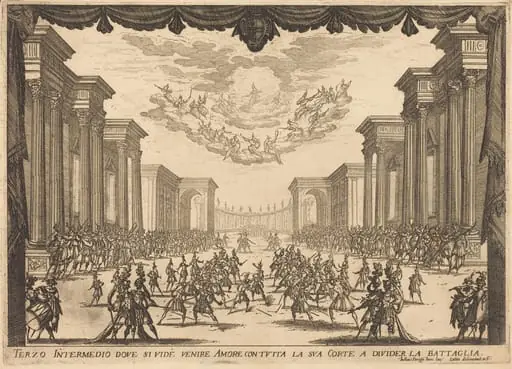 Third Intermezzo
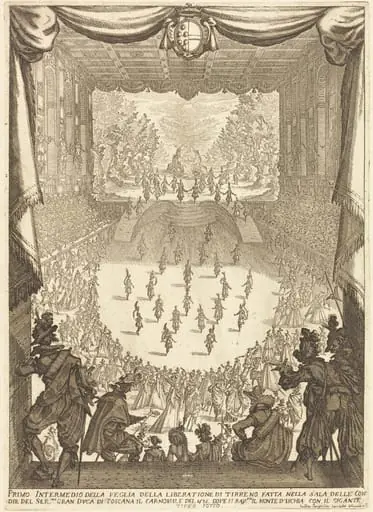 First Intermezzo
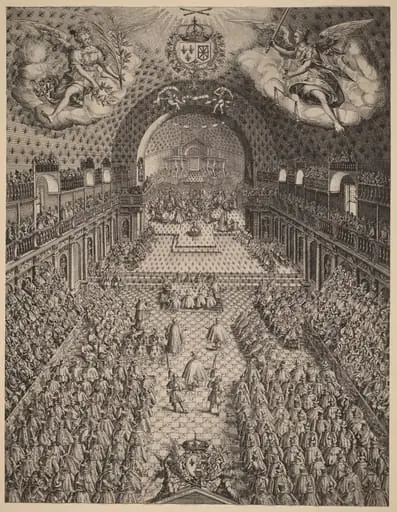 The States General of France (Les Etats Generaux de France)
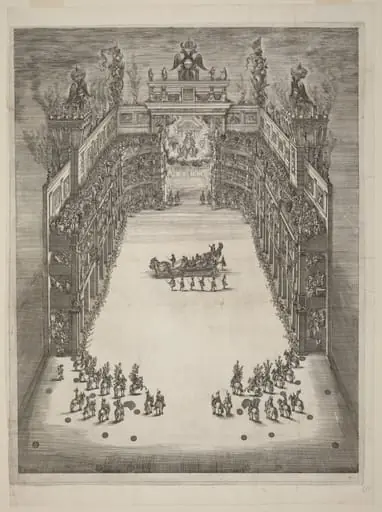 Aerial View of Theatre
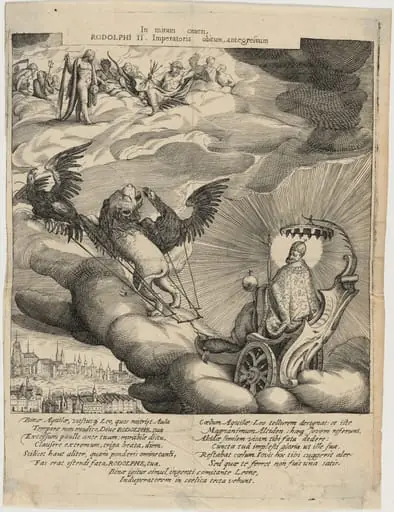 Rudolph II in Chariot Drawn by Lion and Eagle
 Print Collection