Artwork
Print Collection
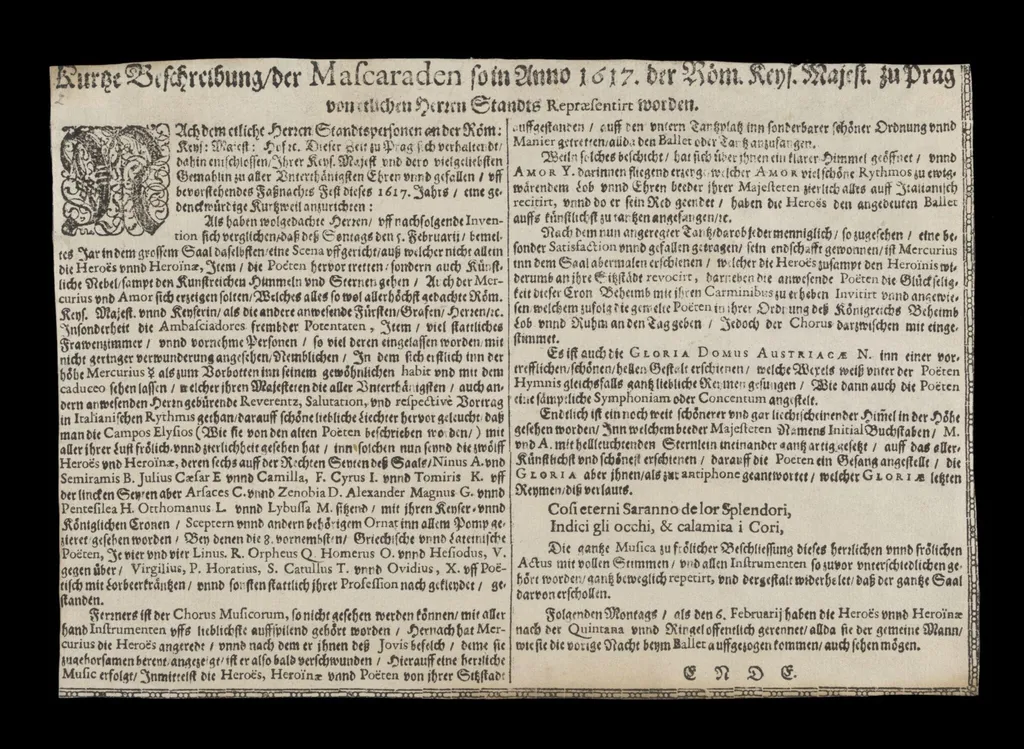
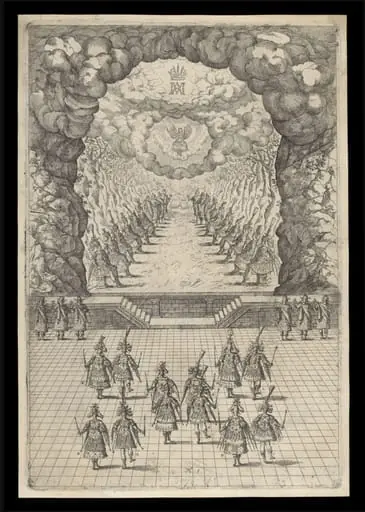
Print Collection is a print by the Baroque artist Unknown. It dates from 1617 and is held in the collection of the Victoria and Albert Museum. This print depicts a ceremonial dance performed at Prague Castle in 1617, known as the Phasma Dionysiacum Pragense.
About this work
The scene matches a 1617 Prague court dance called the *Phasma Dionysiacum*.
This print shows a group of people dancing in a grand hall. Their flowing robes and raised arms suggest a formal celebration. A man in the center holds a staff, leading the motion.
The scene matches a 1617 Prague court dance called the *Phasma Dionysiacum*. It was recorded in a German text, linking art and royal life. The print’s style feels stiff compared to today’s photos.
Look for prints like this at the Victoria and Albert Museum.
Overview
This print depicts a ceremonial dance performed at Prague Castle in 1617, known as the Phasma Dionysiacum Pragense. Rendered in a Germanic-language source, the scene captures a courtly ritual tied to the Habsburg monarchy. The composition emphasizes formal posture and synchronized movement, reflecting the structured nature of early 17th-century aristocratic entertainment. Its medium and style align with contemporary printed records of royal events.
Subject & Meaning
The scene portrays a group of courtiers engaged in a ritualized dance, likely part of a seasonal or political celebration. A central figure, holding a staff, acts as a leader, guiding the motion of others in flowing garments. Raised arms and aligned formations suggest a symbolic order, possibly invoking classical themes of Dionysian revelry adapted to courtly decorum. The event was documented in writing, linking visual and textual records of imperial spectacle.
Technique & Style
The print employs linear precision and flat spatial organization, typical of early 17th-century engraving. Figures are rendered with minimal shading, their forms defined by clean outlines and repetitive patterns in fabric. The lack of perspective and naturalistic detail reflects the conventions of documentary illustration rather than artistic innovation. This stylistic restraint prioritizes clarity and ceremonial accuracy over emotional expression.
History & Provenance
Created shortly after the 1617 dance at Prague Castle, the print likely served as a record for courtly circulation or archival purposes. It corresponds with a contemporary German-language account of the event, suggesting it was produced under official patronage. Its survival points to the value placed on visual documentation of Habsburg rituals. The print’s later presence in collections such as the Victoria and Albert Museum indicates its enduring historical interest.
Context
The dance occurred during a period of political tension preceding the Thirty Years’ War, when Habsburg rulers used ceremonial displays to reinforce authority. The Phasma Dionysiacum blended classical mythology with courtly tradition, a common tactic to legitimize power through cultural symbolism. Such events were meticulously recorded, as visual and textual evidence helped shape perceptions of imperial grandeur across Europe.
Legacy
This print remains a rare visual witness to a specific court ritual, offering insight into how early modern elites staged identity through performance. Its preservation in major collections underscores its role as historical evidence rather than artistic achievement. Scholars continue to reference it alongside textual sources to reconstruct the social and political functions of dance in Baroque courts.
Artist & collection

 Domestic Scene
 Giacomo and Cardinal Marco, investing Andrea, Abbot of San Zeno, with his Benefice
 The Nymph of Fontainebleau
 Portrait of a Woman
 Madonna and Child with Saints in the Enclosed Garden
 Venus and Minerva
 Family Group of Four on Sofa
 Wall painting from Room H of the Villa of P. Fannius Synistor at Boscoreale
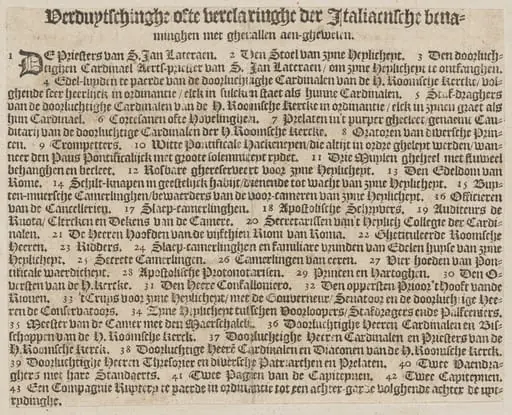 Dutch captions to 'La Calvacatura con le sue Cerimonie'
![The Siege of La Rochelle [plate 8 of 16; set comprises 1952.8.97-112], by French 17th Century](https://artifactworldgallery.com/img/french-17th-century--the-siege-of-la-rochelle-plate-8-of-16-set-comprises-1952-8--8322a1faad6a889e-w320.webp) The Siege of La Rochelle [plate 8 of 16; set comprises 1952.8.97-112]
The Siege of La Rochelle [plate 8 of 16; set comprises 1952.8.97-112]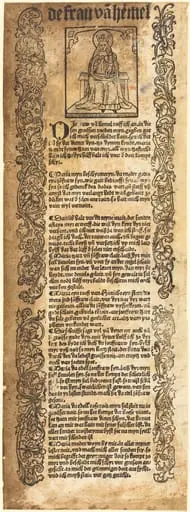 Song to the Madonna
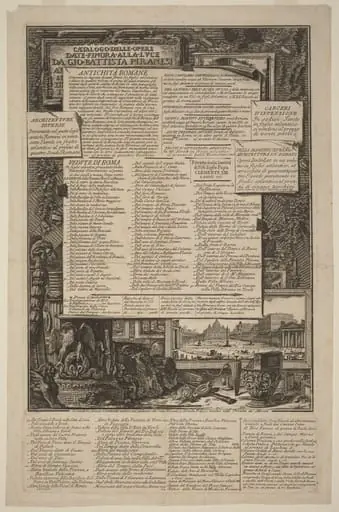 Catalogo delle Opere Date Finora Alla Lvce Da Gio Battista Piranesi
![Lettering [bottom half], by Simon van de Passe](https://artifactworldgallery.com/img/simon-van-de-passe--lettering-bottom-half--9f50722d991807f6-w320.webp) Lettering [bottom half]
Lettering [bottom half]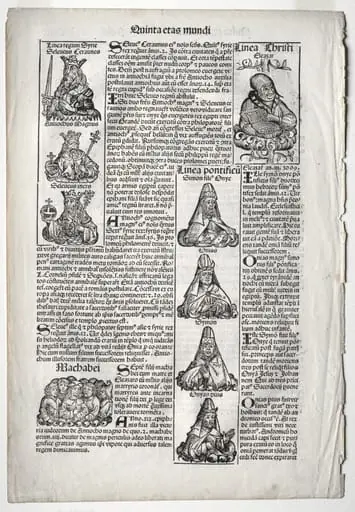 Genealogical Page; published in the Nuremberg Chronicle by Hartmann Schedel
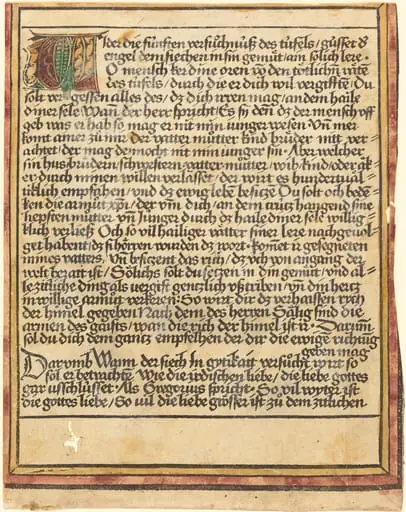 Exhortation Against Avarice
 H Beard Print Collection
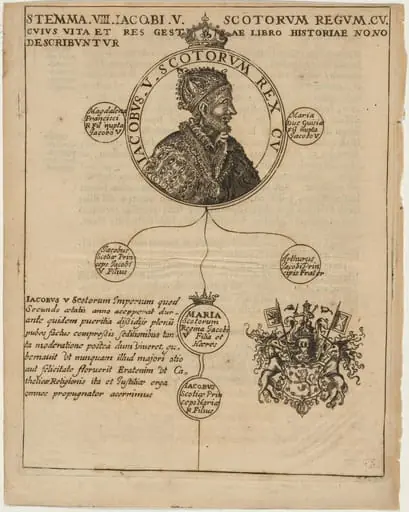 James V of Scotland with Geneology
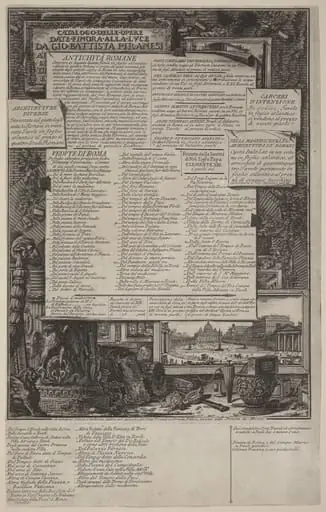 Catalogo delle Opere
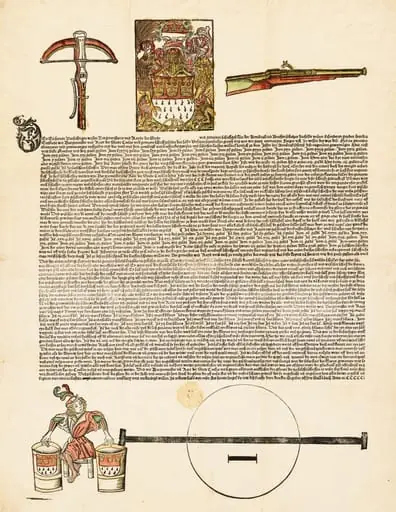 Broadside: An Invitation to an Arms Competition
 Print Collection