Artwork
H Beard Print Collection
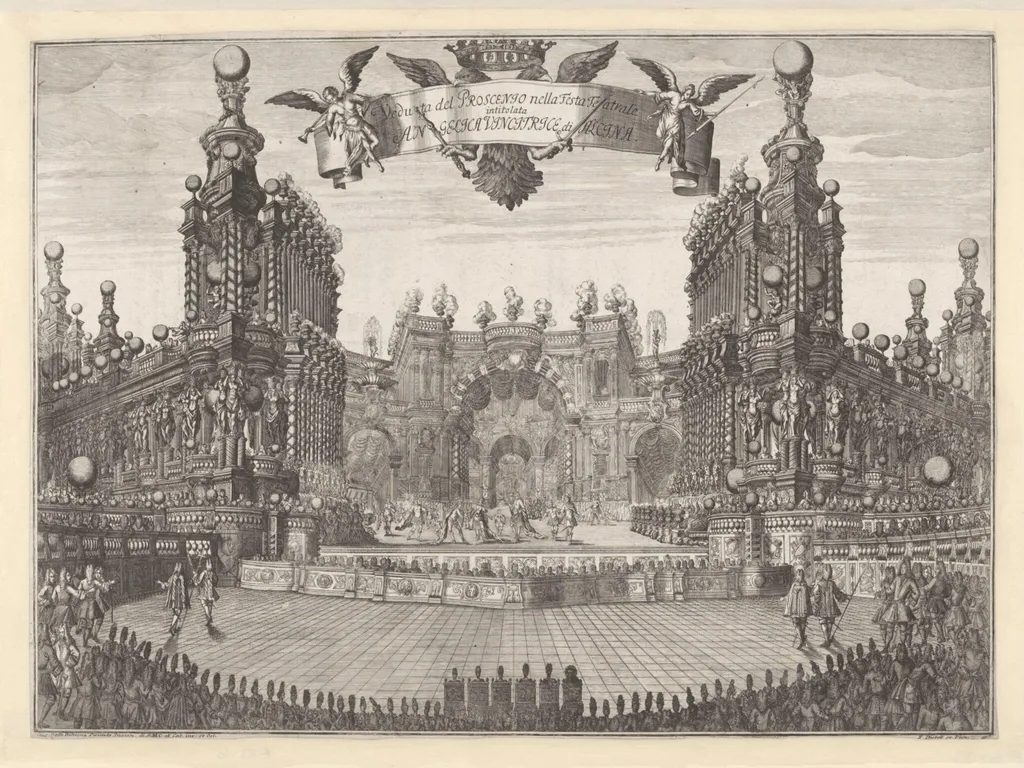
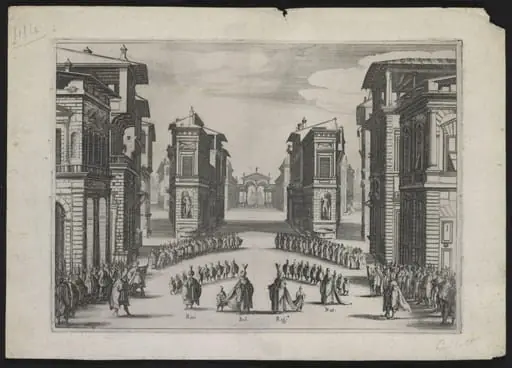
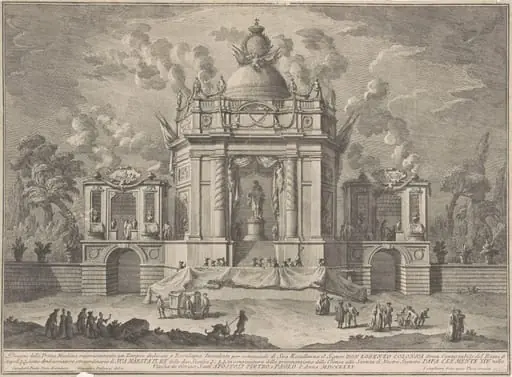
H Beard Print Collection is a print by the Baroque artist Ferdinando Galli Bibiena. It dates from 1716 and is held in the collection of the Victoria and Albert Museum. This print depicts a theatrical stage design created for the 1716 festival production of the opera Alcina.
About this work
This print shows a stage set designed for an opera in 1716. It’s a Baroque print by Ferdinando Galli Bibiena. The work is called “A View of the stage in the Theatrical Festival entitled the Angelic Victory of Alcina.”
The opera is named Alcina. The print captures the stage setup for a festival tied to the story.
Check out the Victoria and Albert Museum.
Overview
Executed in the Baroque style, it presents a detailed perspective of the proscenium as envisioned by Ferdinando Galli Bibiena.
This print depicts a theatrical stage design created for the 1716 festival production of the opera Alcina. Executed in the Baroque style, it presents a detailed perspective of the proscenium as envisioned by Ferdinando Galli Bibiena. The work serves as a record of ephemeral stage architecture, capturing the grandeur and spatial complexity intended for live performance rather than enduring display.
Subject & Meaning
The scene illustrates a moment from the opera Alcina, a tale of magic and illusion centered on the sorceress Alcina and her enchantments. The stage design reflects the narrative’s themes of transformation and spectacle, using architectural elements to suggest otherworldly realms. The title references Angelica’s triumph, positioning the visual as a celebration of virtue overcoming deception through theatrical grandeur.
Technique & Style
Rendered in precise linear perspective, the print demonstrates Bibiena’s mastery of architectural illusion. Fine lines define ornate columns, arches, and receding vistas, typical of Baroque stage design. The tonal gradations and meticulous detail suggest depth and volume, enhancing the sense of immersive space. The composition prioritizes symmetry and dramatic scale over naturalism, aligning with theatrical conventions of the era.
History & Provenance
Created for a 1716 festival performance in Italy, the print was likely produced as a promotional or archival record of the stage design. It entered the H. Beard Print Collection, later acquired by the Victoria and Albert Museum, where it remains as part of a broader archive of theatrical ephemera. Its survival reflects the growing interest in preserving design for performance, even when the original sets were dismantled.
Context
In early 18th-century Italy, opera was a central cultural event, and stage design was as vital as music or libretto. Bibiena’s family dominated scenic design across European courts, blending architecture, painting, and engineering. This print exemplifies how theatrical spectacle functioned as a display of power, patronage, and artistic innovation, merging visual art with live performance in a highly stylized manner.
Legacy
The print endures as a document of Baroque theatrical practice, illustrating how illusion was engineered for the stage. It informs modern studies of scenography and the evolution of stage technology. While the original performance is lost, this image preserves the ambition and craftsmanship of a design tradition that shaped opera’s visual language for generations.
Artist & collection
Artist
Ferdinando Galli Bibiena spent his life drawing every inch of a stage—curtains, columns, balconies—until they felt like rooms you could step into.

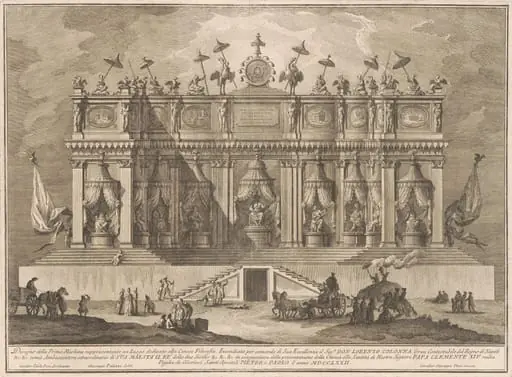 The Prima Macchina for the Chinea of 1772: A Building Dedicated to Chinese Philosophy
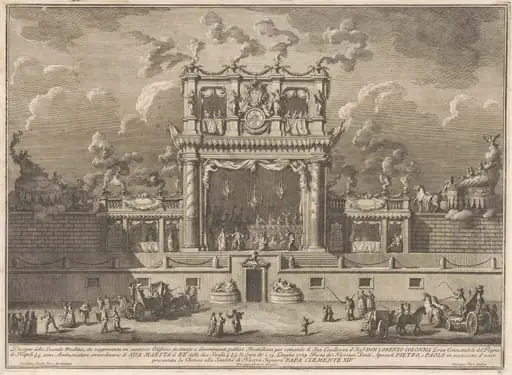 The Seconda Macchina for the Chinea of 1769: A Building for Public Entertainment
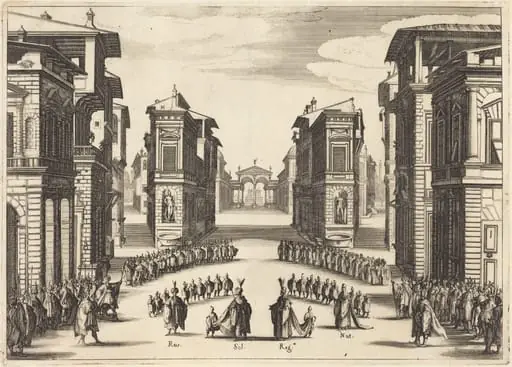 Il Solimano, Act II
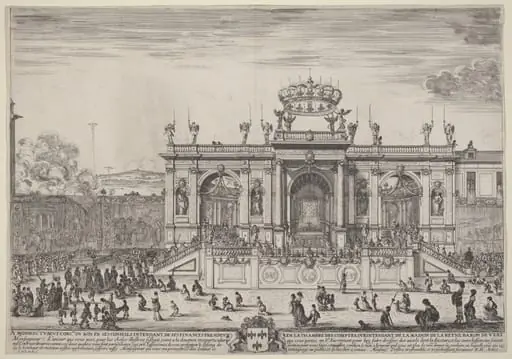 Altar for Corpus Christi Day
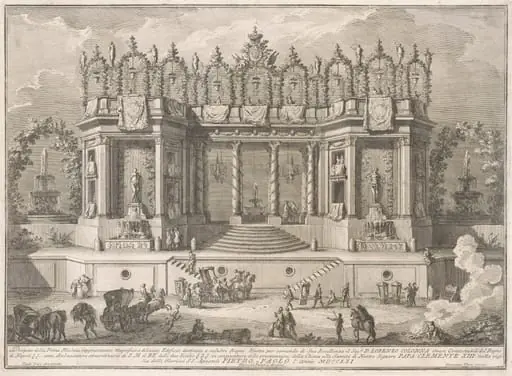 The Prima Macchina for the Chinea of 1761: The Salubrious Baths
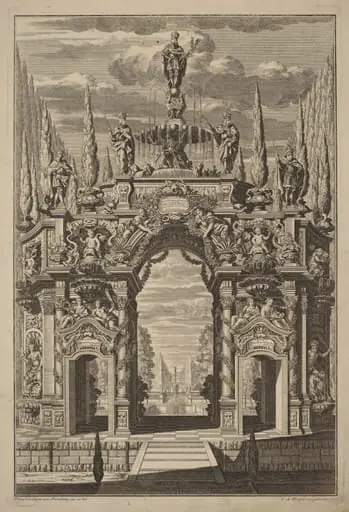 Triumphal Arch for Friedrich IV
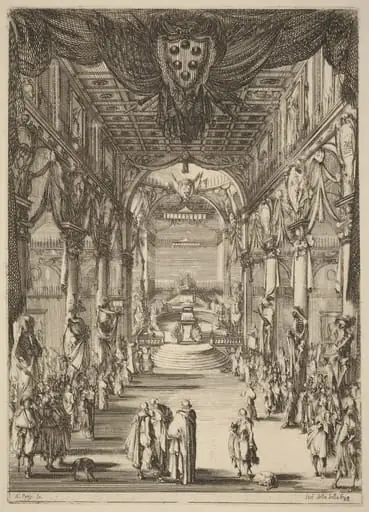 Funeral of Prince Francesco de Medici
 H Beard Print Collection
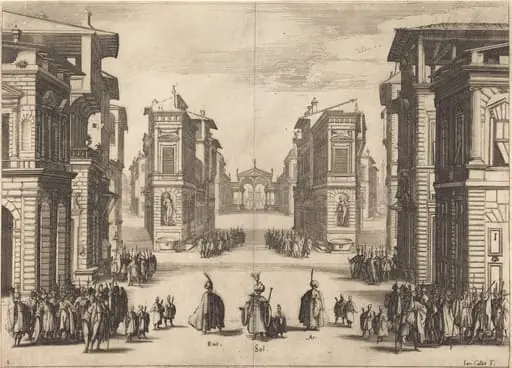 Il Solimano, Act I
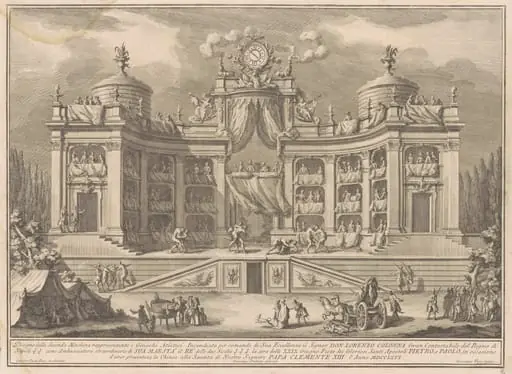 The Seconda Macchina for the Chinea of 1766: A Theater for Athletic Games
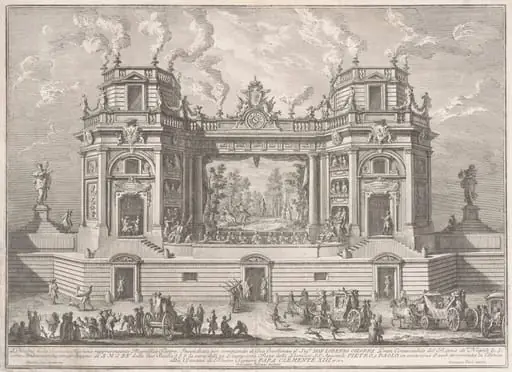 The Seconda Macchina for the Chinea of 1761: A Magnificent Theater
 The Prima Macchina for the Chinea of 1771: The Temple of Asclepius