Artwork
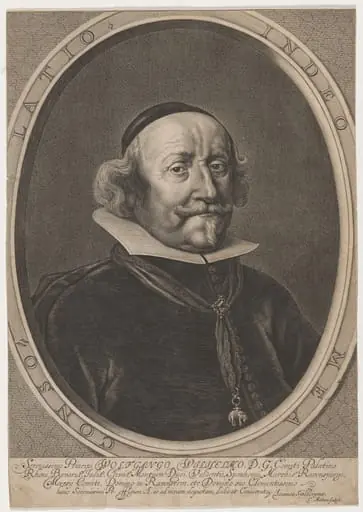
Wolfgang-Wilhelm, Count of Pfalz-Neuburg and Duke of Julich-Berg
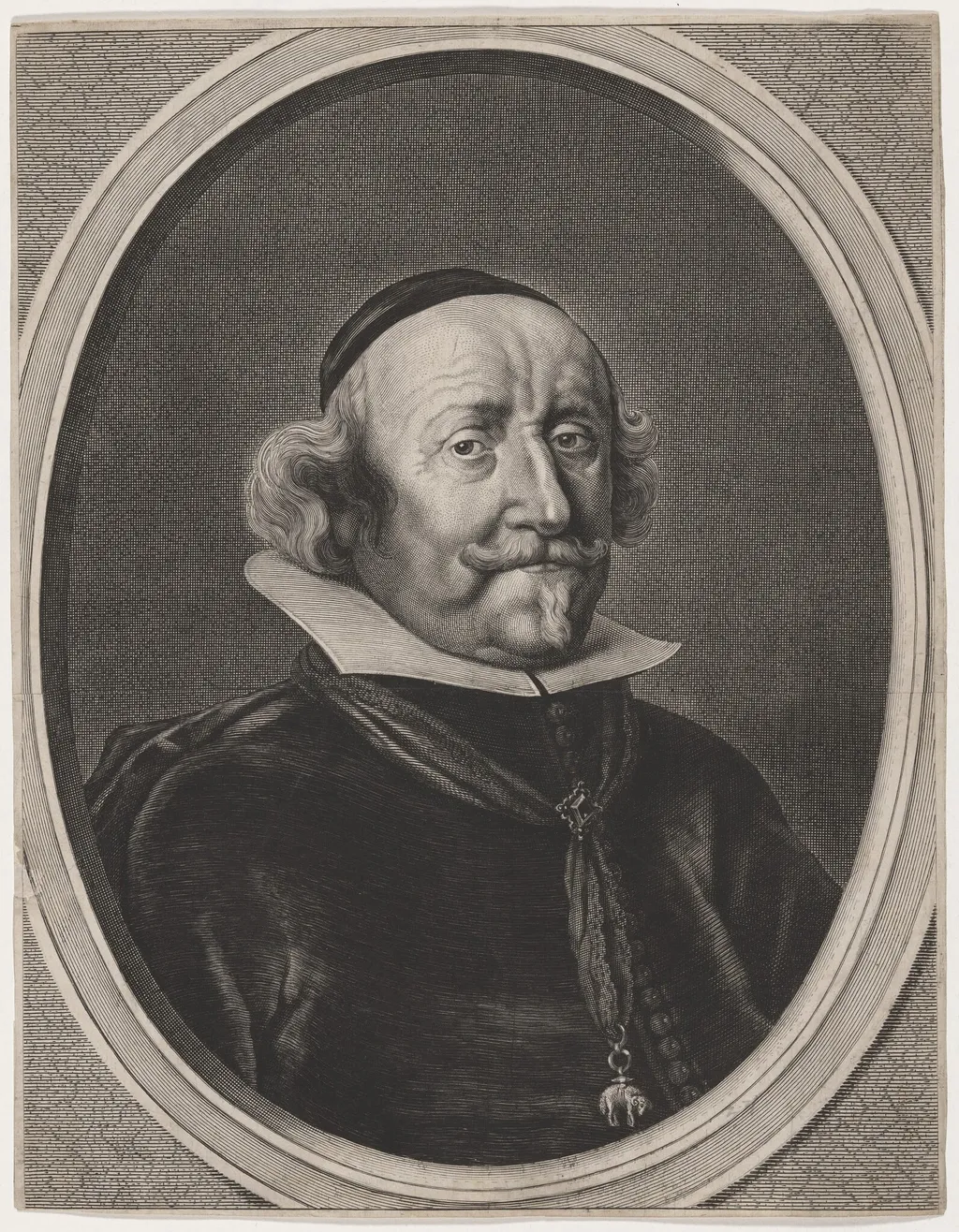
Wolfgang-Wilhelm, Count of Pfalz-Neuburg and Duke of Julich-Berg is an ink print by the Baroque artist Theodor Matham. It dates from 1640 and is held in the collection of the National Gallery of Art.
About this work
Overview
This 1640 engraving on laid paper by Theodor Matham portrays Wolfgang-Wilhelm, Count of Pfalz-Neuburg and Duke of Julich-Berg, in a formal, chest-up portrait.
Subject & Meaning
The subject, Wolfgang-Wilhelm, is depicted with a serious expression, gazing straight ahead, conveying an air of solemnity and authority. His attire, including a dark jacket, white collar, and delicate pendant, reflects his noble status.
Technique & Style
The engraving exemplifies Baroque characteristics through Theodor Matham's use of dramatic lighting and detailed textures, achieved via engraving and cross-hatching techniques to create depth and dimensionality.
History & Provenance
Created in 1640, the engraving's provenance is not detailed here, but its creation date situates it within the Baroque period, aligning with the artistic trends of the time.
Context
As a Baroque piece, it aligns with the period's emphasis on expressive and highly detailed artworks, often portraying nobility and clergy in formal, dignified poses.
Legacy
While specific influence or notable exhibitions of this engraving are not provided, it contributes to the broader legacy of Baroque printmaking and the representation of 17th-century European nobility in art.
Artist & collection