Artwork
Robert Junius
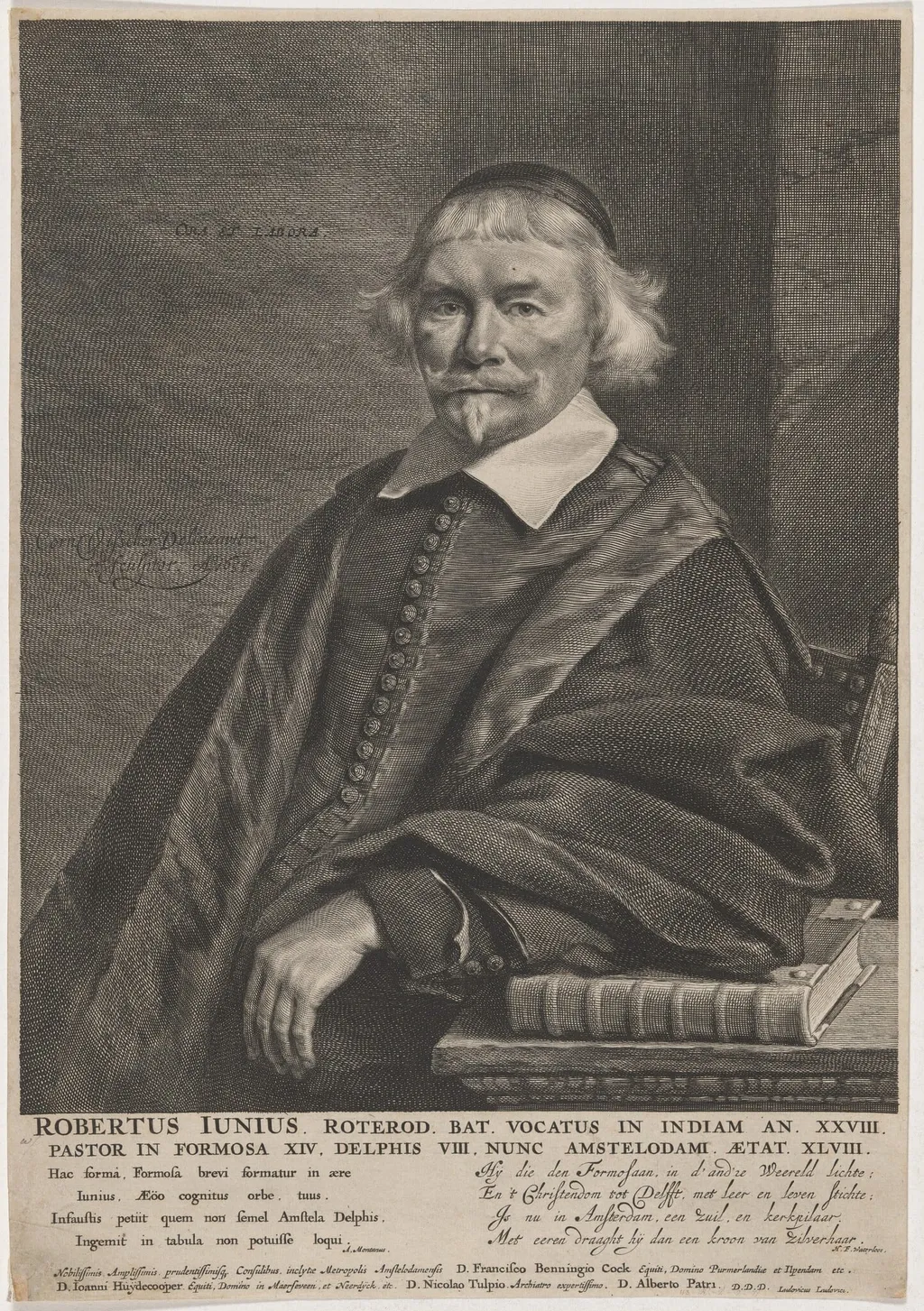
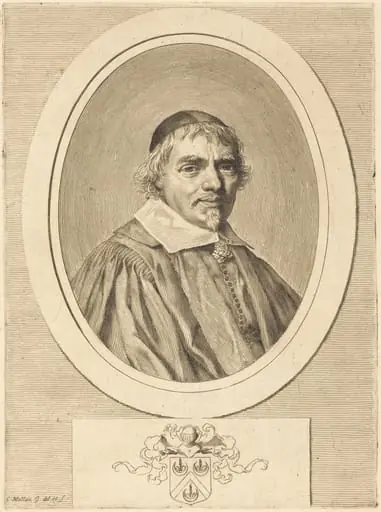
Robert Junius is an ink print by the Baroque artist Cornelis Visscher. It dates from 1654 and is held in the collection of the National Gallery of Art.
About this work
Overview
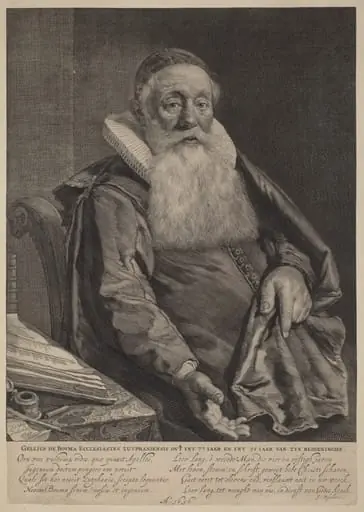
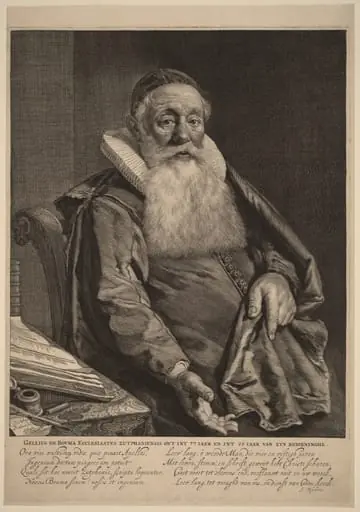
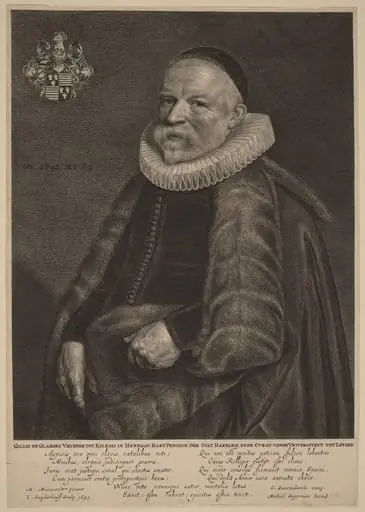
This black-and-white engraving, produced by Cornelis Visscher in 1654, depicts Robert Junius, a Dutch Reformed missionary.
This black-and-white engraving, produced by Cornelis Visscher in 1654, depicts Robert Junius, a Dutch Reformed missionary. Rendered in fine linear detail, the portrait presents a solemn male figure in formal attire, his hands resting on a ledge. The composition is tightly framed, emphasizing facial expression and texture over background elements. The work exemplifies the precision characteristic of 17th-century Dutch printmaking.
Subject & Meaning
Robert Junius was a missionary active in the Dutch East Indies, known for his work among indigenous communities and his linguistic contributions. The portrait reflects his status as a learned religious figure, conveyed through his austere clothing and composed demeanor. The Latin inscription at the base identifies his role and geographic associations, reinforcing his identity as a servant of the church in distant colonies.
Technique & Style
Visscher employed fine, controlled engraving lines to model form and texture, creating a sense of volume through gradations of light and shadow. The stiff collar, fabric folds, and facial contours are rendered with meticulous cross-hatching and parallel strokes. The absence of tone or wash heightens the graphic clarity, typical of the medium’s emphasis on precision and intellectual restraint rather than emotional expression.
History & Provenance
Created in 1654, the engraving likely served as a portrait for distribution among religious circles in the Netherlands. It was produced during a period of heightened Dutch missionary activity, when images of missionaries were used to inspire support and document their work. The print survives in several institutional collections, suggesting its circulation among scholarly and ecclesiastical audiences of the time.
Context
In mid-17th century Holland, engraved portraits of clergy and explorers were common tools for promoting religious and colonial endeavors. Junius’s image aligns with a broader trend of visualizing figures who extended Dutch influence abroad. The format—formal, textual, and restrained—mirrors the values of the Reformed Church, prioritizing piety and intellectual authority over ornamentation.
Legacy
Visscher’s engraving of Junius remains a documented artifact of Dutch missionary culture, offering insight into how religious figures were visually represented in early modern Europe. While not widely known today, it contributes to the historical record of cross-cultural engagement and the role of print in shaping public perception of colonial religious workers.
Artist & collection