Artwork
Cedars of Lebanon
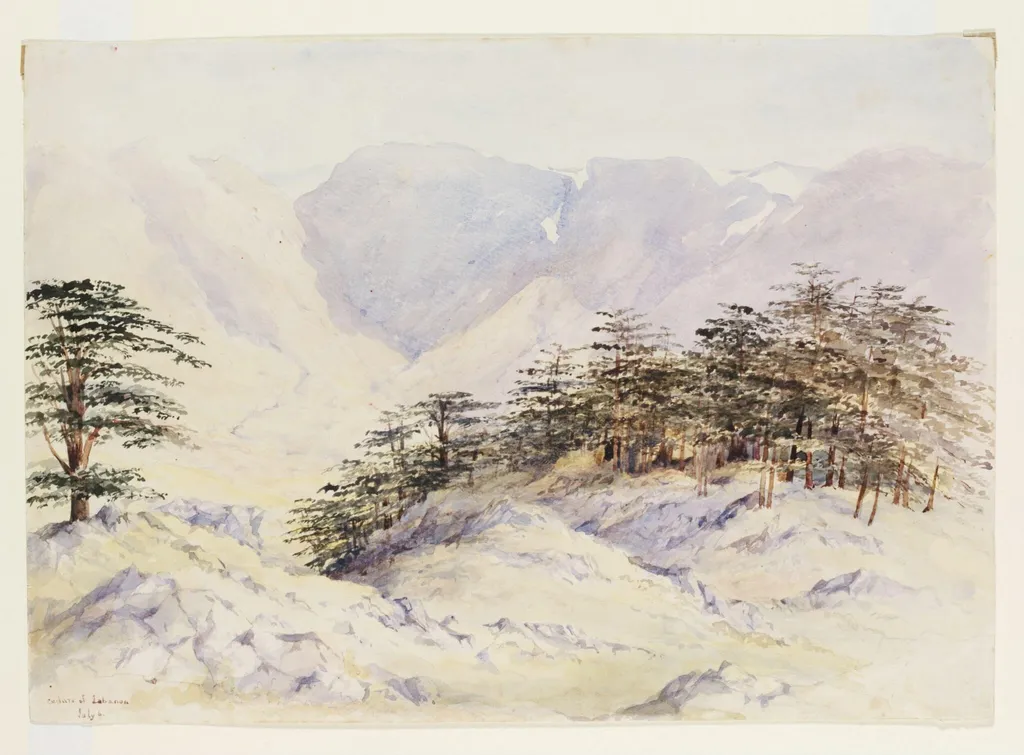
Cedars of Lebanon is a watercolor work on paper by the British Romanticist artist Maria Harriett Mathias. It dates from 1857 and is held in the collection of the Victoria and Albert Museum.
About this work
Overview
Created in 1857, *Cedars of Lebanon* is a watercolour by Maria Harriet Mathias, née Rawstorne, depicting a mountainous landscape in the Levant.
Created in 1857, *Cedars of Lebanon* is a watercolour by Maria Harriet Mathias, née Rawstorne, depicting a mountainous landscape in the Levant. Part of a travel album compiled during her journeys through Egypt, the Levant, and Italy, the work reflects her practice of documenting natural scenery with quiet precision. The piece is signed in the lower corner, consistent with other dated works from the same period.
Subject & Meaning
The painting portrays a snow-dusted slope lined with dark evergreen cedars, their forms contrasting against pale, rocky terrain. Distant peaks recede into a hazy blue atmosphere, suggesting depth and isolation. The subject reflects the cultural and religious significance of the cedar tree in the region, rendered not as a symbol but as a careful observation of place and season, grounded in firsthand experience.
Technique & Style
Mathias employed light, fluid brushwork typical of 19th-century topographical watercolour. The trees are rendered with minimal but deliberate strokes, capturing texture without heavy detail. Muted tones of brown, grey, and pale green dominate, with subtle blue washes suggesting atmospheric perspective. The signature, executed in watercolour, integrates seamlessly into the composition, indicating a deliberate, unadorned aesthetic.
History & Provenance
The watercolour was part of a bound album of travel sketches made between 1856 and 1857. After Mathias’s lifetime, the album entered the market and was auctioned at Christie’s in 1978. Several sheets, including this one, were acquired by The Fine Art Society before being purchased by the Royal Geographical Society, where it remains in their collection as part of a broader archive of 19th-century travel documentation.
Context
Mathias’s work emerged during a period when amateur female artists increasingly documented foreign landscapes, often as part of educational or familial travel. Her watercolours contributed to a growing visual record of the Eastern Mediterranean, distinct from official surveys or colonial expeditions. These private records offered intimate, observational perspectives on regions rarely depicted by women in public collections at the time.
Legacy
Though not widely exhibited during her lifetime, Mathias’s album remains a valuable resource for understanding 19th-century travel practices and the role of women in visual documentation. Her restrained style and attention to natural detail offer a quiet counterpoint to more dramatic Orientalist imagery of the era. The work’s preservation in the Royal Geographical Society underscores its significance as a historical record rather than a decorative object.
Own this work as a print
Artist & collection
Artist
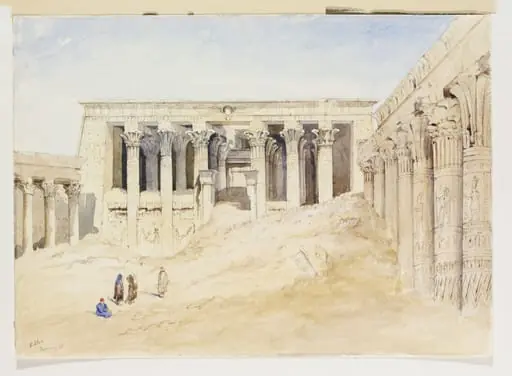
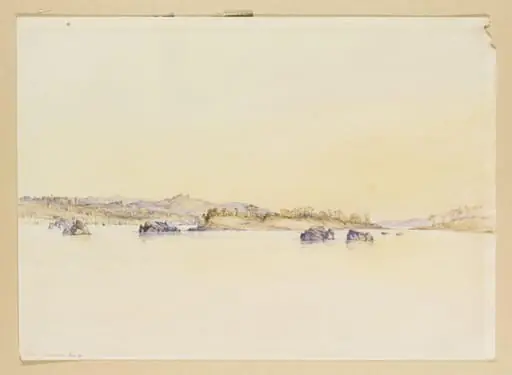
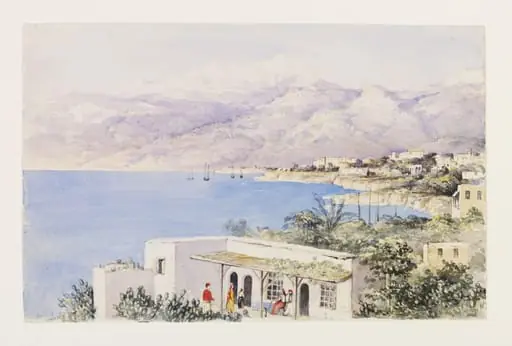
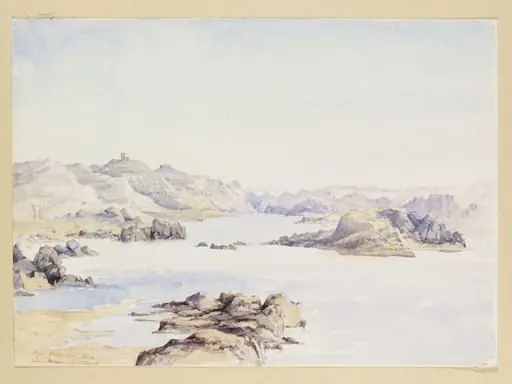
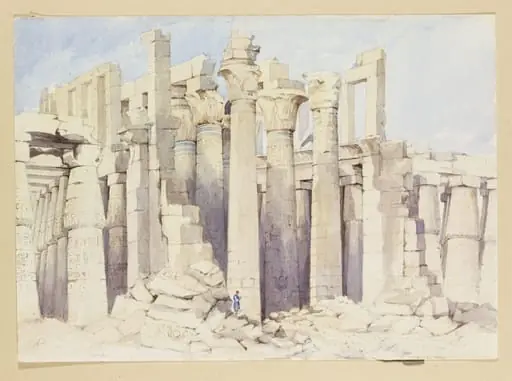
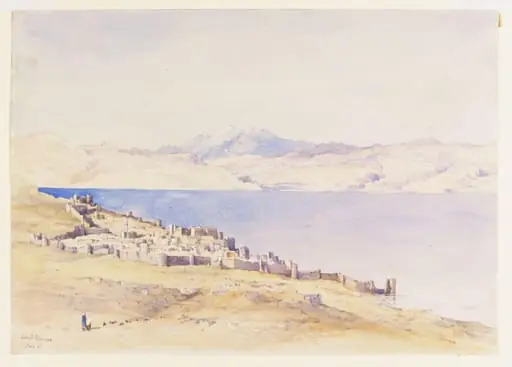
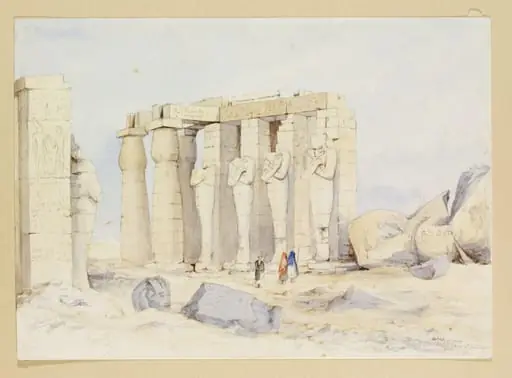
Maria Harriet Mathias painted delicate watercolors of the Middle East in 1857. The five works in this set show views from Egypt and Lebanon—Edfoo’s temple walls, cedar groves, a boat trip near Asouan, the skyline of…

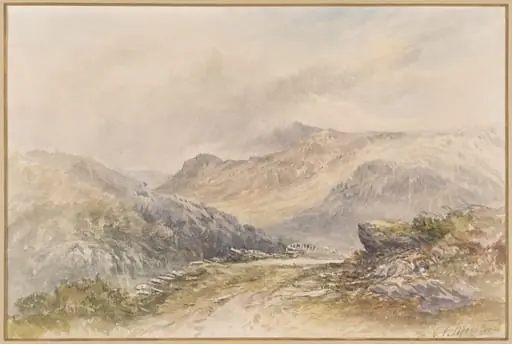 View on the Conway
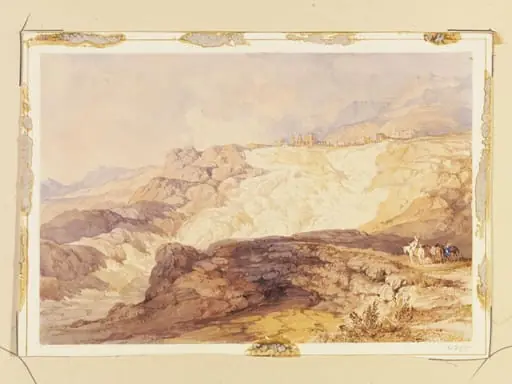 The Ruins of Hierapolis
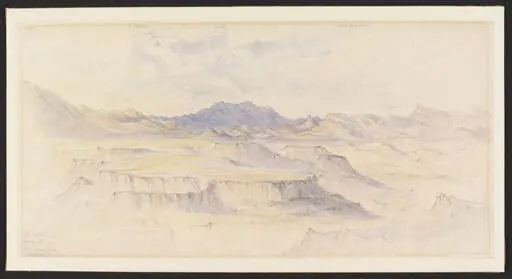 The Sinai Mountains
 Rock Cliffs along the Romanche
 Mountain View at Bormio (from Switzerland 1869 Sketchbook)
 Watercolour in album of 51 drawings and watercolours by James Duffield Harding
 Mountains of Nicaea from Broussa
 Untitled
 Choropiskopos, June 16th & 17th 1856
 The Pass of the Hermus
 Ascent of the Lower Range of Sinai