Artwork
Karnak
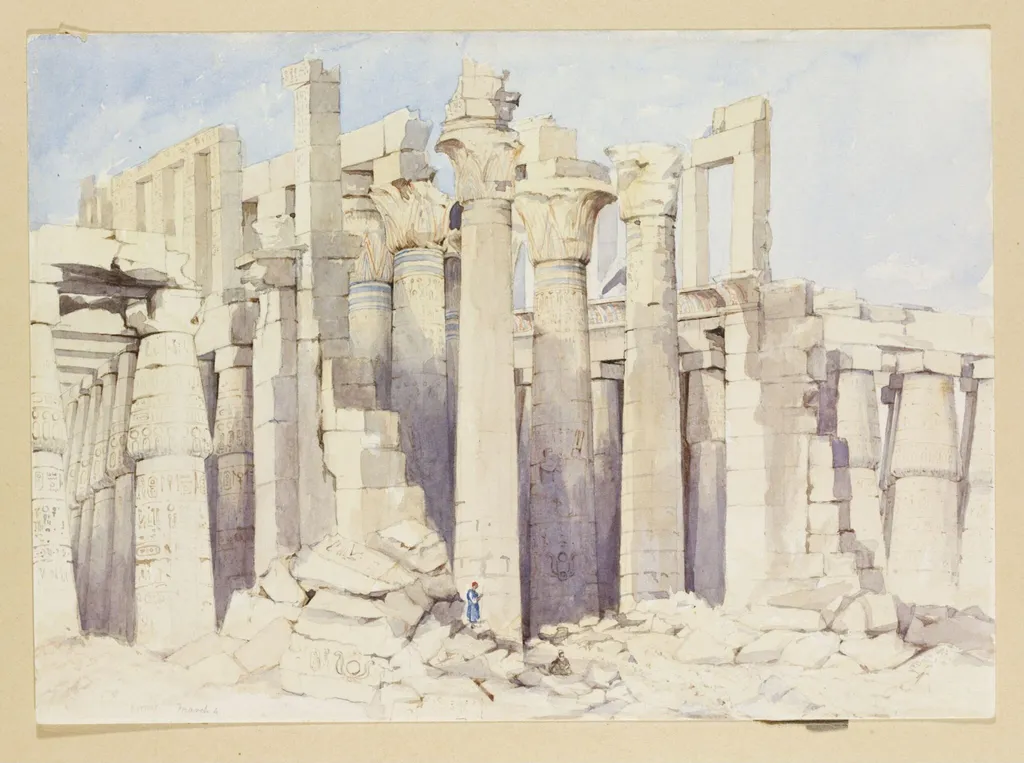
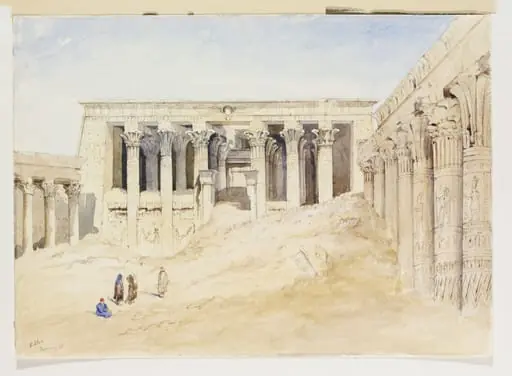
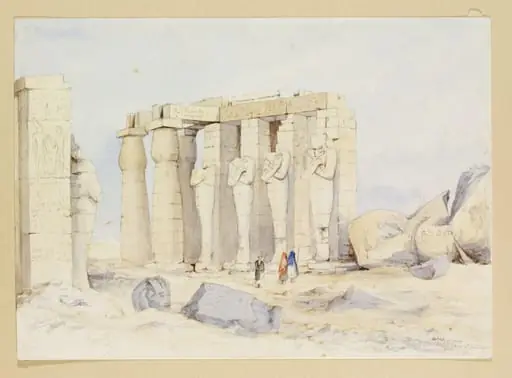
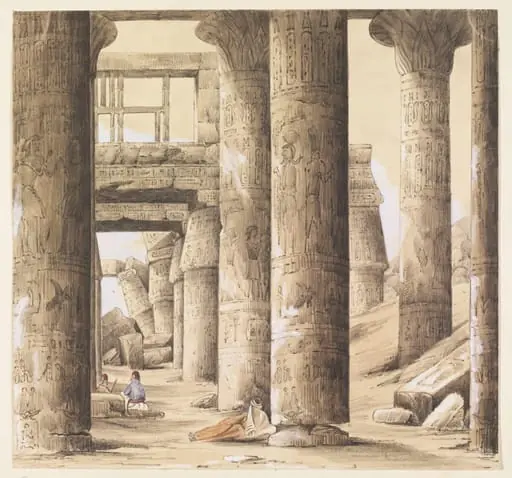
Karnak is a watercolor work on paper by the Impressionist artist Maria Harriett Mathias. It dates from 1857 and is held in the collection of the Victoria and Albert Museum.
About this work
The artist focused on the weathered details—carvings on the columns, cracks in the stone.
This sketch shows a row of broken stone columns and crumbling walls. The paint is light and rough, like a quick note of what’s left behind. A tiny figure stands in the middle, dwarfed by the ruins.
The artist focused on the weathered details—carvings on the columns, cracks in the stone. This was drawn in 1857, when travelers often sketched ruins like this.
Next, look up ruins to see how they’ve inspired art for centuries.
Overview
Karnak is a watercolour drawing by Maria Harriet Mathias, created in 1857 during her travels to Egypt. The work depicts the ancient site of Thebes, capturing the dense arrangement of monumental columns and crumbling walls.
Subject & Meaning
The drawing shows a row of broken stone columns and crumbling walls, with a tiny figure in the centre, emphasizing the scale and decay of the ancient structures. The artist's focus on weathered details conveys a sense of the site's history and neglect.
Technique & Style
The watercolour is executed in a light and rough style, suggesting a quick notation of the scene. The artist's attention to detail is evident in the rendering of carvings on the columns and cracks in the stone.
History & Provenance
Originally part of an album featuring views from her journey, the drawing was later sold at Christie's in 1978, then acquired by The Fine Art Society and subsequently the Royal Geographical Society.
Artist & collection
Artist
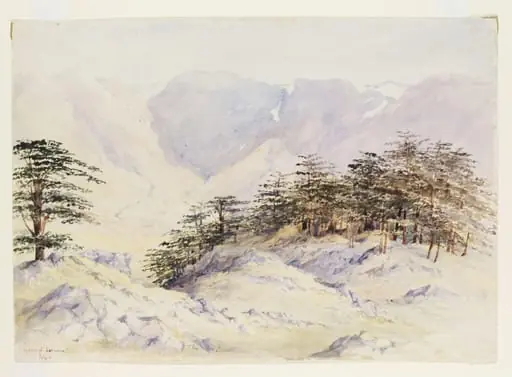
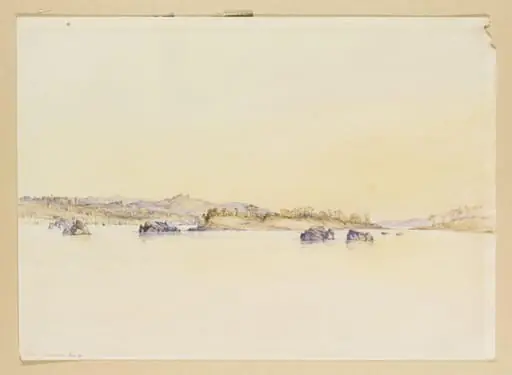
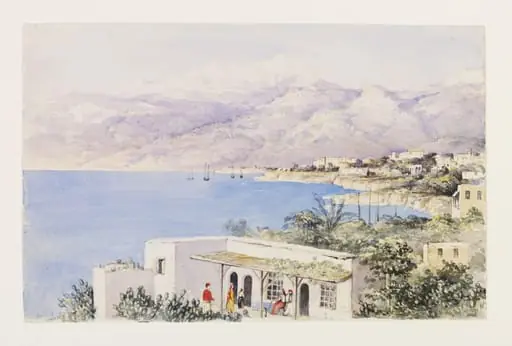
Maria Harriet Mathias painted delicate watercolors of the Middle East in 1857. The five works in this set show views from Egypt and Lebanon—Edfoo’s temple walls, cedar groves, a boat trip near Asouan, the skyline of…