Artwork
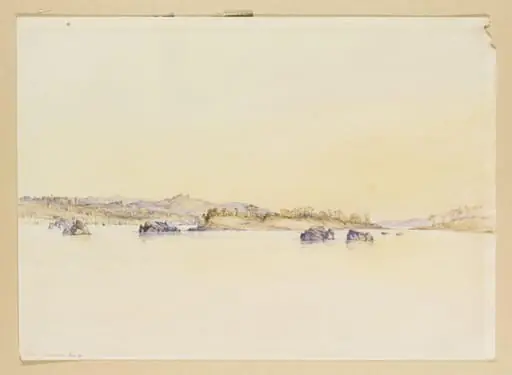
From Elephantine between Asouan and the 1st Cataract
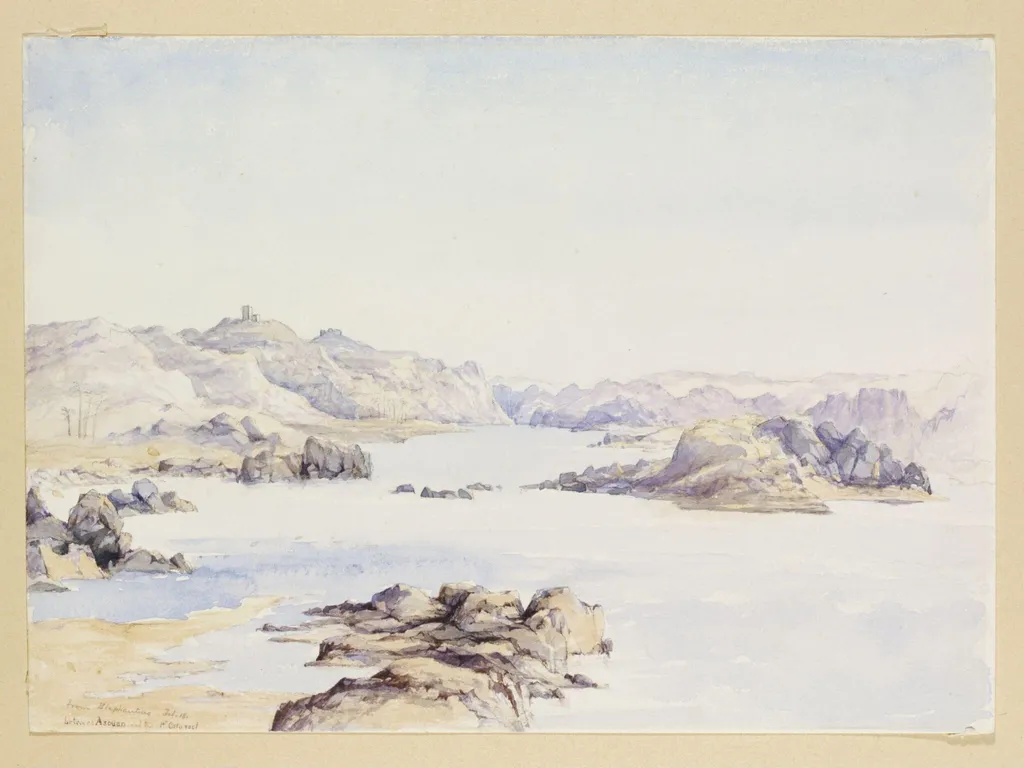
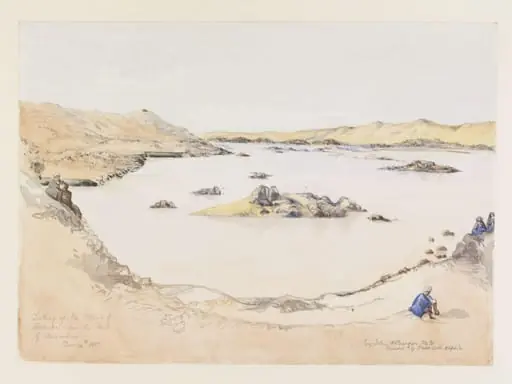
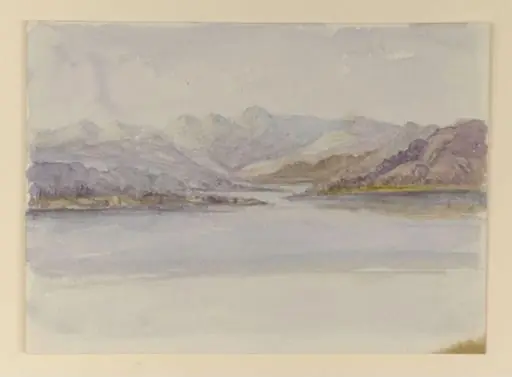
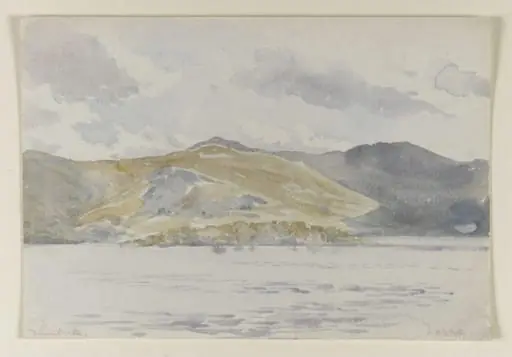
From Elephantine between Asouan and the 1st Cataract is a watercolor work on paper by the Impressionist artist Maria Harriett Mathias. It dates from 1857 and is held in the collection of the Victoria and Albert Museum.
About this work
Overview
Created as part of a personal album of travel sketches, the work reflects her systematic documentation of landscapes across Egypt, the Levant, and Italy.
This watercolour by Maria Harriet Mathias captures a stretch of the Nile near Elephantine, between Aswan and the First Cataract, executed during her 1857 journey through Egypt. Created as part of a personal album of travel sketches, the work reflects her systematic documentation of landscapes across Egypt, the Levant, and Italy. The piece is one of several dated between 1856 and 1857, combining topographical observation with quiet aesthetic sensitivity.
Subject & Meaning
The scene depicts the Nile’s gentle flow through a rugged desert landscape, with exposed bedrock and distant hills receding into a pale sky. There is no human presence, emphasizing the natural quietude of the site. The composition suggests an interest in geological form and atmospheric light rather than narrative or cultural commentary, positioning the river as a silent, enduring feature of the land.
Technique & Style
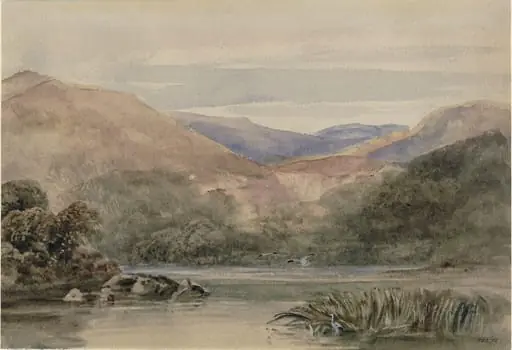
Mathias employed delicate washes and restrained tonal shifts to render the interplay of light on stone and water. Soft, translucent layers suggest the haze of desert air, while subtle variations in hue define the texture of exposed rock and the calm surface of the river. The absence of sharp outlines and the focus on ambient light reflect a practice aligned with topographical watercolour traditions of the mid-nineteenth century.
History & Provenance
The watercolour was part of a bound album containing Mathias’s studies from her travels, later dispersed through auction. In 1978, the album was sold at Christie’s, with several related works acquired by The Fine Art Society. These were subsequently transferred to the Royal Geographical Society, where they remain as part of a broader collection of 19th-century travel documentation and scientific observation.
Context
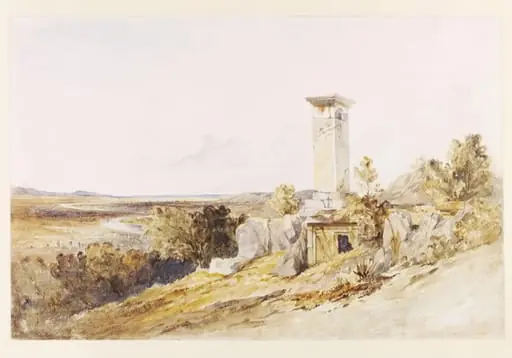
Mathias’s work emerged during a period when British travelers increasingly documented foreign landscapes through sketching, often for personal or scholarly purposes. Her focus on natural features—rather than monuments or people—aligns with a growing interest in geology and environmental observation, distinct from the more theatrical Orientalist imagery common at the time.
Legacy
Though not widely exhibited during her lifetime, Mathias’s watercolours contribute to a quieter archive of 19th-century travel art. Their preservation in institutional collections underscores their value as records of place and perception, offering insight into how non-professional artists engaged with the natural world beyond the dominant artistic conventions of their era.
Artist & collection
Artist
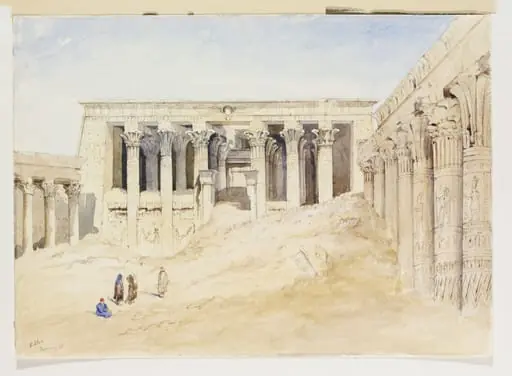
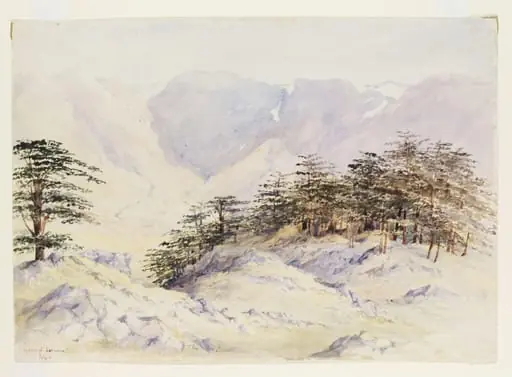
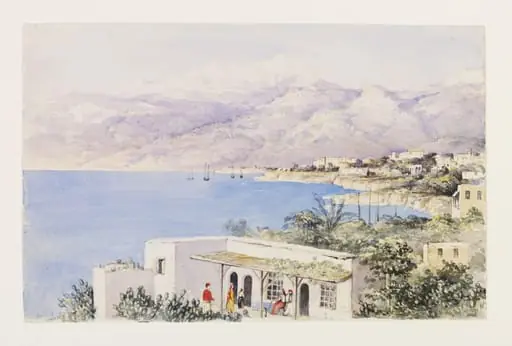
Maria Harriet Mathias painted delicate watercolors of the Middle East in 1857. The five works in this set show views from Egypt and Lebanon—Edfoo’s temple walls, cedar groves, a boat trip near Asouan, the skyline of…